The History and Remains of Oyumi Castle (Chiba Prefecture): A Thorough Explanation of the Castle of Ashikaga Yoshiaki, the Oyumi Shogun
What is Oyumi Castle?
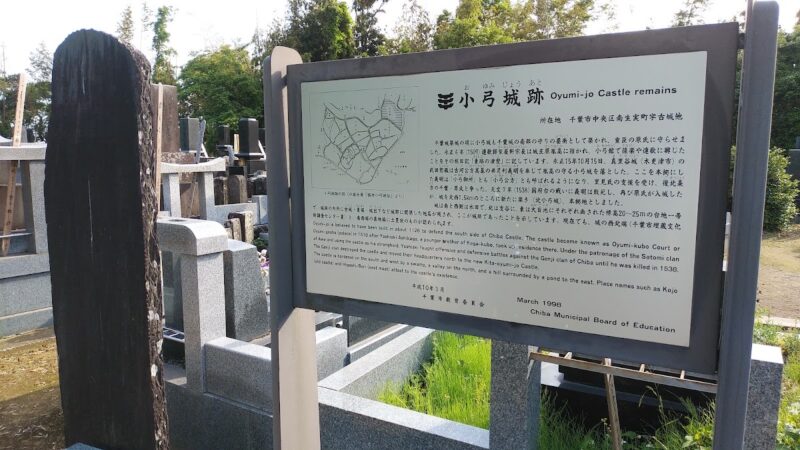
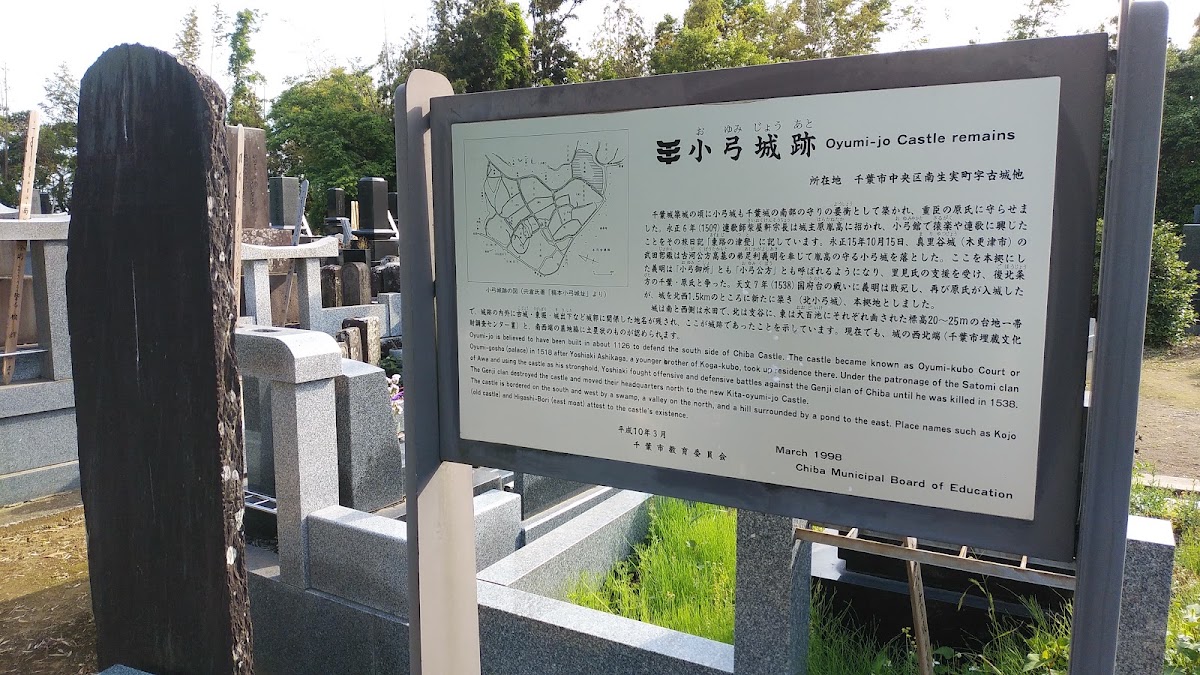
Oyumi Castle (Oyumi-jo) was a Japanese castle located in Minami-Oyumi-cho, Chuo-ku, Chiba City, Chiba Prefecture. Also known as Minami-Oyumi Castle (Minami-Oyumi-jo) or Oyumi Gosho, it served as the residence of Ashikaga Yoshiaki, the Oyumi Shogun, during the Sengoku period, becoming one of the political centers of the Boso Peninsula.
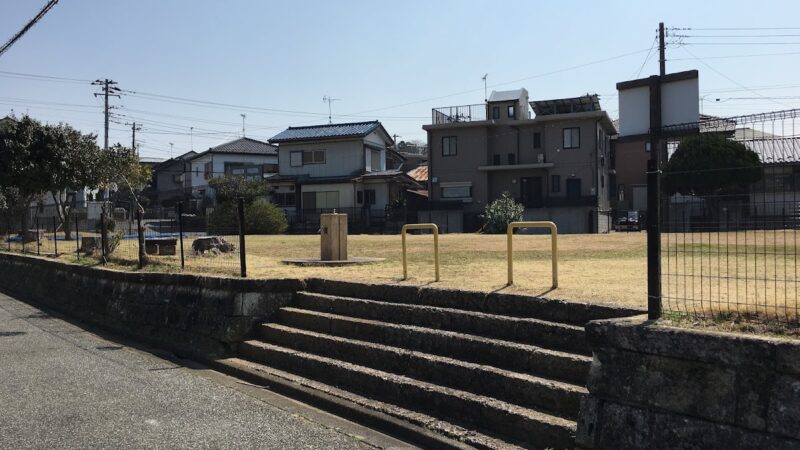
Although the site is now residential and farmland and does not retain its original appearance, it remains an important historical site with traces of earthworks and dry moats still visible. Built as a hilltop castle, it sits on a plateau approximately 26 meters above sea level and 20 meters above ground level, and functioned as a branch castle of Inohana Castle, the Chiba clan’s main base.
History of Oyumi Castle
Construction and the Hara Clan Era
There are various theories regarding the construction date of Oyumi Castle, but the most widely accepted theory is that it was built in 1126 (Daiji 1) by the Chiba clan as a southern defense when they built Inohana Castle. Hara Shiro Tanetaka, the younger brother of Chiba Kanetane, became the first lord of the castle, and it subsequently became the residence of successive generations of the Hara clan.
The Hara clan, as important retainers of the Chiba clan, played a crucial role in the Boso Peninsula, governing the surrounding area from Oyumi Castle. During this period, Oyumi Castle functioned as a strategic stronghold for maintaining the Chiba clan’s sphere of influence.
The Enthronement of Ashikaga Yoshiaki, the Oyumi Shogun
In 1517 (Eisho 14), a major turning point occurred in the history of Oyumi Castle. Takeda Nobuyasu, lord of Mariya Castle, supported Ashikaga Yoshiaki, younger brother of Ashikaga Takamoto, to oppose the Koga Shogunate, and seized Oyumi Castle. At this time, Hara Tomotane, head of the Hara clan, was driven out of the castle.
Ashikaga Yoshiaki made Oyumi Castle his base, declared himself the Oyumi Shogun, and became a central figure in the forces opposing the Koga Shogunate. The establishment of the Oyumi Shogunate symbolized the division of the Ashikaga clan in the Kanto region and significantly shook the political situation on the Boso Peninsula.
With the support of Takeda Nobuyasu, Ashikaga Yoshiaki expanded his power from Oyumi Castle, and for a time, exerted influence over a wide area of Shimosa and Kazusa provinces. Oyumi Castle came to play not only a military base but also a political center.
The First Battle of Kōnodai and the End of Oyumi Castle
In 1538 (Tenbun 7), a battle that would determine the fate of Oyumi Castle took place. This was the First Battle of Kōnodai.
Ashikaga Yoshiaki, the Oyumi Shogun, clashed with the Hōjō army led by Hōjō Ujitsuna at Kōnodai (present-day Ichikawa City, Chiba Prefecture). Ashikaga Yoshiaki was killed in this battle, and the power of the Oyumi Shogunate effectively collapsed. Although there were attempts by the Hara clan to recapture Oyumi Castle after the defeat, it lost its former political and military importance and was eventually abandoned.
This battle marked a crucial turning point in the Later Hōjō clan’s expansion into the Kanto region and significantly altered the power dynamics of the Bōsō Peninsula.
After the Edo Period
In the Edo period, a fortified residence was established on the site of Oyumi Castle, and the Oyumi Domain was formed. This was established on the site of Kita-Oyumi Castle, and the history of Oyumi Castle continued in a new form.
Since the Meiji era, development has progressed, and the area is now residential and agricultural land. However, the memory of the former castle is preserved in the place names “Omi” and “Oyumino.”
Relationship between Minami-Omi Castle and Kita-Omi Castle
The relationship between Minami-Omi Castle and Kita-Omi Castle is crucial when discussing Oyumi Castle. For many years, Minami-Omi Castle was considered the residence of the Hara clan and the palace of the Oyumi Shogun.
Traditional Theory
Traditional research held that Minami-Omi Castle was the Hara clan’s base, and that it became the Oyumi Palace when Ashikaga Yoshiaki was enthroned. On the other hand, Kita-Omi Castle was positioned as a “new castle” built after Minami-Omi Castle.
New Research Findings
However, recent research has significantly revised this conventional theory. Advances in archaeological excavations and documentary research have revealed a high probability that Minami-Omi Castle and Kita-Omi Castle functioned simultaneously.
Currently, the prevailing theory is that Kita-Ikegami Castle was the actual residence of the Hara clan, and that Ashikaga Yoshiaki, the Oyumi Shogun, also established his palace there. It has been suggested that Minami-Ikegami Castle may have been a subsidiary castle or a facility with a different function.
This new theory deepens our understanding of the structure and function of Oyumi Castle, bringing a new perspective to the study of castles of the Sengoku period.
Structure
Oyumi Castle is classified as a flatland castle, possessing a structure that skillfully utilized the topography of the plateau.
Location and Topography
The castle was built on a plateau approximately 26 meters above sea level, with a relative height of about 20 meters above the surrounding lowlands. This topographical advantage ensured defensive strengths. The edges of the plateau were natural cliffs, making it a formidable stronghold that was difficult for attackers to approach.
Layout and Defensive Facilities
The layout of Oyumi Castle is thought to have consisted of multiple baileys (kuruwa). The castle featured multiple defensive lines centered around the main enclosure, with each enclosure demarcated by earthworks and dry moats.
The earthworks were a crucial defensive feature of the castle, and traces of them still remain today. These earthworks served to prevent enemy intrusion and clearly demarcate the various sections within the castle. Similarly, the dry moats functioned as an important defensive element to hinder enemy advances.
Structure of Minami-Omi Castle
Minami-Omi Castle is believed to retain an older castle structure. Archaeological excavations have confirmed remains characteristic of medieval castles, with partial remnants of earthworks and moats.
Structure of Kita-Omi Castle
Kita-Omi Castle was the base of the Hara clan and likely the location of the Omi Shogun’s residence. It is thought to have been larger and had a more complex layout than Minami-Omi Castle. The presence of the Omi Domain’s encampment during the Edo period suggests it maintained a certain level of importance until the early modern period.
Current Status of Remains
Currently, most of the remains of Oyumi Castle have been lost, but with careful observation, traces of its former glory can still be found.
Remaining Remains
At the site of Minami-Omi Castle, a few traces of earthworks remain. These earthworks, scattered throughout the residential area, are valuable remains that allow us to imagine the scale of the castle in its heyday. It is also possible to estimate the location of the dry moats from the topography.
While there may be more clearly defined remains within some privately owned land, the area is currently being developed for housing and agriculture, making it difficult to grasp the overall picture.
Memories Remaining in Place Names
Although there are few physical remains, the memory of Oyumi Castle is preserved in the place name “Omi” and the name of the surrounding “Oyumino New Town.” Because “Omi” is difficult to read, the hiragana spelling “Oyumino” was adopted for the new town.
The preservation of these place names plays an important role in maintaining the historical identity of the region.
Access
Access to the Oyumi Castle Ruins can be via public transport or by car.
Access by Public Transport
The nearest station is Kamatori Station on the JR Sotobo Line. It’s about a 25-minute walk from the station to the Minami-Omi Castle Ruins. It’s also accessible from Gakuenmae Station on the Keisei Chihara Line in about 20 minutes on foot.
If using the bus, the Minami-Omi-cho bus stop on the Chiba Chuo Bus is convenient, and it’s about a 5-minute walk from there to the castle ruins.
Access by Car
It’s about a 15-minute drive from the Soga Interchange on the Keiyo Expressway, or about a 20-minute drive from the Omiya Interchange on the Togane Expressway. However, since the castle ruins are located in a residential and agricultural area, there is no dedicated parking lot. Please be considerate of the neighbors when visiting.
Precautions During Visits
Much of the Oyumi Castle Ruins is private property, so unauthorized entry should be avoided. It is important to respect the lives of local residents and limit visits to areas that can be observed from public roads.
The Relationship Between Oyumi Castle and the Chiba Clan
Understanding the relationship with the Chiba clan is essential to understanding the history of Oyumi Castle. The Chiba clan was a samurai family that wielded power primarily in Shimosa Province from the late Heian period to the Sengoku period.
The Chiba Clan’s Branch Castle Network
The Chiba clan adopted a strategy of placing multiple branch castles around their main base, Inohana Castle. Oyumi Castle was positioned as an important branch castle protecting the south, and its management was entrusted to the Hara clan, a branch of the Chiba family.
This branch castle network allowed the Chiba clan to efficiently govern a vast territory and build a defense system against external enemies. It is believed that Oyumi Castle functioned as the front line against threats from the south within this system.
The Role of the Hara Clan
As a branch of the Chiba clan, the Hara clan was responsible for governing the surrounding area from their base at Oyumi Castle. The Hara clan were not merely castle lords; they were indispensable to the Chiba clan’s maintenance of power and wielded considerable influence as powerful local figures.
Even after losing Oyumi Castle to Takeda Nobuyasu in Eisho 14 (1517), the Hara clan reportedly continued to attempt to recapture the castle, demonstrating their strong attachment to it.
The Oyumi Shogunate and the Kanto Region in the Sengoku Period
The establishment of the Oyumi Shogunate was a symbolic event in the political situation of Kanto during the Sengoku period.
Conflict with the Koga Shogunate
During the Muromachi period, the Ashikaga clan, who ruled Kanto, had their base in Koga (present-day Koga City, Ibaraki Prefecture). However, with the arrival of the Sengoku period, internal conflicts within the Ashikaga clan intensified, and in Eisho 14 (1517), Ashikaga Yoshiaki declared independence as the Oyumi Shogunate, splitting Kanto into two Shogunate forces.
This split forced the Sengoku daimyo of Kanto to choose which Shogunate to support. Oyumi Castle became the center of these political maneuvers.
The Rise of the Hojo Clan
The existence of the Oyumi Shogunate was an obstacle to the Hojo clan’s expansion into the Kanto region, as they were growing their power from Sagami Province. Hojo Ujitsuna’s victory over Ashikaga Yoshiaki in the First Battle of Kōnodai strengthened his influence over the Bōsō Peninsula, laying the foundation for his later conquest of Kanto.
The decline of Oyumi Castle was a crucial step towards the Hojo clan’s unification of Kanto and a turning point that significantly altered the political landscape of Kanto during the Sengoku period.
Related Historical Sites in the Surrounding Area
When visiting Oyumi Castle, visiting the related historical sites in the surrounding area will allow for a deeper understanding of the history.
Inohana Castle (Chiba Castle)
Inohana Castle, the base of the Chiba clan, is located approximately 8 kilometers north of Oyumi Castle. Currently, the Chiba City Local History Museum stands on the site, where you can learn about the history of the Chiba clan and Bōsō. It is a historical site worth visiting to understand its relationship with Oyumi Castle.
Kōnodai Castle Ruins
The ruins of Kōnodai Castle (Ichikawa City), the site of the First Battle of Kōnodai, are also an important related historical site. Ashikaga Yoshiaki was killed here, marking the end of the history of Oyumi Castle. Currently, it is maintained as Satomi Park, and an information board detailing the history of the battle is installed.
Mariya Castle
Mariya Castle (Kisarazu City), the residence of Takeda Nobuyasu, was a base for the establishment of the Oyumi Shogunate. As a mountain castle, its remains are well-preserved, making it one of the important historical sites on the Bōsō Peninsula during the Sengoku period.
Current Status and Challenges of Oyumi Castle Research
Research on Oyumi Castle has made significant progress in recent years, but many aspects remain unclear.
Results of Archaeological Excavations
Limited archaeological excavations have gradually revealed the true nature of Oyumi Castle as a medieval castle. In particular, the structure of the earthworks and moats, and the excavated artifacts, have provided new insights into the castle’s age and function.
Future Challenges
The relationship between Minami-Omi Castle and Kita-Omi Castle is still a subject of ongoing debate. Many questions remain, such as which was the true Omi Palace and what functional divisions the two castles shared.
Furthermore, reconstructing the castle’s overall structure requires a more extensive investigation, but current residential development makes large-scale excavations difficult. Research into the true nature of Omi Castle will continue through a comprehensive analysis of historical documents and archaeological findings.
Summary
Omi Castle was built as a branch castle of the Chiba clan and, during the Sengoku period, became an important fortress serving as the political center of the Boso Peninsula as the residence of Ashikaga Yoshiaki, the Omi Shogun. Although it disappeared from the historical stage after its defeat in the First Battle of Kōnodai, its existence is indispensable for understanding the situation in the Kanto region during the Sengoku period.
While much of the remains have been lost, the traces of earthworks and place names preserve the memory of the former castle. Many mysteries remain unsolved, such as the relationship between Minami-Omi Castle and Kita-Omi Castle, making this a historical site where further research is anticipated.
When visiting Chiba City, exploring the ruins of Oyumi Castle, along with Inohana Castle and other related historical sites in the surrounding area, will allow you to experience the history of the Boso Peninsula during the Sengoku period more deeply.