Kotake Castle (Sakura City, Chiba Prefecture) Complete Guide: History, Highlights, and Access Information
Kotake Castle, located in Sakura City, Chiba Prefecture, is an important castle ruin that tells the story of the Usui clan’s rule in Shimosa Province during the medieval period. Built during the Meitoku era (1390-1394), this castle remains in excellent condition, with traces of earthworks and dry moats still visible, making it a valuable historical heritage site. This article comprehensively explains the detailed history of Kotake Castle, the ruins that can be seen on site, points to note when visiting, and related historical sites in the surrounding area, providing useful information for castle enthusiasts and history fans.
History of Kotake Castle
Background of Construction and the Kotake Clan
Kotake Castle was built during the Meitoku era (1390-1394) by Kotake Goro Takatane, a member of the Usui clan. The Kotake clan was a branch of the Usui clan, which was itself a collateral branch of the Chiba clan, and played an important role in the defense of Usui Castle.
Takatane Kotake is believed to have been in charge of Nakadai Fort, which formed the outer perimeter of Usui Castle, indicating his significant position within the clan. Kotake Castle was not merely a residence, but a military base serving as a subsidiary castle of Usui Castle.
The Usui Clan and the Power Structure of Shimosa Province
The Usui clan was a powerful samurai group that established its influence in northern Shimosa Province as a branch of the Chiba clan. They governed their territory by centering their operations around their base, Usui Castle, and strategically placing several subsidiary castles and forts in the surrounding area. Kotake Castle is thought to have functioned as an important base within this defensive network.
The Usui clan’s sphere of influence extended from present-day Sakura City to Yotsukaido City and Yachiyo City, and Kotake Castle was located at a strategic point in the eastern part of this region. Located approximately 3 kilometers from Usui Castle, it is presumed to have served as a forward base to prepare for invasions from the east.
Changes After the Fall of the Usui Clan
The Usui clan maintained its power in Shimosa Province throughout the Sengoku period, but ultimately came under the control of the Hojo clan. During Toyotomi Hideyoshi’s siege of Odawara in 1590, the Usui clan fought on the Hojo side and were defeated and destroyed.
After the fall of the Usui clan, the Kotake clan is said to have served the Satomi clan. The Satomi clan was a Sengoku daimyo based in Awa Province (present-day southern Chiba Prefecture) and was in conflict with the Hojo clan. However, when the Satomi clan was dispossessed of their lands in 1614, the Kotake clan is said to have abandoned their samurai status and returned to farming.
Even after this return to farming, the place name Kotake remained, and the area continues to be known as Kotake, Sakura City.
Structure and Layout of Kotake Castle
Scale and Form of the Castle
Kotake Castle was built as a flatland castle (residential-type castle). It was of a standard size for a medieval local lord’s residence and had a nearly square layout. The main enclosure is estimated to be about 60-80 meters on each side, and it takes the typical form of a square residence, surrounded by earthworks and a moat.
The castle was located on a flat area of a plateau, utilizing the surrounding lowlands for natural defense. This topography takes advantage of the characteristic terrain of the Shimosa Plateau and is a common location for many castles of the same period.
Characteristics of the Earthworks
The greatest highlight of Kotake Castle is the earthworks, which remain in good condition today. Earthworks approximately 3 meters high surround the residence, conveying the defensive structure of a medieval castle.
The earthworks are thought to have been built using the rammed earth construction method, where layers of soil were compacted to increase their strength. The fact that it remains standing despite years of exposure to wind and rain is a testament to the robust construction techniques used.
In areas where the cross-section of the earthwork can be observed, layers of soil of different colors can be seen, revealing the high level of civil engineering technology at the time.
Moat and Defensive Structures
A dry moat was constructed outside the earthwork. Traces of the moat can still be seen in some places today. The moat is estimated to be about 5-7 meters wide and 2-3 meters deep, and in combination with the earthwork, it formed an effective defensive line.
A gate (entrance) is believed to have been located in the southeast direction, and this direction is thought to have led to a communication route with Usui Castle. The earthwork around the gate is particularly thick, indicating an emphasis on the defense of the castle’s front.
Highlights and Current Status of Kotake Castle
Preservation Status and Remains
The Kotake Castle site is currently private property and entry is prohibited. However, the remains of the earthworks and moats can be viewed from the perimeter, and its state of preservation is among the best of medieval castles in Chiba Prefecture.
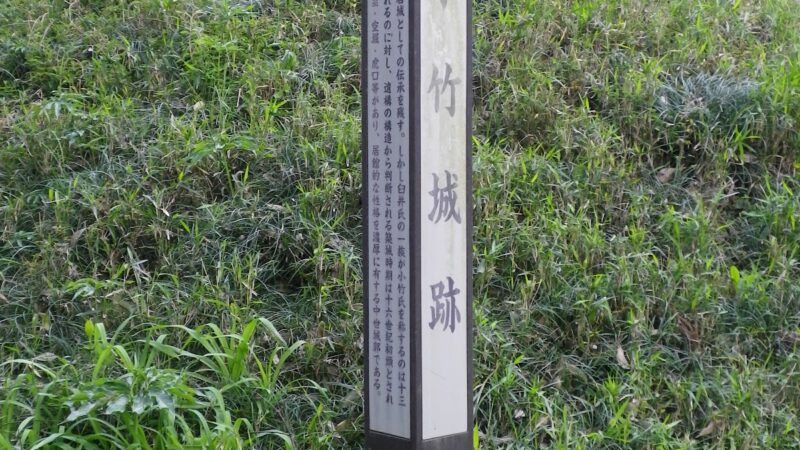
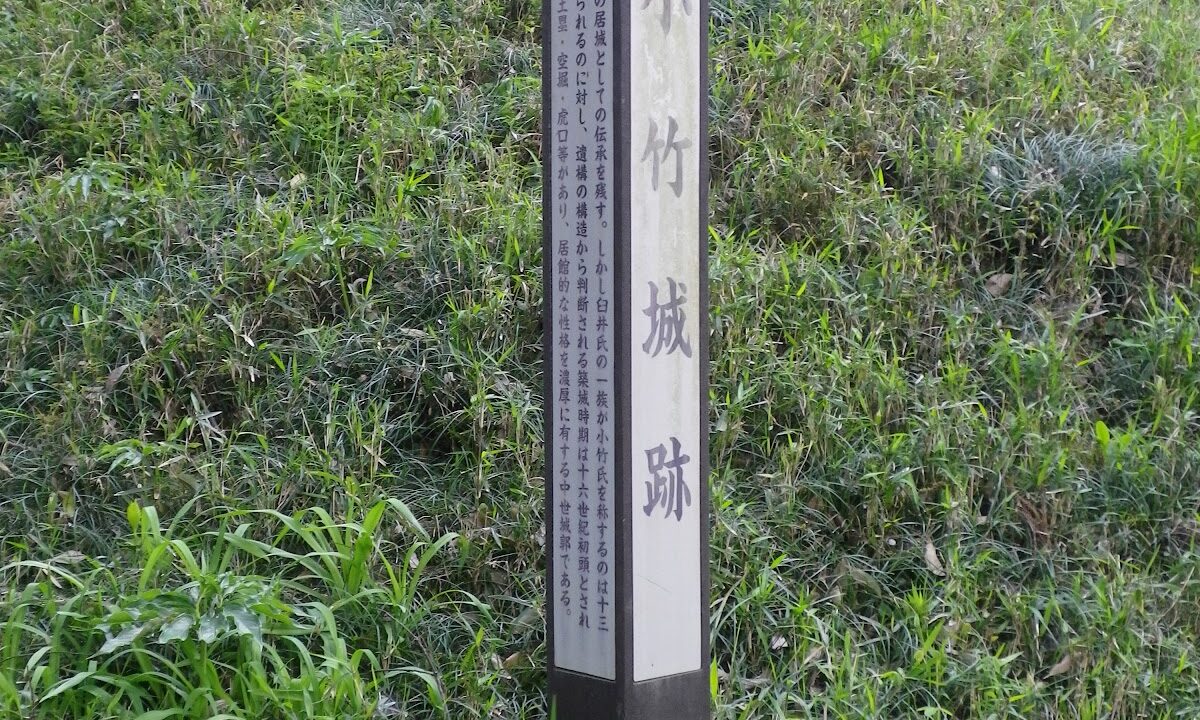
While entry into the interior is prohibited due to it being private property, a narrow path leads to a marker indicating the site of Kotake Castle, clearly marking its location. Walking around the perimeter allows you to observe the continuity and scale of the earthworks from the outside.
Having escaped the waves of residential development, the topography and structure from the time of its construction remain almost entirely intact, making it a highly valuable historical site as a typical example of a medieval rectangular residence.
Points to Note When Visiting
When visiting Kotake Castle, please note the following:
- Respect for Private Property: The castle site is private property and entry is prohibited. Please limit your viewing to the area around the marker and the perimeter, and absolutely do not enter the property.
- Narrow Roads: The road leading to the castle site is a narrow residential street. If visiting by car, please be considerate of the surrounding area and avoid inconveniencing neighbors when parking.
- Photography: Photography is permitted from the perimeter, but please be considerate and avoid including private property or houses in your photos.
- Visiting Time: Since observation of the ruins is limited to the perimeter, 15-20 minutes is sufficient.
Surrounding Historical Landscape
Some of the land divisions from the medieval period remain around the Kotake Castle ruins, allowing us to imagine the settlement structure of that time. Within walking distance of the castle ruins is the Shisha-Okami Shrine, which still functions as a historical center of faith in the region.
The layout of the surrounding farmland and settlements reveals remnants of the medieval village structure, making the area valuable as a historical landscape encompassing not only the castle but also the surrounding environment.
Access Information
Access by Public Transportation
If using the Keisei Main Line:
- Approximately 25-30 minutes on foot from Keisei Usui Station
- Head northeast from the station, via National Route 296 to the Kotake area.
If using the JR Line:
- Take a local bus or taxi from JR Sakura Station
- Approximately 40 minutes on foot
Access by public transportation is somewhat inconvenient, so it is recommended to plan with ample time.
Access by Car
From the Higashi-Kanto Expressway:
- Approximately 15 minutes from Sakura IC
- Take National Route 296 to the Kotake area.
Regarding Parking:
There is no dedicated parking lot for the castle ruins. You will need to find a place that does not inconvenience the surrounding area. Consider parking in a coin-operated parking lot near Keisei Usui Station and accessing the site on foot.
Location
285-0863 Kotake, Sakura City, Chiba Prefecture
Related Historical Sites in the Surrounding Area
Usui Castle Ruins
Usui Castle Ruins, the main castle of Kotake Castle, are located approximately 3 kilometers west of Kotake Castle. It was a large flatland castle built on a plateau overlooking Lake Inba, and is now maintained as Usui Castle Ruins Park.
Usui Castle is known for being attacked by Uesugi Kenshin during the Eiroku era (1558-1570), and was an important stage in the Sengoku period in the Kanto region. Visiting both Kotake Castle and Usui Castle together will provide a deeper understanding of the Usui clan’s rule over their territory.
Shizu Castle Ruins
Shizu Castle, located approximately 2 kilometers south of Kotake Castle, was also a castle under the control of the Usui clan. It is also thought to have functioned as a branch castle of Usui Castle, playing a similar role to Kotake Castle.
Although the area is currently being developed for residential purposes, some remains of the castle still exist.
Shukunai Fort
Located northwest of Usui Castle, Shukunai Fort was also one of the key strongholds in the Usui clan’s defense network. It is presumed to have formed a concentric defensive line centered around Usui Castle, along with Kotake Castle and Shizu Castle.
Matsuzaki Castle Ruins
To the east of Kotake Castle lies the Matsuzaki Castle ruins. This is also a medieval castle site and an important historical site for understanding the placement of samurai strongholds in Shimosa Province.
Historical Value of Kotake Castle
Significance in Medieval Castle Research
Kotake Castle holds high academic value as a typical example of a medieval rectangular residence. Its preservation of its original form without major renovations is particularly important, making it a valuable resource for understanding the castle construction techniques and defensive philosophies of the late 14th century.
Basic elements of medieval castles, such as earthwork construction techniques, moat combinations, and gate placement, are well-preserved, making it an important subject of investigation for castle researchers. ### Position in Local History
Kotake Castle plays an important role in the study of the local history of Shimosa Province as a site that concretely demonstrates the ruling system of the Chiba clan. It provides clues to how the Usui clan governed their territory and how they positioned their family members.
The fact that the place name “Kotake” still exists today and is part of the region’s identity is also an important element demonstrating historical continuity.
Visitor Guide: Efficient Visiting Methods
Recommended Visiting Route
The recommended route for efficiently visiting Kotake Castle is as follows:
- Checking the Marker: First, find the marker for the Kotake Castle ruins to confirm the location of the castle site.
- Observing the Outer Perimeter: While being careful not to enter private property, walk around the outer perimeter as far as possible. Observe the height and continuity of the earthworks.
- Photography: Record the appearance of the earthworks and the surrounding topography. In particular, if you can see the cross-section of the earthworks, you can observe the construction techniques.
- Confirming the Surrounding Topography: Observe the topography around the castle ruins and consider why this location was chosen.
Estimated Visit Time
For a visit to Kotake Castle Ruins alone, 15-20 minutes is sufficient. However, if you wish to observe the surrounding historical landscape in detail, it is recommended to allow about 30 minutes.
If visiting in combination with other related historical sites such as Usui Castle Ruins, it is recommended to plan a half-day to full-day course.
Best Time to Visit
Kotake Castle Ruins are open year-round, but the following times are especially recommended:
Spring (March-May): The season of fresh greenery, the vegetation on the earthworks is beautiful, and the weather is ideal for strolling.
Autumn (October-November): The season of autumn foliage, ideal for photography. The weather is mild and easy to visit.
Winter (December-February): The vegetation has withered, making it easier to observe the shape of the remains. Winter is recommended if you want to examine the castle structure in detail. During the summer, the dense vegetation can make observing the ruins somewhat difficult.
History of Sakura City and Kotake Castle
Formation of Sakura City
The current city of Sakura was formed in 1954 (Showa 29) through the merger of Sakura Town, Usui Town, Shizu Village, and others. The Kotake area was part of Shizu Village, becoming Kotake, a large district of Shizu Village, in 1889 (Meiji 22) when the town and village system was implemented.
Shizu Village was formed by the merger of Ino Village, Ino Town, Senzaki Village, Kamiza Village, Kotake Village, Aosuga Village, Shimosizu Village, and Kamishizu Village, and Kotake was one of its constituent settlements.
Changes Since the Meiji Era
Since becoming part of Chiba Prefecture in 1873 (Meiji 6), the Kotake area has developed as an agricultural region. While its function as a castle site was lost during the modernization process, it has continued to be recognized as a historical symbol of the region.
Currently, the area is a mixed residential and agricultural district within Sakura City, but the Kotake Castle ruins are carefully preserved as a local historical heritage site.
Related Information and Learning Resources
Related Books
References for learning about Kotake Castle and the Usui clan:
- *Comprehensive Guide to Japanese Castles, Vol. 6: Chiba and Kanagawa* (Shin Jinbutsu Oraisha)
- *History of Chiba Prefecture* (Yamakawa Publishing)
- *A Tour of Ancient Castle Sites in Boso* (Ronshobo)
- *Illustrated Guide to Castles in Boso* (Kokushokankokai)
These books provide detailed explanations of the historical background of Kotake Castle and the activities of the Usui clan.
Online Information Sources
Castle information websites feature photos and impressions from actual visitors, which are useful for gathering information before a visit. Sites such as Kojodan and Shirobito allow you to refer to ratings and reviews from other visitors.
Sakura City Tourist Information
When visiting Kotake Castle, we recommend also visiting other tourist spots in Sakura City:
National Museum of Japanese History: One of the largest history museums in Japan, located within Sakura Castle Park. You can learn about medieval history.
Sakura Castle Park: The site of the castle of the Sakura Domain during the Edo period. The earthworks and dry moats are well-preserved.
Samurai Residences: Edo-period samurai residences are preserved, offering a glimpse into life at that time.
Accommodation Information
Sakura Daiichi Hotel
Sakura Daiichi Hotel is a convenient accommodation option when touring historical sites in Sakura City, such as Kotake Castle and Usui Castle. It’s conveniently located near JR Sakura Station.
This business hotel offers attractive, reasonable pricing. Many visitors use it as a base for castle tours, and information on access to surrounding historical sites is also provided.
Other Accommodation Options
There are other business hotels and inns in Sakura City, which you can choose from according to your budget and preferences. You can also utilize accommodations in the neighboring cities of Chiba and Narita.
Summary: The Charm of Kotake Castle
Although not large in scale, Kotake Castle is a valuable historical site that conveys the reality of the samurai groups of medieval Shimosa Province. The well-preserved earthworks and dry moats convey the castle-building techniques of over 600 years ago.
By visiting Kotake Castle, which functioned as a branch castle of the Usui clan, you can gain a concrete understanding of how local samurai groups governed their territories and established defensive systems before the Sengoku period.
While entry into the interior is not permitted due to it being private property, you can still fully experience the atmosphere of a medieval castle by viewing it from the perimeter. Visiting Usui Castle and other surrounding branch castles will provide a deeper understanding of history.
Many medieval castle ruins remain in Chiba Prefecture, but Kotake Castle is one of the best-preserved and relatively easy-to-access historical sites. We recommend this visit not only to history enthusiasts and castle fans, but also to anyone interested in local history.
When visiting the Kotake Castle ruins, please be mindful that it is private property and observe proper etiquette. A balance between appropriate preservation and utilization is crucial to passing on this valuable historical heritage to future generations.