Osaki Castle (Katori City, Chiba Prefecture) Complete Guide | History, Remains, and Access Explained in Detail
Located in Katori City, Chiba Prefecture, Osaki Castle is a hilltop castle that played an important role as a strategic point in Shimosa Province from the Kamakura period to the Sengoku period. Also known as “Yahagi Castle” and “Shiroyama,” it is known as the residence of the Kokubun clan, a branch of the Chiba clan. This article provides a comprehensive explanation of Osaki Castle, including its historical background, details of existing remains, and access information for visitors.
Basic Information on Osaki Castle
Common Names and Alternate Names
Osaki Castle is also known by the alternative names “Yahagi Castle” and “Shiroyama.” The local place name “Shiro no Uchi” (meaning “inside the castle”) remains, preserving the memory of the castle’s existence.
Location and Former Province
Location: Osaki, Katori City, Chiba Prefecture, and other locations
Former Province: Shimosa Province
Current Geography: Located in the tributary area of the Tone River, it is built on a complex terrain of plateaus and lowlands.
Classification and Structure
Castle Classification: Hilltop Castle
Builder: Kuniwake Tanemichi
Year of Construction: Early Kamakura period (around the 13th century)
Main Lords: Kuniwake clan, Torii clan
Year of Abandonment: Around Keicho 5 (1600)
Existing Remains: Earthworks, dry moats, remains of post-and-beam buildings, remains of residences
Osaki Castle is a hilltop castle utilizing the edge of a plateau, characterized by its layout that skillfully makes use of the natural terrain. Built on a slightly elevated area surrounded by low-lying wetlands, it possessed excellent defensive advantages.
History of Osaki Castle
Kamakura Period: Construction by the Kokubun Clan
The history of Osaki Castle dates back to the early Kamakura period. It is believed to have been built by Kokubun Tanemichi, the first head of the Kokubun clan, a branch of the Chiba clan. The Kokubun clan was a prestigious family descended from Higashi Taneyori, the sixth son of Chiba Tsunetane, and expanded its power as a local lord in the Katori region.
Around the end of the Kamakura period, Kokubun Yasutane, the fifth head of the Kokubun clan, is believed to have moved the base from Motoyahagi to this Osaki location, and thus Osaki Castle came to function as the main castle of the Kokubun clan. The reasons behind this move are thought to be the selection of a more defensible terrain and the reorganization of the clan’s bases of control in the Katori region.
Muromachi to Sengoku Periods: A Base for the Chiba Clan
From the Muromachi period to the Sengoku period, Osaki Castle continued to function as the residence of the Kokubun clan. During this time, Shimosa Province was in a complex political situation, and while the Chiba clan members cooperated with each other, they also sometimes clashed.
With the arrival of the Sengoku period, the Kanto region became the stage for the power struggle between the Later Hojo clan and the Satomi clan. Many members of the Chiba clan, including the Kokubun clan, chose to belong to the Hojo clan, and Osaki Castle was incorporated into the Hojo clan’s sphere of influence. During this period, the castle was frequently attacked by the Satomi clan, but the Kokubun clan repelled these attacks and successfully defended the castle.
Azuchi-Momoyama Period: The Torii Clan Era and the Castle’s Abandonment
In 1590 (Tensho 18), Toyotomi Hideyoshi’s “Siege of Odawara” broke out. Records indicate that the Kokubun clan, who belonged to the Hojo clan, abandoned the castle and fled during this battle. After the fall of the Odawara Hojo clan, the Kanto region came under the control of Tokugawa Ieyasu.
Subsequently, it is believed that Torii Mototada, a senior retainer of Tokugawa Ieyasu, took up residence in Osaki Castle. Torii Mototada was a samurai known as a hereditary retainer of the Tokugawa family, and would later meet a tragic end at Fushimi Castle. However, Torii’s time at Osaki Castle was short, and Mototada moved to Iwagazaki Castle (approximately 3.5 km in a straight line from Osaki Castle).
It is believed that Osaki Castle was abandoned around 1600 (Keicho 5). During this period, coinciding with the Battle of Sekigahara, a nationwide consolidation and closure of castles was underway, and it is presumed that Osaki Castle also ended its role within this trend.
Structure and Layout of Osaki Castle
Defensive System Utilizing the Topography
Osaki Castle is a flatland castle built by skillfully utilizing the complex terrain of plateaus and low-lying wetlands. The castle grounds extended behind Honmyo-ji Temple and across the opposite mountain, forming a defensive line that utilized the natural elevation differences.
The plateau on which the castle stood was surrounded by rice paddies and lowlands, which are thought to have acted as a natural moat. For attackers, it was necessary to first cross the low-lying wetlands before reaching the castle facilities on the plateau, creating a double line of defense.
Details of Existing Remains
Earthworks
The most prominent remains of Osaki Castle are the earthworks. Traces of earthworks remain in various parts of the castle grounds, providing important clues for estimating the extent of the former enclosures. The earthworks prevented enemy intrusion and also served to enhance defensive capabilities by allowing fences and walls to be built on top of them.
Dry Moats
Multiple dry moats have been identified within the castle grounds. These were dry moats that did not hold water and functioned as defensive structures separating enclosures. The dry moat is thought to have been used not only to hinder enemy advances but also as a source of soil for constructing earthworks.
Remains of Post-and-Beam Buildings and Dwellings
Excavation surveys have confirmed the remains of post-and-beam buildings and dwellings. These indicate the living spaces of the samurai and retainers who resided within the castle, suggesting that Osaki Castle was not merely a military facility but also functioned as a residence where people lived on a daily basis.
Arrangement of Leveled Areas and Enclosures
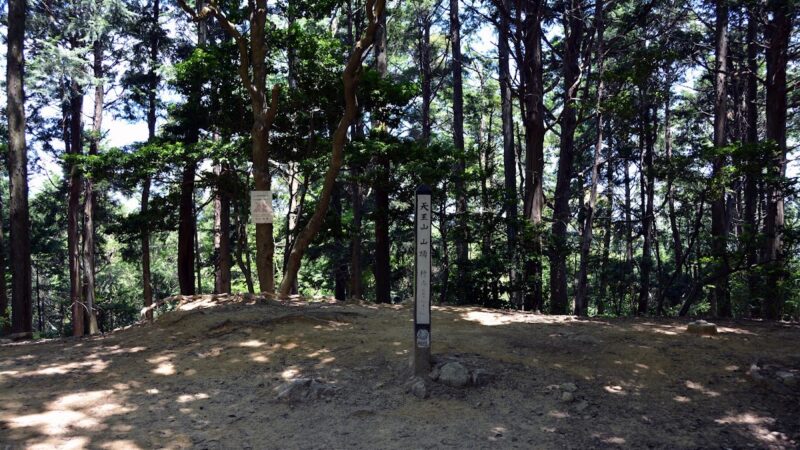
Multiple leveled areas have been identified in the mountains, and it is presumed that these were used as enclosures. The mountain topography remains on both sides of the leveled areas, allowing one to still feel the atmosphere of a castle. In particular, there is a path to an agricultural waterway on the west side, and climbing this leads to the castle grounds. Leveled areas can also be seen around the agricultural waterway, suggesting that the castle’s area was quite extensive.
Network of Surrounding Castles of Osaki Castle
Existence of Subsidiary Castles
Several subsidiary castles were located to the east of Osaki Castle. These castles are thought to have formed a defensive network centered around Osaki Castle (Yahagi Castle).
Hishizaki Castle: A subsidiary castle located approximately 600m southeast of Osaki Castle. Its relatively close proximity allowed for close coordination.
Oone Clan Residence: Located approximately 400m northeast of Hishizaki Castle. It is presumed to have been the residence of the Oone clan, vassals of the Kokubun clan.
Nagayama Castle: A subsidiary castle located approximately 600m south of Hishizaki Castle. These three castles are thought to have formed the eastern defensive line of Osaki Castle.
These subsidiary castles formed a concentric defensive system centered around Osaki Castle, enabling gradual resistance against enemy invasions.
Relationship with Castles in the Katori Region
Numerous medieval castles existed within the Katori City area, and Osaki Castle was one of them, integrated into the regional defense system.
Katori Fortress: A castle strategically located near Katori Shrine.
Kitadai Castle: A castle located north of Osaki Castle.
Yamazaki Castle: One of the castles in the Katori region.
Ijiyama Castle: One of the surrounding subsidiary castles.
These castles were operated by the Kokubun clan and other branches of the Chiba clan, and through their coordinated efforts, they were responsible for the defense of the entire Katori region.
Highlights and Current Status of Osaki Castle
Relationship between Honmyoji Temple and the Castle Site
Currently, part of the Osaki Castle site is included within the grounds and surrounding area of Honmyoji Temple. Honmyoji Temple is an important landmark when visiting the castle site, and the main castle area is behind the temple and on the mountain opposite.
Due to the presence of the temple, part of the castle site is preserved in relatively good condition, but much of the mountain remains undeveloped. Appropriate equipment and preparation are necessary when visiting.
Preservation of the Ruins
The ruins of Osaki Castle have been relatively unaffected by development, and the earthworks and dry moats remain in good condition. However, many parts of the mountain are overgrown with vegetation, making it difficult to grasp the full extent of the ruins.
The shape of the leveled areas and earthworks allows us to imagine the scale and structure of the former castle, making it a valuable historical site for learning about the typical characteristics of medieval castles.
View from the Castle Site
From Osaki Castle, located on a plateau, it is believed that one could overlook the surrounding lowlands. Although the view is currently limited due to dense trees, it likely provided an important vantage point for monitoring enemy movements in the past.
Access Information
Access by Public Transportation
Nearest Station: JR Narita Line “Sawara Station”
Direct access from Sawara Station to Osaki Castle Ruins (Honmyo-ji Temple) by public transportation is difficult. If you take a taxi, the fare from Sawara Station to Honmyoji Temple will be approximately 2,100 yen (this may vary depending on distance and time). The journey takes about 15-20 minutes.
Access by Private Car
Higashi-Kanto Expressway: Approximately 10km from Sawara-Katori IC, about 15 minutes by car.
National Route 356: Accessible via prefectural road from Katori city center.
There is limited parking space around Honmyoji Temple, so it is recommended to check parking availability in advance. Please be considerate of the temple when visiting.
Points to Note When Visiting
- Clothing and Equipment: The mountain area is undeveloped, so long sleeves, long pants, and comfortable walking shoes are essential. Bring insect repellent spray during the summer.
- Time of Year: The ruins tend to be easier to observe in winter than in summer when the vegetation is denser.
- Permission: It is advisable to obtain permission in advance before entering private property or temple grounds.
- Safety Precautions: Avoid exploring the mountains alone; visiting in groups is recommended.
Historical Significance of Osaki Castle
Importance in the Study of the Chiba Clan
Osaki Castle, as the base of the Kokubun clan, a branch of the Chiba clan, is an important historical site for understanding the sphere of influence and governing structure of the Chiba clan in medieval Shimosa Province. The Chiba clan traces its ancestry to Chiba Tsunetane, and his descendants dispersed and established power throughout the Kanto region. The Kokubun clan played a part in this, establishing their own governing system in the Katori region.
Value in the Study of Medieval Castles
The layout and remains of Osaki Castle exhibit typical characteristics of a hilltop castle, making it a valuable sample in the study of medieval castles. In particular, the defensive system that skillfully utilized the natural terrain and the coordination with the subsidiary castles provide important information for considering regional defense strategies during the Sengoku period.
Position in Regional History
Katori City is a region that flourished from ancient times as a temple town for Katori Shrine and as a key point for water transport on the Tone River. Osaki Castle is an important legacy that tells the story of the medieval history of this region and is one of the elements that form the regional identity.
Historical Figures Associated with Osaki Castle
Successive Heads of the Kokubun Clan
The Kokubun clan traces its ancestry to Higashi Taneyori, the sixth son of Chiba Tsunetane, and his descendants adopted the name Kokubun. The heads of the Kokubun clan who were involved with Osaki Castle served the Kamakura Shogunate and the Muromachi Shogunate, and were active as influential samurai in the region. In particular, Kokubun Yasutane is recorded as an important figure who carried out the relocation of the castle to Osaki.
Torii Mototada
Torii Mototada (1539-1600) was one of Tokugawa Ieyasu’s most trusted retainers. A hereditary retainer from Mikawa Province, he shared both joys and sorrows with Ieyasu, even during his time as a hostage. He is said to have resided at Osaki Castle for a short period, before moving to Iwagazaki Castle.
Mototada defended Fushimi Castle on the Tokugawa side during the Battle of Fushimi Castle, a preliminary battle to the Battle of Sekigahara, and fought a fierce siege against the large Western Army led by Ishida Mitsunari. Ultimately, the castle fell, and Mototada was killed in battle, but his loyalty has been recounted to this day. Osaki Castle holds historical value indirectly as the castle where this renowned general spent a period of his life.
Nearby Tourist Attractions
Katori Shrine
Located approximately 7km northeast of Osaki Castle, Katori Shrine is a shrine that has long been revered as the Ichinomiya (first-ranked shrine) of Shimosa Province. This shrine enshrines Futsunushi-no-Okami, known as the god of martial arts. It houses numerous valuable cultural assets, including the National Treasure Sea Beast and Grape Mirror and the Important Cultural Property Main Hall.
Sawara Townscape
Sawara is known as “Little Edo of Northern Chiba” and is a designated Important Preservation District for Groups of Traditional Buildings, with many Edo-period merchant buildings remaining. The charming townscape along the Ono River offers a time-traveling experience. It also features the former residence and memorial museum of Ino Tadataka, making it ideal for historical walks.
Suigo Sawara Iris Park
This park boasts approximately 1.5 million irises of about 400 varieties, and the “Iris Festival” is held from late May to late June. It’s a tourist spot where you can enjoy the beauty of the waterside scenery and flowers simultaneously.
Model Itinerary for Visiting Osaki Castle
Half-Day Course
Morning:
- Take a taxi from Sawara Station to Honmyo-ji Temple (approx. 20 minutes)
- Explore the Osaki Castle Ruins (1-2 hours)
- Check the locations of surrounding subsidiary castle ruins (e.g., Hishizaki Castle) on a map
Afternoon:
- Stroll through the town of Sawara
- Visit the Ino Tadataka Memorial Museum
- Have a meal near Sawara Station
Full-Day Course
Morning:
- Visit Katori Shrine
- Explore the Osaki Castle Ruins
- Confirm the locations of surrounding castles (e.g., towards Iwagazaki Castle)
Afternoon:
- Stroll through the town of Sawara
- Take a boat tour of the waterways
- Visit the Ino Tadataka Memorial Museum
- Enjoy local cuisine
Current Status and Future Challenges of Osaki Castle Research
Results of Archaeological Excavations
Previous archaeological excavations have confirmed the remains of post-hole buildings and dwellings, revealing the layout of the living spaces within the castle. Analysis of excavated artifacts has also accumulated information regarding the period of the castle’s use and the lifestyle of the time.
Future Research Issues
Many aspects of Osaki Castle remain unclear.
- Creation of a Detailed Layout Map: Currently, an accurate survey map of the entire castle area is lacking, and detailed research into the layout is needed.
- Determining the Construction Date: While it is believed to have been built in the early Kamakura period, archaeological confirmation is necessary to determine the exact date.
- Relationship with Subsidiary Castles: Detailed clarification of the specific cooperation system with surrounding subsidiary castles and the defensive network is a challenge.
- Clarifying the Reality of the Kokubun Clan: Given the limited historical documents, further research into the specific activities and territories controlled by the Kokubun clan is desired.
Summary
Osaki Castle (Katori City, Chiba Prefecture) is a hilltop castle that played an important role as a strategic point in the Katori region of Shimosa Province from the Kamakura period to the Sengoku period. It served as the long-term residence of the Kokubun clan, a branch of the Chiba clan, and later, Torii Mototada, a senior retainer of Tokugawa Ieyasu, resided there for a period.
Even today, the remains of earthworks, dry moats, and leveled areas are well-preserved, making it a valuable historical site for learning about the structure of medieval castles. The castle’s layout, skillfully utilizing the complex terrain of plateaus and lowlands, speaks to the high level of castle-building technology of the time.
While visiting may be somewhat difficult, Osaki Castle is a must-see spot for anyone interested in medieval castles or the history of the Chiba clan. The surrounding area also boasts many attractive tourist destinations, such as Katori Shrine and the townscape of Sawara, making it well worth visiting as part of a historical exploration.
Standing amidst the tranquil mountains surrounding Osaki Castle, why not reflect on the historical dramas that once unfolded here?