Complete Guide to Matsudo Castle (Chiba Prefecture): A Thorough Explanation of the History of the Hara and Takagi Clans’ Hilltop Castle and its Current Remains
What is Matsudo Castle?
Matsudo Castle (Matsudo-jō) was a Japanese castle (hilltop castle) from the Sengoku period located in Matsudo, Matsudo City, Chiba Prefecture. Also known as Matsuto Castle, Shōryūji-dai, and Shiroyama, it was built on a tongue-shaped plateau 20-25 meters above sea level, jutting out into the Edogawa River.
While details regarding the year of construction and the builder are unknown, it has been confirmed that in the 15th and 16th centuries, it was under the control of the Hara clan, a branch of the Chiba clan, and the Takagi clan, a senior retainer of the Hara clan. Currently, the castle site is occupied by Tojōgaoka Historical Park and the grounds of the Chiba University Faculty of Horticulture, and some remains of the baileys, dry moats, and earthworks can be seen.
Basic Information about Matsudo Castle
Common Names/Alternate Names
- Matsuwatari Castle
- Matsuryuji-dai
- Shiroyama
Location
Matsudo, Matsudo City, Chiba Prefecture (Currently the area around Tojogaoka Historical Park and Chiba University Faculty of Horticulture)
Former Province Name
Shimosa Province
Classification/Structure
Hilltop Castle (Castle utilizing a tongue-shaped plateau)
Keep Structure
No keep exists (due to being a medieval castle)
Builder
There is a theory that it was built by Hara Sukekage, but details are unknown
Main Lords
- Hara clan (a branch of the Chiba clan)
- Takagi clan (a senior retainer of the Hara clan)
- Takagi Tanemasa
Year of Construction
Several theories exist:
- Kansho 6 (1466) theory
- Kyotoku era (1452-1455) theory
- The latter half of the 15th century is generally accepted
Year of Abandonment
Estimated to be after Toyotomi Hideyoshi’s Odawara campaign in Tensho 18 (1590)
History and Development of Matsudo Castle
From Construction to the Early Sengoku Period
There are several theories regarding the construction period of Matsudo Castle. One theory suggests that it was built in Kansho 6 (1466) by Hara Sukekage, but no reliable historical records remain. The Hara clan was a branch of the Chiba clan and is thought to have controlled the Matsudo area from before the Muromachi period.
The Hara clan was an influential branch of the Chiba clan in Shimosa Province, and Matsudo was a strategic point controlling the water transport of the Edogawa River (then known as the Taihigawa River). Due to this geographical importance, it is presumed that some kind of castle facility existed there in the latter half of the 15th century.
The First Battle of Kōnodai and Matsudo Castle
Matsudo Castle’s name clearly appears in history in the First Battle of Kōnodai in Tenbun 7 (1538). This battle was a crucial one, a clash between the Hojo clan and the Satomi clan of Awa Province for supremacy in the Kanto region.
Records indicate that the forces of Hojo Ujitsuna and Ujiyasu were stationed at Matsudo Castle during this battle. Matsudo Castle, situated across the Edogawa River from Kōnodai (Ichikawa City), was a strategically important base. It is believed that the Hojo army used this location to monitor the Satomi clan’s movements and control the river crossing points.
The Hojo clan emerged victorious in the First Battle of Kōnodai, establishing their dominance in the Kanto region. Matsudo Castle’s role in this battle was extremely important to the Hojo clan’s military strategy.
The Era of the Hara and Takagi Clans
Throughout the Sengoku period, Matsudo Castle was under the control of the Hara clan and their senior retainer, the Takagi clan. The Hara clan, a branch of the Chiba clan, held multiple bases within Shimōsa Province, and Matsudo Castle was one of them.
The Takagi clan were influential vassals serving the Hara clan, and names such as Takagi Tanemasa are recorded. It is believed that the Takagi clan effectively ruled this area as the lords of Matsudo Castle. During the Sengoku period, Shimosa Province was a region where the powers of the Chiba, Satomi, and Hojo clans were intricately intertwined, and Matsudo Castle was affected by these power struggles.
The Second Battle of Kōnodai and the Late Sengoku Period
In 1564 (Eiroku 7), the Second Battle of Kōnodai took place. In this battle, where the Hojo and Satomi clans clashed again around Kōnodai, Matsudo Castle is presumed to have functioned as an important base for the Hojo.
During this period, the Chiba clan of Shimosa Province was under the influence of the Hojo clan, and the Hara and Takagi clans were also subordinate to the Hojo. Matsudo Castle is thought to have served as a base within the Hojo clan’s control of the Kanto region, responsible for monitoring and defending the Edogawa River basin.
Toyotomi Hideyoshi’s Siege of Odawara and the Abandonment of the Castle
In 1590 (Tensho 18), Toyotomi Hideyoshi launched the Siege of Odawara, resulting in the downfall of the Hojo clan. It is believed that the castles in the Kanto region that had been subordinate to the Hojo clan were also abandoned at this time. Matsudo Castle is also presumed to have been abandoned around this period, although detailed records do not exist.
After the Siege of Odawara, Tokugawa Ieyasu entered the Kanto region, establishing a new system of rule centered on Edo. Matsudo, a strategically important location near Edo, developed as a post town on the Mito Highway, but lost its function as a castle.
Remains of Matsudo Castle
Overview of Existing Remains
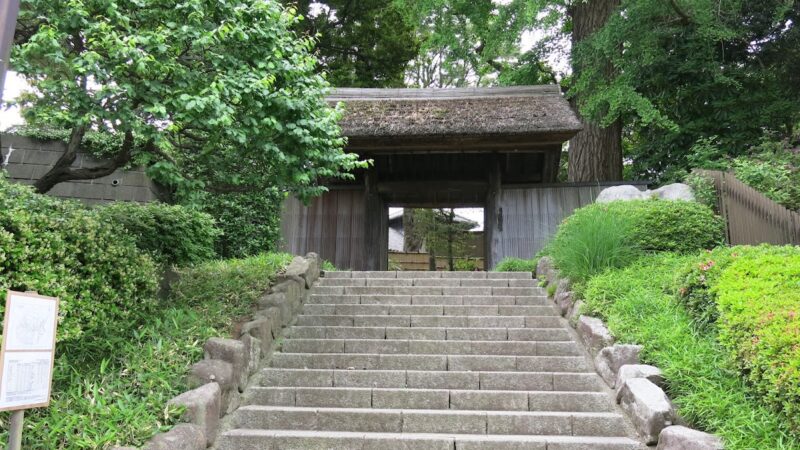
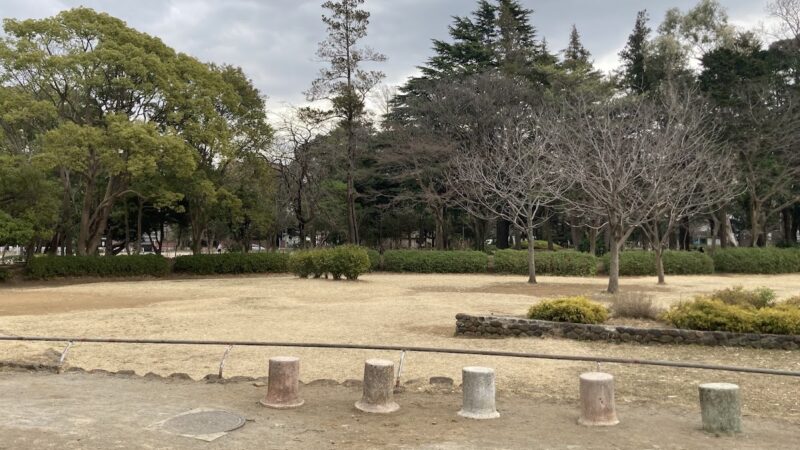
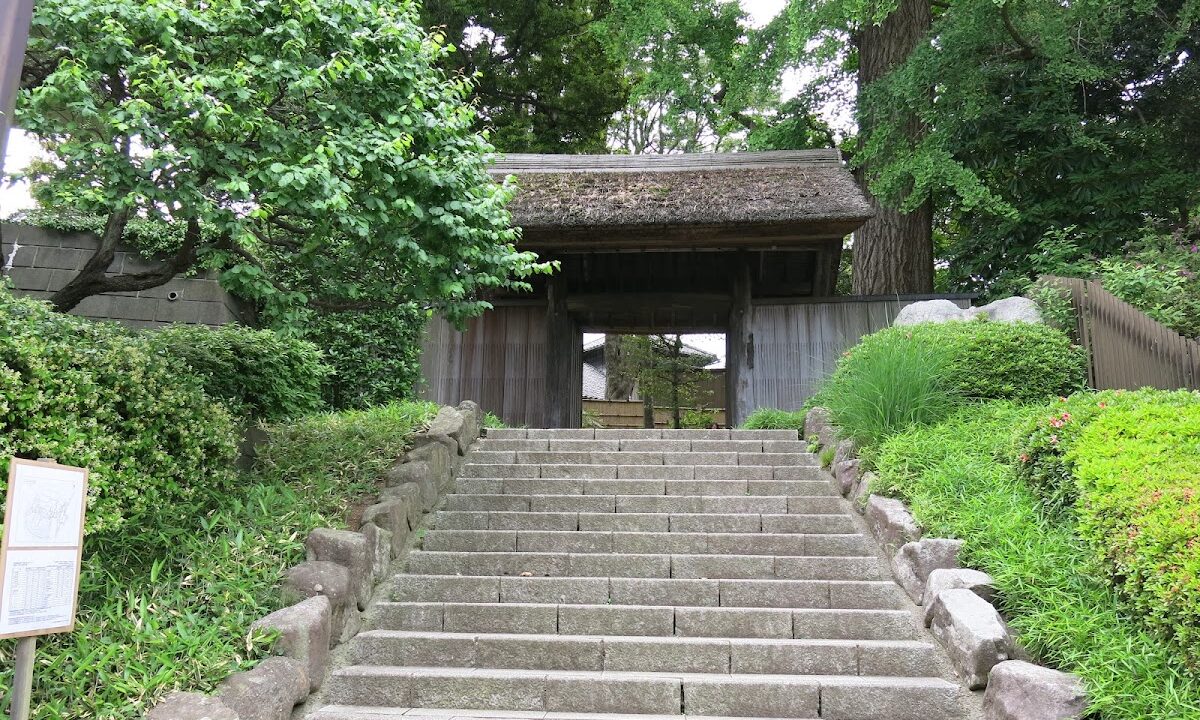
The site of Matsudo Castle is currently occupied by Tojogaoka Historical Park and the Chiba University Faculty of Horticulture, and most of the remains have been destroyed. However, with careful observation, traces of the castle as it once was can still be seen.
The castle ruins are located on a hill 20-25 meters above sea level facing the Edogawa River, and it is clear that the castle’s layout skillfully utilized the tongue-shaped plateau topography. Remains include parts of baileys, traces of dry moats, and surviving sections of earthworks.
Baileys
The main part of Matsudo Castle is thought to have been located in the area south of the current Chiba University Faculty of Horticulture campus. The area around Tojogaoka Historical Park is believed to have been the outer bailey known as the Outer Castle (Tojo).
It is presumed that multiple baileys were arranged on the plateau, but due to changes in the terrain, the clear divisions have been lost. However, it is possible to infer the original bailey layout to some extent from the elevation differences and the arrangement of flat areas.
Dry Moats
Traces of dry moats remain in part of the castle ruins. While the shapes of the V-shaped moats and box-shaped moats, characteristic of medieval castles, are not clear, traces of moats dividing the plateau can be inferred from the topography.
Dry moats were important defensive structures that prevented enemy intrusion and demarcated the areas between baileys. It is believed that dry moats were strategically placed along the edges of the plateau and between the baileys at Matsudo Castle.
Earthworks
Earthworks played a crucial role as defensive structures in castles. Partial remains of earthworks have been confirmed at the Matsudo Castle site. Although their height and size have significantly decreased from their original size, their placement provides clues to inferring the castle’s layout.
Earthworks were positioned to surround the baileys, preventing enemy intrusion and also serving as firing positions for arrows and guns.
Utilization of Topography
The most distinctive feature of Matsudo Castle is its layout, which skillfully utilizes the natural topography of a tongue-shaped plateau jutting out into the Edogawa River. Three sides of the plateau are steep slopes, forming a natural defensive line.
The view from the Edogawa River side is excellent, offering a panoramic view of the Kōnodai area on the opposite bank. This geographical advantage is thought to be one of the reasons why the Hojo army considered Matsudo Castle important in the First and Second Battles of Kōnodai.
Related Facilities in the Surrounding Area
Several temples and shrines that appear to be related to Matsudo Castle exist around the castle:
- Senjuin Enkei-ji: Possibly the family temple of the castle lord and his retainers
- Jigen-ji: A temple associated with the castle
- Shōryū-ji: The temple from which the castle’s alternative name, “Shōryū-ji-dai,” originates
- Taishō-ji: A temple in the castle town
- Akiba Shrine, Suijinja Shrine, Asama Shrine: Shrines surrounding the castle
These temples and shrines are thought to have functioned as part of the castle’s defensive facilities or to have been objects of worship for the castle lord and his retainers.
Tojōgaoka Historical Park and Tojō Residence
Development of Tojōgaoka Historical Park
Currently, part of the Matsudo Castle site has been developed as Tojōgaoka Historical Park. The park is a place of relaxation for citizens, where they can enjoy flowers throughout the seasons, and while strolling through it, they can feel the atmosphere of the castle in its heyday.
From the park, you can see the flow of the Edogawa River, and the view towards Kōnodai on the opposite bank is also excellent. This view is a point where you can truly appreciate why Matsudo Castle was considered important during the Sengoku period.
Tojo Residence and Tojo Historical Museum
Within Tojogaoka Historical Park are the Tojo Residence and the Tojo Historical Museum. The Tojo Residence is a Meiji-era residence built by Tokugawa Akitake, the last lord of the Mito domain, and is designated as a National Important Cultural Property.
The Tojo Historical Museum displays materials related to Tokugawa Akitake and the Tokugawa family, allowing visitors to learn about the history of Matsudo. Some materials and explanations related to Matsudo Castle are also on display, making it worthwhile for castle enthusiasts to visit.
Access and Visiting Information
Transportation Access
Access by Train:
- Approximately 10-15 minutes on foot from the East Exit of Matsudo Station on the JR Joban Line
- Approximately 10-15 minutes on foot from Matsudo Station on the Shin-Keisei Line
Access by Car:
- Approximately 15 minutes from Nagareyama IC on the Joban Expressway
- Parking: Free parking available at Tojogaoka Historical Park (limited number of spaces)
Points to Note When visiting Matsudo Castle Ruins, pay attention to the following points:
- Observation of Topography: Confirm the shape and elevation difference of the tongue-shaped plateau
- View towards the Edogawa River: Confirm the positional relationship with Kōnodai on the opposite bank
- Traces of Earthworks and Dry Moats: Pay attention to the topography’s undulations within the park and around Chiba University
- Visiting Nearby Temples and Shrines: Visit related temples and shrines such as Shōryūji Temple
- Learning at the Tojo Historical Museum: Learn about the general history of Matsudo
Estimated Visiting Time
- Stroll through Tojogaoka Historical Park only: 30-45 minutes
- Including Tojo Residence and Tojo Historical Museum: 60-90 minutes
- Detailed visit including surrounding temples and shrines: 2-3 hours
Historical Significance of Matsudo Castle
Position in the Sengoku Period History of Kanto
Matsudo Castle played a crucial role in the Sengoku period in Kanto. Its function as a base for the Hojo army during the First Battle of Kōnodai is an indispensable element in discussing the Sengoku period history of Kanto.
Its location, utilizing the natural fortifications of the Edogawa River, made it a vital transportation hub connecting Shimōsa and Musashi provinces, giving it importance both militarily and economically. The role played by small to medium-sized castles like Matsudo Castle was significant in the Hojo clan’s expansion of control over Kanto.
History of the Chiba and Hara Clans
The Hara clan, who ruled Matsudo Castle, maintained power within Shimōsa Province as a branch of the Chiba clan. The Chiba clan was a prominent family that had existed since the Heian period and was one of the most powerful samurai groups in the Kanto region.
The Hara clan, as a branch of the Chiba clan, operated around Matsudo and played a supporting role to the main Chiba family. During the Sengoku period, they came under the control of the Hojo clan, but it is believed they maintained their independence as a Chiba family while continuing to control the region.
Relationship with Edogawa River Water Transport
The location of Matsudo Castle was deeply connected to the water transport of the Edogawa River (Taihigawa River). The Edogawa River was an important waterway flowing through the Kanto Plain, used for the transport of goods and people.
Matsudo Castle was located at a crossing point of the Edogawa River, and it is possible that it controlled water transport and functioned as a checkpoint. Since castles in the Sengoku period were not merely military facilities but also centers of economic activity, it is presumed that Matsudo Castle also benefited economically through water transport.
Relationship with Surrounding Castles
Relationship with Kōnodai Castle
The castle with the closest relationship to Matsudo Castle was Kōnodai Castle (Ichikawa City), located across the Edogawa River. During the First and Second Battles of Kōnodai, Matsudo Castle and Kōnodai Castle faced each other, and the relative positions of the two castles significantly influenced the course of the battle.
Kōnodai Castle served as a base for the Satomi clan, while Matsudo Castle functioned as a base for the Hōjō clan. The battles between these two castles across the Edogawa River are one of the most important episodes in the history of the Sengoku period in the Kanto region.
Relationship with Kogane Castle
North of Matsudo Castle was Kogane Castle (Kogane, Matsudo City), which was also ruled by the Takagi clan. Kogane Castle was larger than Matsudo Castle and is thought to have been the Takagi clan’s main base.
Matsudo Castle may have been a subsidiary castle of Kogane Castle, and it is presumed that the two castles cooperated in the defense of the Edogawa River basin.
Relationship with Edo Castle
Edo Castle lies southwest of Matsudo Castle. Edo Castle, during the Sengoku period, is known as a castle built by Ota Dokan and later came under the control of the Hojo clan.
Matsudo Castle was located on the route connecting Edo Castle and Shimosa Province, and is thought to have functioned as part of the Hojo clan’s network of control over the Kanto region. After the Siege of Odawara, when Tokugawa Ieyasu entered Edo Castle, Matsudo developed as a post town close to Edo.
References and Research Materials
Research on Matsudo Castle is limited due to the scarcity of historical materials, but the following documents and materials are helpful:
Main Documents
- *Matsudo City History* (edited by Matsudo City): A fundamental document covering the entire history of Matsudo.
- *Medieval Castles of Chiba Prefecture*: A research book comprehensively surveying castles in Chiba Prefecture.
- *Comprehensive Survey of Japanese Castles*, Volume 6 (Shin Jinbutsu Oraisha): A comprehensive survey of castles in the Kanto region.
- *Cities and Power in Eastern Japan during the Sengoku Period*: A research book discussing the relationship between castles and cities in Kanto during the Sengoku period.
Local Materials
- Exhibition materials at Matsudo City Museum: Permanent exhibitions on the history of Matsudo.
- Materials at Tojo Historical Museum: Materials focusing on the early modern and modern history of Matsudo.
- *A Tour of Matsudo’s Historical Sites*: A guidebook introducing historical sites within Matsudo City.
Archaeological Investigation
While large-scale excavations have not been conducted at the Matsudo Castle site, small-scale investigations in the surrounding area have yielded medieval artifacts. Further investigations may reveal the detailed structure of the castle.
Summary: The Charm and Future Challenges of Matsudo Castle
Matsudo Castle is a castle with many unknown details, such as its builder and construction date, but it undoubtedly played an important role in the Kanto region during the Sengoku period. Its function as a base for the Hojo army during the First Battle of Kōnodai, in particular, demonstrates its historical value.
Currently, most of the castle site has been destroyed, and clear remains are limited. However, the castle site, now developed as Tojogaoka Historical Park, is a popular recreational area for citizens while conveying the history of the past.
Located within walking distance of JR Matsudo Station, it’s an easily accessible castle site recommended not only for castle enthusiasts but also for history buffs. Standing on the hill overlooking the Edogawa River and strolling while imagining the view seen by the warlords of the Sengoku period, you can feel the romance of history. Future challenges include the preservation of the remaining ruins and the advancement of further historical research. It is hoped that further archaeological excavations and historical research will clarify the true nature of Matsudo Castle and its place in the history of the Sengoku period in the Kanto region.
Although not large in scale, Matsudo Castle is one of the essential castles for understanding the Kanto region during the Sengoku period. Understanding the role this castle played as a strategic point in the Edogawa River basin and as a base for the Chiba clan will be a valuable opportunity for studying Japanese medieval history.