Complete Guide to Kōnodai Castle (Ichikawa City, Chiba Prefecture) | History, Highlights, and Access Explained in Detail
What is Kōnodai Castle? | A Strategic Stronghold Overlooking the Edogawa River
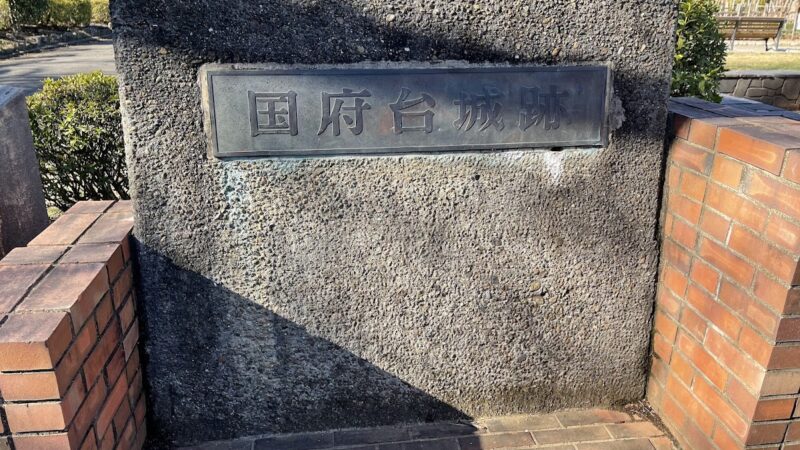
Kōnodai Castle (Kōnodai-jō) was a flatland castle located in Kōnodai, Ichikawa City, Chiba Prefecture. It was also known as Ichikawa Castle or Kōnodai Castle. Built on a river terrace (Kokubun Plateau) approximately 20-25 meters above sea level, overlooking the confluence of the Edogawa River (formerly the Taihigawa River) and the Sakagawa River, it was a natural stronghold and an important military base in Shimōsa Province.
Currently, it is maintained as Satomi Park and serves as a place of relaxation for citizens. However, this site was once the site of two fierce battles of the Sengoku period, known as the “Battle of Kōnodai.” As a key point controlling the entrance to Edo, it is a historically valuable castle that was the stage for the struggle for supremacy in the Kanto region.
Basic Information on Kōnodai Castle
- Location: 3-chome, Kōnodai, Ichikawa City, Chiba Prefecture (within Satomi Park)
- Other Names: Ichikawa Castle, Ichikawa Castle, Kōnodai Castle
- Builder: Ōta Suketada (younger brother of Ōta Dōkan)
- Year of Construction: Bunmei 11 (1479)
- Main Lords: Ōta clan, Chiba clan, Satomi clan, Hōjō clan
- Year of Abandonment: Tenshō 18 (1590)
- Castle Structure: Hilltop Castle
- Remains: Traces of earthworks, dry moats, and trenches
History of Kōnodai Castle | From the Muromachi Period to Abandonment
Construction History and Relationship with Ōta Dōkan
Kōnodai Castle is believed to have been built in Bunmei 11 (1479) by Ōta Suketada, the younger brother of Ōta Dōkan. Ota Dokan is known as a renowned general who built Edo Castle and served the Uesugi clan, the Kanto Kanrei (governor of the Kanto region), playing a crucial role in the politics and military affairs of the Kanto region.
During this period, the Kanto region was plagued by conflict between the Koga Kubo (governor of Koga) and the Yamanouchi Uesugi and Ogigayatsu Uesugi clans, intensifying the struggle for control of Shimosa Province. Due to its geographical advantage at the confluence of the Edogawa and Sakagawa rivers, Kōnodai was recognized as a key point for both advancing towards Edo and for defense. The construction of a castle by the Ota clan in this location held significant strategic importance.
Changes in Castle Lords during the Sengoku Period
From the late Muromachi period to the Sengoku period, the rulers of Kōnodai Castle changed rapidly. Initially, the Ota clan ruled the castle, but it eventually came under the influence of the Chiba clan, a powerful local family in Shimosa Province.
The Chiba clan was a prestigious family that served as the Shugo (military governor) of Shimosa Province, but their power declined during the Sengoku period due to internal conflicts and external pressures. Taking advantage of this chaos, the Later Hojo clan (Odawara Hojo clan), who sought to seize hegemony in the Kanto region, and the Satomi clan, based in Awa Province (present-day southern Chiba Prefecture), engaged in a fierce battle for control of Kōnodai Castle.
Battle of Kōnodai | Two Large-Scale Battles
Indispensable to understanding the history of Kōnodai Castle are the two “Battles of Kōnodai” that occurred during the Sengoku period. These battles marked a crucial turning point that significantly altered the power balance in the Kanto region.
First Battle of Kōnodai (1538)
The First Battle of Kōnodai, which occurred in 1538 (Tenbun 7), was fought between the Later Hojo clan and an anti-Hojo coalition army centered around the Satomi clan. In this battle, Ashikaga Yoshiaki, the Oyumi Shogun, along with Satomi Yoshitaka and others, confronted the Hojo army led by Hojo Ujitsuna.
The battle ended in a victory for the Hojo army, with Ashikaga Yoshiaki killed and the Satomi army forced to retreat to Awa. This battle solidified the Hojo clan’s expansion into Shimosa Province, and Kōnodai Castle came under Hojo control.
Second Battle of Kōnodai (1564)
In 1564 (Eiroku 7), another large-scale battle took place at Kōnodai. The Second Battle of Kōnodai was fought between the Hojo army, led by Hojo Ujiyasu and his son Hojo Ujimasa, and the Satomi army, led by Satomi Yoshitaka and his son Satomi Yoshihiro.
The Hojo army also emerged victorious, with the Satomi army suffering heavy casualties and retreating. This defeat completely thwarted the Satomi clan’s ambitions to expand into the Kanto region, and they subsequently focused on controlling Awa and Kazusa Provinces. Meanwhile, the Hojo clan solidified their control over the region from Shimosa to Musashi Provinces, establishing themselves as the largest Sengoku daimyo in the Kanto region.
The Battle of Kōnodai was not merely a dispute over a single castle, but a crucial battle that determined the hegemony of the Kanto region. Kōnodai Castle, the site of this battle, is an extremely important location in the history of the Sengoku period.
Toyotomi Hideyoshi’s Odawara Campaign and the Castle’s Abandonment
In 1590 (Tenshō 18), Toyotomi Hideyoshi launched the Odawara Campaign, resulting in the downfall of the Later Hōjō clan. Following this, Tokugawa Ieyasu entered the Kanto region and began developing Edo as his base.
With Ieyasu’s entry into Edo, Kōnodai Castle ceased to play a strategic role and was abandoned. This was because the establishment of the Edo Shogunate unified the Kanto region, eliminating the need to maintain a castle along the Edo River. From then on, the Kōnodai area lost its function as a castle and was used as farmland and temple grounds throughout the Edo period.
Structure and Layout of Kōnodai Castle
Location and Topographical Features
Kōnodai Castle is located on a river terrace overlooking the confluence of the Edogawa (Taihigawa) and Sakagawa rivers. The eastern and northern sides are steep cliffs, forming a natural defensive wall. The Edogawa side, in particular, has an elevation difference of over 20 meters, making it extremely difficult for attackers to penetrate.
This topographical advantage allowed Kōnodai Castle to function as a stronghold easily defended even with a small force. Furthermore, it allowed for monitoring water transport using the Edogawa River and for keeping the opposite bank (Musashi Province side) in check, making it a strategically and economically important base.
Castle Structure
While detailed layout maps of Kōnodai Castle do not remain, archaeological excavations and topographical analysis suggest the following structure:
The main enclosure is thought to have been located in the central part of the current Satomi Park, around the Aketo Kofun (ancient burial mound). Multiple enclosures were arranged around the main enclosure, separated by dry moats and trenches. The western side (the plateau side) in particular required artificial defensive structures, so it is presumed that earthworks and dry moats were constructed there as a priority.
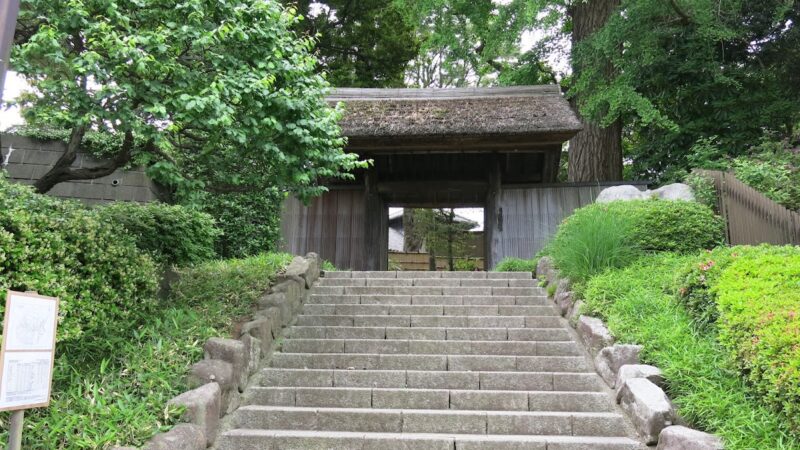
Even today, cut-through slopes and depressions remain within the park, which are believed to be traces of dry moats and trenches. Parts of the earthworks can also be seen in some places, allowing us to imagine the castle’s structure in its heyday.
Current Kōnodai Castle | Developed as Satomi Park
Overview of Satomi Park
The Kōnodai Castle site has now been developed as “Satomi Park,” a place of relaxation for the citizens of Ichikawa. The park is named after the Satomi clan, who once fought over this land.
The park is blessed with abundant nature, and visitors can enjoy the scenery of each season, with beautiful cherry blossoms in spring and autumn leaves in fall. Furthermore, from the elevated area, you can enjoy a panoramic view of the Edogawa River and the Tokyo side on the opposite bank, and on clear days, you can even see the Tokyo Skytree in the distance—a truly spectacular viewpoint.
Highlights of the Castle Ruins
Because the site is now developed as Satomi Park, it’s difficult to determine the extent to which the original castle structure remains. However, with careful observation, traces of the castle can be found.
Earthwork Remains: Traces of earthworks remain in some parts of the park. While difficult to distinguish from the natural terrain, paying attention to unnatural elevations and linear changes in topography reveals traces of artificial earthworks.
Remains of Dry Moats and Trenches: The cut-through slopes and depressions within the park are thought to be remnants of former dry moats and trenches. In particular, terrain that divides the plateau is highly likely to be a trench, a defensive structure.
Cliffs: The eastern and northern sides of the park face steep cliffs towards the Edogawa River, demonstrating their function as a natural defensive wall. Looking down at the Edogawa River from the top of the cliffs reveals how easily this castle could have been defended.
Aketo Kofun (Aketo Burial Mound)
Within Satomi Park lies the Aketo Kofun, a historical site from a different era than Kōnodai Castle. This is a keyhole-shaped burial mound constructed during the late Kofun period (around the 6th century), measuring approximately 40 meters in length.
The Aketo Kofun is believed to have been located within the main enclosure of Kōnodai Castle, and it’s possible it was utilized in some way during the castle’s construction. There’s a theory that the mound’s elevation was used as a lookout post or watchtower base, making it a fascinating site where ancient and medieval remains coexist in layers.
Currently, the burial mound has been restored and is accessible to visitors. From the top, one can overlook the surrounding area, imagining the former castle lords monitoring the Edogawa River and the surrounding region from this vantage point.
Kōnodai Castle Visiting Guide
Estimated Visiting Time
For a visit to the Kōnodai Castle ruins (Satomi Park), allow approximately 40 minutes to 1 hour. You can enjoy a leisurely stroll through the park, searching for traces of the ruins while taking in the views of the Edogawa River.
While there aren’t many detailed explanatory signs about the castle, there is an information board near the park entrance where you can read a brief explanation of the history of Kōnodai Castle.
Best Season to Visit
Satomi Park offers beautiful scenery throughout the four seasons, but the following times are especially recommended:
Spring (Late March to Early April): Known as a famous cherry blossom viewing spot, approximately 200 Somei Yoshino cherry trees bloom in profusion. The park is bustling with many citizens during the cherry blossom season.
Autumn (Mid-November to Early December): The autumn foliage is beautiful, with the trees in the park turning red and yellow. The contrast between the blue of the Edogawa River and the autumn leaves is magnificent.
Summer (July to August): A popular viewing spot for the Edogawa Fireworks Festival, you can enjoy the fireworks from the elevated location.
Recommended Photo Spots
Here are some recommended photo spots for castle enthusiasts and photography lovers.
- Edogawa Observation Point: The view from the hill overlooking the Edogawa River on the east side of the park is breathtaking. You can experience the scenery that the former castle lords saw.
- Earthworks and Moat Traces: The remaining earthworks and cut-through slopes are valuable photographic subjects as castle ruins.
- Aketo Kofun: The reconstructed burial mound is a subject that symbolizes the history of Kōnodai, where ancient and medieval times intersected.
- Cherry Blossom Avenue: In spring, the combination of cherry blossoms and the Edogawa River creates beautiful photographs.
Access Information
Access by Public Transportation
Using Keisei Electric Railway:
- Get off at “Kofudai Station” on the Keisei Main Line, approximately 10 minutes on foot.
- Get off at “Ichikawa-Mama Station” on the Keisei Main Line, approximately 15 minutes on foot.
Using JR:
- Get off at “Ichikawa Station” on the JR Sobu Line, take a bus from the North Exit.
- From the Ichikawa Station North Exit Bus Terminal, take a Keisei Bus bound for “Kofudai Hospital” or “Matsudo Station,” get off at “Kofudai Station Entrance,” approximately 5 minutes on foot.
Access by Car
- Approximately 10 minutes from the “Ichikawa Interchange” on the Keiyo Expressway.
- Approximately 15 minutes from the “Ichikawa-Kita Interchange” on the Tokyo Outer Ring Expressway.
Parking: Satomi Park has a dedicated parking lot (fee applies). However, it can become full during peak seasons such as cherry blossom season, so using public transportation is recommended.
Nearby Attractions
When visiting the ruins of Kōnodai Castle, we recommend also visiting the surrounding historical sites.
Kōbōji Temple: An ancient Shingon Buddhist temple located on a hill in Kōnodai, said to have been founded by Kōbō Daishi Kūkai. The view from the temple grounds is magnificent, and its connection to Kōnodai Castle has been noted.
Around Kōnodai Sports Center: Considered part of the former castle grounds, observing the topography allows you to appreciate the extent of the castle’s fortifications.
Edogawa Riverbed: From the Edogawa Riverbed at the foot of the castle, you can look up at the cliffs of Kōnodai, understanding the castle’s strong defensive capabilities.
To Learn More About Kōnodai Castle
Related Historical Figures
Ōta Dōkan (1432-1486): A renowned general who built Edo Castle. His younger brother, Suketada, is said to have built Kōnodai Castle, and Dōkan himself recognized the strategic importance of this region.
Hojo Ujiyasu (1515-1571): The third head of the Later Hojo clan. He defeated the Satomi army in the Second Battle of Kōnodai, establishing the Hojo clan’s hegemony in the Kanto region.
Satomi Yoshitaka (1507-1574): Head of the Awa Satomi clan. He fought against the Hojo clan in the Battle of Kōnodai, aiming to expand into the Kanto region, but suffered a defeat.
Tokugawa Ieyasu (1543-1616): The first shogun of the Edo shogunate. After the Siege of Odawara, he entered Edo, and Kōnodai Castle was abandoned.
Historical Significance of Kōnodai Castle
Although not a large castle in scale, Kōnodai Castle played an extremely important role in the Sengoku period history of the Kanto region. Located on the natural boundary of the Edogawa River, this castle was a strategic point connecting Musashi Province and Shimōsa Province. The struggle for control of this castle was a battle that determined the hegemony of Kanto.
The two Battles of Kōnodai marked a turning point, solidifying the Later Hōjō clan’s control over the Kanto region while simultaneously halting the Satomi clan’s expansion. Had the Satomi clan won, the history of Kanto might have been significantly altered.
Furthermore, Kōnodai Castle is closely linked to the development of Edo. Even before Tokugawa Ieyasu established Edo as his base, this area was considered important as a gateway to Edo, and the existence of Kōnodai Castle influenced the military balance around Edo. The abandonment of Kōnodai Castle after Ieyasu’s arrival in Edo symbolizes the establishment of conditions for Edo’s peaceful development as a city.
Current Status and Challenges of Castle Research
Regarding Kōnodai Castle, historical documents are limited, leaving many questions unanswered regarding its detailed structure and history. The topography may have been significantly altered during the development of Satomi Park, and archaeological investigations have been limited.
Further detailed excavations and topographical surveys could potentially reveal more about the true nature of Kōnodai Castle. In particular, further research is needed regarding the details of the two Battles of Kōnodai and the castle’s defensive structure.
Summary | The Charm of Kōnodai Castle
Although Kōnodai Castle is now a quiet park, it was once the site of fierce battles for supremacy in the Kanto region. Standing on the hill overlooking the Edogawa River, imagining the view seen by the warlords of the Sengoku period evokes a sense of historical romance.
While no large-scale castle remains survive, the topography and traces of earthworks allow us to imagine its former glory. Furthermore, the beautiful natural environment of Satomi Park and the magnificent view of the Edogawa River offer plenty to enjoy, even for those who aren’t castle enthusiasts.
Kōnodai Castle ruins are easily accessible from central Tokyo, making it a convenient place to visit. Why not take a leisurely stroll while reflecting on the history of the Sengoku period? Along with the cherry blossoms in spring, the autumn leaves, and the view of the Edogawa River, it’s a valuable spot to experience an important stage in Kanto’s Sengoku history.
References
- *History of Chiba Prefecture* (Yamakawa Publishing)
- *The War for Hegemony in the Kanto Region during the Sengoku Period* (Yosensha)
- *Ota Dokan and His Era* (Yoshikawa Kobunkan)
- *Research on the Satomi Clan* (Ebisu Kosho Publishing)
- *Cultural Properties of Ichikawa City*, Ichikawa City Board of Education
- *Comprehensive Survey of Japanese Castles*, Volume 6 (Shin Jinbutsu Oraisha)
- Excavation Survey Report Related to Kōnodai Castle (Ichikawa City Board of Education)