Gotenyama Castle (Shinagawa Ward) Complete Guide | From Ota Dokan’s Residence to the Tokugawa Palace – A Historical Heritage Site of Tokyo
Gotenyama Castle, located on a hill in Kita-Shinagawa, Shinagawa Ward, Tokyo, was a historical site that played an important role from the Muromachi period to the Edo period. It is known as the site where Ota Dokan built his residence before the construction of Edo Castle, and later served as the location of the Tokugawa Shogunate’s falconry palace. Although the castle remains have been lost due to redevelopment, its historical value continues to be recounted.
Basic Information about Gotenyama Castle
The following is a summary of basic information about Gotenyama Castle.
Common Names/Alternate Names
- Ota Dokan Yakata
- Shinagawa Castle (possible)
- Gotenyama
Location
Around 4-chome, Kita-Shinagawa, Shinagawa-ku, Tokyo
The area around the current Gotenyama Trust City and Marriott Hotel Tokyo corresponds to the castle site. Located at the southernmost tip of the Takanawa Plateau, it is a hilltop counted as one of the five hills of southern Tokyo.
Access Information
- Approximately 5 minutes on foot from Keikyu Main Line Kita-Shinagawa Station
- Approximately 10 minutes on foot from JR Shinagawa Station Takanawa Exit
- From Shinagawa Station, you can use the Yamanote Line, Tokaido Main Line, Keihin-Tohoku Line, Yokosuka Line, and Tokaido Shinkansen.
Despite being in the heart of the city, it boasts excellent transportation access.
Former Province Name
Musashi Province (Ebara District)
Classification and Structure
- Classification: Hilltop Castle
- Structure: Details unknown (due to loss of remains)
- Year of Construction: Chōroku era (1457-1460)
- Builder: Ōta Dōkan
- Main Lords: Ōta Dōkan, Udagawa Nagakiyo
- Year of Abandonment: Unknown (used as a palace during the Edo period)
Keep Structure
There was no keep. It is presumed to have been a castle in the style of a residence from the Muromachi period.
Remains
There are no existing remains. Due to earth removal during the construction of the Shinagawa Daiba at the end of the Edo period, the opening of the railway in the Meiji era, and post-war redevelopment, all remains related to the castle have completely disappeared.
Designated Cultural Property
Not specifically designated.
History of Gotenyama Castle
Muromachi Period: The Residence of Ota Dokan
The history of Gotenyama Castle dates back to the Choroku era (1457-1460). According to the *Shinpen Musashi Fudoki-ko* (New Compilation of the Topography of Musashi Province), Ota Dokan is said to have built a castle and resided here before constructing Edo Castle.
Ota Dokan was a renowned general who served the Ogigayatsu Uesugi family and played an active role in the wars of the Kanto region. His decision to establish a residence on the strategically important high ground of Shinagawa before building Edo Castle was a sound military and political judgment at the time.
Shinagawa was a key point on the Tokaido road, close to the sea, and possessed the geographical advantage of being on high ground. It is believed that Ota Dokan surveyed the Edo Bay area from this location and assessed the situation in the Kanto region.
After the Construction of Edo Castle: The Placement of Udagawa Nagakiyo
After Ota Dokan built Edo Castle, Udagawa Nagakiyo was stationed at Gotenyama Castle. Udagawa Nagakiyo is known as the person after whom the present-day Udagawa-cho in Shibuya Ward, Tokyo, is named.
Udagawa Nagakiyo’s placement indicates that Gotenyama continued to be considered important as a southern defense base for Edo Castle. Shinagawa was the sea gateway to Edo and the starting point of the Tokaido road, making it an area requiring military surveillance.
Edo Period: The Tokugawa Shogunate’s Palace
With the arrival of the Edo period, the character of Gotenyama changed dramatically. A palace was built there for successive shoguns, including Tokugawa Ieyasu, to use during falconry expeditions, and the area came to be known as “Gotenyama” (Palace Mountain).
With the establishment of the shogun’s palace, Gotenyama transformed from a military base into a recreational area for the shogun’s family. The Shinagawa area, in particular, developed as a scenic spot near Edo, and Gotenyama became widely known as a famous spot for cherry blossoms and autumn leaves.
Cherry trees were transplanted from the early Edo period, and in spring, it was bustling with many people enjoying the cherry blossoms. Ukiyo-e artists such as Utagawa Hiroshige depicted the cherry blossoms of Gotenyama, and their beauty became beloved by the common people of Edo.
Late Edo Period: Construction of Shinagawa Battery and Topographical Changes
At the end of the Edo period, Gotenyama underwent a major transformation. To counter the threat of foreign ships following Commodore Perry’s arrival, the shogunate decided to construct a battery (Shinagawa Battery) off the coast of Shinagawa.
The construction of the Shinagawa Battery required a large amount of earth and sand, and Gotenyama became a major source of soil. This construction significantly altered the topography of Gotenyama, and its former landscape was lost. Gotenyama, as a famous cherry blossom spot, also underwent a dramatic transformation during this period.
Meiji Era and Beyond: Railway Construction and Modernization
With the opening of the Tokaido Main Line during the Meiji era, the topography of Gotenyama was further divided. The railway was laid through the mountain, and the former unified topography was lost.
After the war, redevelopment progressed with rapid economic growth, and urban development, including the current Gotenyama Trust City, completely destroyed the castle remains. However, the place name “Gotenyama” and its status as a high-class residential area have been passed down to the present day.
Current Information on Gotenyama Castle Ruins and Surrounding Spots
Current Status of Gotenyama Castle Ruins
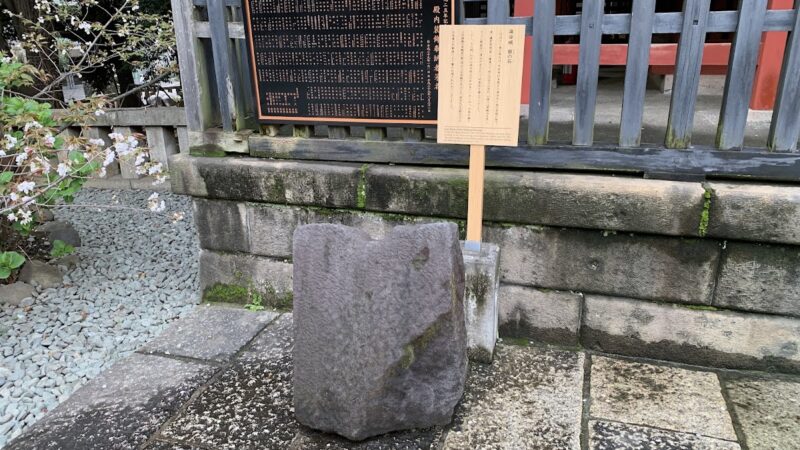
Currently, no remains of Gotenyama Castle exist, but an information board has been installed within the grounds of Gotenyama Trust City.
Location of the Signpost:
- From the entrance of the Marriott Hotel Tokyo, turn left and walk along the street towards Gotenyama Park.
- A 1-minute walk to the right of the Marriott Hotel’s front entrance, along the promenade.
Visiting the grounds of the Gotenyama Trust Tower allows you to experience the atmosphere of the former castle site.
Gotenyama Garden
Gotenyama Garden is a Japanese garden located within Gotenyama Trust City. It is maintained as a garden that conveys the charm of Gotenyama, which was depicted in ukiyo-e prints during the Edo period as a famous spot for cherry blossoms and autumn leaves.
The garden also features a tea house designed by Arata Isozaki, creating a space where modern architecture and traditional Japanese gardens harmonize. It is a valuable spot where you can reminisce about the historical landscape of Gotenyama.
Gotenyama Street
The road currently called “Gotenyama Street” is a historical road that has existed since the Edo period. The route from Shinagawa-shuku to Gotenyama retains traces of that time.
Walking along Gotenyama Street from the Shinagawa-shuku area allows you to experience the atmosphere of the Edo period approach to the castle. However, the surrounding landscape has changed in a modern way, so you will need to use your imagination.
Shinagawa-shuku (Kita-Shinagawa)
Shinagawa-shuku (Kita-Shinagawa), located close to Gotenyama Castle, is a historical post town that flourished as the first post station of the Tokaido Fifty-three Stations. Even today, historical buildings and temples and shrines remain along the old Tokaido road, allowing you to feel the atmosphere of the Edo period.
When visiting the Gotenyama Castle ruins, combining it with a stroll through Shinagawa-shuku will allow you to understand the local history more deeply.
Surrounding Castles
There are other historical castle ruins in the Shinagawa Ward area of Tokyo.
- Shinagawa Daiba: A naval fort built during the late Edo period. Parts of these sites still exist as nationally designated historical sites.
- Magome Castle: A medieval castle located in the southern part of Shinagawa Ward.
- Edo Castle: One of the largest castles in Japan, built by Ota Dokan and expanded by Tokugawa Ieyasu.
Visiting these castles will give you a more comprehensive understanding of the castle history of Shinagawa and Tokyo.
Characteristics and Attractions of the Gotenyama Area
Gotenyama as a High-End Residential Area
Currently, Gotenyama is known as a high-end residential area, counted among the Five Hills of Southern Tokyo. Due to its historical prestige and excellent access to the city center, it has developed into one of Tokyo’s leading residential areas.
A major characteristic is that it maintains a quiet living environment while being within walking distance of Shinagawa Station. High-end condominiums, including Gotenyama Hills, line the streets, creating a sophisticated cityscape.
Cultural Facilities and Business Hub
Gotenyama Trust City is a complex facility that integrates business and residential areas, with a hotel, offices, and residences.
Garden City Shinagawa Gotenyama houses restaurants and shops, creating a unique area where modern urban functions are added to a historical site.
How to Enjoy a Stroll in Gotenyama
The Gotenyama area is a place where you can enjoy both historical walks and modern urban life.
- Historical Exploration: Visit the castle ruins signboards, Gotenyama Garden, and Shinagawa-juku
- Nature Walk: Enjoy the seasonal changes in Gotenyama Park and the garden
- Gourmet: Eat at restaurants and cafes in the area
- Shopping: Shop at bookstores and specialty stores
This area is open not only to history buffs but also to everyone who enjoys urban exploration.
Historical Significance of Gotenyama Castle
Ota Dokan and the Foundation of Edo
The greatest historical significance of Gotenyama Castle is that it was the base of operations for Ota Dokan before the construction of Edo Castle. Ota Dokan was a key figure in laying the foundation for Edo as a city, and Gotenyama Castle was a crucial base in the preliminary stages.
Understanding why Ota Dokan chose Shinagawa and how he moved his base from there to Edo Castle is essential to understanding the formation of Edo/Tokyo.
Strategic Importance of Shinagawa
The location of Gotenyama Castle demonstrates the strategic importance of Shinagawa. Its proximity to the sea, its position as the starting point of the Tokaido road, and its advantageous elevated location were consistently considered important from the medieval to the early modern period.
The fact that the Shogun’s residence was located there during the Edo period also indicates the special status of this area. The shift from a military base to an entertainment district symbolizes the peaceful era.
Challenges of Urban Development and Historical Preservation
The complete loss of the remains of Gotenyama Castle is an example of the difficulties in balancing urban development and the preservation of historical heritage. The construction of the Shinagawa Battery during the late Edo period, the opening of the railway during the Meiji era, and post-war redevelopment—the necessities of each era—changed the historical landscape.
The fact that history is now conveyed through information boards and gardens is a valuable effort that prevented complete loss.
Points to Note When Visiting Gotenyama Castle
Tips for Your Visit
Although no remains of Gotenyama Castle exist, keeping the following points in mind will allow for a more fulfilling visit.
- Pre-visit study: Learn about the history of Ota Dokan and Edo Castle before visiting.
- Map confirmation: Compare the current map with the topography of the Edo period.
- Exploring the surrounding area: Take a wide-ranging stroll including Shinagawa-juku and Gotenyama Street.
- Confirming elevation differences: Walk around and confirm the topographical features of the area being on a hill.
- Garden visit: Reflect on the historical landscape at Gotenyama Garden.
Photo spots
- Gotenyama Trust City information board
- Gotenyama Garden (check opening hours)
- View from Gotenyama Street
- View towards Shinagawa Station
Estimated time required
If you only visit the Gotenyama Castle ruins information board, it will take approximately 15-30 minutes. If you plan to explore Gotenyama Garden and Shinagawa-juku as well, allow 2-3 hours.
Best time to visit
Gotenyama was a famous spot for cherry blossoms and autumn leaves during the Edo period. Even today, you can enjoy the changing seasons at Gotenyama Garden, so visiting in spring (late March to April) and autumn (November) is recommended.
Summary: Reflecting on History at the Lost Castle Ruins
Gotenyama Castle in Kita-Shinagawa, Shinagawa Ward, Tokyo, is an important historical site with a rich history stretching from Ota Dokan to the Tokugawa shogunate, although no remains of the castle itself survive.
During the Chōroku era, Ota Dokan established his residence there. After the construction of Edo Castle, Udagawa Nagakiyo was stationed there. During the Edo period, it became the shogun’s falconry palace and a popular cherry blossom viewing spot for the common people. While the topography changed with the construction of the Shinagawa Daiba at the end of the Edo period, it was divided by the opening of the railway in the Meiji era, and its remains were lost due to modern redevelopment, its historical value remains undiminished.
By visiting the current Gotenyama Trust City and Gotenyama Garden, you can imagine the historical landscape of the past and feel the layered nature of Tokyo’s history. Its convenient location, within walking distance of Shinagawa Station, makes casual historical exploration possible.
For those interested in the formation of Edo/Tokyo, those who want to trace the footsteps of Ota Dokan and the Tokugawa shogunate, or those who want to consider urban development and historical preservation, Gotenyama Castle Ruins offers many insightful perspectives.
Standing on a hill overlooking the sea in Shinagawa, a major transportation hub, and imagining the castle that once stood here—experience this kind of historical exploration at Gotenyama.