Imai Castle (Minato Ward) Complete Guide | Historical Sites and the Legend of Imai Kanehira in Akasaka, Minato Ward, Tokyo
Basic Information on Imai Castle (Minato Ward)
Imai Castle is the site of a castle from the late Heian period to the early Kamakura period, located in Akasaka 6-chome, Minato Ward, Tokyo. The area around the current Akasaka Hikawa Shrine is considered the estimated site of the castle. It is a valuable historical site, a remnant of a Heian period warrior, situated in the modern environment of Akasaka, a high-end residential area in central Tokyo.
Castle Overview Data
Common Name/Alternate Name: Imai Castle Mountain, Imai Shiro Kanehira Residence
Location: Akasaka 6-chome, Minato-ku, Tokyo (present-day area around Akasaka Hikawa Shrine)
Former Province: Musashi Province, Toshima District
Classification/Structure: Flatland Castle (Residence Site)
Builder: Traditionally attributed to Imai Kanehira (Nakahara Kanehira)
Year of Construction: Late Heian Period (Estimated)
Lord: Traditionally attributed to Imai Kanehira
Year of Abandonment: Unknown (Estimated early Kamakura period)
Remains: None (No existing remains have been confirmed)
Designated Cultural Property: None
Keep Structure: None (As it was a residence)
While there are several castles named “Imai Castle” in Tokyo, the Imai Castle in Akasaka, Minato-ku, is unique in that it is traditionally associated with Imai Kanehira, a warrior from the late Heian period. However, historical evidence is limited, and it is considered a presumed location based on tradition.
The History of Imai Castle and the Legend of Imai Kanehira
Imai Kanehira and Kiso Yoshinaka
Imai Castle is named after Imai Kanehira (Nakahara Kanehira), a warrior from the late Heian period. Imai Kanehira is known as one of Kiso Yoshinaka’s loyal retainers, known as the “Four Heavenly Kings of Kiso.” The Four Heavenly Kings of Kiso refer to Imai Kanehira, Higuchi Kanemitsu, Nei Yukichika, and Tate Chikatada, and were Yoshinaka’s most trusted retainers who served him from his childhood.
Imai Kanehira was Yoshinaka’s foster brother, and they were like brothers. According to the “Tale of the Heike,” when Yoshinaka fought against Minamoto no Yoritomo’s forces in Kyoto, Kanehira remained loyal to Yoshinaka until the end, and after witnessing Yoshinaka’s death at the Battle of Awazu, he committed suicide. His loyalty was recounted for generations to come.
Connection to Akasaka, Minato Ward
There is a legend that Imai Kanehira had a castle in Akasaka, but no definitive historical evidence has been found to date. In the late Heian period, Toshima District in Musashi Province was within the sphere of influence of the Toshima clan, one of the seven Musashi clans. Geographically, the possibility that the Imai clan had a base in this area cannot be ruled out, but there is little corroborating evidence from historical documents or archaeology.
The reason Akasaka Hikawa Shrine is considered the presumed site of Imai Castle is thought to be due to the topographical features of this area, which has long been called “Shiroyama” (castle mountain), and the persistence of local legends concerning the Imai clan. While there are some descriptions scattered throughout Edo period geographical records, these are all within the realm of legend.
Historical Background and Periodic Analysis
From the late Heian period to the early Kamakura period, Musashi Province saw conflicts between the Minamoto and Taira clans, as well as power struggles within the Minamoto clan. Minamoto no Yoshinaka was killed in the Battle of Awazu in 1184 (Juei 3), and it is believed that Imai Kanehira committed suicide shortly afterward.
If Imai Kanehira had a residence in Akasaka, it is possible that it was a temporary base before Yoshinaka raised an army in Shinano. However, major historical sources such as the *Tale of the Heike* and the *Azuma Kagami* contain very little specific information about Imai Kanehira’s activities in Musashi Province.
Akasaka Hikawa Shrine and Estimated Castle Site
Overview of Akasaka Hikawa Shrine
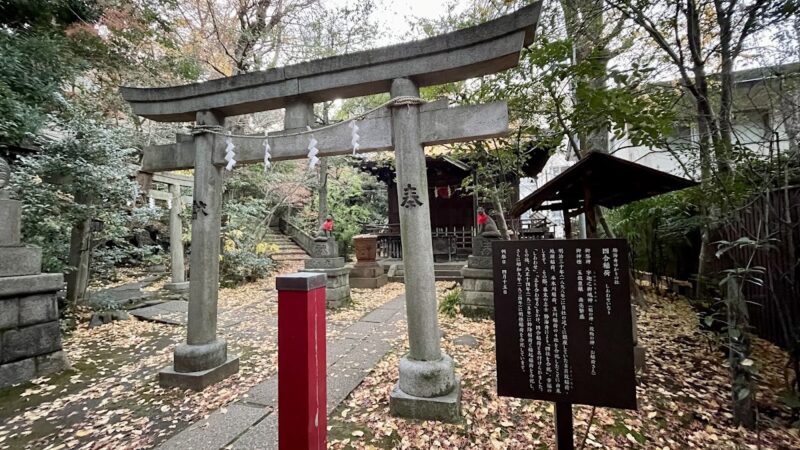
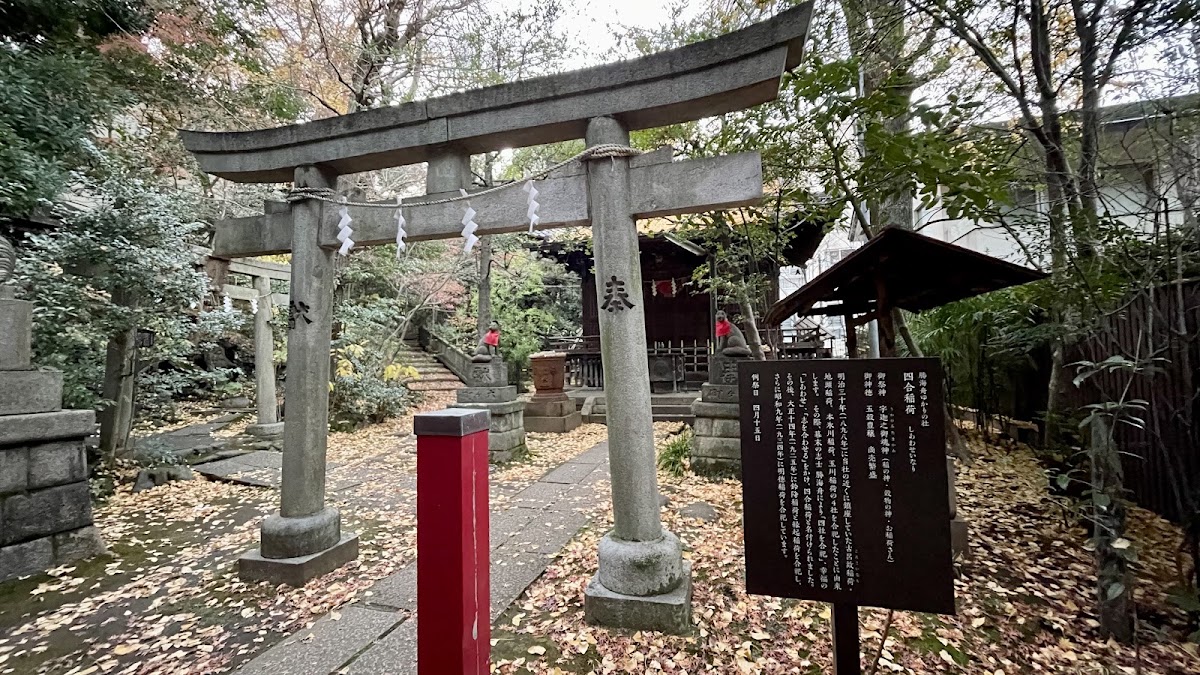
Currently, Akasaka Hikawa Shrine stands on the site believed to be the location of Imai Castle. Akasaka Hikawa Shrine is an ancient shrine said to have been founded in 951 (Tenryaku 5), and its enshrined deities are Susanoo-no-Mikoto, Kushinadahime-no-Mikoto, and Onamuchi-no-Mikoto.
During the Edo period, the shrine was revered by the Shogunate, and in 1716, it was relocated to its current location by order of the eighth Shogun, Tokugawa Yoshimune. The shrine grounds contain numerous historical remains, including a large ginkgo tree over 400 years old and stone lanterns from the Edo period.
Topographical Characteristics of the Castle Site
Akasaka Hikawa Shrine is located on the southern edge of the Akasaka Plateau, slightly higher than the surrounding area. This location on the edge of a plateau is consistent with the topographical features favored by medieval mansions and castles. However, due to urbanization and large-scale topographical changes since the Edo period, accurately reconstructing the original topography is difficult.
Observing the topography around the shrine, there is a gentle slope from north to south, with valleys to the east and west. Such tongue-shaped plateau tips were favored by medieval samurai as a suitable defensive location.
Current Status of Remains
Unfortunately, no clear remains related to Imai Castle have been confirmed at present. No castle remains such as moats, earthworks, or baileys have been discovered within the grounds of Akasaka Hikawa Shrine or in the surrounding area. This is thought to be due to the following reasons:
- Edo Period Development: After the establishment of the Edo Shogunate, the Akasaka area was extensively developed as a samurai residential area, drastically altering the topography.
- Modern Urbanization: Since the Meiji era, and especially after World War II, urban development has almost completely destroyed surface remains.
- Original Scale: Samurai residences from the late Heian period often lacked the large-scale defensive structures of castles from the Sengoku period, making them less likely to retain remains.
Structure and Estimated Reconstruction of Imai Castle
Characteristics of Samurai Residences from the Late Heian Period
If Imai Castle existed, its structure is estimated to have been typical of a samurai residence from the late Heian period to the early Kamakura period. Samurai residences from this period had the following characteristics:
Main Building: A wooden building with a shingle or thatched roof, a simplified version of the Shinden-zukuri style.
Surrounding Defensive Structures: Surrounded by a moat (dry or water) and earthen ramparts, sometimes with wooden fences.
Size: A square or irregularly shaped area with sides of approximately 50 to 100 meters.
Ancillary Facilities: Stables, warehouses, and residences for retainers were located here.
Estimated Layout in Akasaka
Based on the topography around Akasaka Hikawa Shrine, if Imai Castle existed, it’s possible the main enclosure was located on a plateau centered around the current shrine grounds, surrounded by a moat. Utilizing the edge of the plateau, the design likely leveraged natural elevation differences for defense.
However, this is merely an analogy based on the general structure of late Heian period residences, and there is no evidence to suggest a unique structure for Imai Castle.
Access and Visiting Information for Imai Castle
Access by Train
Nearest Stations:
- Approximately 8 minutes on foot from Exit 6 of Akasaka Station on the Tokyo Metro Chiyoda Line
- Approximately 8 minutes on foot from Exit 3 of Roppongi Station on the Tokyo Metro Hibiya Line and Toei Oedo Line
- Approximately 8 minutes on foot from Exit 1 of Roppongi-itchome Station on the Tokyo Metro Namboku Line
From Roppongi-itchome Station, the most common route is via Nanbu-zaka slope to Akasaka Hikawa Shrine. Nanbu-zaka is an ancient road dating back to the Edo period, and you can enjoy the scenic beauty of the slope while walking.
Akasaka Hikawa Shrine Visiting Information
Location: 6-10-12 Akasaka, Minato-ku, Tokyo
Visiting Hours: Grounds are freely accessible (Shrine office: 9:00-17:00)
Admission Fee: Free
Parking: None (Use nearby coin-operated parking lots)
Akasaka Hikawa Shrine maintains a tranquil atmosphere despite its central Tokyo location, and its lush grounds serve as an urban oasis. While there are no clear remains of a castle, one can still feel the historical atmosphere.
Points to Note During Your Visit
- Observing the Topography of the Grounds: Observing the elevation differences and topographical features of the shrine grounds allows you to appreciate its location on a plateau.
- Surrounding Slopes: The Akasaka area has many slopes, providing clues to understanding the characteristics of the plateau topography.
- Historical Buildings: The main shrine building dates back to the mid-Edo period and is designated as a tangible cultural property of Tokyo.
- The Great Ginkgo Tree: The sacred ginkgo tree within the shrine grounds is said to be over 400 years old and has watched over this area since the Edo period.
Estimated Visit Time
A standard visit, including worship at Akasaka Hikawa Shrine and a stroll around the surrounding area, takes approximately 20 to 30 minutes. If you wish to take your time to reflect on the history, allow about an hour.
Nearby Historical Spots and Tourist Information
Historical Points of Interest in the Akasaka Area
Site of Asano Takumi-no-kami Naganori’s Residence: Near Akasaka Hikawa Shrine is the site of the Edo residence of Asano Takumi-no-kami Naganori, famous from the Chushingura story. Currently, it is the site of the International University of Health and Welfare Mita Hospital, but an explanatory sign is installed.
Nanbu-zaka Slope: A slope leading from Roppongi-itchome Station to Akasaka Hikawa Shrine. It is named after the Nanbu family’s residence that once stood there.
Hikawa-zaka Slope: This slope, passing beside Akasaka Hikawa Shrine, retains the atmosphere of the Edo period.
Katsu Kaishu Residence Site: In Akasaka 6-chome, there is the site of the residence where Katsu Kaishu, a hero of the late Edo period, spent his later years.
Historical Background of Akasaka
During the Edo period, Akasaka was a samurai district lined with daimyo and hatamoto residences. Especially after the Kyoho era (1716-1736), development of the Akasaka area progressed due to the policies of Tokugawa Yoshimune, and many daimyo built their residences there. Since the Meiji era, residences of political and business figures have lined the area, and today it has developed into a high-end residential and office district.
Other Imai Castles in Tokyo
Besides Imai Castle in Minato Ward, there are other castles named “Imai Castle” in Tokyo.
Imai Castle (Ome City): A medieval castle located in Imai 1-chome, Ome City, Tokyo. This castle was the residence of the Imai clan, a branch of the Kodama family, and is designated as a historical site by Ome City. The remains, such as moats and earthworks, are relatively well-preserved, providing a clearer picture of its function as a castle. It has a history related to the Uesugi Zenshu Rebellion of 1416.
The Imai Castle in Minato Ward and the Imai Castle in Ome City, while sharing the same name, are different castles with different builders and historical contexts. Care must be taken not to confuse them.
Current Status and Challenges of Imai Castle Research
Historical Source Constraints
Research on Imai Castle (Minato Ward) faces significant challenges due to historical source constraints. While military chronicles such as the *Heike Monogatari* and *Genpei Seisui Ki* detail the activities of Imai Kanehira, there are no descriptions of his activities in Musashi Province or his residence in Akasaka.
Even in Edo period geographical records, such as the *Edo Meisho Zue* and *Shinpen Musashi Fudoki Ko*, no clear descriptions of Imai Castle have been found. The current name “Imai Castle” is likely a designation established during local history research after the Meiji era.
Possibility of Archaeological Investigation
The area around Akasaka Hikawa Shrine is highly urbanized, making large-scale archaeological excavations practically difficult. Past excavations conducted in conjunction with construction work in the surrounding area have not confirmed any remains or artifacts related to Imai Castle.
However, the possibility of new discoveries cannot be completely ruled out if investigations are conducted in connection with future development. Advances in non-destructive testing techniques, such as ground-penetrating radar, may also yield new insights.
Value of Legend
The lack of definitive evidence does not mean that the legend of Imai Castle is entirely without value. Local legends convey the memories of the people that are not recorded in written historical documents, and serve as important clues for historical research.
The very fact that the name of the heroic warrior Imai Kanehira remains in Akasaka is part of the historical identity of this region. It is important to carefully distinguish between legend and historical fact, and to position Imai Castle within the context of local history.
The Story of Kiso Yoshinaka and His Four Heavenly Kings
Understanding the relationship between Imai Kanehira and Kiso Yoshinaka is essential to understanding Imai Castle.
The Life of Kiso Yoshinaka
Kiso Yoshinaka (Minamoto no Yoshinaka) was born the second son of Minamoto no Yoshikata, and his childhood name was Komawamaru. After his father was killed by Minamoto no Yoshihira, he was raised in the Kiso Valley of Shinano Province and came to be known as Kiso Yoshinaka.
In 1180, he raised an army in response to a decree from Prince Mochihito, defeated the large Taira army at the Battle of Kurikara Pass, and entered Kyoto. However, due to his violent behavior in Kyoto and his conflict with Emperor Go-Shirakawa, he was pursued by Minamoto no Yoritomo’s forces and died in battle in January 1184 at Awazu in Omi Province (present-day Otsu City, Shiga Prefecture).
The Loyalty of Imai Kanehira
Imai Kanehira was a loyal retainer who stayed with Yoshinaka until his last moments. According to the *Tale of the Heike*, after Yoshinaka was killed at the Battle of Awazu, Kanehira, declaring he would “follow his lord,” jumped from his horse with his sword in his mouth and committed suicide.
This heroic end has been passed down through generations as a model of samurai loyalty and has become the subject of Noh and Kabuki plays. It is believed that the continued presence of Imai Kanehira’s name in various regions is due to this heroic image.
The Legend of the Four Heavenly Kings
The Four Heavenly Kings of Kiso (Imai Kanehira, Higuchi Kanemitsu, Nei Yukichika, and Tate Chikatada) were all important retainers who served Yoshinaka from his childhood. They were the sons of Yoshinaka’s wet nurse and caretaker, and were like brothers to him.
This type of lord-vassal relationship was characteristic of samurai society from the late Heian period to the Kamakura period, and formed the foundation of later samurai society. The legends of Imai Castle can also be understood within this context of samurai culture.
Summary: Historical Significance of Imai Castle (Minato Ward)
Although Imai Castle (Minato Ward) lacks clear remains or definitive historical evidence, it is an interesting site as a trace of medieval history in central Tokyo. The fact that the name of Imai Kanehira, a samurai from the late Heian period, remains as a legend in the modern environment around Akasaka Hikawa Shrine demonstrates the importance of the region’s historical memory.
While the actual state of the castle site is unclear, it is worth visiting for history enthusiasts as a place that conveys the depth of Akasaka’s historical layers. In the tranquil grounds of Akasaka Hikawa Shrine, one can reflect on the long flow of history from the Heian period to the present day.
While Tokyo boasts numerous castle ruins, including Edo Castle, exploring diverse historical sites, such as the legendary Imai Castle, allows for a richer understanding of history. The lack of definitive evidence is precisely what makes Imai Castle so appealing—it allows for imaginative exploration and enjoyment of history.
When visiting Akasaka, be sure to stop by Akasaka Hikawa Shrine and reflect on the loyal warrior Imai Kanehira. This tranquil historical space, amidst the hustle and bustle of the city, will transport you to a story of the Heian period.