A Complete Guide to the History and Highlights of Tsukudo Castle (Shinjuku Ward, Tokyo) | Relationship with Ota Dokan’s Annex
Tsukudo Hachiman Shrine stands in the urban area of Shinjuku Ward, Tokyo. This site was once home to a castle called “Tsukudo Castle.” Built amidst political tensions in the Kanto region during the Muromachi period, although no remains exist today, it is known as an important historical site in the history of Tokyo.
This article provides a comprehensive explanation of the castle ruins, including its detailed history, its relationship with the adjacent Gotenyama Castle, and its current state.
Basic Information on Tsukudo Castle
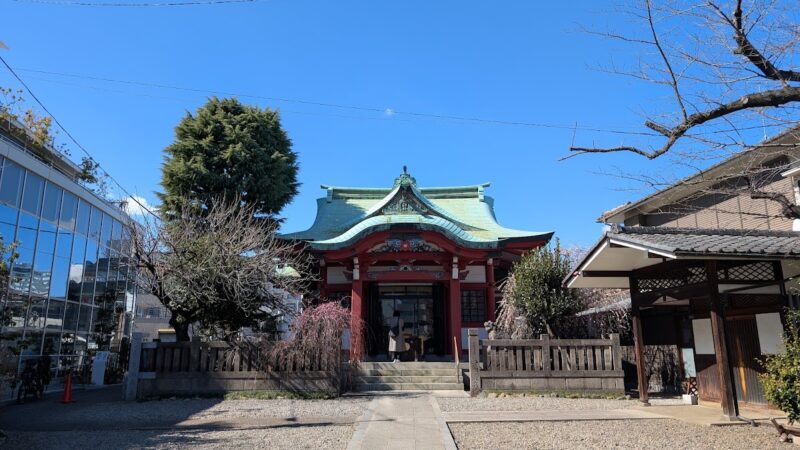
Tsukudo Castle was a castle located in Tsukudo Hachiman-cho, Shinjuku Ward, Tokyo. The current Tsukudo Hachiman Shrine is the site of the castle, situated on a hill in the area between Kagurazaka and Waseda.
Common Names/Alternate Names
Tsukudo Castle is also known as “Tsukudo-rui” or “Uesugi Tokiuji-rui.” There are several theories regarding the origin of the name “Tsukudo.” One theory suggests it derives from the construction of an earthen rampart, while another tradition claims it originates from “Miyado of Usa in Chikushi.” Furthermore, a theory suggests it derives from the name “Tsukudo Myojin,” which was relocated to an adjacent site during the expansion of the outer moat of Edo Castle in the early Edo period.
Location
Tsukudo Hachiman-cho, Shinjuku-ku, Tokyo. The current grounds of Tsukudo Hachiman Shrine are considered to be the former castle grounds. It’s a central Tokyo location, accessible on foot from JR Iidabashi Station and Tokyo Metro Tozai Line Iidabashi Station.
Former Province
It belonged to Musashi Province. Musashi Province was a vast area encompassing parts of present-day Tokyo, Saitama, and Kanagawa prefectures, and played an important role as a political and military stronghold in the Kanto region during the medieval period.
Classification and Structure
Tsukudo Castle is classified as a hilltop castle. Built on the tip of a tongue-shaped plateau between the Kanda River and the Sotobori River, it features a defensive location that skillfully utilizes the natural terrain. Its slightly elevated position compared to the surrounding area provides excellent visibility, making it a suitable location for a military base.
Because it is located on a continuous plateau with the adjacent Gotenyama Castle, it has been suggested that the two castles may have functioned as a single integrated fortress.
Castle Tower Structure
Tsukudo Castle did not have a castle tower. As a castle from the mid-Muromachi period, castles in the Kanto region during this era were more like residences or forts, and did not have the full-fledged castle tower structure seen in the later Sengoku and Edo periods.
Builder
According to tradition, it was built by Uesugi Tokiuji. However, since this person is not clearly listed in the Uesugi family tree, many aspects of his existence and details remain unknown.
On the other hand, there is a legend that Ota Dokan built a separate residence in this area, and because the adjacent Gotenyama Castle is called “Ota Dokan’s Separate Residence,” its connection to Tsukudo Castle is being debated.
Year of Construction
The exact year of construction is unknown, but it is estimated to be the mid-Muromachi period. Around the 15th century, the conflict between the Uesugi clan and the Koga Shogunate intensified in the Kanto region, and it is highly likely that the castle was built amidst such political tension.
Main Renovators
The main renovators recorded are unknown. As is common with medieval castles, detailed renovation records are not available, so it is unclear what changes the castle underwent.
Main Lords
Tradition states that Uesugi Tokiuji was the lord of the castle, but as mentioned above, this cannot be confirmed in genealogical records, so the details are unknown. Also, if Ota Dokan had a separate residence in this area, it is possible that Dokan also used this castle grounds.
Ota Dokan was a renowned general of the Muromachi period, known for constructing Edo Castle, and served as a senior retainer of the Uesugi clan in the Kanto region. If Dokan established a separate residence in this area, it’s possible it functioned as a branch castle or villa of Edo Castle.
Year of Abandonment
The exact year of abandonment is unknown, but it’s presumed to have lost its function as a castle sometime between the late Sengoku period and the early Edo period. After the establishment of the Edo Shogunate, as Edo Castle expanded and the castle town developed, Tsukudo Castle was gradually swallowed up by the wave of urbanization.
Remains
Currently, the remains of Tsukudo Castle have completely disappeared. No castle remains such as earthworks or moats remain on the current site, which is now the grounds of Tsukudo Hachiman Shrine, making it impossible to imagine its former appearance. Given its location in the heart of the urbanized Shinjuku Ward, preserving the remains would have been difficult.
Designated Cultural Property
The Tsukudo Castle ruins are not designated as a cultural property. Due to the lack of remaining structures and the scarcity of historical records, it has not yet been designated as a cultural property.
Reconstructed Structures
There are no reconstructed structures related to the castle. The current Tsukudo Hachiman Shrine is a shrine built on the castle site and is not a reconstruction of the castle.
Historical Background and Explanation of Tsukudo Castle
Kanto Region in the Muromachi Period
The Kanto region during the mid-Muromachi period, when Tsukudo Castle is believed to have been built, was in an extremely politically unstable state. A complex political situation unfolded, including conflicts between the Kamakura Shogunate and the Kanto Kanrei Uesugi clan, as well as power struggles within the Uesugi clan.
In this context, castles and forts were built throughout the region, and samurai developed defensive facilities to protect their territories. Tsukudo Castle is thought to be one of the castles that emerged within this historical context.
Uesugi Tokiuji and Tsukudo Castle
According to tradition, Tsukudo Castle was built by Uesugi Tokiuji, the Kanto Kanrei (governor of the Kanto region). However, even after a detailed examination of the Uesugi family tree, it is difficult to identify a person named “Tokiuji.” Therefore, the credibility of this tradition requires careful consideration.
One possibility is that the name was mistakenly passed down as the name of another Uesugi family member, or that he was a person from a regional branch of the Uesugi family, but no conclusive evidence has been obtained.
Relationship with Ota Dokan
An essential aspect of discussing Tsukudo Castle is its relationship with Ota Dokan. Dokan built Edo Castle in 1457 and is known as a famous general who served the Uesugi clan and was active in the Kanto region.
Tradition says that Dokan built a villa in this area, and the adjacent Gotenyama Castle is also called “Ota Dokan’s Villa.” Because Tsukudo Castle and Gotenyama Castle are located on the same tongue-shaped plateau and are topographically continuous, it has been suggested that the two castles may have functioned as a single integrated fortress.
If Dokan used this site as a subsidiary castle or villa of Edo Castle, it is thought to have functioned as part of the defensive line to the west of Edo Castle, or as a facility for administrative work or rest.
Changes after the Edo Period
During the Edo period, Tokugawa Ieyasu carried out large-scale expansions of Edo Castle and development of the castle town. During this process, the outer moat of Edo Castle was constructed, and the topography around Tsukudo Castle changed significantly.
In the 1600s, due to the expansion of the outer moat of Edo Castle, the Tayasu Myojin shrine, which was located on this site, was moved to an adjacent site and came to be called “Tsukudo Myojin.” There is a theory that this event is one of the origins of the place name “Tsukudo.”
Tsukudo Hachiman Shrine was built on the site of Tsukudo Castle, which lost its function as a fortress, and it remains a center of local faith to this day.
Relationship with Gotenyama Castle
The Theory of a Single Castle Complex
Tsukudo Castle and Gotenyama Castle are located only a few hundred meters apart and on the same tongue-shaped plateau. This topographical continuity has led to discussions among experts about the possibility that the two castles actually functioned as a single castle complex.
Medieval castles typically consisted of multiple interconnected baileys (kuruma) forming a single defensive system. It is possible to consider that Tsukudo Castle and Gotenyama Castle each functioned as independent baileys, forming a single castle complex as a whole.
Gotenyama Castle as Ota Dokan’s Annex
Gotenyama Castle is known as “Ota Dokan’s Annex,” and there is a tradition that Dokan had a residence here. If Tsukudo Castle and Gotenyama Castle were a single castle complex, then it becomes more likely that Dokan’s annex was not a standalone facility but part of a larger castle complex.
Dokan’s main base of operations was Edo Castle, but it is thought that he used such annexes as needed for political affairs and military actions. In particular, its strategic importance was likely recognized due to its location controlling the transportation routes westward from Edo Castle.
Current Tsukudo Castle Ruins and Tsukudo Hachiman Shrine
History of Tsukudo Hachiman Shrine
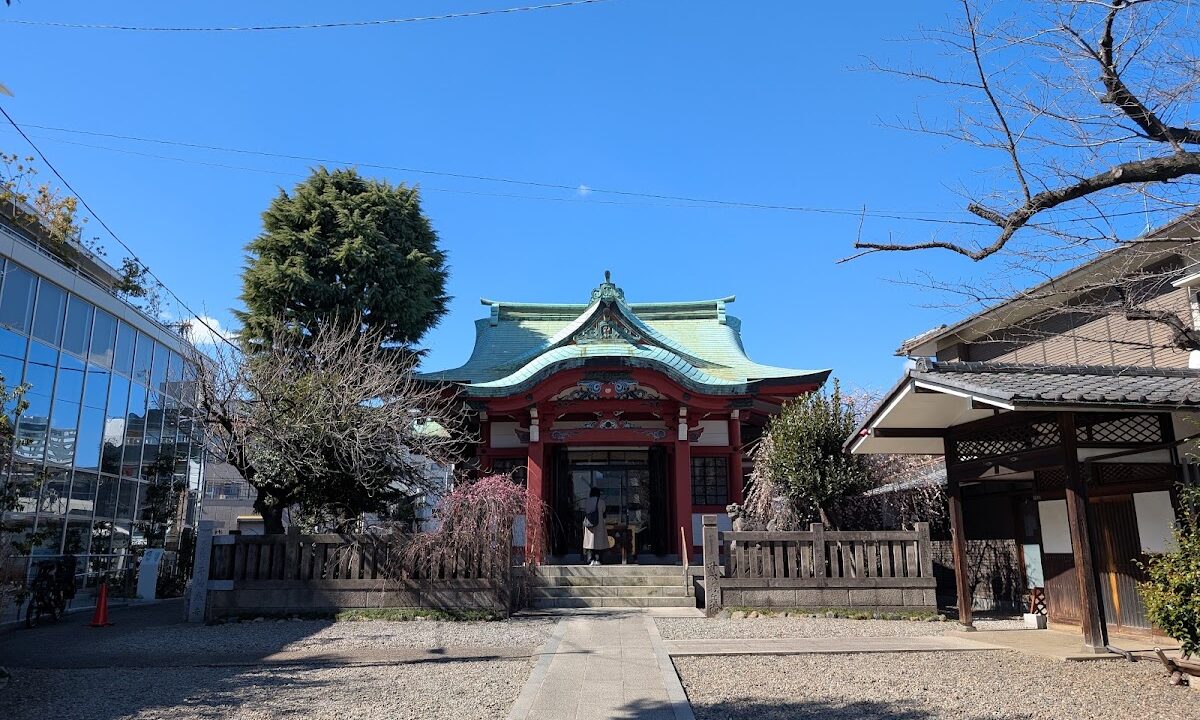
Currently, Tsukudo Hachiman Shrine stands on the site of Tsukudo Castle. This shrine is revered as the local guardian deity, and the grounds are enveloped in a tranquil atmosphere.
According to the shrine’s history, the shrine, which had been worshipped in this area since ancient times, underwent changes during the Edo period to reach its current form. While retaining the historical background of a castle site, it now functions as a place of worship for local residents.
Access and Visiting
Tsukudo Hachiman Shrine is approximately a 10-minute walk from JR Iidabashi Station or the Tokyo Metro Tozai, Yurakucho, and Namboku Lines. It is also within walking distance from Ushigome-Kagurazaka Station on the Toei Oedo Line.
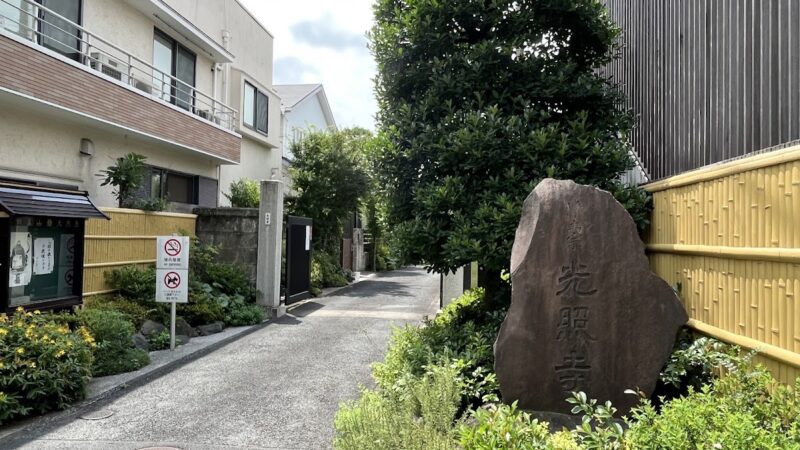
The shrine is located in a residential area, and the grounds are not particularly large, but a quiet environment for worship is maintained. Although no castle remains exist, an information board has been erected indicating that this area was once a castle, allowing visitors to learn about its historical background.
Relationship with Surrounding Historical Sites
Several important historical sites exist around Tsukudo Castle.
Ushigome Castle is located approximately 400 meters from Tsukudo Castle and is also a medieval castle site. It is believed to have been the residence of the Ushigome clan and was one of the strongholds of samurai power in the region.
Gotenyama Castle, as mentioned above, is adjacent to Tsukudo Castle and is believed to have been a separate residence of Ota Dokan. The relationship between these two castles is an important element in understanding Tsukudo Castle.
Ushigome Mitsuke and Ichigaya Mitsuke are the remains of gates (mitsuke) on the outer moat of Edo Castle, and functioned as defensive facilities during the Edo period. Visiting these historical sites allows for a three-dimensional understanding of Edo’s history from the medieval to the early modern period.
Current Status and Challenges of Tsukudo Castle Research
Limitations of Historical Sources
Research on Tsukudo Castle faces a major challenge: the scarcity of historical sources. Because there are no reliable records of its construction or documents concerning its lords, much of the research must rely on tradition and speculation.
It remains difficult to reach definitive conclusions on important points such as the existence of Uesugi Tokiuji, his relationship with Ota Dokan, and the integration of Tsukudo Castle with Gotenyama Castle.
The Need for Archaeological Investigations
While new discoveries are difficult given the complete disappearance of the remains, there remains a possibility of discovering related artifacts and structures through excavations accompanying development in the surrounding area.
In particular, investigating potential underground remains around both castle sites would be effective in clarifying the relationship between Tsukudo Castle and Gotenyama Castle. However, given its location in a densely populated urban area, large-scale investigations are not practical.
Positioning in Local History Research
Tsukudo Castle is a valuable case study for understanding the local history of Shinjuku Ward, and even the medieval history of Tokyo. It provides clues not only to the history of Edo centered around Edo Castle, but also to the political situation in Musashi Province during the preceding medieval period, the layout of castles, and the activities of samurai.
Future comparative studies with surrounding castle ruins and advancements in medieval castle research throughout the Kanto region are expected to clarify the historical position of Tsukudo Castle.
Significance of Visiting Tsukudo Castle
Currently, neither stone walls nor earthworks remain at the Tsukudo Castle site. However, visiting this place holds great significance.
First, it allows one to truly grasp the fact that a medieval castle once existed in the heart of a major metropolis like Tokyo. Recognizing that layers of history, where samurai of the Muromachi period were active, are buried beneath the modern landscape of towering skyscrapers enriches one’s historical imagination.
Furthermore, the fact that the memory of the place is preserved in the form of Tsukudo Hachiman Shrine is also important. Even though the castle itself has disappeared, the fact that the site remains rooted in the community as a shrine and continues to live on in people’s lives demonstrates the connection between history and the present.
By visiting the surrounding Ushigome Castle, Gotenyama Castle, and even the remains of the outer moat of Edo Castle, you can gain a three-dimensional understanding of the historical changes in this area.
Summary
Tsukudo Castle was a medieval castle located in Shinjuku Ward, Tokyo. It is believed to have been built by Uesugi Tokiuji, and a connection to Ota Dokan’s villa has also been suggested, but many details remain unknown.
It is possible that it was part of a single castle complex with the adjacent Gotenyama Castle, and understanding both castles together is important. Although the remains have completely disappeared and Tsukudo Hachiman Shrine has been erected, the historical significance of this site remains unchanged.
Tsukudo Castle is shrouded in mystery due to the scarcity of historical records, but this is precisely what makes it so fascinating and stimulating to the imagination. Those interested in Tokyo’s history or medieval castles should definitely consider visiting this site. You should be able to sense the lives of the samurai of yesteryear within the modern urban landscape.