Akatsuka Castle (Itabashi Ward, Tokyo) Complete Guide | History, Remains, Access, and Nearby Sightseeing
Located in Akatsuka 5-chome, Itabashi Ward, Tokyo, Akatsuka Castle is known as a flatland castle built by the Musashi Chiba clan during the medieval period. Currently, it is maintained as part of Akatsuka Park, and along with its remains that retain traces of its former glory, it is a popular place of relaxation for local residents. This article provides a detailed explanation of Akatsuka Castle, from its history to its current state, access methods, and nearby tourist attractions.
Basic Information on Akatsuka Castle
Akatsuka Castle is a medieval castle located in Akatsuka 5-chome, Itabashi Ward, Tokyo. Basic information is summarized below.
Location: Akatsuka 5-chome, Itabashi-ku, Tokyo (near Akatsuka 5-30~32)
Former Province: Musashi Province
Classification/Structure: Hilltop Castle
Year of Construction: Kōshō 2 (1456)
Builder: Chiba Jitsutane
Lord: Musashi Chiba Clan (Akatsuka Chiba Clan)
Year of Abandonment: Tenshō 18 (1590)
Remains: Earthworks, dry moats, bailey remains
Designated Cultural Property: None (Undesignated)
Common Name/Alternate Name: None in particular
Akatsuka Castle is a medieval hilltop castle built on a terrace located at the northeastern edge of the Musashino Plateau. While its actual scale is thought to have been closer to a fort than a castle, it functioned as an important base for the Musashi Chiba Clan.
History and Background
From Castle Construction to Chiba Clan Rule
The history of Akatsuka Castle begins in 1456 (Kōshō 2), when Chiba Jitsutane moved from Ichikawa Castle (Ichikawa City, Chiba Prefecture) and built the castle. Chiba Jitsutane was a member of the prestigious Chiba clan of Shimōsa Province and is considered the ancestor of the Musashi Chiba clan, which expanded its power into Musashi Province.
The reason the Chiba clan chose this location was its geographical advantage: its position at the northeastern edge of the Musashino Plateau. A wetland area called Tokumarugahara stretched to the north of the castle, functioning as a natural defensive line. Furthermore, this area was close to a key point on the Kamakura Road, occupying a strategically important position both militarily and traversally.
The Akatsuka Chiba Clan in the Sengoku Period
During the Sengoku period, the Akatsuka Chiba clan, based at Akatsuka Castle, played an active role as a powerful vassal of the Later Hōjō clan. During the reigns of Hojo Ujiyasu and Hojo Ujimasa, Akatsuka Castle played a crucial role in the control of northern Musashi Province, and is believed to have formed a defensive line north of Edo Castle, along with nearby castles such as Shimura Castle, Itabashi Castle, Shakujii Castle, and Inazuke Castle.
The Akatsuka Chiba clan ruled this area for generations, contributing to the development and administration of the surrounding region. It is no exaggeration to say that the foundation of the current Akatsuka area of Itabashi Ward was formed during this period.
Abandonment of the Castle and its Aftermath
In 1590 (Tensho 18), Toyotomi Hideyoshi launched the Odawara Campaign. The Akatsuka Chiba clan resisted, following the lead of their lord, the Hojo clan, but with the fall of the Hojo clan, Akatsuka Castle was abandoned. This marked the end of the Akatsuka Chiba clan’s rule, which had lasted for approximately 134 years.
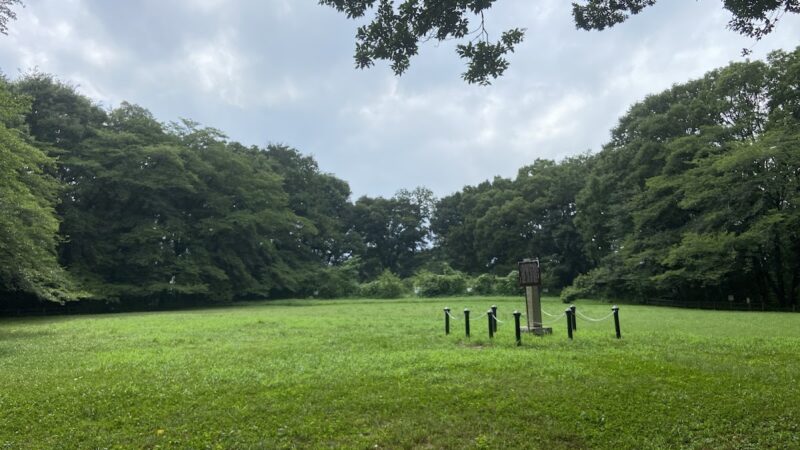
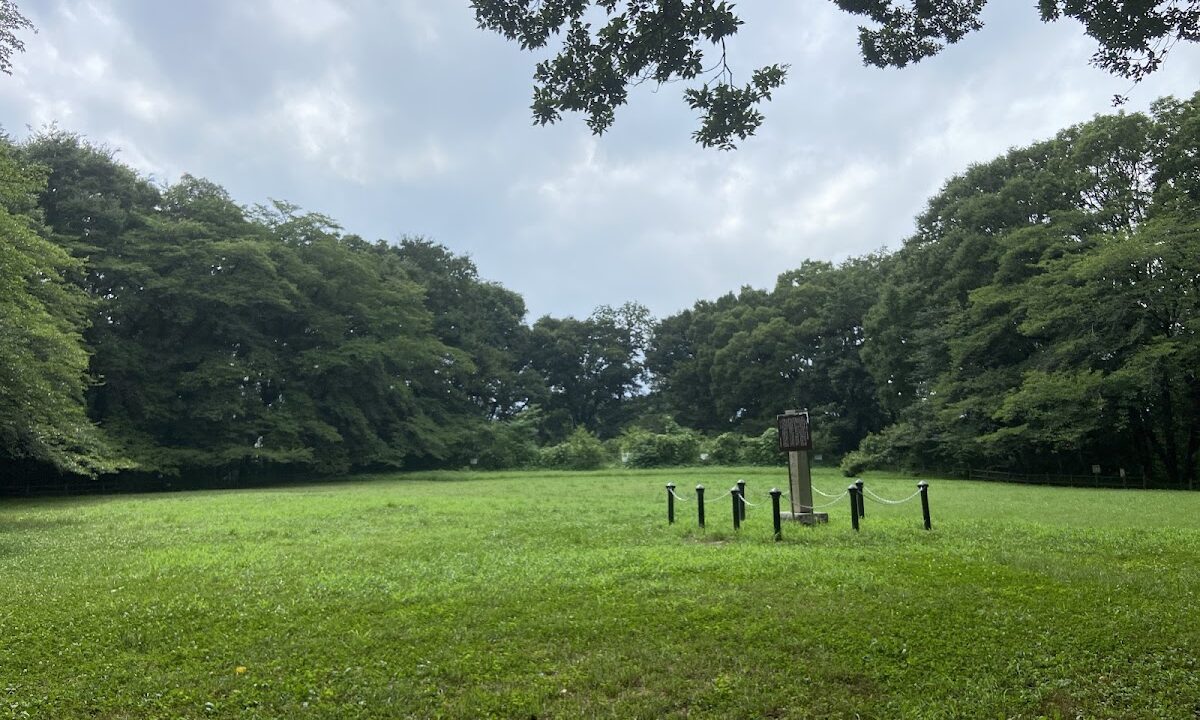
After its abandonment, the castle site was used for a long time as farmland and forest, but from the 1970s onward, the Tokyo Metropolitan Government proceeded with park development. Currently, it is maintained as part of Tokyo Metropolitan Akatsuka Park, and a stone monument marking the “Akatsuka Castle Site” stands at the site of the main keep.
Structure
Layout and Topography
Akatsuka Castle is a flatland castle built on a terrace approximately 30 meters above sea level at the northeastern edge of the Musashino Plateau. The layout, centered around the main keep, exhibits a typical medieval castle structure that skillfully utilizes the plateau’s topography.
The castle grounds measure approximately 200 meters east-west and 150 meters north-south, classifying it as a medium-sized medieval castle. However, some believe it should actually be called a fort, and that it functioned not as a large-scale castle stationing numerous soldiers at all times, but rather as a base during times of emergency.
Arrangement of the Main Keep and Enclosures
The main keep is located at the highest point of the plateau and is currently maintained as a plaza. It is presumed that the second and third enclosures were located around the main keep, but the clear boundaries have been lost due to later development.
The northern side of the main enclosure was a steep slope, and below it lay a wetland known as Tokumarugahara. This natural terrain functioned as a natural defensive structure, making attacks from the north difficult.
Existing Remains
Currently, the following remains are preserved at the Akatsuka Castle site:
Earthworks: Traces of earthworks remain partially around the main enclosure. They are approximately 1-2 meters high and were constructed by piling up Kanto loam.
Dry Moats: Slight remains of dry moats can be seen around the castle. Traces of trenches are particularly visible on the east and south sides, suggesting the defensive structure of the time.
Enclosure Site: The main enclosure site is now a plaza, and a stone monument marking “Akatsuka Castle Site” has been erected. The flat terrain indicates the presence of an enclosure.
While most of these remains have been lost due to urbanization, careful observation allows one to perceive the remnants of a medieval castle. Paying attention to the topography, especially when strolling through the park, will help you understand the castle’s structure.
Relationship with Okiyama Fort
Within Akatsuka Park, separate from Akatsuka Castle, there are also remains of a medieval castle called “Okiyama Fort.” It has been suggested that Okiyama Fort may have functioned as a subsidiary or outpost of Akatsuka Castle, and that the two formed a single defensive system.
Okiyama Fort is located approximately 500 meters southwest of Akatsuka Castle and is also built on a terrace of the Musashino Plateau. Further research is needed regarding the relationship between the two castles, but it is attracting attention as an important remains indicating the sphere of influence of the Akatsuka Chiba clan.
Access
Access by Train
Access to Akatsuka Castle ruins is convenient using public transportation. It is within walking distance from the nearest station.
From Tobu Tojo Line “Narimasu Station”:
- Approximately 15 minutes on foot from the South Exit
- Approximately 1.2 kilometers
- It’s easy to find if you aim for Akatsuka Tameike Park
From Tokyo Metro Yurakucho Line/Fukutoshin Line “Narimasu Station”:
- Approximately 15 minutes on foot from Exit 5
- Connects to Tobu Tojo Line Narimasu Station, same route
From Tokyo Metro Yurakucho Line/Fukutoshin Line “Chikatetsu Akatsuka Station”:
- Approximately 20 minutes on foot
- Approximately 1.5 kilometers
From Tobu Tojo Line “Shimo-Akatsuka Station”:
- Approximately 20 minutes on foot
- Adjacent to Chikatetsu Akatsuka Station
The easiest route is from Tobu Tojo Line Narimasu Station. From the station, head towards Akatsuka Tameike Park, and if you aim for the Itabashi City Local History Museum, the Akatsuka Castle ruins are on the hill behind it.
Access by Bus
Kokusai Kogyo buses are also available from Narimasu Station.
- Take the bus bound for “Akatsuka 8-chome” from the north exit of Narimasu Station.
- Get off at the “Ward Museum” bus stop and walk for about 5 minutes.
Taking the bus will shorten your walking time, but the number of buses is limited, so we recommend checking the timetable in advance.
Access by Car
If accessing by car:
From the Takashimadaira Exit of the Metropolitan Expressway Route 5 Ikebukuro Line:
- Approximately 10 minutes (approximately 3 kilometers)
From the Wako IC on the Kan-Etsu Expressway:
- Approximately 15 minutes (approximately 5 kilometers)
Parking is available at the Itabashi Ward Local History Museum parking lot (free, limited number of spaces) adjacent to Akatsuka Tameike Park. However, it can get crowded on weekends and during peak seasons, so we recommend using public transportation.
Map Information
Akatsuka Castle Ruins are located within Tokyo Metropolitan Akatsuka Park, and it will be easy to find using the Itabashi Ward Local History Museum as a landmark. Searching for “Akatsuka Castle Ruins” or “Tokyo Metropolitan Akatsuka Park” on Google Maps or your smartphone’s map app will show you the exact location.
Information boards are also installed around the castle ruins, so even first-time visitors can easily find their way.
Sightseeing
Highlights of Akatsuka Castle Ruins
Here are some of the main highlights when visiting Akatsuka Castle Ruins.
Stone Monument at the Main Enclosure: A stone monument inscribed with “Akatsuka Castle Ruins” stands at the site of the main enclosure. The area around this monument was the center of the castle and the former location of the Chiba clan’s residence.
Earthworks and Dry Moats: As you stroll through the park, you can discover remnants of earthworks and dry moats. The remains of a moat can be seen particularly on the eastern slope, giving a sense of the medieval castle’s atmosphere.
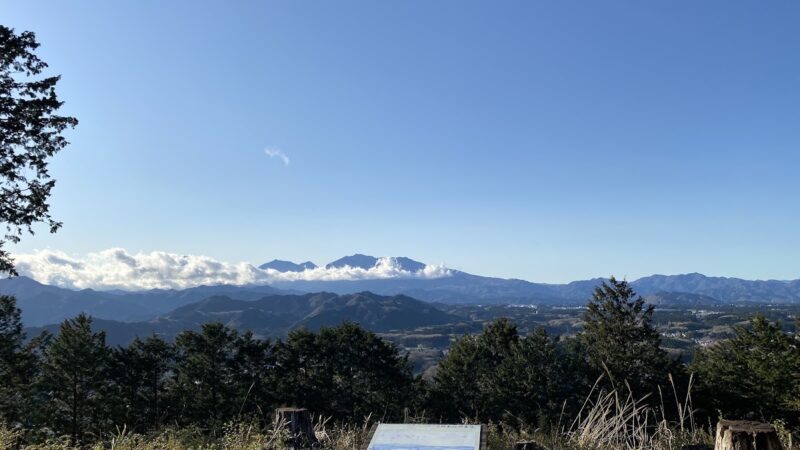
View: From the main enclosure, you can enjoy panoramic views of the surrounding area. While the view is currently limited by overgrown trees, it would have once offered a clear view of the Tokumarugahara wetlands and surrounding villages. Plum Grove and Cherry Blossom Avenue: Plum groves and cherry blossom avenues are maintained around the castle ruins, offering beautiful flowers in spring. The area is particularly lively with many visitors during the plum blossom season in March and the cherry blossom season in April.
Nearby Attractions
The area around Akatsuka Castle Ruins is home to several facilities where you can experience history and culture.
Itabashi City Local History Museum:
- Located at the foot of Akatsuka Castle Ruins
- Exhibits the history and culture of Itabashi Ward
- Also exhibits materials related to Akatsuka Castle and the Chiba clan
- Free admission (special exhibitions may have a fee)
- Opening hours: 9:30 AM – 5:00 PM (last entry at 4:30 PM)
- Closed: Mondays (or the following day if Monday is a public holiday), New Year holidays
The local history museum exhibits the history of Akatsuka Castle, the results of archaeological excavations, and materials related to the Chiba clan. Visiting before visiting the castle ruins will deepen your understanding.
Itabashi Ward Museum of Art:
- Adjacent to the Local History Museum
- Primarily houses Edo period paintings
- Regularly holds special exhibitions
- Admission fee: Varies depending on the exhibition
Itabashi Ward Akatsuka Botanical Garden:
- Approximately 5 minutes on foot from Akatsuka Castle Ruins
- A botanical garden recreating the nature of Musashino
- Free admission
- You can observe plants of all seasons
Akatsuka Tameike Park:
- A park spreading at the foot of Akatsuka Castle Ruins
- A waterside landscape centered around Tameike Pond
- Well-maintained walking paths and benches, perfect for taking a break
Jorenji Temple (Tokyo Daibutsu):
- Approximately 10 minutes on foot from Akatsuka Castle Ruins
- Famous for its bronze Buddha statue, approximately 13 meters tall
- Affectionately known as “Tokyo Daibutsu”
- Hotei, one of the Seven Lucky Gods of Itabashi, is also enshrined on the temple grounds
Shogetsuin Temple:
- Approximately 8 minutes on foot from Akatsuka Castle Ruins
- Ancient Temples Associated with the Chiba Clan
- Considered the family temple of the Akatsuka Chiba clan
- A tranquil temple grounds where you can feel the history
Visiting these facilities will allow you to fully appreciate the history and culture of the Akatsuka region in half a day to a full day. The local history museum and Shogetsuin Temple, in particular, are important spots for deepening your understanding of Akatsuka Castle.
Reconsidering Akatsuka Castle
In recent years, research and evaluation of Akatsuka Castle have been re-evaluated. While Akatsuka Castle was often treated as merely a small fort in the past, recent research presents the following new perspectives:
The Importance as a Base for the Musashi Chiba Clan
Akatsuka Castle was not just a standalone military facility, but also the headquarters of the Musashi Chiba clan and a center for governing the surrounding region. It is believed that the Chiba clan used this castle as a base to promote the development of the Akatsuka region, agricultural advancement, and road construction.
Positioning in the Hojo Clan’s Defense Line
During the Sengoku period, the Later Hojo clan advanced their control of the Kanto region from Edo Castle, and Akatsuka Castle played a crucial role in their northern defense. Along with Shimura Castle, Itabashi Castle, Shakujii Castle, and Inazuke Castle, it formed a defensive line to prepare for invasions from northern Musashi Province.
Significance in Local History
The history of Akatsuka Castle is at the core of the identity of the Akatsuka area in Itabashi Ward. For local residents, the era of the Chiba clan is the origin of their local history, and the castle ruins are carefully preserved as a source of local pride.
Local organizations such as the Itabashi Historical Society continuously conduct research and promotional activities on Akatsuka Castle, working to pass it on to future generations as a local historical heritage.
Akatsuka Castle User Reviews
Looking at the impressions of people who have actually visited the Akatsuka Castle ruins, the following comments can be heard:
One comment stated, “If you’re not paying attention, it just looks like an ordinary small hill, but reading the explanatory sign reveals its historical significance, which is truly moving.” This indicates that, despite the limited remaining structures, understanding the historical background deepens the emotional impact.
Many also suggested visiting the surrounding local history museum and park, indicating that a more fulfilling experience can be had by combining it with other nearby facilities rather than visiting Akatsuka Castle alone.
Another comment noted, “The view from the castle ruins isn’t great, but it’s beautiful during the cherry blossom and plum blossom seasons in spring,” highlighting the importance of choosing the right season for a visit.
History enthusiasts believe that Akatsuka Castle deserves more recognition as a valuable medieval castle remaining in Musashino, demonstrating that while not widely known, its historical value is undeniably acknowledged.
The Charm and Future Prospects of Akatsuka Castle
Akatsuka Castle is one of the valuable medieval castles remaining within Tokyo’s 23 wards. While it lacks large stone walls or a keep, it offers valuable insights into medieval castle construction utilizing the topography of the Musashino Plateau.
Currently, the castle ruins have been developed into Akatsuka Park, a metropolitan park serving as a place of relaxation for local residents. It’s a prime example of balancing the preservation of historical heritage with its use as a park.
Further excavations and research could potentially reveal more about the true nature of Akatsuka Castle. Furthermore, the use of AR (augmented reality) technology to recreate the castle’s appearance in its heyday is also anticipated.
In Itabashi Ward, the Akatsuka area, including the Akatsuka Castle ruins, is designated as a “history and culture zone,” and its use as a tourist resource is being considered. The development of cultural tourism routes in conjunction with local history museums, art museums, botanical gardens, and ancient temples would increase opportunities for more people to learn about the history of Akatsuka Castle.
Summary
Akatsuka Castle was a medieval flatland castle built in 1456 by Chiba Jitsutane and functioned as the base of the Musashi Chiba clan for approximately 134 years until the fall of the Hojo clan in 1590. Currently, the site is part of Akatsuka Park, a metropolitan area, with only a few remnants of earthworks and dry moats remaining.
Its convenient location, just a 15-minute walk from Narimasu Station on the Tobu Tojo Line, is another attractive feature. The surrounding area is home to numerous cultural facilities and ancient temples, including the Itabashi City Local History Museum, the Itabashi City Museum of Art, Jorenji Temple (Tokyo Daibutsu), and Shogetsuin Temple, making it an ideal area for historical exploration.
Although not large in scale, Akatsuka Castle is a valuable medieval castle remaining within Tokyo’s 23 wards, and an important legacy that tells the history of the Musashi Chiba clan. It should be carefully preserved for future generations. It’s a recommended spot not only for history buffs but also for those who enjoy strolling and seasonal flowers. Why not visit the Akatsuka Castle ruins and reflect on the history of medieval Musashino?