Itabashi Castle Complete Guide | The History and Present State of the Phantom Medieval Castle in Itabashi Ward, Tokyo
Itabashi Castle, believed to have existed in Itabashi Ward, Tokyo, is a medieval castle sometimes called the “phantom castle.” Along with Akatsuka Castle and Shimura Castle, it is one of the important medieval castles that existed in Itabashi Ward, yet its location and details have been debated among researchers for many years. This article provides a comprehensive explanation of this mysterious castle, including its history, the lineage of the Itabashi clan who ruled it, the current state of the remains, and detailed information for visiting.
What is Itabashi Castle? | Basic Information and Overview
Itabashi Castle is a medieval flatland castle believed to have existed in the vicinity of Higashiyama-cho, Itabashi Ward, Tokyo. It is known as the residence of the Itabashi clan, a branch of the Toshima clan, but because no reliable primary sources remain, much about its true nature remains shrouded in mystery.
Basic Castle Data
- Location: Higashiyama-cho, Itabashi-ku, Tokyo (around the current Itabashi Municipal Kami-Itabashi Elementary School)
- Other Names: None in particular
- Castle Structure: Hilltop castle
- Year of Construction: Estimated to be during the Bunmei era (1469-1487)
- Builder: Itabashi clan
- Year of Abandonment: Estimated to be Tensho 18 (1590)
- Main Lords: Itabashi clan (Itabashi Higo-no-kami, etc.)
- Remains: Only a castle site monument exists (no clear remains have been discovered)
- Designated Cultural Property: None
The most distinctive feature of Itabashi Castle is that, although its existence is recorded in historical documents, its location remained unknown for a long time. In 1972 (Showa 47), a historian tracked down descendants of the Itabashi clan, revealing that the castle grounds were located in the area surrounding the current Itabashi Municipal Kami-Itabashi Elementary School in Higashiyama-cho, Itabashi-ku, Tokyo.
History of Itabashi Castle | From Construction to Abandonment
Background of Construction and the Toshima Clan’s Territory
Itabashi Castle is believed to have been built around the Bunmei era (1469-1487) by the Itabashi clan, a branch of the Toshima clan. The Toshima clan was a powerful samurai group in Musashi Province, controlling the area encompassing present-day Kita-ku, Toshima-ku, Itabashi-ku, and Nerima-ku in Tokyo.
The Toshima clan wielded considerable power in this region until the mid-Muromachi period. It is presumed that the Itabashi clan, as a branch of the Toshima clan, played an important role in protecting the western part of the Toshima clan’s territory. The name Itabashi itself is said to originate from a bridge over the Shakujii River, indicating that this area was a transportation hub from ancient times.
The Battle with Ota Dokan and the Decline of the Toshima Clan
When discussing the history of Itabashi Castle, the relationship with Ota Dokan is indispensable. In 1477, during a series of battles stemming from the Nagao Kageharu Rebellion, the Toshima clan came into conflict with Ota Dokan.
In April 1478, at the Battle of Egota-Numabukurohara, the Toshima Yasutsune and Yasuaki brothers, the heads of the Toshima clan, were defeated by Ota Dokan, and the Toshima clan’s power declined significantly. In this battle, the Toshima clan’s strongholds, Shakujii Castle and Nerima Castle, were captured, effectively leading to the extinction of the Toshima main family.
While the role of the Itabashi clan in this battle is unclear, it is believed that Itabashi Castle survived even after the decline of the Toshima main family.
Under the Rule of the Hojo Clan
After the extinction of the Toshima main family, the Itabashi clan is believed to have become subservient to the Later Hojo clan (Odawara Hojo clan). During the Sengoku period, Musashi Province came under the influence of the Later Hojo clan, and the Itabashi clan continued to exist as vassals of the Hojo.
The entry for Kami-Itabashi Village in the *Shinpen Musashi Fudoki-ko* (New Compilation of the Topography of Musashi Province) states, “The Kamakura Okusoshi mentions Itabashi Castle, and the Odawara-ki states that Itabashi Higo-no-kami resided there and belonged to Chiba Jiro.” This “Chiba Jiro” is thought to refer to the Chiba clan, whose base was Akatsuka Castle, suggesting that the Itabashi clan belonged to the Chiba clan of Akatsuka Castle.
In 1561 (Eiroku 4), a battle is said to have taken place in Itabashi between the Hojo and Ota clans, and Itabashi Castle may have played some role in this battle. One theory suggests that the castle was seized by the Ota clan and abandoned after this battle, but there is no conclusive evidence.
History of the Castle’s Abandonment
The most plausible theory is that Itabashi Castle, along with Akatsuka Castle, was abandoned when the Hojo clan was destroyed during Toyotomi Hideyoshi’s siege of Odawara in 1590. With the fall of the Odawara Hojo clan, many castles under their control ceased to serve their purpose and were abandoned. Itabashi Castle is believed to have been one of them.
After its abandonment, the site of Itabashi Castle was gradually developed, and traces of the castle were lost. By the Edo period, the exact location of the castle was already unknown, leading to its nickname as a “phantom castle.”
About the Itabashi Clan | Genealogy and Figures of the Castle Lords
The Itabashi Clan as a Branch of the Toshima Clan
The Itabashi clan is considered a branch of the Toshima clan, which descended from the Murayama clan, one of the seven clans of Musashi Province. The Toshima clan was a samurai group based in Toshima County, Musashi Province, from the late Heian period to the Kamakura period. Their family members were dispersed over a wide area, establishing residences and castles in various locations.
The Itabashi clan, as a branch of the Toshima clan, is thought to have ruled the Itabashi area and adopted this place name as their surname. It was common for samurai in the medieval period to adopt the place name of their territory as their surname. The name Itabashi is believed to originate from a wooden bridge over the Shakujii River, and as it was an important river crossing point on the Nakasendo road, it was a strategically important location.
Itabashi Higo-no-kami and His Era
The name “Itabashi Higo-no-kami” appears in historical documents such as the “Shinpen Musashi Fudoki-ko” and “Odawara-ki.” It is believed that this Itabashi Higo-no-kami was the lord of Itabashi Castle, but many details about his real name and detailed achievements remain unknown.
The official title of Higo-no-kami suggests that the Itabashi clan were samurai of a certain status. During the Sengoku period, Itabashi Higo-no-kami is believed to have served the Hojo clan and acted as a subordinate of the Chiba clan of Akatsuka Castle.
Discovery of the Itabashi Clan’s Descendants
The location of Itabashi Castle was discovered in 1972 (Showa 47) when a historian tracked down descendants of the Itabashi clan. This investigation revealed that the castle grounds were located around the present-day Itabashi Municipal Kami-Itabashi Elementary School in Higashiyama-cho, Itabashi-ku, Tokyo.
This discovery finally identified the long-unsolved mystery of Itabashi Castle’s location, and a monument marking the castle site now stands within the elementary school grounds. The fact that descendants of the Itabashi clan have continued to the present day is valuable evidence of the continuity of this family’s history.
The Itabashi Castle Location Controversy | Multiple Candidate Sites
One of the biggest mysteries surrounding Itabashi Castle is its exact location. Because no clear remains have been discovered, researchers have proposed several candidate sites.
The Theory of the Area Around Kami-Itabashi Elementary School (Most Likely Theory)
The most likely theory currently is that the area around Kami-Itabashi Elementary School, a municipal school in Higashiyama-cho, Itabashi-ku, Tokyo, was the site of the castle. This was identified in 1972 (Showa 47) based on information obtained from descendants of the Itabashi clan.
This area is located on a slightly elevated plateau, a suitable terrain for building a medieval castle. While it is now an elementary school and residential area, and no clear castle remains exist, some researchers point to the possibility of a castle based on observations of the microtopography.
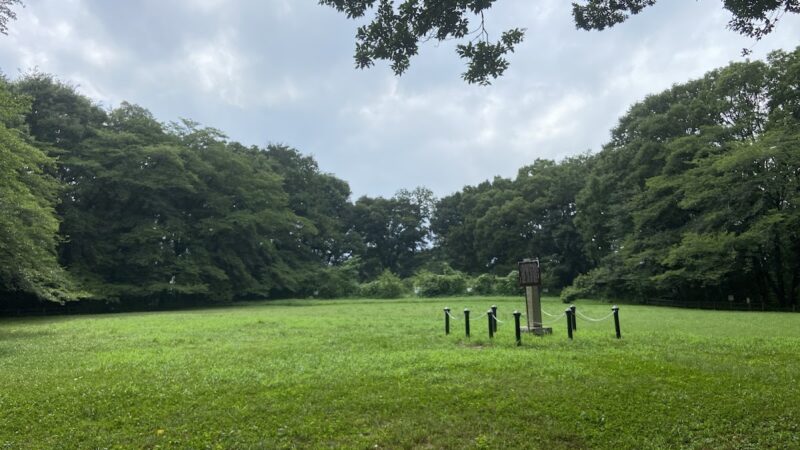
A castle site monument has been erected within the elementary school grounds, providing the only physical evidence that Itabashi Castle existed in this location.
The Theory of the Area Around Chomeiji Temple (One of the Legendary Sites)
Chomeiji Temple, located near the intersection of Kan-nana-dori and Kawagoe-kaido, within walking distance of Tokiwadai Station on the Tobu Tojo Line, is also considered one of the legendary sites of Itabashi Castle. The information board at Chomeiji Temple states that this is “one of the traditional sites of Itabashi Castle, which is said to have been located in Higashiyama during the Muromachi period.”
This theory is based on local traditions and topographical features, but there is no conclusive evidence. However, since this area is also on a slightly elevated location and has terrain suitable for defense, the possibility that part of a castle facility was located here cannot be ruled out.
Other Candidate Sites
Several other candidate sites have been proposed within Itabashi Ward. It is thought that the Itabashi area in the Middle Ages consisted of multiple residences and forts scattered on the plateau along the Shakujii River, and it is possible that one of these was Itabashi Castle, or that multiple facilities were collectively called Itabashi Castle.
Given the current lack of clear remains, it is difficult to completely settle the location dispute, but the theory that it was located around Kami-Itabashi Elementary School is currently considered the most likely.
Structure and Layout of Itabashi Castle
Estimated Castle Structure
Itabashi Castle is classified as a flatland castle and is estimated to have been a medieval castle utilizing the edge of a plateau. Because no clear remains survive, it is difficult to reconstruct the detailed layout (the castle’s blueprint), but it is possible to infer it from surrounding castles of the same period.
Medieval castles in Musashi Province generally had the following characteristics:
- Defense using earthworks and dry moats: Without using stone walls, defensive lines were formed using earthworks and excavated dry moats.
- Arrangement of baileys: A structure in which multiple baileys were arranged around a main bailey.
- Utilization of natural terrain: The elevation difference of the plateau and rivers were used as natural moats.
- Coexistence of living space and defensive space: Functioning as a residence in peacetime and as a defensive base in wartime.
It is believed that Itabashi Castle also possessed these typical characteristics of a medieval castle.
Surrounding Topography and Location Conditions
The area around Higashiyama-cho, where Itabashi Castle is believed to have existed, is located on a plateau about 30-40 meters above sea level, which is part of the Musashino Plateau. This plateau faces a valley carved by the Shakujii River, with steep cliffs on the north and east sides.
This terrain was ideal for a medieval castle, offering the following advantages:
- Excellent Visibility: The plateau offered a panoramic view of the surrounding area, allowing for early detection of approaching enemies.
- Ease of Defense: The cliffs acted as natural barriers, making it difficult for attackers to approach.
- Access to Water Sources: The nearby Shakujii River made securing water easy.
- Strategic Transportation Point: Its proximity to the Nakasendo (Kawagoe Road) allowed for monitoring and control of transportation.
Relationship with Akatsuka Castle and Shimura Castle
In addition to Itabashi Castle, there were two other medieval castles in Itabashi Ward: Akatsuka Castle and Shimura Castle. These three castles are thought to have been part of a castle network built by the Toshima clan and their related forces.
Akatsuka Castle was located in Akatsuka, Itabashi Ward, and was ruled by the Chiba clan. Itabashi-shi is believed to have belonged to the Chiba-shi of Akatsuka Castle, and Itabashi Castle may have served as a subsidiary castle of Akatsuka Castle.
Shimura Castle was located in Shimura, Itabashi Ward, and is believed to have been built by the Shimura-shi. It fell in 1524 after a defeat against Hojo Ujitsuna, and subsequently became a subsidiary castle of the Hojo clan.
It is presumed that these three castles worked together to form a defensive line in western Musashi Province.
Current Itabashi Castle Ruins | Remains and Highlights
Castle Site Monument and Memorial
Currently, the only identifiable remains of Itabashi Castle are the castle site monument erected within the grounds of Itabashi Municipal Kami-Itabashi Elementary School. This monument, erected after a 1972 survey, is an important memorial indicating the existence of Itabashi Castle in this location.
The monument includes a brief explanation of the history of Itabashi Castle and the Itabashi-shi, allowing visitors to learn about its history. However, since it is located on the grounds of an elementary school, consideration for school operations is necessary when visiting.
Current State of the Remains
Unfortunately, no clear castle remains such as earthworks, dry moats, or baileys exist at Itabashi Castle. Due to years of urban development, traces of the castle have almost completely disappeared.
Even visiting the site, it is difficult to imagine that a castle once stood there at first glance. However, careful observation of the surrounding microtopography may reveal slight differences in elevation or unnatural changes in the terrain. While it is difficult to determine whether these are related to the castle, they may offer clues to imagine that a castle once existed here.
Legends of Chomeiji Temple
At Chomeiji Temple, located near the intersection of Kan-nana Street and Kawagoe Kaido, there are legends concerning Itabashi Castle. The temple’s information board mentions Itabashi Castle, indicating that this site is one of the candidate locations for the castle ruins.
While Chōmei-ji Temple itself was founded during the Edo period, reports of medieval artifacts being discovered on its grounds suggest the possibility of some kind of medieval facility existing in the area.
Surrounding Historical Landscape
Although the area around Itabashi Castle ruins is now a residential area, elements that evoke history remain, such as the scenery along the Shakujii River and traces of the old Kawagoe Road. When visiting the castle ruins, paying attention to this surrounding historical environment will allow you to gain a deeper understanding of what the Itabashi area was like in the medieval period.
Access and Visiting Information for Itabashi Castle
Access by Public Transportation
Itabashi Castle Ruins (Kami-Itabashi Elementary School, Itabashi Ward) can be accessed in the following ways:
Access from the Nearest Station
- From Kami-Itabashi Station on the Tobu Tojo Line
- Approximately 15 minutes on foot
- Exit the south exit of the station and head towards Kawagoe Kaido.
- This is the access route from the closest station.
- From Tokiwadai Station on the Tobu Tojo Line
- Approximately 15-20 minutes on foot
- This route passes through the intersection of Kan-nana-dori and Kawagoe Kaido.
- You can also visit Chomeiji Temple (one of the legendary sites).
- From Shimura-Sanchome Station on the Toei Mita Line
- Approximately 20 minutes on foot
- This route is a bit further, but convenient if you are visiting Shimura Castle Ruins as well.
Access and Parking by Car
If visiting by car:
- Take Kawagoe Road (National Route 254) and exit near Kami-Itabashi.
- Accessible from Kan-nana Street as well.
- There is no dedicated parking lot, so you will need to use nearby coin-operated parking lots.
- The area around the elementary school is a residential area, so please avoid street parking.
Precautions for Visiting
When visiting Itabashi Castle Ruins, please note the following:
- Elementary School Grounds: The castle ruins monument is located within the elementary school grounds, so entry during school hours should be avoided.
- Visiting Hours: We recommend visiting outside of school hours on weekdays or on holidays.
- Prior Contact: It is advisable to contact the elementary school in advance and obtain permission.
- Consideration for Surrounding Residents: As this is a residential area, please be careful not to cause any inconvenience to neighbors, such as noise or street parking.
- Photography: Please avoid photographing the elementary school or children, and only photograph the castle ruins monument.
Visiting Nearby Attractions in Combination
When visiting Itabashi Castle Ruins, you can enjoy a more fulfilling historical exploration by visiting the following nearby spots as well:
Akatsuka Castle Ruins (Akatsuka, Itabashi Ward)
- The best-preserved medieval castle in Itabashi Ward
- You can see remains such as dry moats and earthworks
- Approximately 15 minutes by car from Itabashi Castle, also accessible by bus
Shimura Castle Ruins (Shimura, Itabashi Ward)
- The site of the Shimura clan’s castle, with some remains still present
- A castle site monument is located within the grounds of Kumano Shrine
- Approximately 30 minutes on foot from Itabashi Castle, or accessible by train
Walking Path Along the Shakujii River
- An important geographical element for understanding the Itabashi area in the Middle Ages
- A promenade is maintained along the river
Itabashi Ward Local History Museum (Akatsuka, Itabashi Ward)
- Exhibits on the history of Itabashi Ward and medieval castles
- May also house materials related to Itabashi Castle
Literature and Research on Itabashi Castle
Major Historical Documents
The following are some of the main documents that mention Itabashi Castle:
“Shinpen Musashi Fudoki-ko”
A local history compiled in the late Edo period, it contains a description of Itabashi Castle in the section on Kami-Itabashi Village. The statement, “Itabashi Castle is mentioned in the Kamakura Ososhi,” is important evidence of the castle’s existence.
“Kamakura Ososhi”
A military chronicle recording the history of the Kanto region during the Sengoku period, it mentions Itabashi Castle. However, it contains few detailed descriptions, and many aspects of the castle’s specific appearance remain unclear.
“Odawara-ki”
A record concerning the Later Hojo clan, it mentions that Itabashi Higo-no-kami resided at the castle. It is an important historical source for understanding the relationship between the Itabashi and Hojo clans.
Modern and Contemporary Research
Serious research on Itabashi Castle began in the latter half of the 20th century. The 1972 (Showa 47) survey, in particular, was groundbreaking, as it led to the discovery of descendants of the Itabashi clan and the identification of the castle’s location—a significant achievement.
In recent years, local historical research groups such as the Itabashi Historical Society have continued their research on medieval castles within Itabashi Ward, including Itabashi Castle. These studies are gradually clarifying the historical significance of Itabashi Castle and the role of the Toshima clan within the castle network.
However, because definitive archaeological evidence has not yet been obtained, there is still considerable room for further research on Itabashi Castle. Future excavations may reveal new facts.
Medieval History and Castles of Itabashi Ward
Historical Background of Itabashi Ward
The current Itabashi Ward of Tokyo was established in 1932 (Showa 7) when it was incorporated into Tokyo City, and became a special ward in 1947 (Showa 22). The ward’s name originates from the Itabashi bridge on the Nakasendo road that spanned the Shakujii River. The Itabashi area in the Middle Ages belonged to Toshima District of Musashi Province and was ruled by the Toshima clan and their relatives. This area was a strategically important location, a key transportation hub connecting the central part of Musashi Province with Kawagoe.
Major Castles in Itabashi Ward
In addition to Itabashi Castle, the following medieval castles existed in Itabashi Ward:
Akatsuka Castle
- Location: Akatsuka, Itabashi Ward
- Lord: Chiba clan
- Features: The castle with the best-preserved remains in Itabashi Ward. Existing features include dry moats and earthworks.
- Current status: Developed as Akatsuka Castle Ruins Park
Shimura Castle
- Location: Shimura, Itabashi Ward
- Lord: Shimura clan, later a branch castle of the Hojo clan
- Features: Fell in 1524 during a battle with Hojo Ujitsuna
- Current status: Castle ruins monument and some remains remain within the grounds of Kumano Shrine
Tokumaru Castle (Legend)
- Location: Around Tokumaru, Itabashi Ward (estimated)
- Lord: Unknown
- Features: A castle whose very existence is uncertain
These castles are thought to have functioned as part of the Toshima clan and their relatives’ control over western Musashi Province.
The Downfall of the Toshima Clan and Changes in the Itabashi Region
After the Toshima main family was defeated by Ota Dokan in the Battle of Egota-Numabukurohara in 1478, the Itabashi region was gradually incorporated into the sphere of influence of the Later Hojo clan. The Toshima clan, including the Itabashi clan, sought to survive by submitting to the Hojo clan.
When the Hojo clan was destroyed in Toyotomi Hideyoshi’s siege of Odawara in 1590, the Itabashi region came under the control of Tokugawa Ieyasu. During this period, many medieval castles, including Itabashi Castle, were abandoned, and the area developed into an agricultural region during the Edo period.
The Significance of Visiting Itabashi Castle | Historical Romance and the Modern Age
The Charm of a “Phantom Castle”
The greatest charm of Itabashi Castle lies in its mysterious existence. Many mysteries remain, including the lack of clear remains, the long-unknown location, and the scarcity of primary sources.
This character as a “phantom castle” is a major attraction for history enthusiasts and castle fans. Precisely because there is little concrete evidence, there is the pleasure of using one’s imagination to envision what the Itabashi region was like in the medieval period.
Urbanization and the Preservation of Historical Heritage
The case of Itabashi Castle illustrates the modern challenge of the loss of historical heritage due to urbanization. In central Tokyo, many medieval castles have been lost due to development, and in many cases, not even traces remain.
The erection of a monument at the Itabashi Castle site is a small but significant effort to pass on history to future generations. Even without clear remains, Itabashi Castle teaches us the importance of remembering and passing on the history that once existed in that place.
As an Entry Point to Understanding Local History
Visiting Itabashi Castle serves as an entry point to understanding the history of Itabashi Ward, and even the medieval history of Tokyo. Many areas within present-day Tokyo’s 23 wards once had medieval castles or samurai residences. Understanding this history allows us to understand the origins of the cities we live in and the layered historical complexity of the land.
Itabashi Castle is a valuable site that offers a glimpse into a part of the history sleeping beneath the modern urban landscape.
Summary | The Historical Significance and Future Challenges of Itabashi Castle
Itabashi Castle was a medieval castle located in Itabashi Ward, Tokyo. It was the residence of the Itabashi clan, a branch of the Toshima clan. It survived even after Ota Dokan’s conquest of the Toshima clan, and was under the control of the Later Hojo clan, belonging to the Chiba clan of Akatsuka Castle. However, it is believed to have been abandoned in 1590 during the Siege of Odawara.
For many years, its location was unknown, making it a “phantom castle.” However, a 1972 survey revealed that the castle grounds were around the current Itabashi Ward Kami-Itabashi Elementary School. However, no clear remains exist, and many mysteries remain regarding the castle’s detailed structure and history.
The historical significance of Itabashi Castle lies in the following points:
- Evidence of the Toshima Clan’s sphere of influence: Important for understanding the Toshima clan’s and their relatives’ control over western Musashi Province.
- A strategic transportation hub in the Middle Ages: Its role as a strategically important location along the Nakasendo (Kawagoe Road).
- Loss of historical heritage due to urbanization: An example illustrating the challenges of historical preservation in modern times.
- A subject of local history research: An indispensable element for understanding the history of Itabashi Ward.
Future challenges include the following:
- Implementation of archaeological investigations: Discovery of clear remains and clarification of the castle’s actual state.
- Continuation of documentary research: Clarification of history through the discovery of new historical materials.
- Utilization in history education: Use as teaching material for local history education.
- Preservation and commemoration: Maintenance of the castle site monument and transmission of history.
Itabashi Castle, precisely because its existence is shrouded in mystery, stimulates our imagination about history and inspires our desire to explore the history of the region. Unearthing the medieval memories buried within the modern urban landscape and passing them on to future generations is a crucial responsibility for us.
While there are few visible remains when visiting the Itabashi Castle ruins, one can reflect on the historical fact that a castle once stood here and that the Itabashi samurai lived here. Such imagination is the true joy of learning history, and perhaps the greatest gift Itabashi Castle offers us.