History and Highlights of Takayasu-ji Castle (Fuchu City, Tokyo) | Ancient Castle Ruins that served as the site of the Battle of Bubaigawara
Located in Katamachi, Fuchu City, Tokyo, Takayasu-ji Castle is the site of a castle that functioned as an important military base from the Nanboku-cho period to the Muromachi period. Currently, it is the grounds of Ryumon-zan Takayasu Gokoku Zenji Temple (commonly known as Takayasu-ji Temple), and along with historical buildings, it preserves the atmosphere of its former glory.
Basic Information on Takayasu-ji Castle
Due to its geographical importance near the Musashi Provincial Capital, Takayasu-ji Castle was repeatedly used militarily throughout the medieval period.
Location: 2-4-1 Katamachi, Fuchu City, Tokyo
Former Province: Musashi Province
Common Name/Alternate Name: Takayasu-ji Manor, Takayasu-ji Fort
Year of Construction: Around 1333 (Genkō 3/Shōkei 2)
Builder: Nitta Yoshisada (established the main camp), Fujiwara Hidesato (legend)
Major Lords: Nitta Yoshisada, Ashikaga Shigeuji, Uesugi clan, Hojo clan
Year of Abandonment: Late Sengoku period
Remains: Terrace cliff, topography of the temple grounds
Designated Cultural Property: Main Hall, Temple Gate, Bell Tower, Kannon Hall (Historically Designated Buildings by the Tokyo Metropolitan Government)
History and Development of Takayasu-ji Castle
Origins in the Heian Period
The origins of Takayasu-ji Castle are said to date back to the Heian period. According to tradition, the temple’s origins lie in the mid-Heian period, when Fujiwara no Hidesato (Tawara no Tōta), a military commander, established a residence near the Musashi Provincial Government and named it Ichikawayama Kenshōji. Fujiwara no Hidesato is known for suppressing the rebellion of Taira no Masakado, and legends associated with him remain throughout the Kanto region.
During the time when the Musashi Provincial Government was located in Fuchū, this area was a strategically important political and military center. Its location, situated between the old Kōshū Kaidō and the Kamakura Kaidō, made it a crucial transportation hub in all directions, possessing the conditions to become a militarily important base.
Late Kamakura Period to Nanboku-chō Period
Takayasu-ji Castle first appears on the historical stage during the Battle of Bubaigawara in 1333 (Genkō 3/Shōkei 2), which marked the fall of the Kamakura Shogunate.
Responding to Emperor Go-Daigo’s plan to overthrow the shogunate, Nitta Yoshisada raised an army in Kōzuke Province (present-day Gunma Prefecture) and marched toward Kamakura. On May 15th, Nitta’s army clashed with the shogunate forces led by Hōjō Yasuie at Bubaigawara. In this initial battle, Nitta’s army suffered a defeat and was forced to retreat to Horikane (present-day Sayama City, Saitama Prefecture).
However, the following day, the 16th, Nitta Yoshisada regrouped and marched toward Bubaigawara again, establishing his headquarters at Kōyasu-ji Temple. In this battle, Nitta’s army defeated the shogunate forces, subsequently succeeding in capturing Kamakura and bringing about the downfall of the Kamakura shogunate. The Battle of Bubaigawara was a crucial turning point in Japanese history, and Kōyasu-ji Castle played a significant role in its development.
Restoration by Ashikaga Takauji
When the Kenmu Restoration collapsed and the Nanboku-cho period of turmoil began, Ashikaga Takauji invited Zen Master Daitetsu (Sōetsu) of Kenchō-ji Temple to be its founding abbot, and restored Ichikawa-yama Kenshō-ji Temple as a Rinzai Zen temple. This was the beginning of Ryūmon-zan Takayasu Gokoku Zen-ji Temple, the present-day Takayasu-ji Temple.
It is believed that Ashikaga Takauji’s restoration of Takayasu-ji Temple was influenced by his awareness of the strategic importance of the area, particularly after Nitta Yoshisada’s victory at the Battle of Bubaigawara. It is also thought that he intended to commemorate the war dead and pray for continued military success.
As a Military Base in the Muromachi Period
Even into the Muromachi period, Takayasu-ji Castle continued to play a crucial role as a military stronghold.
In Kōshō 1 (1455), another Battle of Bubaigawara occurred as part of the Kyōtoku Rebellion. Records show that at this time, Ashikaga Shigeuji, the 5th Kamakura Shogun, holed up in Takayasu-ji Temple and repelled the attacking forces of the Kanto Kanrei (governor of the Kanto region), the Uesugi clan. This battle symbolizes the political turmoil in the Kanto region and demonstrates that Takayasu-ji Castle was a battlefield.
Afterward, Takayasu-ji Castle was repeatedly used militarily by various Kanto forces, including the Uesugi and Later Hojo clans. Throughout the Sengoku period, this site remained an important strategic point in the struggle for control of Musashi Province.
Decline due to War and the Present
However, repeated wars gradually led to the dilapidation of Takayasu-ji Temple. By the end of the Sengoku period, it had lost its function as a castle and steadily declined as a temple.
With the arrival of the Edo period, peace returned under the rule of the Tokugawa shogunate, and Takayasu-ji Temple was restored as a temple. The main buildings of the current temple, including the main hall, temple gate, bell tower, and Kannon Hall, were constructed from the Edo period to the modern era and are designated as historically significant buildings by the Tokyo Metropolitan Government.
While no clear remains of the castle itself exist, traces of former defensive structures can be seen in the terrace cliff south of the temple and in the topography of the temple grounds.
Layout and Structure of Takayasu-ji Castle
Topographical Features
The most distinctive feature of Takayasu-ji Castle lies in its location. A terrace cliff with a height difference of approximately 5 meters exists south of the temple, and the JR Nambu Line currently runs along this cliff. This terrace cliff functioned as a natural defensive structure, enhancing the temple’s defenses against attacks from the south.
Located on the river terrace of the Tama River, this terrain combined excellent visibility with a suitable elevation difference for defense. Its position between the old Koshu Kaido and Kamakura Kaido, two major highways, was ideal for controlling a key transportation hub.
Scope of the Castle Grounds
While there are various theories regarding the exact boundaries of Takayasu-ji Castle, it is generally believed to have encompassed the area centered around the current grounds of Takayasu-ji Temple. It is highly probable that the entire grounds of the large temple complex included the former castle facilities.
Medieval castles typically functioned as temples or residences in peacetime and were used as defensive structures during wartime. Takayasu-ji Castle is a typical example of such a “castle-temple,” and it is thought that the temple’s moats and walls were repurposed as defensive structures.
Relationship with Surrounding Castles
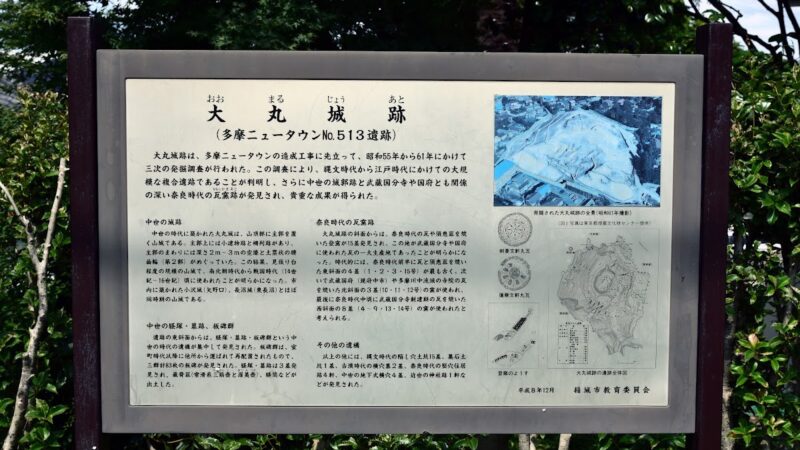
Several medieval castles, including Daimaru Castle and Sekido Castle, existed around Takayasu-ji Castle. These formed a defensive network centered around the Musashi Provincial Government, and it is presumed that Takayasu-ji Castle played a part in this network.
The place name “Bubaigawara” itself indicates a battle fought on a riverbed in the past, suggesting that this area was militarily important.
Highlights and Local Information of Takayasu-ji Castle
Tokyo Metropolitan Government Designated Historic Buildings
Currently, Takayasu-ji Temple has four buildings designated as Tokyo Metropolitan Government Designated Historic Buildings.
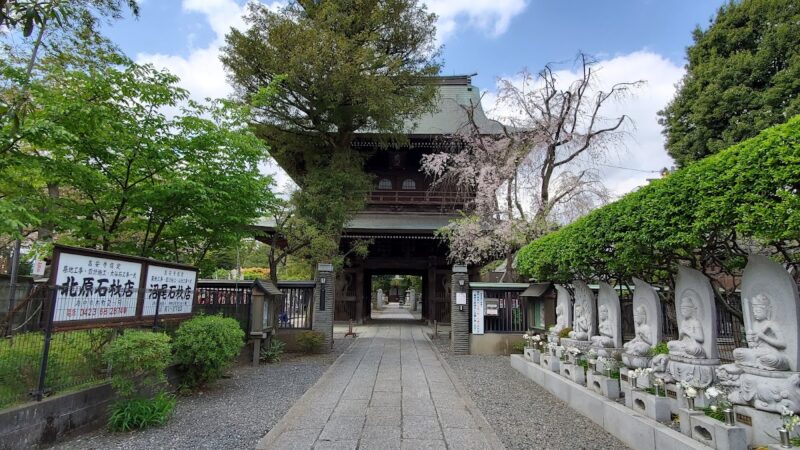
Main Hall: The imposing main hall exhibits a simple yet powerful architectural style characteristic of Zen Buddhist temples. The principal image is enshrined inside, welcoming visitors.
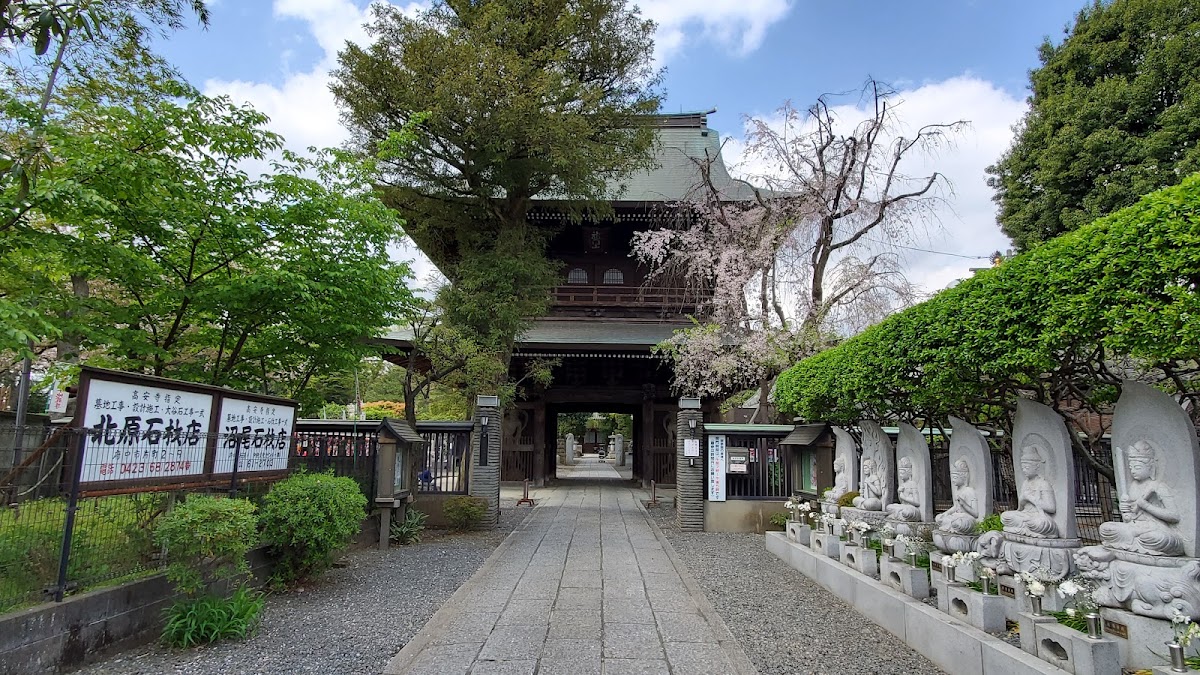
Temple Gate: The temple gate, adorning the front of the temple, welcomes visitors with its dignified construction. Its magnificent two-story gate structure evokes the temple’s former prosperity.
Bell Tower: The bell tower, where the temple bell is hung, maintains a traditional architectural style and is still used for events such as the New Year’s Eve bell ringing.
Kannon Hall: The Kannon Hall, dedicated to Kannon Bodhisattva, is a place of worship cherished by the local people.
These buildings are not castle remains, but they are important cultural assets that convey the long history of Takayasu-ji Temple.
Terrace Cliff and Topography
The terrace cliff extending south of the temple, below the cemetery, is an important geographical feature suggesting the former defensive line of the castle. Looking up from the base of the cliff, where the JR Nambu Line now runs, you can clearly see the approximately 5-meter difference in elevation.
This defensive technique utilizing the cliff line is typical of medieval castles and can be considered the only physical evidence that conveys the military character of Takayasu-ji Castle.
Atmosphere of the Temple Grounds
The grounds of Takayasu-ji Temple are enveloped in a tranquil and peaceful atmosphere. Despite its proximity to the city center, the environment surrounded by lush greenery provides solace to visitors.
Walking through the grounds, one can feel the romance of history as one reflects on the fact that this was once the site of Nitta Yoshisada’s headquarters and the place where Ashikaga Shigeuji was besieged.
Transportation Access and Surrounding Information
Access Method
Public transportation is the most convenient way to access Takayasu-ji Castle (Takayasu-ji Temple).
Nearest Stations:
- Approximately 10-minute walk from Fuchu-Honmachi Station (JR Nambu Line/Musashino Line)
- Approximately 10-minute walk from Bubaigawara Station (JR Nambu Line)
- Approximately 15-minute walk from Fuchu Station (Keio Line)
All stations are within walking distance, making access excellent. If approaching from Bubaigawara Station, the station name itself indicates the site of a historical battle, enhancing the historical atmosphere.
Address: 2-4-1 Katamachi, Fuchu City, Tokyo
Nearby Historical Spots
Several related historical spots exist around Takayasu-ji Castle.
Bubaigawara Battlefield Monument: Near Bubaigawara Station, a stone monument commemorating the battle between Nitta Yoshisada and Hojo Yasuie stands. Visiting this monument along with Takayasu-ji Castle will provide a deeper understanding of the Battle of Bubaigawara.
Okunitama Shrine: A historic shrine with a long history dating back to ancient times, serving as the principal shrine of Musashi Province. It has deep ties to the Musashi Provincial Government. It is within walking distance of Fuchu Station.
Musashi Provincial Government Site: The ruins of the ancient Musashi Provincial Government are preserved as scattered archaeological sites within Fuchu City. This is important for understanding why Takayasu-ji Castle was built in this location.
Sekido Castle Site: Located in Tama City, across the Tama River, this medieval castle functioned at the same time as Takayasu-ji Castle.
Points to Note When Visiting
Takayasu-ji Temple is an active temple, so please note the following points when visiting.
- Visit during visiting hours and maintain quiet.
- Obtain permission before taking photographs inside the main hall.
- Act especially cautiously in the cemetery area.
- Parking is limited, so using public transportation is recommended.
Significance of Visiting Takayasu-ji Castle
As a Place for Historical Education
Takayasu-ji Castle is a place involved in a major turning point in Japanese history: the fall of the Kamakura Shogunate. Visiting the actual site of the “Battle of Bubaigawara,” which you learn about in textbooks, allows you to feel history more closely.
Takayasu-ji Castle has historical significance beyond mere castle ruins, as it was the place where Nitta Yoshisada established his headquarters and devised the strategy that led to his victory the following day, and where Ashikaga Takauji rebuilt the temple to commemorate those who died in battle.
Historical Heritage in the City
Located within the metropolis of Tokyo, Takayasu-ji Castle, which conveys medieval history to the present day, is an important example for considering the balance between urban development and historical preservation. Because no clear castle remains exist, imagination is required to interpret history from the topography and the presence of temples.
Understanding Local History
Fuchu City was the site of the ancient Musashi Provincial Government and was an important area throughout the Middle Ages. Visiting Takayasu-ji Castle provides an opportunity to gain a deeper understanding of the local history and serves as a catalyst for becoming aware of the layers of history sleeping beneath the current cityscape.
Current Status of Research and Preservation
Academic Evaluation
The existence and role of Takayasu-ji Castle have been confirmed through historical documents and the local topography. However, archaeological excavations have been limited, and much remains to be seen regarding the detailed layout and structure of defensive facilities, requiring further research.
Takayasu-ji Castle occupies an important position in the study of medieval castles in Tokyo, and due to its connection to the Battle of Bubaigawara, it is also attracting attention as a subject of military history research.
Efforts Towards Preservation
The fact that the buildings of Takayasu-ji Temple are designated as historically significant buildings by the Tokyo Metropolitan Government indicates that the historical value of this site is officially recognized. This site is a prime example of how religious activities as a temple can be successfully balanced with the preservation of historical heritage.
Continued research and investigations by local history enthusiasts and castle researchers are also underway, with ongoing efforts to pass on the historical significance of Takayasu-ji Castle to future generations.
Summary
Takayasu-ji Castle, located in the modern urban environment of Fuchu City, Tokyo, is a valuable historical site that conveys the turbulent history from the late Kamakura period to the Muromachi period. Appearing repeatedly in important scenes of Japanese history, such as the establishment of Nitta Yoshisada’s headquarters during the Battle of Bubaigawara, the temple’s reconstruction by Ashikaga Takauji, and Ashikaga Shigeuji’s siege, this place is truly a witness to history.
Because no clear castle remains are left, it may appear at first glance to be an ordinary temple. However, understanding the topography of the terrace cliff, its location between old roads, and the temple’s history reveals that this was once an important military base.
History buffs, and anyone visiting Fuchu City, should definitely visit Takayasu-ji Temple, the site of Takayasu-ji Castle. In the tranquil grounds, you can feel the presence of the warriors from 700 years ago. As a historical island amidst the hustle and bustle of the city, Takayasu-ji Castle is a precious place that teaches us the connection between the past and the present.