Jingamori Castle, Tosa District, Kochi Prefecture | A Thorough Explanation of the History of Jingamori and Mountain Castles during the Sengoku Period
What is Jingamori Castle?
Jingamori Castle is a medieval mountain castle built around the summit of Mt. Jingamori (elevation 1013.3m), located near the border of Tosa Town and Ino Town in Tosa District, Kochi Prefecture. Situated at a strategic point in the southern part of the Shikoku Mountains, it functioned as an important military base in Tosa Province during the Sengoku period.
The name Jingamori (meaning “camping mountain”) originates from the fact that, despite its relatively low elevation, it offers expansive views, and many feudal lords fought for control of the surrounding area as a strategic stronghold. This geographical characteristic enhanced its value as a mountain castle, making it the stage for battles fought by multiple forces.
Currently, Mt. Jingamori is selected as one of the 100 Famous Mountains of Shikoku and is popular with mountain climbing enthusiasts. From the summit, you can enjoy a panoramic view of the Tosa Mountains, experiencing the same scenery that the former castle lords once saw.
Historical Background of Jingamori Castle
Situation in Tosa Province during the Sengoku Period
During the Sengoku period, Tosa Province was divided among powerful local lords such as the Motoyama, Chosokabe, and Ichijo clans. The area around Tosa County, where Jingamori Castle is located, was a border zone between these forces, resulting in constant military tension.
In particular, the area around Tosa Town in Tosa County was the point of contact between the Motoyama and Chosokabe clans’ spheres of influence, playing a crucial role in their conflicts. High ground with good views, like Jingamori, was essential for monitoring enemy movements and serving as a base for military operations.
Construction Period and Lord
The exact construction period of Jingamori Castle cannot be definitively determined due to limited clear historical records. However, it is believed that a castle was constructed in this area during the mid-to-late Sengoku period, when numerous mountain castles were built by lords within Tosa Province for territorial defense and power expansion.
Construction Period and Lord
The surrounding area contains several mountain castles, including Mori Castle (Tosa-cho), which was controlled by the Mori clan, and Motoyama Castle, the base of the Motoyama clan. It is possible that Jingamori Castle functioned as part of this castle network.
The Mori clan held the area around Tosa-cho as their territory from around 1504, and Mori Castle served as their residence. Jingamori Castle was likely under the control of either the Mori or Motoyama clan, and it is presumed to have been used as an outpost (branch castle) for border defense and surveillance between the two forces.
The Rise of the Chosokabe Clan and the Fate of the Castle
In the latter half of the 16th century, as Chosokabe Motochika advanced the unification of Tosa Province, local lords such as the Motoyama and Mori clans were successively incorporated under the Chosokabe clan’s control. With the surrender of the Motoyama clan in 1575, the entire Tosa County came under the control of the Chosokabe clan.
During this process, it is believed that Jingamori Castle also came under the control of the Chosokabe clan. However, after Chosokabe Motochika moved his base from Okotoyo Castle to Urado Castle in 1588, many mountain castles in Tosa Province lost their military importance and were abandoned.
After the Battle of Sekigahara, in 1601, Yamauchi Kazutoyo entered Tosa Province and began construction of Kochi Castle, at which point the mountain castles of the Sengoku period completely ceased to exist. It is presumed that Jingamori Castle was also abandoned around this time.
Structure and Remains of Jingamori Castle
Location and Topography of the Castle
Jingamori Castle is a typical mountain castle built on the summit of Jingamori Mountain (elevation 1013.3m) and the surrounding ridges. Among the mountains of the southern Shikoku Mountains, it has a relatively isolated shape and features a topographical characteristic of open views of the surrounding area.
From the mountaintop, one could see the Ishizuchi mountain range to the north, Tosa Bay to the south, and the mountains of Tosa to the east and west, making it an ideal location for a military observation post. Furthermore, its position overlooking the major valleys of Tosa County offered the advantage of early detection of enemy invasion routes.
Enclosures and Defensive Structures
Regarding the remains of Jingamori Castle, detailed archaeological excavations have not been conducted, so the exact structure of the castle is not fully understood. However, it is said that traces of artificial flat areas (enclosures) remain on the mountaintop and surrounding ridges.
Similar to typical Tosa mountain castles, the following defensive structures may have existed:
- Main Enclosure (Honmaru): The central enclosure located at the highest point of the mountaintop
- Secondary Enclosure: Multiple enclosures arranged to surround the main enclosure
- Moat: A defensive ditch dug to cut across the ridge
- Earthwork: An earthen wall built around the enclosure
- Vertical Moat: A defensive structure dug vertically into the slope
However, due to years of weathering and overgrown vegetation, many of these remains are unclear.
Current Status of Existing Remains
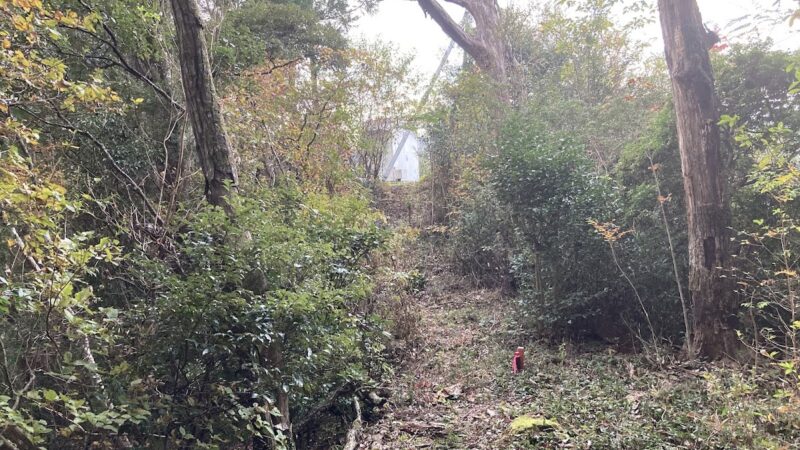
The current summit of Jingamoriyama has well-maintained hiking trails and is visited by many hikers as one of the 100 Famous Mountains of Shikoku. However, preservation and maintenance of the castle remains are limited, and there are no clear signposts or explanatory panels.
Careful observation of the area around the summit may reveal artificial flat areas and slight elevation changes that differ from the natural terrain. These may be remnants of baileys and earthworks from the castle era, but it is difficult to say for certain without specialized investigation.
Some castle researchers and history enthusiasts hope for a more detailed investigation of the remains of Jingamori Castle to reveal its historical value.
Castle Network around Jingamori
Relationship with Mori Castle
Approximately 10 km northwest of Jingamori Castle lies Mori Castle (Tosa Town), the residence of the Mori clan. Mori Castle was a mountain castle built on Hanaseyama in Tosa Town, and place names such as “Shiroyama” and “Shirotsurui” remain.
The Mori clan held this area as their territory from around Eisho 1 (1504), and it is believed that the 3rd head of the clan, Mori Yorishige, designated it as his residence, and the 4th head, Yorizane, built it in earnest. The Mori clan’s territory extended from Tosa Town to the Shioe area of Kochi City, and Jingamori Castle may have been a watchtower located at the eastern edge of this region.
Location in relation to Motoyama Castle
To the east of Jingamori Castle was Motoyama Castle (Motoyama Town), the base of the Motoyama clan, one of the seven powerful clans of Tosa Province. The Motoyama clan held power primarily in Tosa County and fiercely contested with the Chosokabe clan during the Sengoku period.
Jingamori Castle is located near the border between the Mori and Motoyama territories, and may have functioned as a buffer zone between the two forces, or as a joint defense base if they were in a cooperative relationship.
Position within the Chosokabe Clan’s Castle System
After Chosokabe Motochika unified Tosa Province, Jingamori Castle is thought to have been incorporated into the Chosokabe clan’s extensive castle network. While the Chosokabe clan’s base was Okotoyo Castle, they maintained numerous branch castles within Tosa Province to govern their territory.
Jingamori Castle may have been incorporated into the Chosokabe clan’s territorial control system as one of the branch castles responsible for monitoring and defending the northern part of Tosa County. However, after Motochika moved his base to Urado Castle, its military importance is thought to have declined.
Geography and Hiking Routes of Jingamori
Mountain Overview
Jingamori is a mountain with an elevation of 1013.3m located on the border of Tosa Town and Ino Town in Tosa District, Kochi Prefecture, and is selected as one of the 100 Famous Mountains of Shikoku. Belonging to the southern part of the Shikoku Mountains, it has a relatively isolated shape, resulting in excellent views from the summit.
As mentioned above, the mountain’s name originates from the fact that many feudal lords fought battles for control of the mountain during the Sengoku period (Warring States period). This historical background is an interesting point for hikers.
Main Hiking Routes
There are several hiking routes to Jingamori, but the most common is the following course:
Route from Tosa Town: This route ascends along the ridge from the trailhead in Tosa Town, and has a relatively well-maintained hiking trail. The hiking time is approximately 2-3 hours one way.
Route from Ino Town: While it’s possible to approach from the Ino Town side, the route is slightly longer than the Tosa Town side.
The hiking trail is generally well-maintained, but there are steep and slippery sections, so appropriate equipment and preparation are necessary. Particular caution is needed during winter due to the possibility of snow and ice.
Views from the Summit
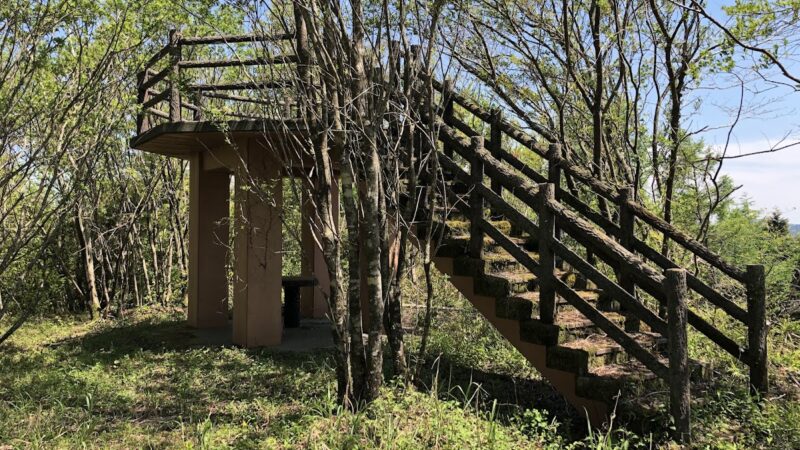
From the summit of Jingamoriyama, a 360-degree panoramic view unfolds. On clear days, you can enjoy the following scenery:
- North: The mountains of the Ishizuchi mountain range
- South: Tosa Bay and the Pacific Ocean
- East: The mountains of the Tsurugi mountain range
- West: The Kochi Plain and the mountains of Tosa
This magnificent view is the reason why this mountain was chosen as a military base during the Sengoku period, and it remains a major attraction for modern hikers. You can gaze upon the same scenery while imagining the former castle lords who set up watchtowers and monitored enemy movements.
Tosa’s Mountain Castle Culture and Jingamori Castle
Characteristics of Tosa’s Mountain Castles
Tosa Province (present-day Kochi Prefecture) is a region where many mountain castles were built due to its topographical characteristics. The rugged mountains and deep valleys of the Shikoku Mountains provided numerous suitable locations for mountain castles.
Tosa’s mountain castles share the following common characteristics:
- Utilization of Steep Terrain: Defensive design that makes maximum use of the natural terrain
- Placement on Ridges: Enclosures are continuously arranged on mountaintops and ridges
- Simple Structure: Few stone walls, with defensive facilities centered on earthworks and moats
- Emphasis on Views: Location selection that emphasizes surveillance
Jingamori Castle is thought to have been a typical Tosa mountain castle possessing these characteristics.
Value as a Medieval Castle
Hundreds of medieval castle sites have been confirmed in Kochi Prefecture, and many of them are mountain castles built during the Sengoku period (Warring States period). These castles are valuable historical relics that tell the story of the complex political situation in Tosa Province and the power struggles among local lords.
Jingamori Castle, with its unique location (over 1000m above sea level) and the historical background reflected in the mountain’s name, is an interesting case study in the study of mountain castles in Tosa. Further detailed investigations may reveal more historical facts.
Challenges of Preservation and Utilization
Currently, many mountain castles in Tosa, including Jingamori Castle, face challenges in preserving their remains and raising awareness of their historical value. While they are used as hiking trails, their recognition as castle remains is not necessarily high.
The following initiatives are expected in the future:
- Confirmation and recording of remains through professional archaeological excavations
- Provision of historical information through the installation of information boards and explanatory signs
- Utilization as a resource for local history education and tourism
- Appropriate preservation and management of remains
Through these efforts, it is hoped that the historical value of Jingamori Castle will be widely recognized and passed on to future generations.
Visiting Information and Access
Access Method
Access to Jingamori is primarily from the Tosa Town side.
Access by Car:
- Head north on National Route 33 from Kochi City towards Tosa Town.
- Use the forest road leading to the trailhead from Tosa Town.
- Parking space available near the trailhead (limited number of spaces).
Public Transportation:
- Access by public transportation is limited.
- Take a bus from Kochi Station towards Tosa Town, then use a taxi or other means of transport.
Points to Note When Visiting
When visiting Jingamori, please note the following:
- Mountaineering Equipment: This is a mountainous area over 1000m above sea level; appropriate mountaineering equipment is necessary.
- Weather Check: Weather at the summit is unpredictable, so checking the weather forecast beforehand is important.
- Seasonal Consideration: Snow and ice are possible in winter; this is for advanced climbers.
- Avoid Solo Hiking: Hiking in groups is recommended whenever possible.
- Protection of Historical Remains: Take care not to damage the terrain that may contain castle remains.
Nearby Tourist Attractions
Around Jingamori Castle and Jingamori, there are other historical and tourist spots:
- Old Townscape of Tosa Town: Tosa Town has areas where historical streetscapes remain.
- Sameura Dam: One of Japan’s largest multi-purpose dams.
- Motoyama Castle Ruins in Motoyama Town: The ruins of the castle of the Motoyama clan, one of the seven powerful clans of Tosa.
- Mori Castle Ruins: The ruins of the castle of the Mori clan, located within Tosa Town.
Visiting these spots in combination will allow you to gain a deeper understanding of the history and nature of Tosa County.
Summary
Jingamori Castle is a Sengoku period mountain castle built on Jingamori, at an altitude of 1013m, in Tosa County, Kochi Prefecture. Its name originates from the history of “territory capture battles,” which tell the story of the fierce power struggles in Tosa Province during the Sengoku period.
Currently, it is a popular mountain for hikers as one of the 100 Famous Mountains of Shikoku, and the view from the summit is magnificent. Although many details of the castle ruins remain unclear, it is an important site for understanding the mountain castle culture of Tosa.
For history enthusiasts, it offers a valuable opportunity to gaze upon the same landscape seen by the former castle lords and reflect on Tosa during the Sengoku period. Further research and investigation are expected to reveal even more historical facts.