Hōgon Castle (Ochi-cho, Takaoka-gun) | A Thorough Explanation of the History and Remains of Mountain Castles in Kochi Prefecture
What is Hōgon Castle?
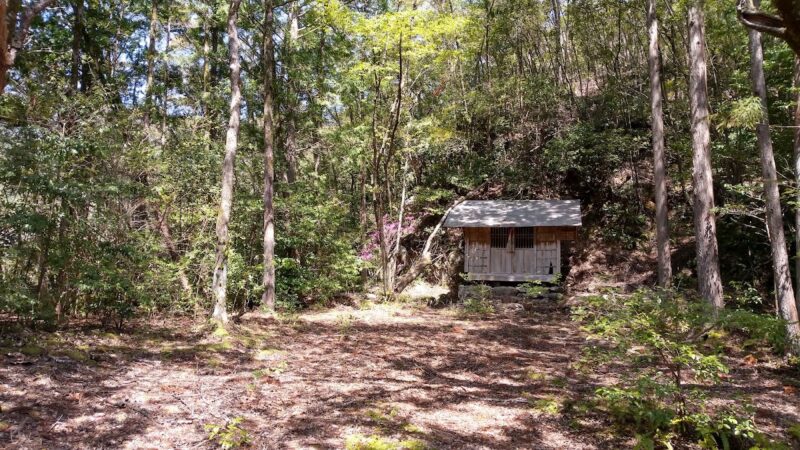
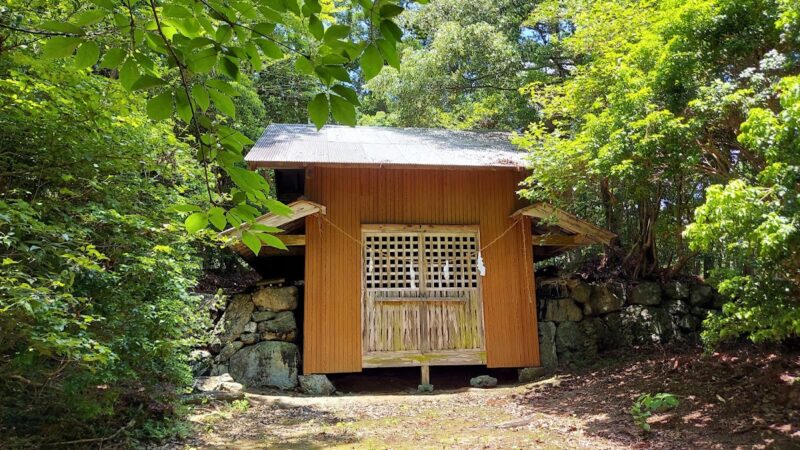
Hōgon Castle is a medieval mountain castle located in Kataoka, Ochi-cho, Takaoka-gun, Kochi Prefecture. Built on a mountaintop at an altitude of 331m, it is known as a highly defensible fortress that took advantage of the steep terrain with a relative height of approximately 280m. Currently, the area is home to Okamoto Shrine, and the remains of the castle are well-preserved.
While Kochi Prefecture boasts many famous castles such as Kochi Castle, Okotoyo Castle, Aki Castle, and Nakamura Castle, Hōgon Castle is one of the important mountain castles indispensable to understanding the region’s history. Research on Hōgon Castle provides valuable clues for understanding the medieval mountain castle culture of Tosa Province.
Location and Geographical Characteristics of Hōgon Castle
Topography of Kataoka, Ochi Town
Hōgon Castle was built in Ochi Town, Takaoka District, Kochi Prefecture, a naturally rich area located in the upper reaches of the Niyodo River. The Kataoka district is located northwest of the center of Ochi Town and exhibits a typical mountainous terrain surrounded by mountains.
The main keep was situated on a mountaintop at an altitude of 331m, and the relative height from the foot of the mountain was approximately 280m, placing it among the mountain castles in Kochi Prefecture with a considerable difference in elevation. This steep terrain functioned as a natural fortress, making enemy intrusion difficult.
Strategic Positioning
Hōgon Castle’s location was crucial for monitoring and controlling the transportation routes in the Niyodo River basin. In the Middle Ages, rivers were major transportation routes, playing a vital role in the transport of goods and military movements. Hōgon Castle is located overlooking the Niyodo River system and is thought to have functioned as a base for regional control.
In Takaoka District, Kochi Prefecture, there are several other castles, including Kure Castle (Kure, Nakatosa-cho, Takaoka-gun, Kochi Prefecture) and Sagawa Castle. It is possible that these castles, in conjunction with Hōgon Castle, formed a defense network in western Tosa Province.
History of Hōgon Castle
Background and Period of Construction
While there are limited reliable historical sources regarding the construction period of Hōgon Castle, its structure and the characteristics of its remains suggest it was built during the Sengoku period (Warring States period). Before the unification of Tosa Province by the Chōsokabe clan, many local lords held sway, and Hōgon Castle is thought to have been built as a base for such regional powers.
In Kochi Prefecture, the Chōsokabe clan, based at Ōkō Castle, gradually expanded their power, and by the latter half of the 16th century, they had almost unified Tosa Province. It is possible that Hōgon Castle came under the influence of the Chōsokabe clan during this process, or that it became a target for conquest.
Castle Lords and Rulers
Currently, there are no clear records regarding the specific lords of Hōgon Castle. However, examining the local history around Ochi Town reveals that several local lords and regional rulers existed in this area.
In the medieval history of Tosa Province, the Takaoka District of Kochi Prefecture was a complex area of power relations. Considering its relationship with surrounding castles such as Asakura Castle and Motoyama Castle (Motoyama, Motoyama-cho, Nagaoka-gun, Kochi Prefecture), it is presumed that Hōgon Castle was also maintained and managed by influential local figures.
Abandonment and the Present
There are no definitive records regarding when Hōgon Castle was abandoned, but it is thought that many medieval mountain castles ceased to function after Toyotomi Hideyoshi’s conquest of Shikoku (1585) or after the Battle of Sekigahara (1600), when Yamauchi Kazutoyo entered Tosa and built Kochi Castle.
During the Edo period, the “One Castle Per Province” decree (1615) resulted in the demolition of all castles within the Tosa Domain except for Kochi Castle. It is presumed that Hōgon Castle completely lost its function as a military facility during this period.
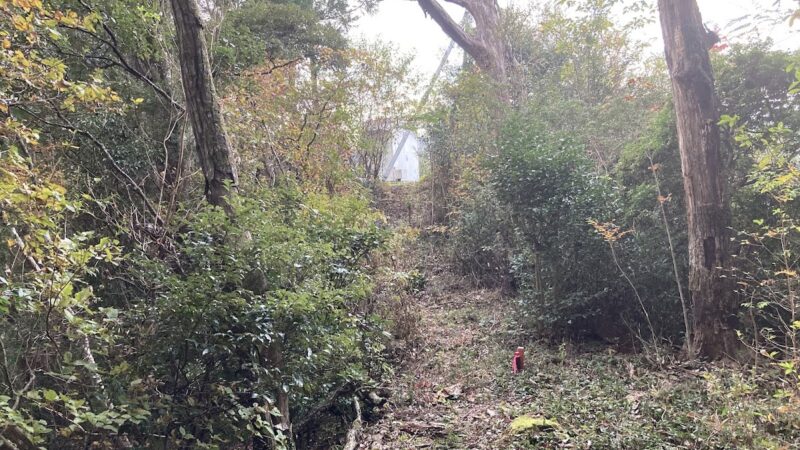
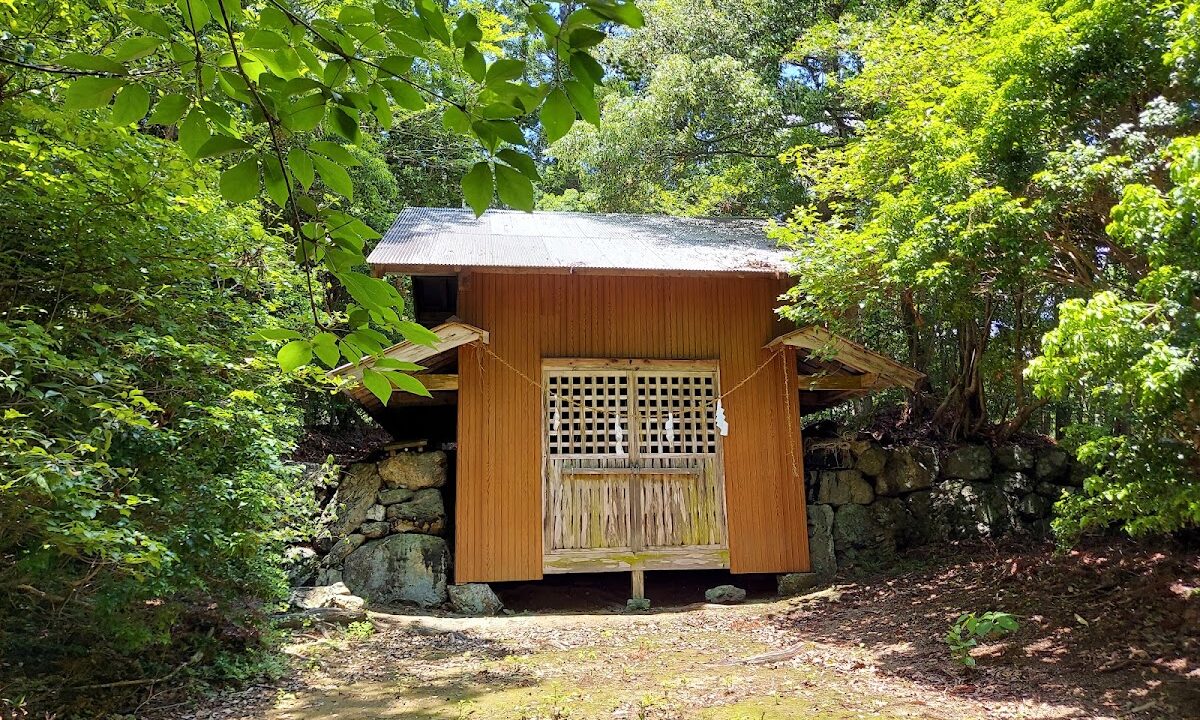
Currently, Okamoto Shrine stands on the castle site, carefully preserved as a place of local worship.
Layout and Structure of Hōgon Castle
Characteristics as a Mountain Castle
Hōgon Castle is a typical mountain castle, characterized by its layout that skillfully utilizes the natural terrain. The main enclosure (honmaru) is located on the mountaintop at an altitude of 331m, and from there, multiple baileys (kuruwa) are arranged in a stepped pattern along the ridge and slopes.
Mountain castles, compared to flatland castles and hill castles, had the advantage of higher defensive capabilities due to their terrain, making them easier to defend with fewer troops. Hōgon Castle also utilized its steep slope with a relative height of 280m, securing a terrain overwhelmingly advantageous to attackers.
Major Remains
The following remains have been confirmed at Hōgon Castle:
Horikiri (Moat)
Horikiri are defensive structures dug to cut across ridges, playing a crucial role in preventing enemy incursions. Multiple horikiri have been confirmed at Hōgon Castle, indicating the use of defensive techniques unique to mountain castles.
Kuruwa (Enclosure)
Kuruwa are flat, leveled areas that functioned as spaces for building structures and deploying troops. At Hōgon Castle, multiple kuruwa are arranged around the main enclosure, forming a layered defensive structure.
Kirigishi (Cut Slope)
Kirigishi, steep slopes created by cutting around the kuruwa, have also been confirmed, demonstrating ingenuity in making enemy ascents difficult.
Characteristics of the Castle Layout
While the layout of Hōgon Castle shares characteristics common to mountain castles in Tosa Province, it also exhibits unique ingenuity adapted to the local topography. Compared to other mountain castles in Kochi Prefecture, such as Himenono Castle (Himeno, Tsuno-cho, Takaoka-gun, Kochi Prefecture) and Kakumi Castle, the arrangement of moats and the shape of the baileys reveal regional characteristics.
The castle’s layout, utilizing the ridgeline, effectively limited attack routes and created a battle environment advantageous to the defenders.
Hōgon Castle and the Surrounding Castle Network
Castle Groups in Takaoka-gun, Kochi Prefecture
Besides Hōgon Castle, many other medieval castles existed in Takaoka-gun, Kochi Prefecture. Kure Castle (Kure, Nakatosa-cho, Takaoka-gun, Kochi Prefecture) was located near the coast and played a role in controlling a key point for maritime traffic. Sagawa Castle also functioned as an important inland base.
It is believed that these castles cooperated with each other, sharing information using communication methods such as signal fires. Hōgon Castle likely played a part in this network, contributing to the defense of the Niyodo River basin.
Relationship with Major Castles in Tosa Province
Looking at Tosa Province as a whole, important castles were located in various regions, including Kochi Castle (Kochi City, Kochi Prefecture), Okotoyo Castle (Nankoku City, Kochi Prefecture), Aki Castle (Aki City, Kochi Prefecture), Urado Castle (Urado, Kochi City, Kochi Prefecture), and Nakamura Castle (Shimanto City, Kochi Prefecture).
Although Hogen Castle was not large in scale, it played an important role in the castle system of Tosa Province as a castle that served as the periphery of regional control. In particular, the existence of such small mountain castles throughout the region during the Chosokabe clan’s unification of Tosa illustrates the difficulty of the unification project.
Comparison with Asakura Castle and Motoyama Castle
Asakura Castle and Motoyama Castle (Motoyama, Motoyama-cho, Nagaoka-gun, Kochi Prefecture) are mountain castles built in mountainous areas, similar to Hogen Castle. Comparing these castles with Hogen Castle reveals commonalities in their location and layout.
All of these castles share the common purpose of overlooking river basins, monitoring transportation routes, and controlling the local area. Furthermore, the use of moats and baileys as primary defensive structures is a characteristic common to mountain castles in Tosa Province.
Investigation and Research of Hōgon Castle
Archaeological Investigation
Hōgon Castle has been surveyed by several castle researchers and local historians. Examination of the current state of the remains and surveying have gradually revealed the castle’s size and structure.
However, large-scale excavations have not been conducted, so dating based on unearthed artifacts and identification of the castle lord have not yet been achieved. Further detailed academic research may shed more light on the history of Hōgon Castle.
Documentary Sources and Folklore
Documentary sources concerning Hōgon Castle are extremely limited. Only brief descriptions can be found in Edo period geographical records and local historical materials from the Meiji era onward, and reliable information regarding the construction date and castle lord has not been obtained.
While oral traditions and legends may still exist in the region, they are gradually being lost over time. Folkloric approaches, such as interviews with local elders, are also a subject of future research.
Position in Castle Research
Hogen Castle is registered in castle databases such as “Castle Wanderings” and is well-known among castle enthusiasts. However, academic research is not yet sufficiently advanced, and further investigation is anticipated.
It is said that there are over 200 castle ruins in Kochi Prefecture, and Hogen Castle is one of them, an important historical site for understanding the medieval history of Tosa Province.
Access and Visiting Hogen Castle
Access Method
To reach the Hogen Castle ruins, the basic route is to aim for Okamoto Shrine in Kataoka, Ochi-cho, Takaoka-gun, Kochi Prefecture. It is accessible by car from the center of Ochi-cho, and parking may be available around Okamoto Shrine. However, as it is a mountain castle, it is necessary to check the condition and safety of the hiking trails beforehand.
If using public transportation, you will need to take a bus or taxi from JR Dosan Line Sakawa Station or Ochi Town Hall. However, since the number of services is limited, visiting by private car is more practical.
Points to Note When Visiting
Hogen Castle is a mountain castle with a relative elevation of 280m, and climbing it requires appropriate physical fitness and equipment. Please note the following points:
- Mountaineering Equipment: Prepare basic equipment such as hiking boots, drinking water, map, and compass.
- Weather Check: Avoid climbing in rainy or bad weather.
- Avoid Solo Activities: Travel in groups whenever possible.
- Prior Contact: Check with the local tourism association or board of education regarding whether visits are permitted.
- Protection of Remains: Take care not to damage the remains, and be sure to take all your trash with you.
Nearby Tourist Attractions
Besides Hogen Castle, there are other points of interest around Ochi Town.
- Niyodo River: A clear stream known as “Niyodo Blue,” popular as a scenic spot.
- Ochi Town Yokokurayama Nature Forest Museum: A facility where you can learn about the region’s natural history and history.
- Samurai Residences of Sakawa Town: The nearby town of Sakawa retains its Edo-period streetscape.
Visiting these tourist spots in conjunction with a visit to Hogen Castle will provide a more fulfilling historical and cultural experience of Takaoka District, Kochi Prefecture.
Kochi Prefecture’s Castle Culture and Hogen Castle
Tosa Mountain Castle Culture
Kochi Prefecture is characterized by its mountainous terrain, and numerous mountain castles were built there during the medieval period. Hogen Castle is one of them, embodying the unique mountain castle culture of Tosa.
Tosa mountain castles are characterized by their limited use of stone walls, relying primarily on earthworks and moats as defensive structures. This is thought to be due to the difficulty in obtaining stone materials and regional differences in castle construction techniques. Hōgen Castle is also fundamentally an earthen castle, preserving the typical form of a mountain castle in Tosa Province.
The Chōsokabe Clan and the Unification of Tosa
The existence of the Chōsokabe clan is indispensable when discussing the Sengoku period history of Tosa Province. Based at Ōkō Castle, the Chōsokabe clan unified Tosa during the time of Motochika and further expanded their power throughout Shikoku.
The period when Hōgen Castle was operational coincides precisely with the rise of the Chōsokabe clan. The local lords around Ochi Town were likely forced to choose between submitting to or resisting the Chōsokabe clan. Hōgen Castle is thought to have been at the center of this historical upheaval.
The Entry of the Yamauchi Clan and Early Modern Castles
After the Battle of Sekigahara, Yamauchi Kazutoyo entered Tosa Province by order of Tokugawa Ieyasu. Kazutoyo built Kōchi Castle and established a system of governance as an early modern daimyo. During this process, many medieval mountain castles, including Hōgon Castle, were abandoned and disappeared from the forefront of history.
Kochi Castle still has its keep and main palace, and is selected as one of Japan’s Top 100 Castles. On the other hand, medieval mountain castles like Hōgon Castle remain only as quiet ruins in the mountains. However, these mountain castles are invaluable historical sites that directly convey the lives of the people who lived in Tosa during the medieval period.
Preservation and Utilization of Hōgon Castle
Value as a Cultural Property
Although Hōgon Castle is not currently designated as a national or prefectural cultural property, it is an important historical site that conveys the history of the region. The state of preservation of the ruins is relatively good, and there is potential for future research and cultural property designation.
In Kochi Prefecture, the cultural value of medieval castles is being recognized, as exemplified by the designation of Okotoyo Castle as a national historical site. Further detailed research on Hōgon Castle will likely clarify its historical value.
Utilization as a Local Resource
Hogen Castle is a valuable historical resource of Ochi Town. With proper maintenance and utilization, it has the potential to contribute to local tourism promotion and educational activities.
- Installation of Information Boards: Installation of information boards explaining the history and structure of the castle ruins.
- Improvement of Access Paths: Improvement of access paths to the castle for safe viewing.
- Guided Tours: Implementation of tours with explanations by local guides.
- Educational Use: Use as teaching material for local history learning in local schools.
Through these efforts, Hogen Castle can become an important element in forming the region’s identity.
Preservation Challenges
On the other hand, there are challenges in preserving Hogen Castle. Because it is a mountain castle, there are concerns about damage to the remains due to natural disasters and burial of remains due to overgrown vegetation. Furthermore, trampling on the remains by visitors could also be a problem.
Appropriate preservation management requires regular inspections, vegetation management, and surveys as needed. It is crucial for local residents, the government, and researchers to cooperate in creating a system to pass on the history of Hōgon Castle to future generations.
Summary
Hōgon Castle is a medieval mountain castle located in Kataoka, Ochi-cho, Takaoka-gun, Kochi Prefecture. It is a sturdy fortress built on a steep terrain at an altitude of 331m and a relative height of 280m. The remains, such as moats and baileys, are well-preserved, making it a valuable historical site that conveys the medieval history of Tosa Province.
Kochi Prefecture has many castles, including Kochi Castle, Okotoyo Castle, Aki Castle, Nakamura Castle, Urado Castle, Asakura Castle, Kure Castle, Sagawa Castle, Motoyama Castle, and Himenono Castle, each telling the story of its region’s history. Hōgon Castle is one of them, and is indispensable for understanding the history of the Niyodo River basin.
Further detailed research will likely reveal more about the construction date, lord, and circumstances of the castle’s abandonment. Furthermore, through proper preservation and utilization, it is hoped that this will be passed down to future generations as a valuable historical resource of the region.
When you visit Takaoka District in Kochi Prefecture, we highly recommend visiting Hōgon Castle and experiencing the mountain castle culture of medieval Tosa. As you climb the steep mountain path and gaze out over the Niyodo River basin from the summit, you will surely feel the presence of the people who once protected this land.