Complete Guide to Ukan Tsuneyama Castle (Takahashi City) | History, Highlights, Access, and the Charm of Ukan Tsuneyama Park
What is Ukan Tsuneyama Castle?
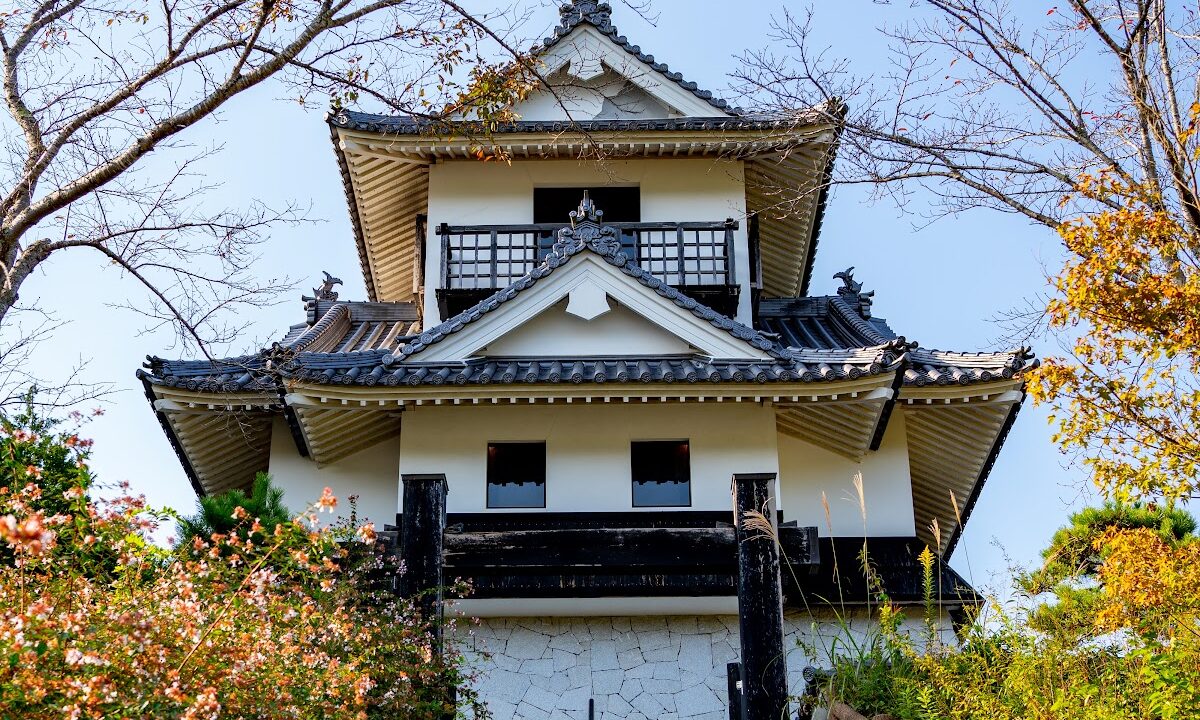
Ukan Tsuneyama Castle is a medieval mountain castle located in Ukan-cho, Takahashi City, Okayama Prefecture. Built on a mountaintop 265 meters above sea level, it was constructed by the Akiba clan, who were local lords during the Kamakura period. Currently, it is maintained as “Ukan Tsuneyama Park,” a popular tourist spot featuring a replica castle tower and a stone windmill.
It is an important castle site in the history of the Bitchu region, and it functioned as a base for the Akiba clan before they later built Bitchu Matsuyama Castle. It is attracting attention as a place that can be enjoyed by history buffs and families alike, with its harmonious blend of historical remains and modern park facilities.
Basic Information about the Castle
- Location: Ukan, Ukan-cho, Takahashi City, Okayama Prefecture (border of Chado and Doi districts)
- Castle Classification: Mountain Castle
- Elevation: 265 meters
- Relative Height: Approximately 50 meters
- Construction Period: Kamakura period
- Builder: Akiba Shigenobu (Akiba Shigenobu)
- Main Lords: Akiba clan, Shinzan Genba-no-suke Iezumi, Hida Gohei
- Remains: Enclosures, earthworks, moats
- Designation: Takahashi City Designated Historic Site
History of Ukan Jōzan Castle
Construction in the Kamakura Period and the Akiba Clan
Ukan Jōzan Castle was built in the Kamakura period by the Akiba clan, who were appointed as the jitō (land steward) of Bitchū Province. Shigenobu Akiba (also spelled Shigenobu Akiba in some historical sources) established a residence called Seishaku Yashiki at the foot of the northern mountain, and built his main castle as a fortified outpost on Mt. Tsuneyama, located directly south of it.
At that time, mountain castles were not primarily living spaces during peacetime, but rather military facilities for taking refuge during times of conflict. Ukan Tsuneyama Castle also functioned as a guard castle protecting the Akiba clan’s ancestral homeland. The castle structure, combining a residence and an outpost, represents a typical residential form for medieval samurai.
Relocation to Bitchu Matsuyama Castle
Later, the Akiba clan built a new castle on Mt. Gagyū, located in the center of present-day Takahashi City, and moved their base there. This later became Bitchu Matsuyama Castle. Bitchu Matsuyama Castle is a famous castle with a surviving keep, considered one of Japan’s three greatest mountain castles. The fact that its predecessor was Ukan Tsuneyama Castle holds significant importance in the history of castles in the Bitchu region.
The reason Akiba moved from Tsuneyama Castle to Matsuyama Castle is likely because Matsuyama was located at a more strategic transportation hub, making it more suitable for governing the territory. While Tsuneyama Castle was excellent as a base for defending the Ukan region, Matsuyama was geographically more advantageous for governing the entire Bitchu Province.
History of the Sengoku Period
At the start of the Sengoku period, Ukan Tsuneyama Castle came under the control of the Mimura clan. The Mimura clan was a prominent Sengoku daimyo in Bitchu Province, known for their wavering between the Mori and Oda clans. During this period, it is said that Niiyama Genba-no-suke Iezumi, a general of the Mimura clan, resided in the castle.
During the turbulent period from the Eiroku to Tensho eras, Bitchu Province became the front line of the power struggle between the Mori and Oda (later Toyotomi) clans. The Mimura clan’s switch to the Oda side intensified their conflict with the Mori clan, and they were destroyed in the Bitchu Rebellion of 1575.
Records indicate that Gohei Hida later resided there, but many details remain unclear, and it is believed that the castle lost its function by the end of the Sengoku period.
Edo Period and Beyond
During the Edo period, Ukan Jōzan Castle was abandoned, and the castle ruins were left as a forest, far removed from the living areas of the local people. Even after the Meiji era, it remained largely undeveloped, resulting in the excellent preservation of the medieval mountain castle’s remains.
From the Showa to the Heisei period, the castle ruins were developed from the perspective of regional revitalization and historical preservation, transforming it into the current Ukan Jōzan Park. It is attracting attention as an example of how historical value can be preserved while also being utilized as a tourist resource.
Castle Structure and Layout
Characteristics as a Mountain Castle
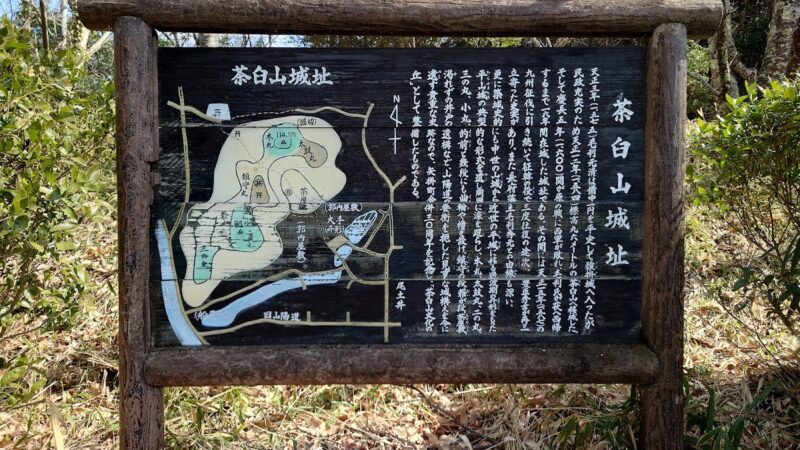
Ukan Jōzan Castle has the typical structure of a medieval mountain castle. The main enclosure is located at the mountaintop at an altitude of 265 meters, with multiple enclosures arranged around it in a linear layout. Its location, with a relative height of approximately 50 meters, is sufficient for defense while also being a practical height for daily access. As defensive structures of the mountain castle, earthworks, moats, and steep slopes can be observed. These are valuable remains that demonstrate the castle-building techniques of the time and are still preserved in the park.
Arrangement of the Main Enclosure and Enclosures
The main enclosure at the mountaintop was the central space of the castle, and a replica keep currently stands there. From the main enclosure, one could overlook the surrounding terrain, indicating its military surveillance function.
Several enclosures were arranged around the main enclosure, each forming a defensive line. Moats were constructed between the enclosures, showing ingenuity in preventing enemy intrusion. These remains tell the story of the changes in castle-building techniques from the Kamakura period to the Sengoku period.
Relationship with the Residence Site
It is believed that the site of the Akiba clan’s residence, the Masakaku Yashiki, existed at the foot of the mountain north of the castle. Although no clear remains exist today, the location of the residence can be estimated from place names and topography.
The structure combining a mountain castle and a residence reflects the lifestyle of medieval samurai. In peacetime, they lived in residences at the foot of the mountain, and in times of war, they would take refuge in the castle on the mountaintop. This dual castle structure was common for samurai residences from the Kamakura period to the Muromachi period.
Highlights of Ukan Jōzan Park
Stone Windmills “Wind Stage”
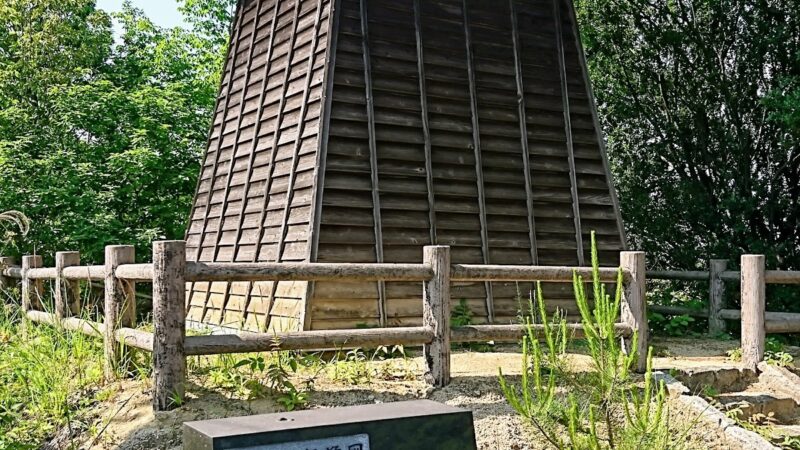
The most distinctive feature of Ukan Jōzan Park is the “Wind Stage,” where seven stone windmills are lined up. These windmills are works of art that utilize the techniques of stonework culture and serve as symbols of the park.
Ukan Town has long been a region where stone processing flourished, and these stone windmills were created using this traditional technique. The windmills, which actually rotate in the wind, soothe visitors with their gentle movements. Under the slogan “Gathering the wind, creating the wind,” it also functions as a hub for community exchange.
Stone windmills are installed not only in Takahashi City (formerly Ukan Town), but also in Ipponmatsu Park in Yamaga City, Kumamoto Prefecture (a sister city), and Todoroki Park in Shimanto Town, Kochi Prefecture. These windmills have fostered ongoing exchanges between the municipalities connected by their shared heritage.
Castle-Shaped Observation Deck (Wind and Fossil Museum)
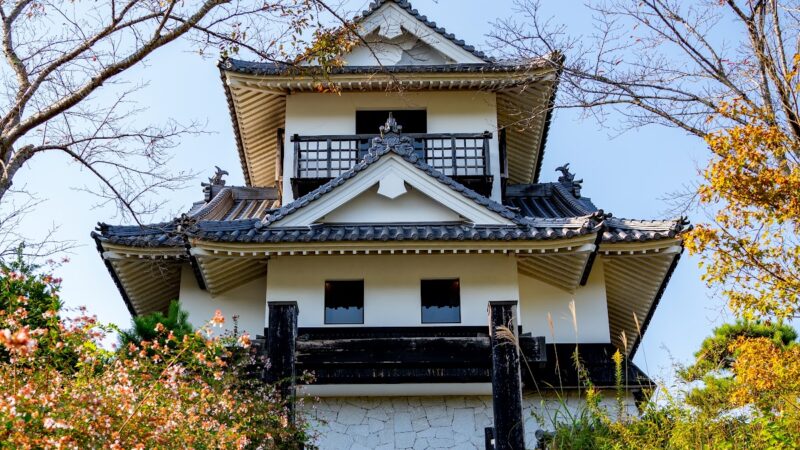
At the mountaintop stands the “Wind and Fossil Museum,” a castle-shaped observation deck modeled after a replica of a castle keep. Admission to this observation deck is free, and it houses exhibits on local history and fossils.
From the observation deck, you can enjoy a panoramic view of Ukan town and the surrounding mountains. On clear days, you can even see distant mountain ranges. Imagining the castle lords of the time gazing upon the same scenery evokes a sense of historical romance.
The observation deck is also used as a place for historical learning, serving as a local history learning site for elementary and junior high school students.
Highlights of the Ruins
Although the area is maintained as a park, the castle ruins are well-preserved. The main highlights include the following: Earthworks: Earthworks built around the enclosures served as defensive structures to prevent enemy intrusion. The clearly visible earthworks reveal the castle-building techniques of the time.
Moat: Moats dug to cut across ridges are a defensive feature unique to mountain castles. Multiple moats have been identified, forming the castle’s defensive line.
Enclosures: Flat, leveled enclosures served as spaces for building structures and deploying troops. Their size and shape allow us to infer the role of each enclosure.
Cut Slopes: Cut slopes, artificially carved steep inclines, were also designed to make ascent difficult for enemies. A defensive system combining natural terrain and artificial modifications can be observed.
For castle enthusiasts, observing these remains offers the pleasure of imagining the castle’s appearance in its time. Information boards are also installed, allowing even beginners to understand the significance of the remains while visiting.
Rest House and Rest Facilities
The park has a rest house where you can relax and enjoy light refreshments. Local specialties and souvenirs are also sold, making it a convenient base for sightseeing.
Benches and gazebos are also provided, making it ideal for picnics and rest stops during hikes. You can enjoy the changing seasons, from cherry blossoms in spring to autumn leaves in fall.
Parking and Access Facilities
The park has a parking lot with a capacity of 100 cars, making it easily accessible by car. You can walk from the parking lot to the observation deck, providing a pleasant form of exercise.
Both park admission and observation deck admission are free, making it an attractive and easily accessible destination.
Access Information
Access by Car
From Okayama City:
- Approximately 30 minutes from the Okayama Expressway “Kayo IC”
- Take National Route 484 towards Ukan
From Hiroshima:
- Approximately 20 minutes from the Chugoku Expressway “Hokubo IC”
- Take National Route 313
From Takahashi City Center:
- Approximately 20 minutes by car
- Head north on National Route 313
Enter “Ukan Jōzan Park” or “Ukan, Takahashi City, Okayama Prefecture” into your car navigation system for directions.
Access by Public Transportation
Public transportation is limited; using a car is generally recommended.
If using JR:
- Get off at Kinoyama Station on the JR Hakubi Line, then take a taxi for about 10 minutes.
- Get off at Bitchu-Takahashi Station on the JR Hakubi Line, then take a taxi for about 25 minutes.
Since there are few local buses, we recommend checking the timetable in advance. Taking a taxi is the most reliable option.
Combining with nearby tourist attractions
When visiting Ukan Tsuneyama Castle, combining it with nearby tourist attractions will make for a more fulfilling trip.
Bitchu Matsuyama Castle (approx. 30 minutes by car): One of Japan’s three great mountain castles with an existing keep. It has historical ties as the castle to which the Akiba clan moved from Tsuneyama Castle.
Fukiya Furusato Village (approx. 40 minutes by car): A townscape preservation area with beautiful reddish-brown Sekishu tiles and reddish-brown exteriors.
Takahashi City Nariwa Museum of Art (approx. 30 minutes by car): A museum exhibiting works mainly by Kojima Torajiro.
Nature of the Takahashi River Basin: Beautiful valleys and natural landscapes unfold along the Takahashi River, making it an enjoyable driving route.
Best Season to Visit
Spring (March-May)
During cherry blossom season, the park is filled with blooming cherry trees, making it a popular spot for cherry blossom viewing. Early April is especially beautiful. The weather is mild, making it an ideal season for strolling.
Summer (June-August)
The greenery becomes lush, allowing for enjoyable forest bathing. However, temperatures rise in summer, so remember to stay hydrated to prevent heatstroke. Early morning or evening visits are recommended.
Autumn (September-November)
During autumn foliage season, the entire mountain is ablaze with color, offering a beautiful landscape. Late October to early November is the best time to see the autumn leaves. The weather is cool, making it the most suitable season for exploring the castle ruins.
Winter (December to February)
During winter, there is a possibility of snowfall, and caution is needed regarding icy roads. However, the stone windmills and observation deck amidst the snowy landscape are fantastic, making it an excellent opportunity for photography. Be sure to dress warmly when visiting.
Historical Learning and Educational Value
As a Place for Local History Learning
Ukan Jōzan Castle is used as a place for local elementary and junior high school students to learn about local history. Visiting the actual castle ruins allows for a tangible sense of history that cannot be gained from textbooks alone.
Multifaceted learning is possible, including the structure of medieval mountain castles, the lives of samurai, and the history of the Bitchū region. The exhibits in the observation deck are also educational, allowing both children and adults to learn while having fun.
As a Subject of Castle Research
From the perspective of castle research, Ukan Jōzan Castle is an important subject of study. It retains the characteristics of a Kamakura period mountain castle well and contributes to the study of medieval castles.
Due to the recent castle boom, castle enthusiasts from all over Japan are now visiting, and information exchange is active within communities such as the “Castle Siege Group.” The distribution of castle stamps has also begun, and the number of people visiting as part of castle tours is increasing.
Preservation of Local Culture
The stonework culture, exemplified by the stone windmills, is a traditional technique of the Ukan region. Efforts are being made to pass on this culture to future generations through the park.
Local events include demonstrations by stonemasons and workshops, providing opportunities to deepen understanding of traditional techniques.
Castle Stamps and Souvenirs
Obtaining Castle Stamps
Castle stamps for Ukan Jōzan Castle can be obtained at the castle ruins and surrounding facilities. Many castle fans collect them as souvenirs when touring castles in Okayama Prefecture.
The castle stamps contain information about the castle’s history and features, making them valuable as souvenirs of visits and as historical documents. The designs are also well-thought-out, making them highly collectible items.
Souvenir Goods
The rest house sells souvenir goods featuring stone windmills and local specialties. Buying souvenirs as a memento of your visit and as a way to support the local community is one of the joys of traveling.
Nearby Castle Ruins
Bitchu Matsuyama Castle
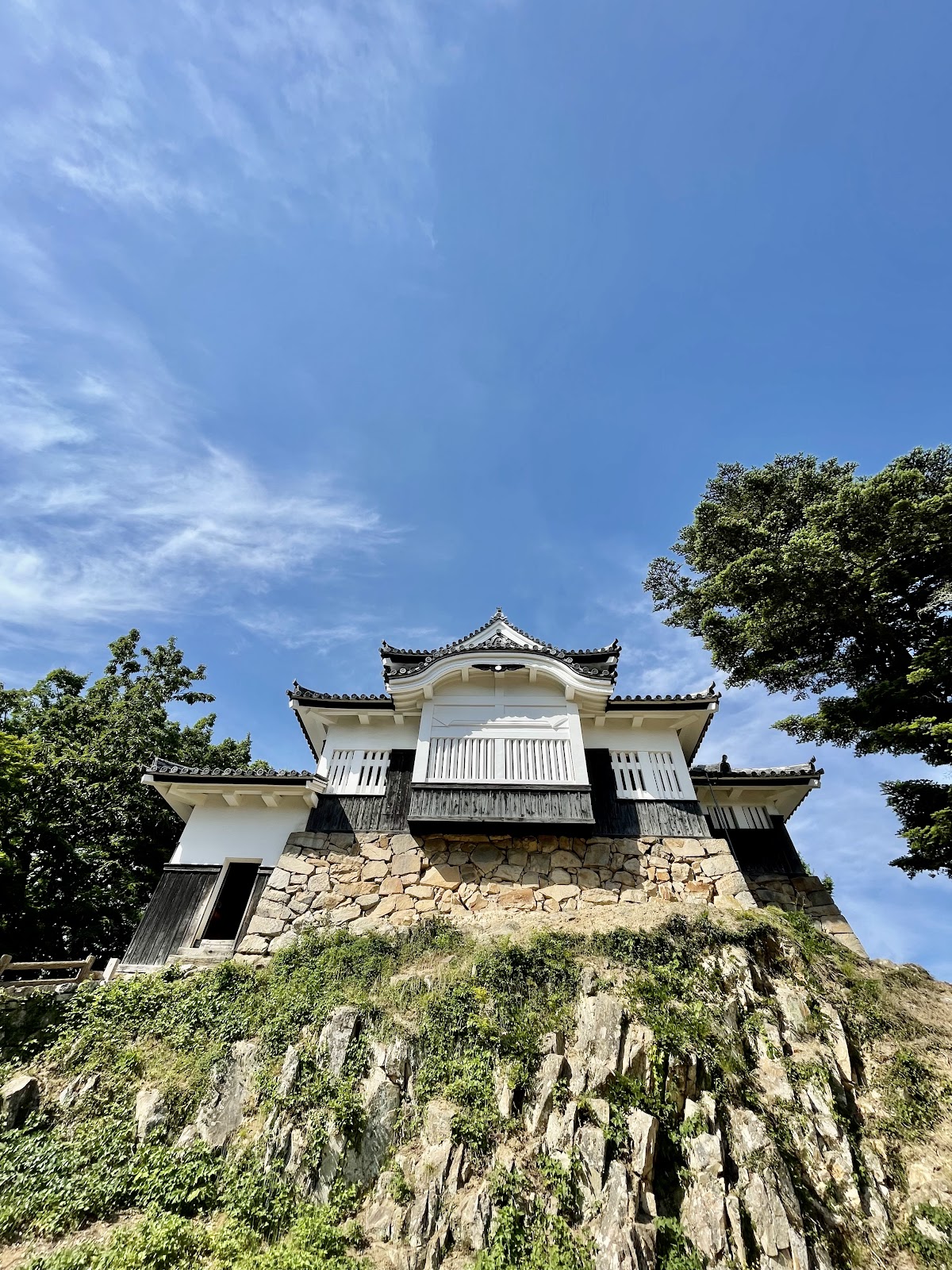
Located about 30 minutes by car from Ukan Tsuneyama Castle, Bitchu Matsuyama Castle was built by the Akiba clan after Tsuneyama Castle. It is one of the 12 existing castle keeps and a valuable castle as the only mountain castle with a surviving keep.
Built on the summit of Gagyūzan Mountain at an altitude of 430 meters, Bitchu Matsuyama Castle has recently gained popularity as a “mountain castle in the sky” floating in a sea of clouds. Visiting both Ukan Tsuneyama Castle and Bitchu Matsuyama Castle allows you to trace the history of the Akiba clan’s castles.
Kinojo Castle
Located about 40 minutes by car, Kinojo Castle is an ancient mountain castle (Korean-style mountain castle). Although from a different era than Ukan Jōzan Castle, it is an important historical site for discussing the history of castles in Okayama Prefecture.
Shūzō Chausuyama Castle
Shūzō Chausuyama Castle, located in the Mimasaka region, is also known as a medieval mountain castle in Okayama Prefecture. It’s possible to create a route visiting multiple castles as part of a castle tour.
Attractiveness as a Photography Spot
Stone Windmills and Observation Deck
The landscape of stone windmills is a representative photography spot in Ukan Jōzan Park. You can photograph the windmills against a blue sky, illuminated by the setting sun, or combined with seasonal flowers, offering a variety of compositions.
The castle-shaped observation deck is also a subject for photography, with its beautiful Japanese architecture harmonizing with the surrounding nature. Many photography enthusiasts visit, especially during cherry blossom and autumn foliage seasons.
View from the Observation Deck
The view from the observation deck is also a popular photography spot. You can capture vast landscapes in photographs, from the townscape of Ukan to the surrounding mountains and distant mountain ranges.
At sunrise and sunset, the lighting is beautiful, allowing for dramatic photographs.
Regional Development and Tourism Initiatives
“Gathering the Wind, Creating the Wind” Town Development
Under the slogan “Gathering the Wind, Creating the Wind,” which has continued since the days of the former Ukan Town, town development emphasizing regional exchange has been promoted.
Ukan Jōzan Park serves as a central facility, a gathering place for people from both within and outside the region. Various initiatives are undertaken, including events, exchanges with sister cities, and educational activities.
Exchanges with Sister Cities
Through the stone windmills, Ukan has established sister city relationships with Yamaga City in Kumamoto Prefecture and Shimanto Town in Kochi Prefecture. Stone windmills are installed in each municipality, and mutual exchange events are held.
These exchanges not only revitalize the region but also provide opportunities to deepen cultural mutual understanding.
Future Prospects
Takahashi City is focusing on the preservation and utilization of historical heritage, including the Ukan Jōzan Castle ruins. A balanced approach is being pursued, protecting the value of the site as a cultural asset while utilizing it as a tourist resource.
Continued research and investigation of the castle ruins are also underway, with new discoveries and insights expected. Various activities are planned to pass on the region’s history to future generations.
Summary
Ukan Jōzan Castle is an important castle site that tells the history of the Bitchū region from the Kamakura period to the Sengoku period. It began as a fortified castle built by the Akiba clan and has historical significance, leading to the later Bitchū Matsuyama Castle.
Currently, it has been developed as “Ukan Jōzan Park,” with facilities such as a stone windmill and a castle-shaped observation deck. Its characteristic feature is that it maintains its value as a historical heritage site while providing a space that can be enjoyed by local residents and tourists alike.
Admission is free, and parking is available, making it easily accessible. By combining a visit to Bitchu Matsuyama Castle and other nearby tourist attractions, you can create a trip that offers a deep understanding of Okayama Prefecture’s history and culture.
For castle enthusiasts, it’s a valuable place to observe the remains of a medieval mountain castle, and for families, it’s an educational setting where they can learn about history amidst nature. With its beautiful scenery that changes with the seasons, this historical site possesses multifaceted appeal and is sure to continue to be cherished by many people in the future.