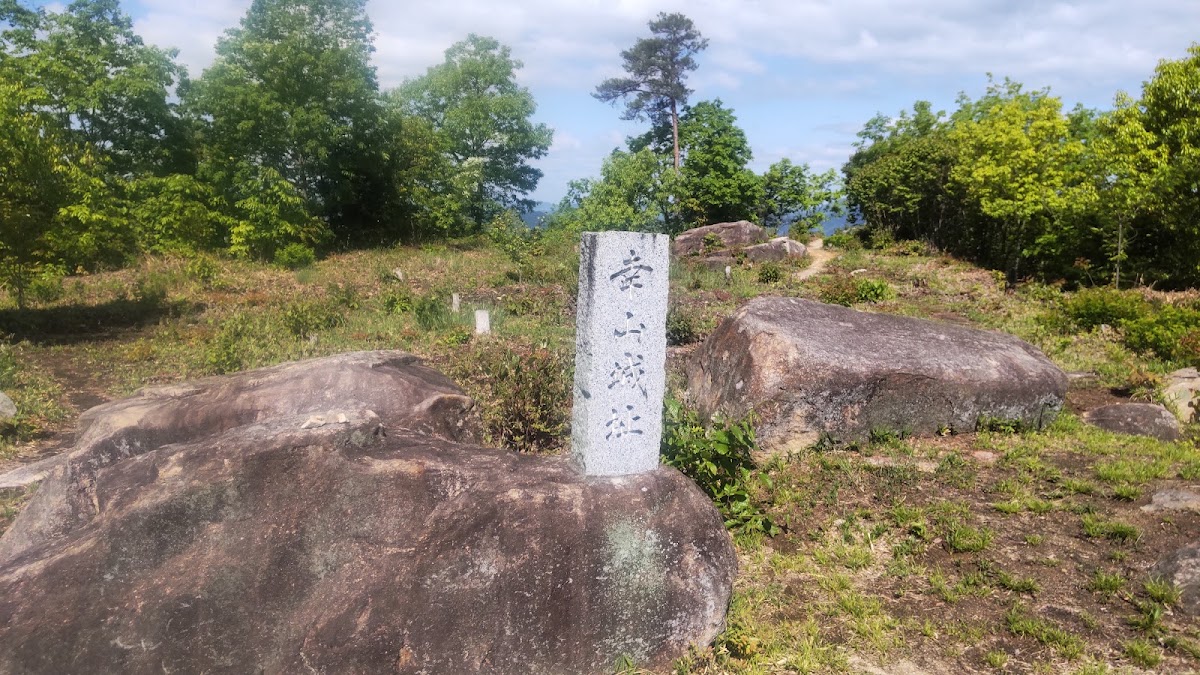
Complete Guide to Kozan Castle (Soja City) | A Thorough Explanation of the History and Highlights of the Ishikawa Clan’s Residence, the Deputy Governor of Bitchu Province
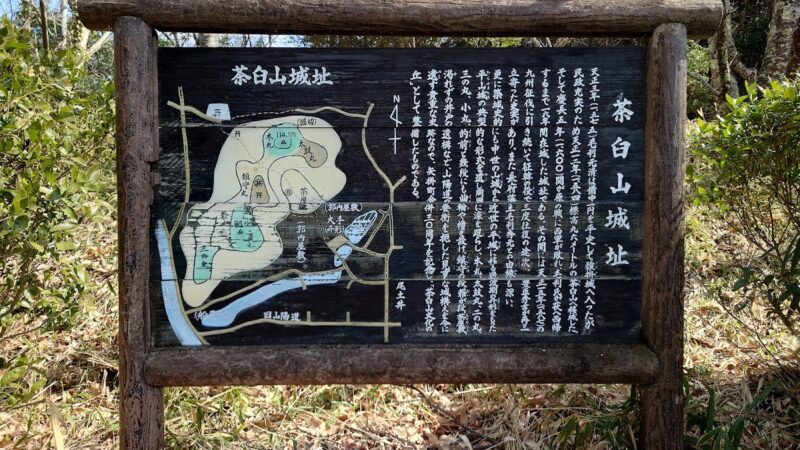
Kozan Castle, located in Nishigori, Soja City, Okayama Prefecture, is a mountain castle that played an important role as the political and military center of the Bitchu region during the medieval period. Built on an isolated ridge at an altitude of 164 meters, this strategically important location overlooking the old Sanyo Road served as the residence of the Ishikawa clan, the deputy governors of Bitchu Province, for eight generations over approximately 150 years.
This article provides a thorough explanation of this Soja City-designated historical site, from the historical background of Kozan Castle to details of existing remains, highlights, and access information.
Basic Information and Location of Kozan Castle
Castle Overview
Kozan Castle, also written as Takayama Castle or Kozan Castle, is a mountain castle located on a ridge jutting out north of Fukuyama, where Fukuyama Castle is located. Fukuyama Castle and Koyama Castle are located on the same ridge extension, and it is believed that the two castles formed an integrated defensive system.
Basic Data:
- Location: Nishigori, Soja City, Okayama Prefecture
- Elevation: 164 meters
- Castle Type: Mountain Castle
- Construction Period: Late Kamakura period (Enkei era, around 1308-1311)
- Designation: Soja City Designated Historic Site
Geographical Importance
The greatest feature of Koyama Castle lies in its strategic location. The castle was built overlooking the old Sanyo Road, giving it complete control over a crucial east-west transportation hub in Bitchu Province. This location was one of the main reasons why the Ishikawa clan was able to maintain their power as the deputy governor of Bitchu Province from this base.
By utilizing the summit of a small, isolated hill northwest of Fukuyama, it offered high visibility from the surrounding area, providing excellent functionality in both defense and surveillance.
History of Koyama Castle
Late Kamakura Period: Construction by Sho Sukefusa
It is said that Koyama Castle was first constructed during the Enkei era (1308-1311), towards the end of the Kamakura period, by Sho Sukefusa, a powerful local lord of Bitchu Province. This period saw the weakening of the Kamakura Shogunate’s authority, and samurai groups were expanding their power throughout the region.
The Sho clan was a powerful local family in Bitchu Province, and it is believed they built the mountain castle to solidify their control over the area.
Muromachi Period: Prosperity as the Ishikawa Clan’s Residence
In the mid-Muromachi period, Koyama Castle became the residence of the Ishikawa clan, who were the deputy governors of Bitchu Province under the Hosokawa clan. The Ishikawa clan ruled from this castle for eight generations, approximately 150 years, and reigned as the de facto rulers of Bitchu Province.
Characteristics of the Ishikawa Clan’s Era:
- Governed Bitchu Province as a shugodai (deputy governor) supporting the Hosokawa clan.
- Managed transportation along the old Sanyo Road, securing economic benefits.
- Controlled local lords in surrounding areas.
- Functioned as a cultural center of the Kibi region.
During the Ishikawa clan’s rule, Koyama Castle developed not merely as a military base, but as a political, economic, and cultural center. It is presumed that the castle town was home to the residences of retainers and merchants, functioning as a core city of the region.
After the Sengoku Period: The Castle’s Decline
With the arrival of the Sengoku period, Bitchu Province became a battleground for power struggles between clans such as the Mori, Ukita, and Mimura. The Ishikawa clan’s power gradually declined, and Koyama Castle lost its importance.
While it is unclear exactly when Koyama Castle was abandoned, it is believed to have ceased functioning sometime between the end of the Sengoku period and the beginning of the early modern period.
Remains and Highlights of Koyama Castle
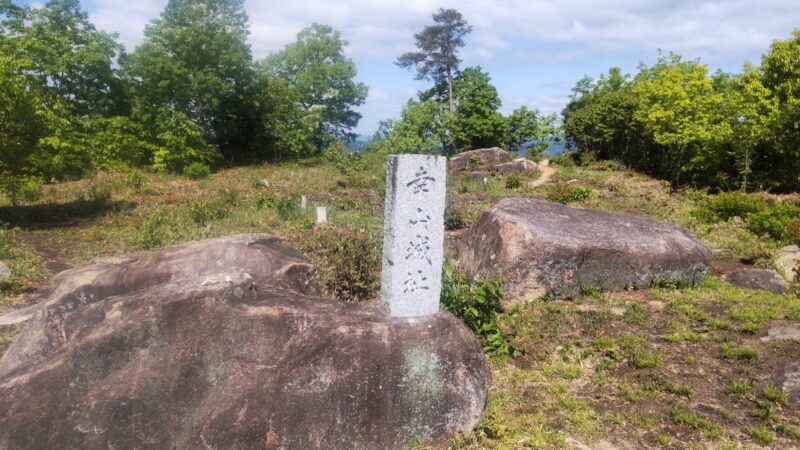
The current Koyama Castle site retains typical medieval mountain castle remains in excellent condition, making it a valuable historical site for understanding the castle’s structure at the time.
Large Moat (Ōhorikiri)
The greatest highlight of Koyama Castle is the large moat located at the mountaintop.
Moat Details:
- Width: Approximately 30 meters
- Depth: Approximately 4 meters
- Function: Cuts off the ridge and prevents enemy intrusion
This moat was constructed by skillfully utilizing the natural terrain while also adding artificial excavation. Its 30-meter width is exceptionally large for a medieval mountain castle moat, demonstrating the power and technical skill of the Ishikawa clan.
Earthly mounds can be seen on both sides of the moat, indicating further reinforcement of its defensive capabilities.
Enclosure (Kuruwa) Remains
Multiple enclosure (Kuruwa) remains can be seen on the mountaintop, to the east and west.
Main Enclosures:
- Main Enclosure (Honmaru): Located at the highest point on the mountaintop
- Eastern Enclosure: Extending to the east of the main enclosure
- Western Enclosure: Located to the west of the main enclosure
These enclosures are arranged in a stepped pattern following the terrain, achieving efficient defense and space utilization. The flat areas of each enclosure are relatively large, providing sufficient space for buildings and troop garrisons.
Earthwork-like Remains
Partial remains of earthwork-like structures remain around the enclosures. These are thought to have reinforced the edges of the enclosures, enhancing defensive capabilities, and also functioned as foundations for buildings.
While some areas are unclear due to weathering and vegetation, careful observation reveals traces of artificial earthworks.
Traces of Vertical Moats
Remains believed to be vertical moats can also be seen scattered on the slopes. Vertical moats are trench-like defensive structures dug along the mountain slopes, serving to prevent enemies from climbing the slopes. While the vertical moats of Koyama Castle are not entirely intact, their former existence can be inferred from subtle changes in the terrain.
View
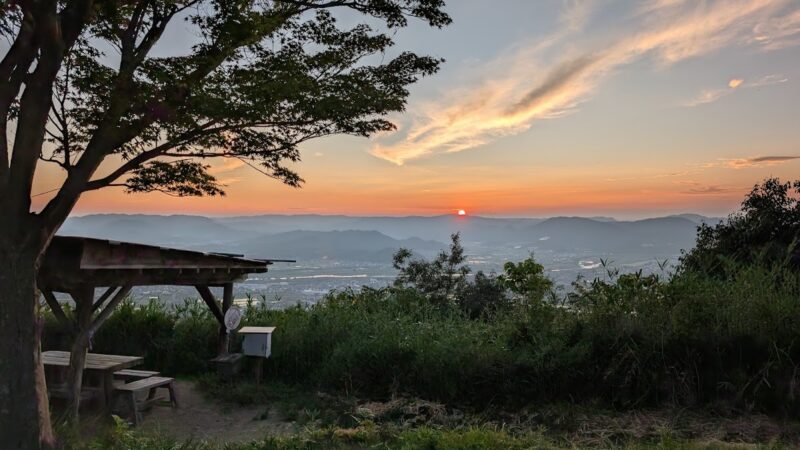
The view from the mountaintop is another major attraction of Koyama Castle. On a clear day, you can see not only the city of Soja but also the mountains of the Kibi Plateau and even the Seto Inland Sea in the distance.
This view is not only beautiful, but also a valuable experience that allows you to understand how the castle lord at the time monitored and managed the old Sanyo Road and the surrounding area.
Happiness Hiking Course: Visiting Koyama Castle and Fukuyama Castle
Soja City has developed a hiking course connecting Koyama Castle and Fukuyama Castle. This course is called the “Happiness Hiking Course,” and is affectionately known by its auspicious name, which combines “Koyama” and “Fukuyama” to form “happiness.”
Course Overview
Hiking Course Features:
- Distance: Approximately 3-4 kilometers
- Estimated Time: Approximately 2-3 hours (including sightseeing time)
- Difficulty: Intermediate (includes mountain trails)
- End Point: Fukuyama Castle Main Enclosure (Elevation 302 meters)
Course Highlights
- Exploring the Ruins of Koyama Castle: Carefully observe the large moat and enclosure remains
- Nature on the Ridge: Enjoy the vegetation of each season
- Transfer to Fukuyama Castle: A historical path connecting the two castles
- Spectacular View from Fukuyama Castle Main Enclosure: A panoramic view from the highest point of the course
This hiking course is an attractive route that allows you to enjoy both historical exploration and nature walks simultaneously. It is especially popular with hikers during the spring when the new leaves are out and the autumn leaves are vibrant.
The Ishikawa Clan and the Governance of Bitchu Province
When discussing Koyama Castle, the existence of the Ishikawa clan, who made this castle their residence for approximately 150 years, is indispensable.
Role as Shugodai (Deputy Governor)
During the Muromachi period, the Hosokawa clan held the position of Shugo (governor) of Bitchu Province, but the actual governance was handled by the Ishikawa clan, who served as Shugodai. The Shugodai system, which developed during the Muromachi period when Shugo often governed multiple provinces, gave the de facto regional rulers significant power.
Main Duties of the Ishikawa Clan:
- Maintaining domestic order
- Collection and management of taxes
- Control of local lords
- Commanding military mobilization
- Exercise of judicial power
Economic Foundation
The Ishikawa clan’s ability to maintain power for such a long period was due to their solid economic foundation.
Main Sources of Income:
- Transportation Tax: Taxes collected from merchants traveling along the old Sanyo Road
- Agricultural Production: Annual tribute from the surrounding fertile plains
- Commercial Activities: Profits from trade in the castle town
- Mining Management: Development of mineral resources in the Kibi region
Controlling key points along the old Sanyo Road brought enormous economic benefits. This major highway connecting Kyoto and Kyushu was a vital artery for goods and information, and controlling it meant immense wealth and power.
Cultural Contributions
The Ishikawa clan were not merely military rulers, but also patrons of culture. They actively introduced Kyoto culture, contributing to the improvement of the cultural level in the Bitchu region.
They engaged in various cultural activities, including the protection of temples and shrines, the encouragement of learning, and the support of performing arts, and the area around Koyama Castle functioned as a cultural center of the Kibi region.
Related Historical Sites and Tourist Attractions in the Surrounding Area
When visiting Koyama Castle, exploring the surrounding related historical sites and tourist attractions will allow you to gain a deeper understanding of the history and culture of Soja City.
Fukuyama Castle Ruins
As mentioned above, Fukuyama Castle, located on the same ridge as Koyama Castle, is a mountain castle built on a mountaintop at an altitude of 302 meters. It is larger in scale than Koyama Castle and was used until a later period. Visiting both castles together will provide a comprehensive understanding of the medieval castle system of Bitchu Province.
Bitchu Kokubunji Temple
Bitchu Kokubunji Temple, a representative tourist attraction of Soja City, is an ancient temple founded during the Nara period. Its five-story pagoda is known as the only national treasure-class pagoda in Okayama Prefecture and is a symbol of the Kibiji region. It has a history far older than that of Koyama Castle and tells the story of the long history of this region.
Soja Shrine
Soja Shrine, founded as the main shrine of Bitchu Province, is an important shrine that enshrines the gods of the province. It is believed that Mr. Ishikawa also held deep faith in and protected the site.
Sakuyama Kofun and Komorizuka Kofun
Numerous large keyhole-shaped burial mounds from the Kofun period remain in Soja City. These burial mounds indicate that the Kibi region was an important political and cultural center from ancient times.
Access Information and Precautions for Visiting
Access Methods
Using Public Transportation:
- Approximately 15 minutes by car from JR Soja Station
- Taxis are convenient
- Bus services are limited, so please check in advance.
Using a Car:
- Approximately 20 minutes from Okayama Expressway Okayama Soja IC
- Approximately 30 minutes from Sanyo Expressway Kurashiki IC
- Please note that parking spaces are limited.
Precautions When Visiting the Castle
Clothing and Equipment:
- Comfortable clothing and hiking boots or trekking shoes are recommended.
- In summer, a hat, sunscreen, and insect repellent are essential.
- In winter, warm clothing and non-slip shoes are necessary.
- Always bring drinking water.
Safety:
- The mountain trails are well-maintained, but they can be slippery after rain, so please be careful.
- Avoid going alone; visiting in a group is recommended.
- Check cell phone signal strength in advance.
- Complete your descent before sunset.
Manners:
- To protect the historical site, please do not damage the remains.
- Always take your trash with you.
- No open flames.
- No trespassing on private property.
Best Time to Visit
Spring (March-May):
- Beautiful fresh greenery and mild weather.
- Particularly popular during cherry blossom season.
Autumn (October-November):
- Magnificent autumn foliage.
- Suitable temperatures for hiking.
- Clear air and excellent views.
Summer (June-September):
- Lush greenery, perfect for enjoying nature.
- Need to take precautions against heat and insects.
- Early morning visits are recommended.
Winter (December-February):
- Leaves fall, making the remains easier to see.
- Clear air and excellent long-distance views.
- Warm clothing is essential.
Historical Significance and Modern Value of Koyama Castle
Importance in Medieval Castle Research
Koyama Castle is a historically significant site in castle research, as it well preserves the typical structure of a medieval mountain castle. In particular, its large-scale moats provide valuable information for understanding castle construction techniques of the Muromachi period.
While archaeological excavations have been limited, future investigations may yield more information.
Educational Material for Understanding Local History
Koyama Castle is an indispensable historical site for understanding the medieval history of Bitchu Province. Historical facts that are difficult to grasp from textbooks alone, such as the rule of the Ishikawa clan, the importance of the old Sanyo Road, and the realities of the shugodai system, can be experienced firsthand by visiting the site.
It is also used as educational material for local history in local schools, contributing to the formation of the region’s historical identity.
Potential as a Tourism Resource
Soja City is known as a central hub for Kibiji tourism, but Koyama Castle is still an underutilized tourist resource. Branding as the “Happiness Hiking Course” is proving successful, and further development and information dissemination have the potential to attract many tourists.
It has an appeal that can be enjoyed by a wide range of people, not only history buffs and castle enthusiasts, but also hiking lovers and photography enthusiasts.
Historical Tourism in Soja City and Koyama Castle
Soja City, as the “center of ancient Kibi,” boasts a rich historical heritage. It is home to a concentration of important historical sites from various periods, including large burial mounds from the Kofun period, a provincial temple from the Nara period, a mountain castle from the medieval period, and the ruins of the Bitchu provincial government from the early modern period.
Koyama Castle is positioned as a historical site representing the specific medieval period within this rich historical heritage. Koyama Castle is an important piece in understanding the continuous history of Soja City from ancient times to the early modern period.
Soja City Tourism Information
The Soja City Tourism Association provides brochures and maps introducing historical spots in the city, including Koyama Castle. Guided tours are also regularly held, allowing visitors to explore historical sites while listening to explanations from experts.
Soja City also has many delicious bakeries and cafes using local ingredients, making them enjoyable rest stops after hiking. A sightseeing plan combining historical exploration and local cuisine is highly recommended.
Summary: Rediscovering the Charm of Koyama Castle
Koyama Castle in Soja City, Okayama Prefecture, is a historically significant mountain castle that served as the residence of the Ishikawa clan, the deputy governors of Bitchu Province, for 150 years. Built on a mountaintop 164 meters above sea level, this castle overlooks the old Sanyo Road and functioned as the political, economic, and military center of medieval Bitchu Province.
The well-preserved remains, such as the large moat and the baileys, are valuable resources for understanding the structure of medieval mountain castles and are protected as a Soja City designated historical site. The trail, developed as the Kofuku Hiking Course, is an attractive route that allows you to enjoy historical exploration and nature walks simultaneously.
Visiting Koyama Castle is not simply about seeing an old castle ruin; it’s an experience that allows you to imagine how people in the medieval period governed and lived in this land, and feel the breath of history. When visiting Okayama Prefecture, be sure to visit Koyama Castle in Soja City and experience its historical charm.
The area around Soja City offers many other attractions, including Bitchu Kokubunji Temple and ancient burial mounds. Starting from Koyama Castle, a journey exploring the rich history and culture of the Kibi region will surely create unforgettable memories.