Complete Guide to the History and Highlights of Koga Castle | A Thorough Explanation of the Famous Castle in Koga City, Ibaraki Prefecture
Koga Castle, located in Koga City, Ibaraki Prefecture, was a flatland castle that played an important role in the history of the Kanto region. Built at a strategic point for water transport near the confluence of the Watarase River and the Tone River, this castle was ruled by many famous generals from the Sengoku period to the Edo period. This article provides a detailed explanation of the history of Koga Castle, the changes in its lords, and the remaining structures and highlights.
What is Koga Castle? | A Historically Significant Castle in Koga City, Ibaraki Prefecture
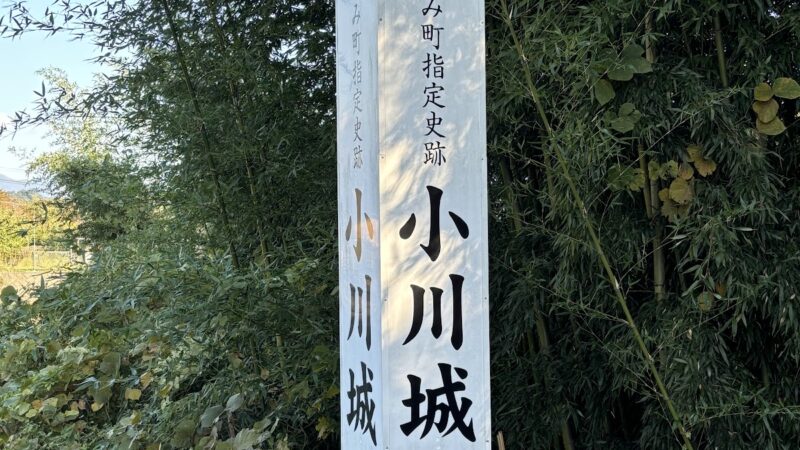
Koga Castle (Koga-jō) was a flatland castle located in Chuo-machi, Koga City, Ibaraki Prefecture, also known as “Koga Gosho.” Built on low-lying wetlands along the Watarase River, it was a highly defensible castle that utilized the river as a natural moat.
Location and Geographical Importance of Koga Castle
Koga Castle was built in the northern part of the Kanto Plain, near present-day Chuo-cho, Koga City, Ibaraki Prefecture. This area has long been a crucial transportation hub and possessed the following geographical characteristics:
- Water Transport Hub: The Watarase River and Tone River were close together, making water transport of goods very active.
- Intersection of Highways: It was an important land transportation route where the Nikko Kaido and Oshu Kaido intersected.
- Northern Defense of the Kanto Plain: It functioned as a defensive base to the north from Edo’s perspective.
- Utilization of Low-lying Wetlands: The surrounding wetlands served as natural defensive structures.
Due to these locational conditions, Koga Castle developed into a strategically and economically important base.
History of Koga Castle | From Construction to Abandonment
The history of Koga Castle spans approximately 500 years, from the medieval to the early modern period. While the castle’s role and importance changed with each era, it consistently functioned as a key strategic point in the Kanto region. ### Medieval Koga Castle | Kamakura to Muromachi Periods
There are various theories about the origin of Koga Castle, but it is generally believed to have been built by the Shimokawabe clan during the Kamakura period. Initially, it is thought to have been a small residence called “Koga Gosho.”
During the Muromachi period, Ashikaga Shigeuji moved his base from Kamakura to Koga, making it the center of his rule over the Kanto region as the “Koga Kubo.” During this period, Koga Castle became not merely a military facility, but a political center.
Koga Castle in the Sengoku Period | The Stage of the Kanto Struggle
During the Sengoku period, Koga Castle became the stage for the struggle for supremacy in the Kanto region.
Conflict with the Oyumi Kubo: Ashikaga Yoshiaki established his base in Oyumi, creating a conflict with the Koga Kubo.
Under the Influence of the Hojo Clan: In the late Sengoku period, it came under the influence of the Odawara Hojo clan and became an important base for controlling the Kanto region. During the time of Hojo Ujimasa, Koga Castle functioned as the center of the Hojo clan’s control over northern Kanto.
Toyotomi Hideyoshi’s Odawara Campaign and Koga Castle
In 1590 (Tensho 18), when Toyotomi Hideyoshi launched his Odawara campaign, Koga Castle, as a branch castle of the Hojo clan, was also attacked. After the Hojo clan’s eventual downfall, Koga Castle entered a new era with Tokugawa Ieyasu’s entry into the Kanto region.
Koga Castle in the Edo Period | Residence of a Fudai Daimyo
When Tokugawa Ieyasu entered Kanto, Koga Castle became an important residence for a Fudai Daimyo (hereditary daimyo).
The Era of Ogasawara Hidemasa: Ogasawara Hidemasa, the first lord of the Koga Domain, proceeded with the development of the castle.
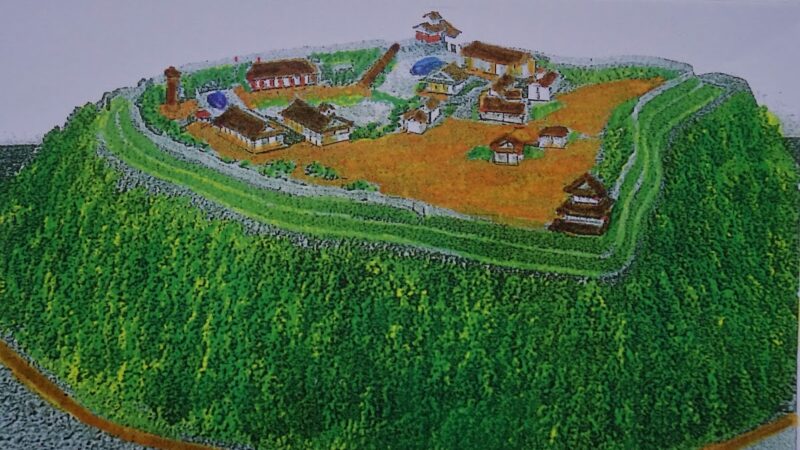
Major Renovation by Doi Toshikatsu: In 1616 (Genna 2), Doi Toshikatsu, who became the lord of the Koga Domain, extensively renovated Koga Castle, giving it the appearance of a modern castle. During this period of renovations, a three-story keep and numerous turrets were constructed, and the castle town was also developed.
Changes in Successive Lords: Throughout the Edo period, the lords of the domain were high-ranking officials of the Tokugawa shogunate, including the Doi, Hotta, Honda, Matsudaira, and Doi (re-appointed). This indicates the important position of the Koga Domain to the shogunate.
The Meiji Restoration and the Abolition of Koga Castle
With the return of land and people to the emperor in 1869 (Meiji 2), the Koga Domain ceased to exist, and in 1873 (Meiji 6), Koga Castle was officially abolished by the castle abolition decree. Subsequently, the castle buildings were demolished, and the land was sold off.
Structure and Layout of Koga Castle
Koga Castle was a typical flatland castle, characterized by its layout that skillfully utilized the natural topography of the Watarase River.
Honmaru and Ninomaru
Honmaru: The central part of the castle, where a three-story keep once stood. The keep was destroyed by fire in 1681 (Tenna 1) and was never rebuilt.
Ninomaru: Surrounding the Honmaru, this area housed the lord’s residence and government offices.
Sannomaru and Gaikaku
Sannomaru: An outer enclosure surrounding the main castle, where the residences of retainers and government offices were located.
Gaikan: A vast area, including the castle town, was designated as the Gaikaku (outer enclosure), with samurai residences and merchant districts neatly arranged.
Moats and Earthworks
The defensive structures of Koga Castle had the following characteristics:
- Water Moat: A vast water moat, utilizing water drawn from the Watarase River, surrounded the castle.
- Earthworks: Stone walls were rarely used; earthworks were the primary defensive structure.
- Watchtowers: Numerous watchtowers were strategically placed to enhance the castle’s defenses.
Successive Lords of Koga Castle
Many important figures in Japanese history served as lords of Koga Castle.
Lords of the Castle in the Medieval Period
- Shimokawabe Clan: Believed to be the builder of the castle during the Kamakura period
- Ashikaga Shigeuji: First Koga Kubo, established Koga as his base in 1455
- Ashikaga Masauji, Takamoto, Haruuji, Yoshiuji: Successive Koga Kubos
Lords of the Castle in the Sengoku Period
- Hojo Clan: Ruled during the late Sengoku period
Lords of the Domain in the Edo Period
- Ogasawara Hidemasa (1590-1601): First Lord of the Koga Domain
- Matsudaira Yasunaga (1601-1616): Echizen Matsudaira family
- Doi Toshikatsu (1616-1633): Senior retainer who served as Grand Elder, extensively renovated the castle
- Doi Toshitaka (1633-1636): Son of Toshikatsu
- Hotta Masamori (1636-1638): Senior Councilor
- Matsudaira Tadaaki (1638-1644): Transfer of a Daimyo family
- Doi Toshikatsu (1644-1651): Re-established
- Doi Toshishige (1651-1669): Son of Toshikatsu
- Honda Tadayoshi (1669-1681): Fudai Daimyo
- Doi Toshiie (1681-1762): The Doi family was re-established in the domain, and the Doi family served as lords until the end of the Edo period.
The Doi family ruled the Koga Domain for a particularly long period and contributed to the development of the castle town.
Koga Castle Today | Remains and Highlights
Currently, almost none of the buildings of Koga Castle remain, but several remains and historical sites convey the atmosphere of the past.
Current Status of Koga Castle Ruins
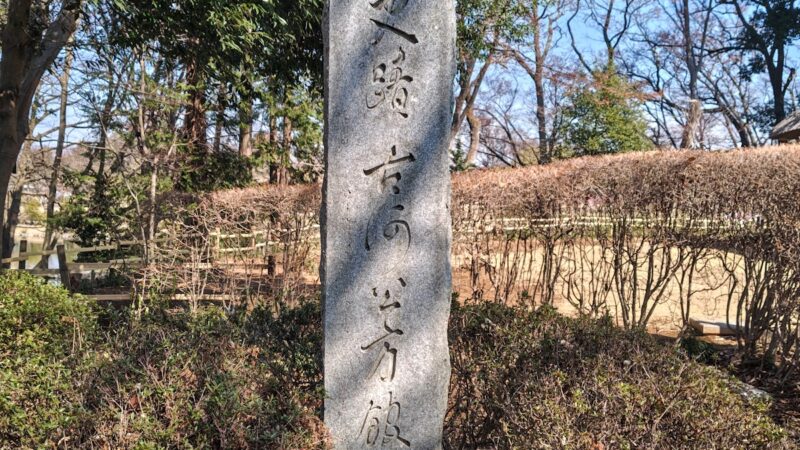
The site of Koga Castle’s main keep is now the grounds of Koga Municipal Koga First Elementary School. A stone monument marking the “Site of Koga Castle’s Main Keep” stands in a corner of the schoolyard, indicating the former location of the castle.
Site of Outpost (Around Koga Historical Museum)
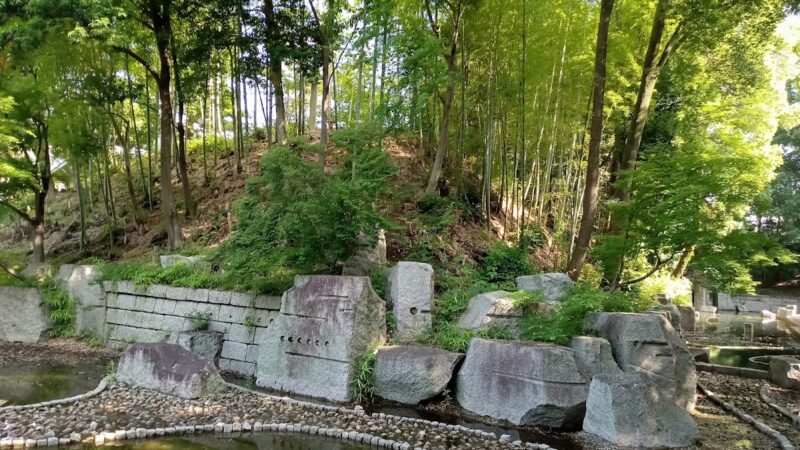
The site of Koga Castle’s outpost is now occupied by the Koga Historical Museum. Parts of the earthworks remain around the museum, allowing visitors to imagine the scale of the castle at the time.
Koga Historical Museum: This museum exhibits materials related to the history of Koga Castle, the Koga Domain, and the Koga Shogunate, making it an ideal facility for learning about the history of Koga Castle. A reconstructed model of the castle and old maps are also on display.
Site of Suwa Kuruwa
The Suwa Kuruwa was the outer fortification of Koga Castle, and the name still remains as a place name. This area was once lined with samurai residences, and some of the town layout from that time is reflected in the current roads.
Site of the Ochaya-guchi Entrance
The site of the Ochaya-guchi, one of the castle’s entrances, remains as a place name today. This area was a bustling entrance to the castle town.
Relationship between the Watarase River and Koga Castle
The Watarase River currently flows south of Koga Castle, but it once flowed very close to the castle, functioning as a natural moat. Walking along the river, you can truly appreciate how the castle was built with water transport in mind.
Traces of Earthworks
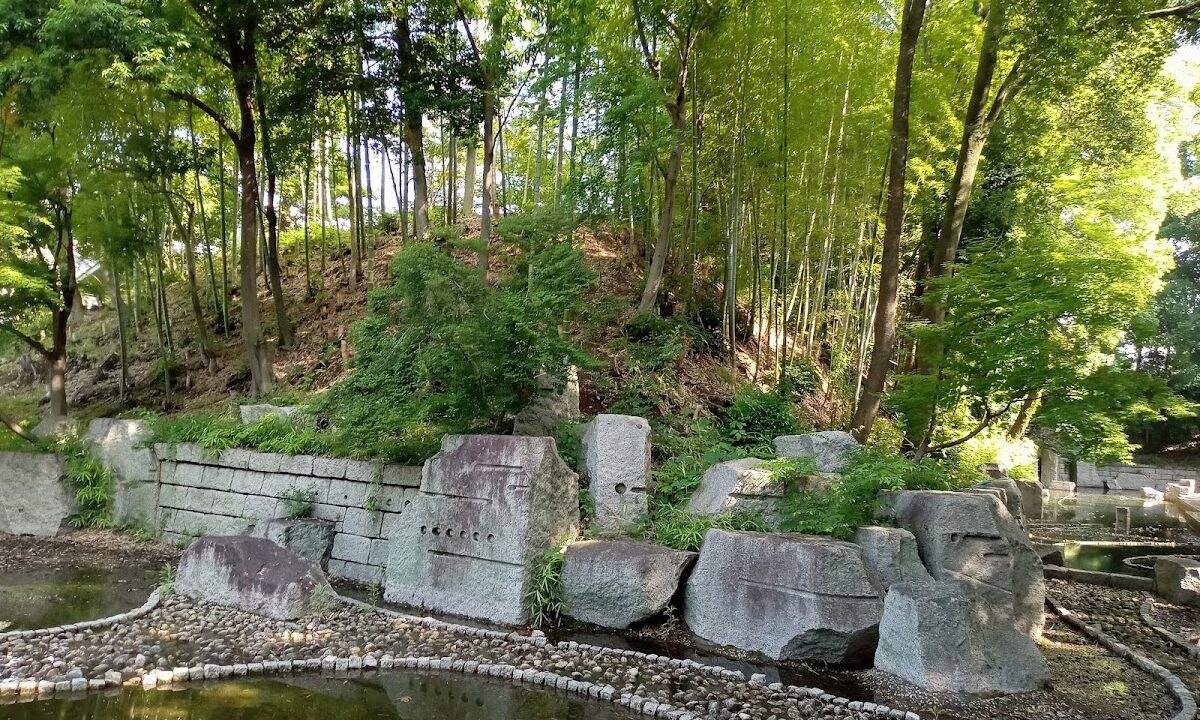
Slight traces of earthworks remain in several locations within the city. Especially around the Koga Historical Museum, you can get a sense of the height and scale of the earthworks in their heyday.
Famous Places in Koga Castle Town
When visiting Koga Castle, we recommend also visiting the famous places in Koga City, which developed as a castle town.
Takami Izumiseki Memorial Museum
The former residence of Takami Izumiseki, who served as a chief retainer of the Koga Domain, is open to the public as a memorial museum. This is a valuable facility where you can learn about the appearance of samurai residences in the late Edo period.
Koga Literary Museum
This facility exhibits materials related to literary figures associated with Koga, allowing you to learn about the cultural aspects of the castle town.
Koga Street Corner Art Museum
A small art museum exhibiting the history and culture of Koga, it is suitable for a stop during a stroll through the castle town.
Fukuhōji Temple
A temple associated with the lords of Koga Castle, and also the family temple of the Doi family. The temple grounds contain the tombs of successive feudal lords, allowing you to feel the history of the Koga domain.
Shōjōji Temple
A temple associated with the Koga Shogun, it contains historical materials and tombs related to the Ashikaga clan.
Koga Castle Town Streetscape
In the central part of Koga City, some of the Edo period town layout remains, allowing you to feel the atmosphere of the castle town at that time. Historic buildings are scattered throughout the streets lined with merchant houses.
How to Access Koga Castle
This section provides information on how to access the Koga Castle ruins and related historical sites.
Access by Train
JR Tohoku Main Line “Koga Station”: Approximately 1 hour from Tokyo Station, and approximately 40 minutes from Utsunomiya Station. From Koga Station, it’s about a 15-minute walk to the Koga Castle ruins (Koga First Elementary School) and about a 20-minute walk to the Koga Historical Museum.
Access by Car
- Tohoku Expressway “Kuki IC”: Approximately 20 minutes
- Tohoku Expressway “Tatebayashi IC”: Approximately 20 minutes
- Ken-O Expressway “Sakai-Koga IC”: Approximately 15 minutes
The Koga Historical Museum has a parking lot.
Getting Around the City
Historical sites within Koga City are relatively close together, making it possible to explore on foot or by bicycle. Bicycle rentals are available at Koga Station.
Points to Know When Visiting Koga Castle
This is a summary of useful information to know when visiting the Koga Castle ruins.
Best Season for Visiting
Since the Koga Castle ruins are mainly outdoor historical sites, the best times to visit are during the pleasant weather of spring (March-May) and autumn (September-November). Spring is especially beautiful with the surrounding cherry blossoms, making it ideal for a stroll.
Time Required
- Koga Castle Ruins Only: 30 minutes to 1 hour
- Including Koga Historical Museum: 2-3 hours
- Exploring the Entire Castle Town: Half a day to a full day
Notes
- Koga First Elementary School: Because the main keep site is within the school grounds, there are restrictions on external visits on weekdays. The stone monument can be seen from near the school gate.
- Preservation Status of Remains: Since very few buildings remain, it is recommended to study at the Koga Historical Museum beforehand to deepen your understanding.
- Photography: Consideration is required when taking photographs on the elementary school grounds.
Historical Significance of Koga Castle
Koga Castle holds the following important significance in the history of the Kanto region:
Base of the Koga Shogunate
From the Muromachi period to the Sengoku period, it functioned as the base for the Koga Shogunate’s rule over Kanto. With the relocation of the Kamakura Shogunate to Koga, the political center of Kanto shifted to Koga, and it served as a gathering point for Kanto samurai groups for approximately 150 years.
Northern Defense Base of the Edo Shogunate
During the Edo period, it was positioned as an important defense base north of Edo. The fact that successive feudal lords were selected from among the Tokugawa family’s hereditary daimyo and collateral branches is evidence of the shogunate’s importance placed on this area.
A Key Hub for Transportation and Logistics in the Kanto Region
Located at the intersection of water and land transport, it played a vital economic role as a center for the collection and distribution of goods. The castle town also developed as a commercial center, becoming one of the economic centers of northern Kanto.
A Center for Culture
The Koga Domain encouraged learning and culture, producing many cultural figures. In particular, Takami Izumiseki, a chief retainer during the late Edo period, was known as a scholar of Western learning and contributed to the development of Koga as a cultural city.
Legends and Anecdotes about Koga Castle
Several interesting legends and anecdotes remain about Koga Castle.
Doi Toshikatsu’s Castle Renovation
Doi Toshikatsu, who enjoyed the deep trust of Tokugawa Ieyasu, undertook large-scale castle renovations upon becoming the lord of Koga Castle. He constructed a three-story keep and transformed it into a modern castle with numerous turrets and gates. Toshikatsu rose to the position of Grand Elder, and the Koga Domain’s stipend increased from 80,000 koku to 160,000 koku.
Records of the Castle Tower’s Destruction
In 1681 (Tenna 1), the three-story castle tower of Koga Castle was destroyed by fire. Afterward, the castle tower was never rebuilt, and only a three-story turret was constructed in the main enclosure. This was because, from the mid-Edo period onward, the shogunate effectively prohibited the construction of new castle towers.
Takami Izumiseki and Watanabe Kazan
Takami Izumiseki, a senior retainer of the Koga domain during the late Edo period, was close friends with Watanabe Kazan, a scholar of Western learning and painter, and developed the Koga castle town as a center of cultural exchange. A portrait of Izumiseki was painted by Kazan and is designated a National Treasure.
Tourism in Koga City and Koga Castle
Koga City is focusing on historical tourism centered around Koga Castle and is undertaking various initiatives.
Tourism Policies in Koga City
Koga City has established tourist routes to tour the Koga Castle ruins and historical sites in the castle town, and has developed information boards and brochures. Furthermore, guided tours of the historical site by volunteer guides are available, allowing you to learn more about the history of Koga Castle.
Events and Festivals
Koga City regularly holds events themed around history. In particular, the “Koga Lantern Pole Festival” is a traditional event with a history of over 400 years, preserving the culture of the castle town.
Efforts to Restore Koga Castle
Currently, Koga City is considering a plan to restore part of Koga Castle. While complete restoration is difficult, the restoration of turrets and gates, and the improvement of information facilities are being discussed.
Comparison with Surrounding Castles
Comparing Koga Castle with surrounding castles is also beneficial for understanding it.
Sekiyado Castle (Noda City, Chiba Prefecture)
Located at the confluence of the Tone River and Edo River, this water castle, like Koga Castle, was built at a strategic point for water transport. Currently, a replica keep has been built and is open to the public as a museum.
Sano Castle (Sano City, Tochigi Prefecture)
Located northwest of Koga Castle, it was also built as a flatland castle. Currently, some earthworks and moats remain.
Oyama Castle (Oyama City, Tochigi Prefecture)
Located north of Koga Castle, this flatland castle was the base of the Oyama clan during the Sengoku period. Currently, it is a historical park known as the Gion Castle Ruins.
Compared to these castles, Koga Castle stands out in terms of scale, political importance, and historical continuity.
Current Status and Challenges of Koga Castle Research
Research on Koga Castle is ongoing, but several challenges remain.
Results of Archaeological Excavations
Archaeological excavations conducted by the Koga City Board of Education and others are gradually revealing the structure of Koga Castle’s moats and earthworks, as well as the appearance of the castle town. Excavated pottery and roof tiles are helping to elucidate the castle’s history and the lifestyle of its inhabitants.
Research on Historical Materials
Research into historical documents and maps related to the Koga Domain has revealed the detailed structure of the castle and the layout of the castle town. Edo period maps, in particular, are invaluable resources for understanding the castle’s appearance at the time.
Future Challenges
- Preservation of Remains: How to preserve the remains that are being lost due to development?
- Restoration Possibilities: To what extent is restoration possible within a limited budget?
- Tourism Utilization: How to utilize the site as a tourist resource given the scarcity of remains?
- Educational Utilization: How to utilize it for local history education?
These challenges are being addressed through collaboration between the government, researchers, and citizens.
Summary | The Value and Future of Koga Castle
Although very few buildings remain of Koga Castle, its importance in Japanese history is immeasurable. During the Muromachi period, it served as the political center of the Kanto region as the headquarters of the Koga Shogunate, and during the Edo period, it functioned as a key point for the shogunate’s northern defense.
Currently, various initiatives are underway in Koga City to pass on the historical value of Koga Castle to future generations. Through exhibitions at the Koga Historical Museum, preservation of historical sites, and development of tourist routes, citizens and the local government are working together to protect the memory of Koga Castle.
When visiting the Koga Castle ruins, it’s important not only to see the remaining structures, but also to reflect on the centuries of history that unfolded here. Gaining some background knowledge at the Koga Historical Museum before exploring the historical sites will lead to a deeper understanding and greater appreciation.
If you have the opportunity to visit Koga City in Ibaraki Prefecture, be sure to visit the Koga Castle ruins and related historical sites. From the traces of history remaining amidst the modern cityscape, you can feel the remnants of a time when this area flourished as a strategic point in the Kanto region.
Even though the physical structures of Koga Castle are gone, its historical significance and cultural value still live on in Koga City. As a source of pride for the local people and as a valuable resource for learning about Japanese history, the memory of Koga Castle will continue to be carefully preserved.