History and Highlights of Fuchu Castle (Ishioka City, Ibaraki Prefecture) | The Residence of the Daijo Clan, Built on the Site of the Hitachi Provincial Government
Overview and Basic Information of Fuchu Castle
Fuchu Castle (Fuchu-jo) is a flatland castle located in Soja 1-chome, Ishioka City, Ibaraki Prefecture, and is also known as Ishioka Castle. It was situated around the current site of Ishioka Municipal Ishioka Elementary School and Ishioka City Central Community Center.
Basic Data
Location: 1-chome, Soja, Ishioka City, Ibaraki Prefecture
Former Province: Hitachi Province
Classification/Structure: Flatland Castle
Common Name/Alternate Name: Ishioka Castle, Hitachi Fuchu Castle
Year of Construction: Around 1346 (Shohei 1st year/Jowa 2nd year)
Builder: Daijo Akikuni
Main Lord: Daijo Clan
Year of Abandonment: 1590 (Tensho 18th year)
Access Information
Located approximately 10 minutes on foot from Ishioka Station on the JR Joban Line, in the center of Ishioka City. It’s easiest to find by heading northeast from the station and using Ishioka Elementary School as a landmark. There are also public facilities with parking nearby, making it accessible by car.
History of Fuchu Castle
Relationship with Hitachi Provincial Government
The site where Fuchu Castle was built is a historically significant location, formerly the site of the Hitachi Provincial Government. The name “Fuchu” itself signifies the central location of the provincial government, and it flourished as a political and economic center from ancient times. The Hitachi Provincial Government functioned from the Nara period to the Heian period, but declined after the Kamakura period.
A new castle was built on this historically significant land during the Nanboku-cho period.
Construction by the Daijo Clan
Around 1346 (Shohei 1st year/Jowa 2nd year) during the Nanboku-cho period, Daijo Akikuni, the 15th head of the Daijo clan, who ruled the southern part of Hitachi Province, built a new castle on this site, the former location of the provincial government. Daijō Akikuni had previously been based at Ishioka Castle (another location), but it is believed that he moved to this location for better defensive purposes and to emphasize its symbolic significance as the center of Hitachi Province.
The Daijō clan was a family descended from the Kanmu Taira clan, specifically Taira no Kunika. They expanded their power in southern Hitachi Province from the late Heian period, and by the Kamakura period, they had grown into a powerful local lord, holding the hereditary position of Hitachi Daijō.
The Daijō Clan’s Prosperity Period
Based at Fuchū Castle, the Daijō clan wielded considerable power in southern Hitachi Province during the Sengoku period. Centered in Ishioka, they controlled the central and southern parts of present-day Ibaraki Prefecture, maintaining their influence through marital alliances with surrounding local lords.
Fuchū Castle functioned not only as a military base but also as a political and economic center. The town of Ishioka developed as a castle town, with thriving commercial activity, including markets.
The Satake Clan’s Invasion and the Fall of Fuchu Castle
In 1590, during the reign of Daijo Kiyomoto, the 24th head of the Daijo clan, Fuchu Castle underwent a major transformation. Satake Yoshinobu, based in northern Hitachi Province, advanced southward, aiming to unify Hitachi Province, against the backdrop of the changing political situation following Toyotomi Hideyoshi’s siege of Odawara.
Satake Yoshinobu attacked Fuchu Castle with overwhelming military force, and Daijo Kiyomoto was forced to surrender despite his futile resistance. It is said that Daijo Kiyomoto was invited by the Satake clan to Ota Castle (present-day Hitachiota City), but was murdered en route. This marked the end of the Daijo clan, which had ruled southern Hitachi Province for approximately 250 years.
Edo Period and Beyond
After the fall of the Daijō clan, Fuchū Castle came under the control of the Satake clan. However, when the Satake clan was transferred to Akita in 1602, Hitachi Province came under the control of the Tokugawa clan, centered around the Mito Domain.
For a time, the Minagawa clan ruled Fuchū, but in 1645, Minagawa Narisato died without an heir, and the Minagawa family line ended. Subsequently, Matsudaira Yoriyoshi (Tokugawa Yoriyoshi), the younger brother of Tokugawa Mitsukuni, the lord of the Mito Domain, established the Fuchū Domain with a 20,000 koku stipend and became the castle lord. However, this Fuchū Domain also ended after a short period when Yoriyoshi was transferred to Nukata in Hitachi Province (present-day Naka City) in 1661.
Afterward, Fuchū became a direct territory of the Mito Domain, and its function as a castle gradually declined. After the Meiji Restoration, the castle was completely abandoned, and the castle site was repurposed as a school and public facilities.
Fuchu Castle’s Layout and Structure
Castle Size and Arrangement
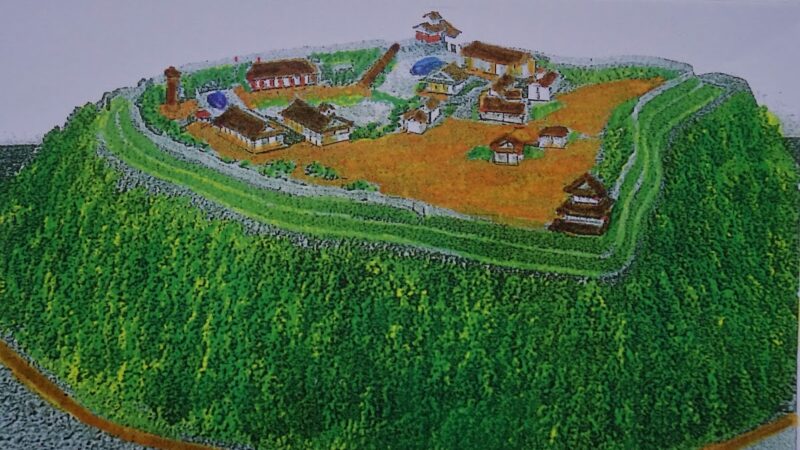
Fuchu Castle was a flatland castle built on the Ishioka Plateau, and is believed to have measured approximately 400 meters east-west and 350 meters north-south. The castle’s central area was the main keep (honmaru), surrounded by the second and third baileys (ninokuruwa and sannomaru), forming a concentric layout.
The current site of Ishioka Elementary School corresponds to the main keep, and the area around the Ishioka City Central Community Center is thought to be the site of the second bailey. The Koise River flowed south of the castle, serving as a natural moat.
Defensive Structures
As a flatland castle, Fuchu Castle primarily utilized earthen ramparts and moats as its defensive structures. Stone walls were not used; instead, earthen ramparts demarcated the baileys, with dry moats surrounding them. This is a typical form of medieval castle.
The castle was surrounded by multiple moats, which prevented enemy intrusion and also served as a water supply for the castle. It is also believed that there were multiple castle gates, with watchtower gates built at the main entrances.
Formation of the Castle Town
A castle town formed around Fuchu Castle. Samurai residences were located around the castle, while the merchant and artisan districts developed to the south of the castle. Ishioka was an old town with a history dating back to the Hitachi Provincial Government era, and it prospered as a castle town.
Remaining Structures Today
Earthworks and Dry Moats
The remains of Fuchu Castle that can be confirmed today mainly consist of earthworks and parts of dry moats. A small portion of the earthworks remains within and around the grounds of Ishioka Elementary School. In particular, traces of the earthworks indicating the castle’s outline can be seen on the north and east sides of the school.
Regarding the dry moats, although they have been largely filled in, some topographical undulations indicating the former moats can still be seen. Around the Ishioka City Central Community Center, traces of the former moat remain in the topography.
Traces of the Castle in the Topography
The current road layout and topography of Ishioka city still show remnants of the Fuchu Castle’s layout. In some places, the remains of moats and earthworks that demarcated the castle’s enclosures are preserved as roads and property boundaries.
Walking through the town with local elders and historians as guides, you’ll discover that areas that appear to be ordinary residential areas or school grounds were actually important parts of the castle.
Stone Monuments and Information Boards
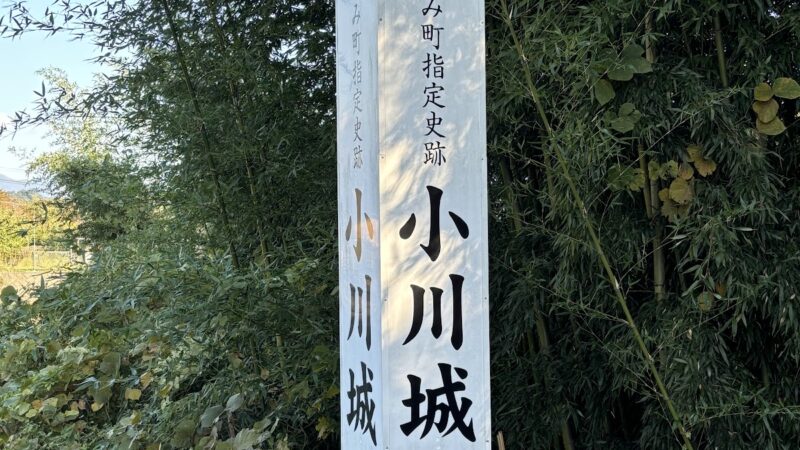
Within the grounds of Ishioka Elementary School, there is a stone monument marking the “Fuchu Castle Ruins,” indicating that this was once the residence of the Daijo clan. Information boards installed by the Ishioka City Board of Education also provide detailed information about the history and structure of Fuchu Castle.
Highlights and Visiting Points for Fuchu Castle
Exploring the Area Around Ishioka Elementary School
When visiting the Fuchu Castle ruins, it is recommended to explore the area around Ishioka Elementary School. While you cannot enter the school grounds, walking around the perimeter allows you to appreciate the remnants of the earthworks and the scale of the castle. The earthworks are particularly well-preserved near the northeast corner of the school.
When visiting, it is important to avoid school hours and prioritize the safety of the children. Visiting on weekends, holidays, or during long school breaks is preferable.
Ishioka City Central Community Center
The Ishioka City Central Community Center is located on the site of the second bailey and houses an exhibition corner on the history of Ishioka. Materials related to Fuchu Castle and the Daijo clan are also on display, allowing for a deeper understanding of the castle’s history.
The community center’s parking lot is available, making it a convenient base for those visiting by car.
Nearby Historical Spots
Numerous historical sites that tell the history of Ishioka remain around the Fuchu Castle ruins.
Hitachi Province Grand Shrine: Located north of Fuchu Castle, this ancient shrine has long been revered as the principal shrine of Hitachi Province. The Daijō clan is also said to have held it in high esteem.
Kokubunji Temple Ruins: The site of the Hitachi Kokubunji Temple, where the remains of a Nara period temple are preserved. It is within walking distance of Fuchu Castle.
Ishioka Townscape: Parts of the old townscape retain the atmosphere of a castle town, making it a great place for a historical stroll.
Photo Spots
While the castle ruins are limited, the remaining earthworks and the stone monument marking the castle site are popular photo spots. The combination of the Ishioka Elementary School building and the earthworks creates an interesting subject that contrasts the present with history.
About the Daijō Clan
Origins and Genealogy of the Daijō Clan
The Daijō clan is a family descended from the Kanmu Taira clan, and is considered to be descended from Taira no Kunika. The Daijō clan adopted the title of “Daijō” (大擔) after being appointed to the position of Daijō (副官) in Hitachi Province during the mid-Heian period.
During the Kamakura period, they served the shogunate as gokenin (vassals) while expanding their power in southern Hitachi Province. From the Muromachi period to the Sengoku period, they were powerful local lords in Hitachi Province, rivaling the Satake and Oda clans in influence.
Daijō Clan’s Territory
The Daijō clan’s territory extended to the central and southern parts of Ibaraki Prefecture, centered around present-day Ishioka City, including Kasumigaura City, Omitama City, and Namegata City. They particularly controlled the fertile plains around Lake Kasumigaura, giving them a strong economic base.
Within their territory, they built several branch castles and managed their domain by stationing family members and retainers there. Notable branch castles include Katano Castle, Tebaisaka Castle, and Hatori Castle.
The Daijō Clan’s Relationship with Other Sengoku Daimyo
During the Sengoku period, the Daijō clan forged complex relationships with surrounding forces. They sometimes clashed with the Satake clan to the north, and at other times formed alliances. They had a similar relationship with the Oda clan to the south.
While maintaining relations with the Kantō Kanrei Uesugi clan and the Koga Kubō Ashikaga clan, they strived to maintain their independence. However, ultimately, they could not withstand the expansion of the Satake clan’s power and met their demise.
The Historical Significance of Fuchū Castle and Ishioka
Role as the Center of Hitachi Province
Ishioka, where Fuchū Castle was built, has played an important role as the center of Hitachi Province since ancient times. During the Nara and Heian periods, when the provincial capital was located there, in the medieval period when the Daijō clan’s castle was situated there, and in the Edo period, as a post town on the Mito Highway, it played a central role in the region in each era.
This historical continuity speaks to the geographical and political importance of the Ishioka region.
A Typical Example of a Medieval Castle
Fuchu Castle holds an important position in the study of castle history as a typical example of a medieval castle built of earth without stone walls. It is a valuable historical site for understanding the structure of flatland castles in the Kanto region during the Sengoku period and the actual conditions of castles of local lords.
A Symbol of Regional Identity
For the current residents of Ishioka, the Fuchu Castle ruins are an important place symbolizing the region’s history and identity. The history of the Daijo clan is passed down as a source of local pride, and this spirit is carried on in local events such as the annual “Ishioka Festival.”
Preservation and Utilization of the Fuchu Castle Ruins
Current Situation and Challenges
The Fuchu Castle ruins are currently used as public facilities such as Ishioka Elementary School and a community center, and the state of preservation as castle remains is not necessarily good. Many remains have been lost due to development, and the remaining earthworks and moat traces have been altered by weathering and human modification.
The site has not been designated as a historical site, and therefore lacks sufficient legal protection.
Efforts toward preservation
In recent years, Ishioka City and local history research groups have been working on the investigation and preservation of the Fuchu Castle ruins. Excavations are gradually revealing the castle’s structure, and public awareness campaigns are underway.
There are also efforts to aim for historical site designation in the future, and it is hoped that the site will be appropriately preserved and utilized as a regional historical heritage.
Utilization as a tourism resource
Ishioka City is also working on utilizing historical resources, including the Fuchu Castle ruins, for tourism promotion. Efforts are being made to create an environment where visitors can gain a deeper understanding of Ishioka’s history through the development of historical walking routes, improved signage, and the implementation of guided tours.
By collaborating with events such as the “Ishioka Festival,” efforts are being made to enhance the appeal of Ishioka as a tourist destination where visitors can experience history and culture.
Summary
Fuchu Castle, located in Ishioka City, Ibaraki Prefecture, served as the residence of the Daijo clan, who ruled southern Hitachi Province from the Nanboku-cho period to the Sengoku period, and has a history spanning approximately 250 years. Built on the historically significant site of the former Hitachi Provincial Government, this castle functioned as the political, economic, and cultural center of the region.
While the castle’s remains are limited today, the earthworks and moat traces remaining around Ishioka Elementary School offer a glimpse into its former glory. Visiting the castle ruins allows you to experience the rise and fall of the Daijo clan and the historical importance of the Ishioka region.
Its convenient location within walking distance of JR Ishioka Station, and the presence of other historical sites such as Hitachi-no-Kuni Soja Shrine and the ruins of Kokubunji Temple nearby, makes it an ideal base for historical exploration. Those interested in the medieval history of Ibaraki Prefecture are highly encouraged to visit.
Fuchu Castle ruins may not be a flashy tourist destination, but it is a valuable historical site that quietly speaks of history. Even though it has been transformed into a modern school and residential area, the historical memories etched into this land remain vivid, allowing visitors to feel a connection between the past and the present.