The History and Legend of the Fall of Nio Castle (Mitoyo City, Kagawa Prefecture) – A Sengoku Period Castle Ruins and Kakujoin Temple
Nio Castle, located in Nio-cho, Mitoyo City, Kagawa Prefecture, is an important historical site that conveys the history and unique culture of the Sengoku period. From the castle ruins, where the temple Kakujoin now stands, one can enjoy a panoramic view of the Seto Inland Sea and the townscape of Nio, and feel the remnants of its former glory as a thriving port town that prospered from shipping and salt production.
Overview and Location of Nio Castle
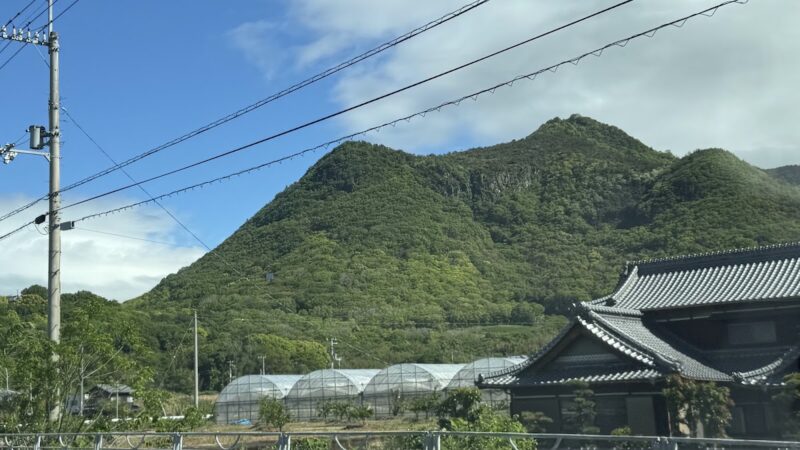
Nio Castle (Nio-jo) is a medieval mountain castle built on Shiroyama (approximately 100m above sea level) in Nio-cho, Mitoyo City, Kagawa Prefecture. Also known as “Niho Castle,” it was strategically located overlooking the town of Nio.
Geographical Characteristics of the Castle
Shiroyama is a small hill rising on the east side of Nio-cho, boasting an excellent location facing the Seto Inland Sea. From this location, it was possible to monitor and defend Nio Port, a crucial point for maritime traffic, and it functioned as an important military base in western Sanuki Province.
Nio Town is located in the southwestern part of Mitoyo City and has flourished since ancient times as a port town facing the Hiuchi Sea. Currently known as a scenic spot for Chichibugahama Beach, this area was strategically extremely important during the Sengoku period as a key point for maritime traffic connecting Sanuki and Iyo Provinces.
History of Nio Castle
Construction Period and Lord
There are various theories regarding the construction period of Nio Castle, but it is believed to have already existed in the early Sengoku period. There are also several theories regarding the lord of the castle, with the theory that Hosokawa Tosa-no-kami Yorihiro was the lord being considered the most likely.
The Hosokawa clan was a powerful daimyo under the Muromachi Shogunate and wielded considerable influence in Sanuki Province. Nio Castle was under the control of the Hosokawa clan and is presumed to have functioned as a base in western Sanuki Province.
Nio Castle in the Sengoku Period
During the Sengoku period, Sanuki Province was in a period of turmoil with multiple powers vying for control. Nio Castle was no exception, and it is believed to have been the site of repeated battles with surrounding forces.
Particularly in the latter half of the 16th century, the forces of Chosokabe Motochika of Tosa Province, who aimed to unify Shikoku, invaded Sanuki. The Chosokabe clan actively pursued the conquest of Sanuki from the 1570s, and Nio Castle became one of their targets.
The Legend of the Fall of Nio Castle
The Tragedy of the 3rd Day of the 3rd Month of the Lunar Calendar
The most famous part of Nio Castle’s history is the legend of its fall by the Chosokabe clan. The fact that this fall occurred on the 3rd day of the 3rd month of the lunar calendar, the day of the Hina Matsuri (Girls’ Festival), gave rise to a unique culture that continues to this day.
According to tradition, in the late 1570s, the Tosa army led by Chosokabe Motochika attacked Nio Castle, and after a fierce battle, the castle fell. Many samurai and local residents are said to have lost their lives in this battle.
Circumstances of the Castle’s Fall
The capture of Nio Castle was of great importance to the Chosokabe clan’s strategy for unifying Shikoku. Controlling this strategically important maritime point allowed them to establish their influence in western Sanuki and provide a foothold for further eastward expansion.
Although the castle lord and defenders bravely resisted, they were ultimately forced to surrender in the face of the overwhelming force of the Chosokabe army. This tragic event, along with the date of the 3rd day of the 3rd month of the lunar calendar, is deeply etched in the memory of the region.
Nio Town’s Unique Hina Matsuri Culture
The Tradition of Not Celebrating Hina Matsuri
Due to the historical memory of Nio Castle’s fall on the 3rd day of the 3rd month of the lunar calendar, a unique custom of not celebrating Hina Matsuri (Girls’ Day) continues in some areas of Nio Town. This custom has been passed down as a way to remember the tragedy of the day the castle fell and to mourn the victims.
Hina Dolls on Hassaku
Instead of the Hina Matsuri (Girls’ Festival), Nio Town has a unique custom of displaying Hina dolls on Hassaku (the first day of the eighth month in the old lunar calendar). While Hassaku is originally a festival to pray for a bountiful harvest, Nio Town has developed a unique culture of displaying both Hina dolls and May dolls together on this day.
This custom is thought to embody the people’s hopes for overcoming the tragedy of the castle’s fall and wishing for new prosperity. By shifting the timing, they have preserved the significance of the Hina Matsuri while also cherishing historical memory—a unique example of local wisdom.
Kakujoin – A Temple Built on the Castle Ruins
History of Kakujoin
Currently, a temple called Kakujoin stands on the site of Nio Castle. Kakujōin Temple is a temple relocated to the site of a castle after its fall, and it plays an important role in conveying the history of the castle to the present day.
The temple’s name, “Kakujō,” literally means “to remember (remember) the castle,” and it plays a role in passing on to future generations the fact that a castle once stood on this site.
View from Kakujōin Temple
Kakujōin Temple is located near the top of the castle hill, and from its grounds, you can enjoy a panoramic view of the town of Nio and the Seto Inland Sea. You can still see the same view that the castle lord and samurai once had.
In particular, the view overlooking Nio Port, the coastline towards Chichibugahama Beach, and the old townscape remaining in the center of town is magnificent, allowing visitors to feel the atmosphere of the past. On a clear day, you can even see the islands of the Seto Inland Sea in the distance, giving you a real sense of why a castle was built in this location.
History and Culture of Nio Town
Prosperity of Salt Production and Shipping
Nio Town was a thriving port town from before the Sengoku period (Warring States period) onwards, thanks to its salt production and shipping industries. The warm climate of the Seto Inland Sea and its shallow coastline were ideal for salt production, and the salt produced in Nio was widely traded.
Especially during the Edo period, salt field development progressed, and Nio became known as one of the leading salt-producing areas in Sanuki Province. Salt field managers, including Shiota Chuzaemon, played a vital role, and the town enjoyed great economic prosperity.
Development of Shipping
Along with salt production, shipping was also an important industry in Nio Town. From Nio Port, located at a key point on the Seto Inland Sea shipping route, goods such as salt were transported to various locations, and conversely, a variety of goods were brought in.
Due to these economic activities, many wealthy merchants and shipowners lived in Nio Town, and magnificent merchant houses and townhouses came to line the streets. The old townscape with its tiled roofs, still remaining in the town center, conveys the prosperity of that time.
Nio Town Today
Merger into Mitoyo City
For a long time, Nio Town was an independent municipality in Mitoyo District. However, on January 1, 2006 (Heisei 18), seven towns in Mitoyo District (Takase Town, Yamamoto Town, Mino Town, Toyonaka Town, Takuma Town, Nio Town, and Takada Town) merged to form Mitoyo City. As a result, Nio Town became a district of Mitoyo City.
Even after the merger, Nio Town continues to inherit its history and culture as an important area of Mitoyo City.
Value as a Tourism Resource
In recent years, Nio Town has attracted attention as a tourist destination. In particular, Chichibugahama Beach has become popular as “Japan’s Uyuni Salt Flats,” attracting many tourists.
Furthermore, walking tours that take advantage of the old townscape are also popular, allowing visitors to explore buildings and alleys that retain the atmosphere of the era when the town prospered from salt production and shipping. An increasing number of tourists are enjoying historical walks in conjunction with visits to Kakujoin Temple.
Access and Highlights of Nio Castle Ruins
Access Method
To reach Nio Castle Ruins (Kakujoin Temple), take a bus or taxi from Takuma Station on the JR Yosan Line (approximately 20 minutes), or walk up the castle hill from the center of Nio town. By car, it’s about 30 minutes from the Sanuki Toyonaka Interchange on the Takamatsu Expressway.
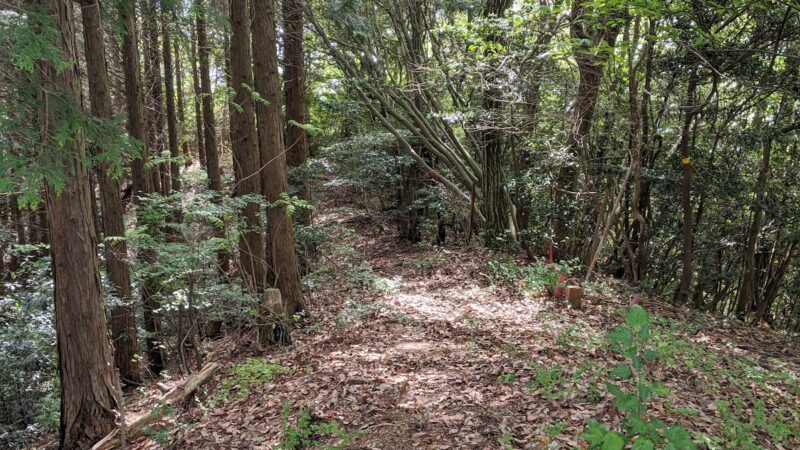
The hiking trail to the castle hill is well-maintained, and you can reach Kakujoin Temple at the summit in about 15-20 minutes on foot. The path is a quiet mountain trail surrounded by trees, allowing you to enjoy various natural sights depending on the season.
Highlights
Kakujoin Temple Grounds
From the temple grounds, you can enjoy a spectacular view of the townscape of Nio and the Seto Inland Sea. The scenery, especially at sunset, is beautiful and a popular spot for photography.
Castle Ruins
While there are few clearly defined remains such as stone walls, the castle’s structure can be inferred from the topography. You can observe features of a mountain castle, such as the remains of baileys and moats.
Nio Townscape
The townscape of Nio, viewed from the castle ruins, is a charming landscape with old merchant houses and townhouses remaining. We recommend enjoying a stroll through the town in conjunction with your visit to the castle ruins.
Nio Castle and Surrounding Historical and Cultural Assets
Cultural Assets of Nio Town
Besides the Nio Castle ruins, Nio Town has many other historical and cultural assets. Mitoyo City introduces the historical and cultural assets of Nio Town on its official website, allowing you to learn about the region’s history.
Many assets that tell the story of this port town, which prospered from salt production and shipping, are preserved, including merchant buildings scattered throughout the old townscape, salt field-related remains, and temples and shrines.
Local Traditional Events
Besides the Hina doll display on Hassaku, Nio Town has a variety of other traditional events that have been passed down through generations. These events embody the beliefs and wishes of people who have lived in harmony with the sea, and are important elements in shaping the region’s identity.
Historical Lessons Told by Nio Castle
Sanuki in the Sengoku Period
The history of Nio Castle tells the story of the complex political situation in Sanuki during the Sengoku period. Various forces, such as the Hosokawa, Miyoshi, and Chosokabe clans, vied for control of Sanuki, and many castles became battlefields.
The fall of Nio Castle is a snapshot of this era, illustrating how the people of the region lived and overcame hardships within the larger currents of history.
Passing on Memory
The people of Nio Town have remembered the fall of the castle on the 3rd day of the 3rd month of the lunar calendar for over 400 years by not celebrating the Hina Matsuri (Girls’ Festival). This attitude is a manifestation of Japanese culture’s respect for history.
Never forgetting tragedy, yet moving forward with life. The custom of displaying Hina dolls on Hassaku (the first day of the Hina Matsuri festival) reflects the wisdom and strength of these people.
Significance of Nio Castle Ruins in Modern Times
Regional Identity
Nio Castle Ruins are an important place for the people of Nio Town, symbolizing their regional identity. Climbing the castle hill and visiting Kakujoin Temple provides an opportunity to reaffirm their roots and reflect on the history of their ancestors.
Educational Value
The history of Nio Castle is also an important teaching material in local schools. By learning about local history, children deepen their attachment to their hometown and cultivate a sense of valuing history.
Potential as a Tourism Resource
With the popularity of Chichibugahama Beach, the number of tourists visiting Nio Town as a whole is increasing. Nio Castle Ruins and the old townscape enhance Nio Town’s appeal as a tourist destination with depth of history and culture, beyond just a beach resort.
For history buffs and castle enthusiasts, the value of Nio Castle Ruins is increasing as a precious historical site where one can learn about the history of Sanuki during the Sengoku period.
Points to Note When Visiting Nio Castle
Preparation for Hiking
The hiking trail to the castle mountain is well-maintained, but it has a considerable incline. We recommend wearing comfortable shoes and clothing. Especially in summer, don’t forget to stay hydrated.
Protection of Historical Sites
Nio Castle Ruins are a valuable historical heritage site. When visiting, please observe proper etiquette and avoid damaging the remains or leaving litter.
Consideration for the Local Community
Kakujoin Temple is still in operation, and the surrounding area is residential. It is important to visit quietly and be considerate of the lives of the local residents.
Summary
Nio Castle in Nio-cho, Mitoyo City, Kagawa Prefecture, is a valuable historical site that conveys the turbulent history of the Sengoku period. The tragedy of the castle’s fall to the Chosokabe clan gave rise to a unique cultural practice: the absence of the Hina Matsuri (Girls’ Festival) on the third day of the third month of the lunar calendar. This tradition continues to be passed down by the local people even more than 400 years later.
From Kakujoin Temple, built on the castle ruins, visitors can enjoy a panoramic view of the town of Nio, which once prospered from salt production and shipping, and the beautiful Seto Inland Sea, evoking a sense of historical romance. Along with the stunning views of Chichibugahama Beach, experiencing the deep history and culture of Nio will enrich your travel experience.
The history of Nio Castle tells the story of the complex political situation in Sanuki during the Sengoku period, its importance as a key point for maritime traffic, and the people who overcame difficulties to build prosperity. For us living in the modern age, it is a meaningful historical site that teaches us the importance of remembering history and applying its lessons to the future.