Terui Castle (Mannō-cho, Nakatado-gun, Kagawa Prefecture): A Complete Guide to its History and Highlights
Terui Castle, located in Mannō-cho, Nakatado-gun, Kagawa Prefecture, is an important mountain castle site from the Sengoku period in the Sanuki region. This article comprehensively explains the historical background, castle structure, local highlights, and access information of Terui Castle, providing useful information for castle enthusiasts and history lovers.
Basic Information on Terui Castle
Terui Castle is a medieval mountain castle located in the Terui and Mano districts of Nanaka, Mannō-cho, Nakatado-gun, Kagawa Prefecture. In the Comprehensive Survey of Cultural Properties, it is treated as a single castle complex, “Shiromaru Castle Ruins, Jo-no-maru Castle Ruins, and Terui Castle Ruins.”
Location and Geographical Characteristics
- Location: Terui and Mano, Nanaka, Mannō-cho, Nakatado-gun, Kagawa Prefecture
- Coordinates: 34°10′04.2″N, 133°51′28.8″E (World Geodetic System)
- Topography: Mountain castle located on a branch of the Sanuki Mountains
- Elevation: Mountainous area around 300m
Nakatado-gun is a district that stretches from the central to western Sanuki regions of Kagawa Prefecture. Mannō-cho was formed in 2006 through the merger of Nakanan-cho, Mannō-cho, and Kotonan-cho. The area where Terui Castle is located was once a key transportation hub connecting the central part of Sanuki Province with the Asan Mountains.
Historical Background of Terui Castle
Sanuki and Terui Castle in the Sengoku Period
Terui Castle is believed to have been built during the Sengoku period (Warring States period). During this period, Sanuki Province was a turbulent era of power struggles between the Miyoshi clan of Awa Province, the Chosokabe clan of Tosa Province, and local powerful families.
Numerous mountain castles were built in the Sanuki region, and Terui Castle was one of them, serving as a base for regional control. The Nakatado district was a strategically important location connecting the Sanuki Plain and the mountainous areas, occupying a military and economically significant position.
Relationship with Shiromaru Castle and Jonomaru Castle
In the Comprehensive Survey of Cultural Properties, “Shiromaru Castle Ruins,” “Jonomaru Castle Ruins,” and “Terui Castle Ruins” are treated as a single group of castle remains. These may have constituted a multi-bailey castle system built on the same mountain mass.
In medieval mountain castles, it was common practice to enhance defensive capabilities by arranging multiple baileys and subsidiary castles. It is presumed that Terui Castle also had a structure with a main bailey at its center, surrounded by multiple defensive strongholds.
Lords and Rulers
Historical records regarding the specific lords of Terui Castle are limited, and details remain unclear. However, this region was under the influence of the following forces during the Sengoku period:
- Miyoshi clan: Based in Awa Province, they expanded their influence into Sanuki Province.
- Kagawa clan: Powerful local lords of Sanuki Province.
- Chosokabe clan: Invaded Sanuki Province during the Tensho era.
After Toyotomi Hideyoshi’s conquest of Shikoku in 1585 (Tensho 13), Sanuki Province became the territory of Sengoku Hidehisa, and then Ikoma Chikamasa, and many medieval mountain castles were abandoned. It is believed that Terui Castle also lost its military function during this period.
Structure and Layout of Terui Castle
Characteristics as a Mountain Castle
Terui Castle possesses the typical characteristics of a medieval mountain castle. It is presumed that the following defensive structures were strategically placed, making skillful use of the mountainous terrain:
Major Remains
- Main Enclosure (Honmaru): The central enclosure of the castle
- Second and Third Enclosures: Defensive positions surrounding the main enclosure
- Moat: A defensive structure cutting across the ridge
- Earthwork: A defensive wall made of piled-up earth
- Vertical Moat: A defensive ditch dug into the slope
Possibility of a Concentric Enclosure Structure
If Shiromaru Castle, Jo-no-maru Castle, and Terui Castle formed a single castle complex, this is likely a concentric enclosure layout. A concentric enclosure is a castle structure in which multiple enclosures are arranged in a continuous sequence, aiming to provide multiple layers of defense.
In mountain castles, the following layout is common depending on the terrain:
- Mountaintop: Main enclosure (most important base)
- Ridge: Secondary enclosures and outworks
- Valley: Water supply and storage facilities
- Ascent Route: Entrance gates and fortified positions
Highlights and Current Status of Terui Castle
Current Situation
According to data from Kojodan (a castle-visiting website), Terui Castle has an average rating of ★★★☆☆ (3.00), and the estimated visit time is approximately 30 minutes. The number of visitors is small (5 people), making it a relatively less visited castle site.
Entrance and Shrine
According to photos published on Kojodan, there is a shrine near the entrance to the castle. Many medieval mountain castles had shrines or altars built around them in later periods, becoming objects of local worship.
Preservation Status of the Ruins
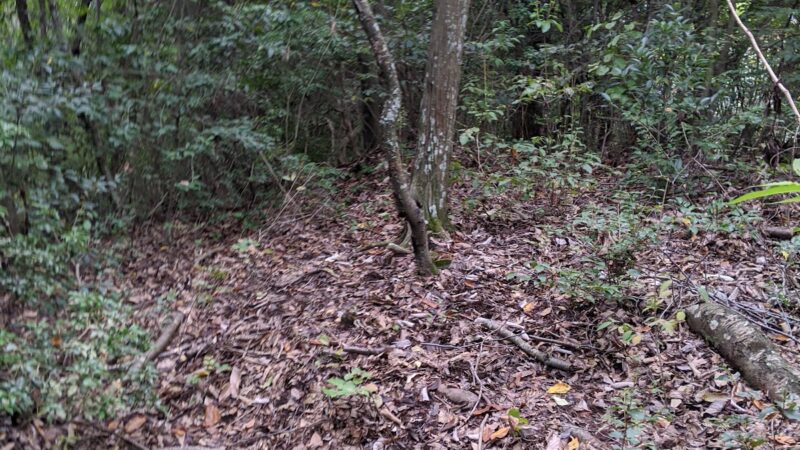
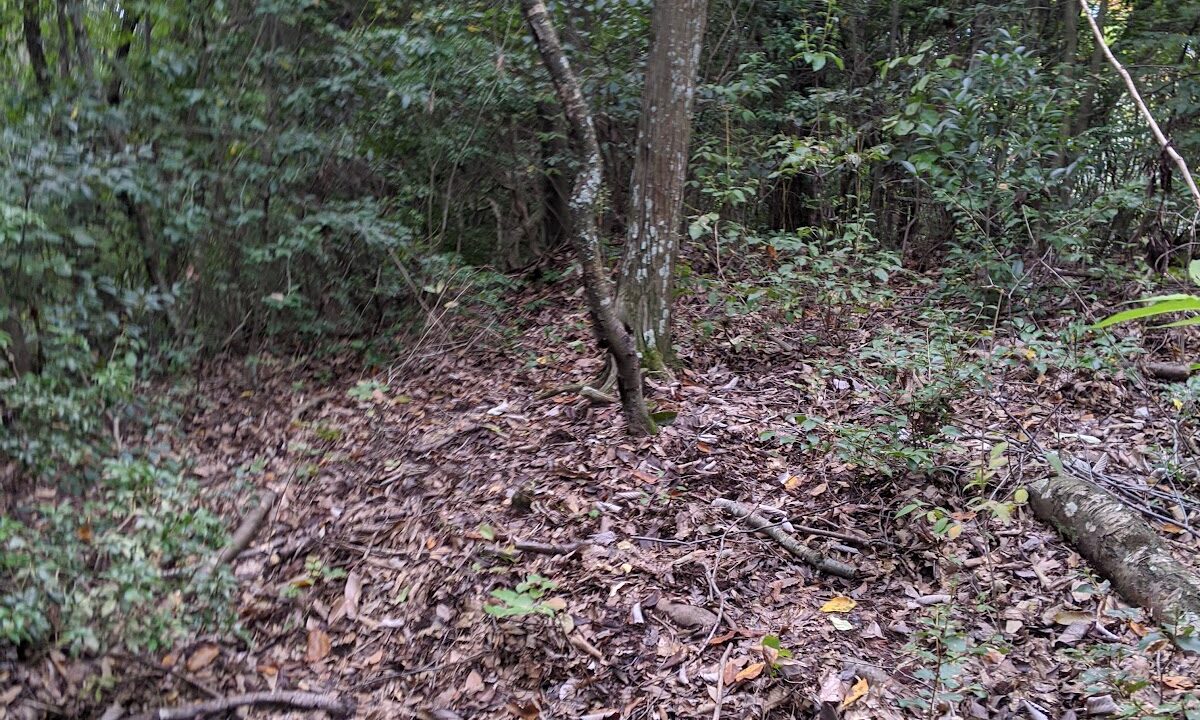
While detailed information on excavation and maintenance is limited, it is believed that traces of earthworks and baileys remain within the forest. Please note the following points when visiting:
- Hiking Equipment: Appropriate shoes and clothing for walking on mountain trails
- Season: In summer, vegetation is dense, making the ruins difficult to see
- Safety Management: Avoid solo visits; visiting in groups is recommended
- Prior Confirmation: Check local information and the latest conditions
Access to Terui Castle
Access by Public Transportation
When using public transportation to Terui Castle, the following routes are available:
Using the JR Dosan Line
- From Shioiri Station: Approximately 20 minutes on foot
- From Kotohira Station: Approximately 69 minutes on foot (approximately 5.5 km)
Shioiri Station is the nearest station, but the route from the station to the castle ruins involves walking along mountain trails. Preparing a map or GPS device in advance is recommended.
Access by Car
- From Takamatsu Expressway, Zentsuji Interchange: Approximately 20 minutes
- Parking: Please check in advance for detailed information.
While access by car is the most convenient, we recommend checking the latest information regarding road conditions and parking spaces around the castle ruins with the Mannō Town Hall or local tourist information center.
Nearby Tourist Attractions
When visiting Terui Castle, a more fulfilling trip will be made possible by also visiting other tourist attractions in Nakatado District:
Major Tourist Attractions in Nakatado District
- Kotohira-gu Shrine (Kotohira Town): A representative shrine of Sanuki Province
- Mannō Pond (Mannō Town): One of Japan’s largest irrigation reservoirs
- Zentsūji Temple (Zentsūji City): The birthplace of Kōbō Daishi
- Marugame Castle (Marugame City): A famous castle with an existing keep
Touring Other Castle Ruins
There are numerous castle ruins in Kagawa Prefecture, allowing you to enjoy castle tours:
- Takamatsu Castle: A modern castle known as a coastal castle
- Marugame Castle: Famous for the beauty of its stone walls
- Hikida Castle: A mountain castle overlooking the Seto Inland Sea
History and Culture of Nakatado District
The Origins of Nakatado District
Nakatado District is located in the central and western Sanuki regions of Kagawa Prefecture and has been an important area of Sanuki Province since ancient times. The district name “Tado” originates from the ancient Tado District, and it became established as “Nakatado” from the medieval period onward.
Current Constituent Municipalities
The following towns belong to Nakatado District:
- Kotohira Town: Developed as a temple town for Kotohira Shrine
- Tadotsu Town: Has a history of flourishing as a port town
- Mannō Town: Formed in 2006 through the merger of three towns
Nakatado District in the Sengoku Period
During the Sengoku period, Nakatado District was strategically important due to its central location in Sanuki Province for the following reasons:
- Transportation Hub: A route connecting the Sanuki Plain and the Asan Mountains
- Economic Importance: A region with high agricultural productivity
- Military Value: A region repeatedly contested by various powers
The construction of numerous mountain castles, including Terui Castle, attests to the importance of this region.
The Castle Culture of Sanuki and the Position of Terui Castle
Characteristics of Mountain Castles in Sanuki
Numerous mountain castles were built in Sanuki Province (present-day Kagawa Prefecture) during the Sengoku period. The mountain castles of Sanuki have the following characteristics:
Topographical Characteristics
- Utilization of the Sanuki Mountains: Numerous mountain castles are located in the mountainous areas of the south.
- Monitoring of the Plains: Castles are built in locations overlooking the Sanuki Plain.
- Guarding the Seto Inland Sea: Locations that allow monitoring of maritime traffic.
Structural Characteristics
- Earth Castles: Few stone walls, mainly earthworks and trenches.
- Consecutive Enclosure Style: Multiple enclosures are arranged in a continuous pattern.
- Ridge Utilization: Layouts that utilize the mountain ridges.
Historical Significance of Terui Castle
Terui Castle holds historical significance among the mountain castles of Sanuki in the following respects:
- Center for Regional Control: The residence of the lord in Nakatado District.
- Monitoring of Transportation Routes: Locations that control roads leading to mountainous areas.
- Example of a Consecutive Enclosure Style: A structure in which multiple castles are interconnected.
Castle Research and Cultural Heritage Value
Status of Cultural Heritage Designation
Terui Castle is registered in the Comprehensive Survey of Cultural Properties as “Shiromaru Castle Ruins, Jo-no-maru Castle Ruins, and Terui Castle Ruins,” but it is not currently designated as a national or prefectural cultural property. However, it possesses academic value as a medieval mountain castle site.
Future Research and Preservation Challenges
The following are challenges in preserving and utilizing medieval mountain castles:
The Need for Research
- Surveying: Creation of an accurate layout map
- Excavation: Detailed confirmation of remains
- Documentary Research: Clarification of the castle lord and historical circumstances
Preservation and Utilization
- Protection of Remains: Protection from development and weathering
- Installation of Information Boards: Providing information to visitors
- Maintenance of Access Routes: Ensuring a safe viewing environment
- Collaboration with the Local Community: Preservation activities by local residents
Practical Guide for Visiting Terui Castle
Preparation Before Visiting
When visiting Terui Castle, we recommend the following preparations:
Essential Items
- Map and GPS: Smartphone map app or dedicated GPS device
- Hiking Boots: Non-slip shoes that protect the ankles
- Drinking Water: Sufficient water
- Camera: For recording ruins and scenery
- Insect repellent spray: Especially from spring to autumn
Clothing
- Long-sleeved shirt and long pants: To protect skin from plants and insects
- Hat: To protect the head from the sun and branches
- Gloves: For hand protection and non-slip grip
Points to note during your visit
Points to observe the ruins
- Layout of the enclosures: Confirm the extent and layout of the flat areas
- Traces of earthworks: Pay attention to subtle differences in elevation
- Moat: Where the ridge is cut off
- Road to the castle: Imagine the route taken at the time
Tips for taking photographs
- Lighting conditions: The oblique light in the morning highlights the ruins
- Season: Late autumn to early spring is the best time to observe the ruins
- Angle: A shooting position that emphasizes differences in elevation
Safety Precautions
The following safety precautions are important when visiting mountain castles:
- Weather Check: Slippery and dangerous during and after rain.
- Accompanying Groups: Avoid acting alone.
- Time Management: Plan to descend before sunset.
- Emergency Contact Method: Check cell phone signal strength.
- Consideration for Locals: Obtain permission if on private property.
History of Mannō Town and Terui Castle
Overview of Mannō Town
Mannō Town was formed on March 20, 2006, through the merger of Chūnan Town, Mannō Town, and Kotonan Town. It has a population of approximately 17,000 (as of 2024), with agriculture and tourism being its main industries.
History of Mannō Pond and Irrigation
Mannō Town is home to Mannō Pond, one of the largest irrigation reservoirs in Japan. This pond was constructed during the Nara period and has supported agriculture in the Sanuki Plain. There is also a legend that Kobo Daishi Kukai was involved in the renovations.
Even during the Sengoku period when Terui Castle was built, the agricultural productivity of this region was high, which contributed to its military importance.
Local Cultural Heritage
Mannō Town has many historical sites besides Terui Castle:
- Mannō Pond: Designated as a National Place of Scenic Beauty
- Kanno-ji Temple: A temple associated with Kōbō Daishi
- Ancient Burial Mounds: Traces of human activity from ancient times
Kagawa Prefecture’s Castle Network
Major Castles in the Prefecture
Approximately 67 castle ruins have been identified in Kagawa Prefecture, and they can be classified as follows:
Japan’s Top 100 Castles / Continued Top 100 Castles
- Takamatsu Castle: One of Japan’s Top 100 Castles, famous as a coastal castle
- Marugame Castle: One of Japan’s Top 100 Castles, one of the 12 castles with existing keeps
Major Mountain Castles
- Hikida Castle: An important base in eastern Sanuki
- Amagiri Castle: A famous castle in Nakatado District
- Katsuga Castle: A mountain castle in Takamatsu City
The Relationship Between Terui Castle and Surrounding Castles
Several castle ruins exist around Terui Castle, and during the Sengoku period (Warring States period), they were in a relationship of mutual cooperation and conflict. Visiting these castle sites provides insight into the regional governance of that time.
Resources for Castle Researchers and Enthusiasts
References and Materials
The following resources are helpful for researching Terui Castle in detail:
Online Resources
- Kojodan: A site sharing information and visit records of castles nationwide
- Cultural Properties WebGIS: A cultural property database from the Agency for Cultural Affairs
- Historical Administrative Area Dataset: Information on old administrative areas
Books and Papers
- Local history research on castles in Kagawa Prefecture
- Archaeological research on the structure of medieval mountain castles
- Historical research on Sanuki Province during the Sengoku period
Castle Visiting Communities
By joining a community of castle enthusiasts, you can exchange information and have opportunities for joint visits:
- Kojodan: Online information sharing and interaction
- Regional History Research Group: A history research group for Mannō Town and Nakatado District
- Castle Tours: Guided tours led by professional guides
Future Prospects for Terui Castle
Potential for Preservation and Utilization
Medieval mountain castles, including Terui Castle, have the potential to become regional tourism and educational resources through appropriate preservation and utilization:
Utilization as a Tourism Resource
- Establishment of Castle Tour Routes: Tourist courses linked to surrounding castles
- Development of Information Boards and Explanation Boards: Providing information to visitors
- Implementation of Guided Tours: Guided tours with explanations by local guides
Utilization as an Educational Resource
- School Education: Teaching materials for learning local history
- Lifelong Learning: Holding history lectures and tours
- Research Subject: Collaboration with universities and research institutions
Contribution to Regional Development
Utilizing historical heritage can also contribute to regional development:
- Attracting Tourists: Visits from castle enthusiasts and history lovers
- Regional Identity: Pride in and affection for the region’s history
- Economic Effects: Contribution to the regional economy through tourism consumption
Summary
Terui Castle is a Sengoku period mountain castle located in Mannō-cho, Nakatado-gun, Kagawa Prefecture. It formed a complex of castles along with Shiromaru Castle and Jo-no-maru Castle. Currently, only the remains are preserved within the mountain forest, requiring hiking equipment and prior preparation for a visit.
It is accessible by a 20-minute walk from Shioiri Station on the JR Dosan Line, or by a 20-minute drive from the Zentsuji Interchange on the Takamatsu Expressway. While a visit takes approximately 30 minutes, combining it with other nearby tourist attractions will allow for a deeper understanding of Sanuki’s history and culture.
Terui Castle, possessing academic value as a medieval mountain castle, is expected to be preserved as a valuable historical heritage of the region for future generations through further research and preservation efforts. We encourage castle enthusiasts and history buffs to visit the site and reflect on Sanuki during the Sengoku period.
Please take sufficient safety precautions during your visit and cooperate in protecting the remains. For the latest information and detailed access instructions, we recommend contacting the Mannō Town Hall or local tourist information center.