Tachibana Castle (Mitoyo City, Kagawa Prefecture) Complete Guide | History, Access, and Highlights Explained in Detail
Tachibana Castle, located in Takada-cho, Mitoyo City, Kagawa Prefecture, is a historical site that played an important role as a medieval mountain castle in western Sanuki Province. This article comprehensively explains the historical background, castle structure, access methods, and related historical sites in the surrounding area, providing useful information for those considering a visit or for history enthusiasts.
What is Tachibana Castle? | Overview of a Medieval Mountain Castle in Mitoyo City, Kagawa Prefecture
Tachibana Castle is a medieval mountain castle built in the mountainous area of Takada-cho, Mitoyo City, Kagawa Prefecture. It played an important role as a military base in western Sanuki Province, primarily during the Sengoku period (Warring States period).
Basic Information on Tachibana Castle
- Location: Takada-kami, Takada-cho, Mitoyo City, Kagawa Prefecture
- Castle Type: Mountain Castle
- Construction Period: Medieval Period (Exact date unknown)
- Elevation: Mountaintop at approximately 300m
- Remains: Enclosures, moats, earthworks, etc.
Mitoyo City is located in the western part of Kagawa Prefecture, bordered by the Seto Inland Sea to the north and the Sanuki Mountains to the south, which separate it from Tokushima Prefecture. With a population of approximately 61,857 (as of 2020), it is the third largest metropolitan area in Kagawa Prefecture, after Takamatsu City and Marugame City.
Geographical Characteristics of Tachibana Castle
Takada-cho, where Tachibana Castle was built, is located on the north side of the Sanuki Mountains, a strategic point where mountainous and plain areas meet. This region was a crucial point on the transportation route connecting Sanuki Province and Awa Province (Tokushima Prefecture), and has long been considered militarily and economically important.
The castle was built on a mountaintop overlooking the surrounding area, and is thought to have been intended for monitoring and defending the Tadagawa River basin. It features a defensive design that takes advantage of the steep terrain characteristic of mountain castles.
History of Tachibana Castle | From Construction to Abandonment
There are few clear documentary records regarding the detailed construction date and builder of Tachibana Castle, and many aspects remain unclear. However, its role can be inferred from the historical background of the surrounding area and the castle’s structure.
Political Situation in Medieval Sanuki Province
The western part of Sanuki Province was a region where multiple powers vied for supremacy throughout the medieval period. Especially during the Sengoku period, powers such as the Miyoshi clan, Kagawa clan, and Chosokabe clan were constantly vying for power.
Tachibana Castle is thought to have functioned as a base for regional control or a defensive facility within this political context. The Tada region, located on the route connecting Sanuki and Awa provinces, must have become particularly important during periods of heightened military tension.
Role during the Sengoku Period
During the late Sengoku period, Sanuki Province was embroiled in fierce battles during Chōsokabe Motochika’s unification of Shikoku. Following Toyotomi Hideyoshi’s conquest of Shikoku in 1585 (Tenshō 13), Sanuki Province came under the control of the Ikoma clan.
During this period, many medieval mountain castles were abandoned, and a shift towards modern castles progressed. It is presumed that Tachibana Castle also lost its function as a military facility during this time.
After the Edo Period
With the advent of the Edo period, many mountain castles were officially abandoned due to the “One Castle Per Province” decree (1615). Tachibana Castle was completely abandoned during this period and subsequently faded into history.
Currently, its remains are being confirmed and documented by local history enthusiasts and castle researchers.
Structure and Highlights of Tachibana Castle
Tachibana Castle possesses the typical structure of a medieval mountain castle, characterized by its defensive design that skillfully utilizes the natural terrain.
Major Remains
Main Enclosure (Honmaru)
Located at the mountaintop, the main enclosure was the central facility of the castle. Even today, a flat area remains, allowing us to imagine the remains of the former buildings. From the main enclosure, one can see the surrounding mountains and the Tadagawa River basin, highlighting its importance as a surveillance point.
Enclosures (Kuruwa)
Several terraced enclosures are arranged around the main enclosure. These are thought to have been used as garrisons for soldiers and storage areas for supplies. Each enclosure is positioned utilizing the slope, enhancing its defensive effectiveness against attackers.
Moats
Moats dug to cut across the ridge are important defensive structures to prevent enemy intrusion. Multiple moats have been identified at Tachibana Castle, indicating the use of basic mountain castle defense techniques.
Earthworks
Traces of earthworks remain along the edges of the enclosures. These earthworks served not only as defensive walls but also as foundations for fences and walls.
Points of Interest During Your Visit
When visiting Tachibana Castle, paying attention to the following points will help you understand the castle’s features more deeply:
- Utilization of Terrain: How the steep slopes were used for defense
- Layout of Enclosures: How efficient defensive lines were constructed
- View: The range visible from the castle and the targets of surveillance
- Preservation Status of Remains: The appearance of the castle ruins as they return to nature
How to Access Tachibana Castle
Since Tachibana Castle is a mountain castle located in a mountainous area, prior preparation is necessary for a visit.
Access by Car
Nearest Interchange: Takamatsu Expressway “Sanuki Toyonaka IC” or “Mitoyo Torisaka IC”
- Approximately 20-30 minutes from the IC
- Head towards the Takada-kami area of Takada-cho
- Access to the castle entrance is via a paved road
Parking: There is no dedicated parking lot, so you will need to park in a suitable location nearby. Please be considerate of local residents.
Access by Public Transportation
Nearest Station: JR Dosan Line “Takada Station”
- Approximately 5-7 km from the station to the castle ruins
- Access on foot is difficult, so taxi use is recommended
- Rental car is also worth considering
Points to Note When Visiting the Castle
- Mountaineering Equipment Required: As it is a mountain castle, trekking shoes and comfortable clothing are essential.
- Season Selection: In summer, vegetation is overgrown, making it difficult to confirm the remains. Autumn to Spring is recommended
- Water and Food: There are no shops nearby, so prepare in advance.
- Bear and Bee Precautions: As it is a mountainous area, carrying a bell or similar item is recommended.
- Avoid Solo Travel: Visiting with multiple people is safer if possible.
- Use GPS Apps: To prevent getting lost, using a smartphone GPS app is recommended.
Related Castles and Historical Sites in the Surrounding Area
Numerous medieval castles from western Sanuki Province are scattered around Tachibana Castle. Visiting these together will help you understand the overall defense network of the region.
Major Castles in the Nearby
Higashimiya Castle (1.2km)
A mountain castle located approximately 1.2km northeast of Tachibana Castle. It is thought to be a defensive base that worked in conjunction with Tachibana Castle.
Kanda Castle (2.3km)
One of the important strongholds in the Takada area. Given its location relative to Tachibana Castle, it may have been a subsidiary castle that communicated with each other.
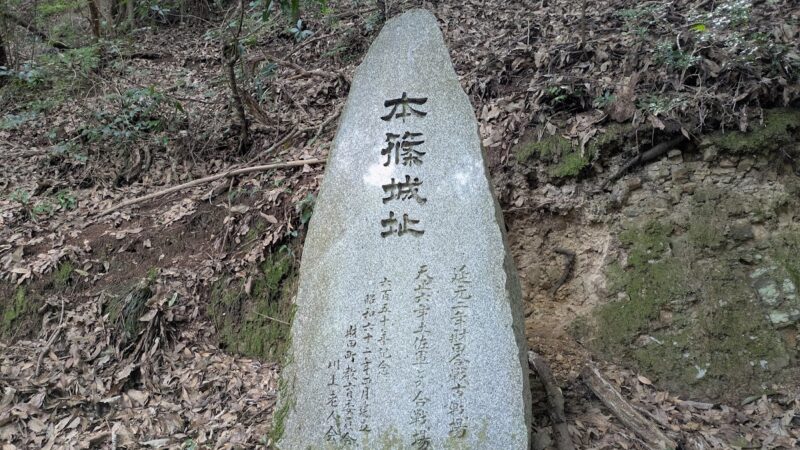
Honshino Castle (2.3km)
A mountain castle also located in the Takada area. It played a part in the regional defense network.
Komaru Castle (2.5km)
Located south of Tachibana Castle, it was positioned to defend against invasions from the Awa Province.
Chigyojiyama Castle (3.0km)
A castle built to monitor the Takada River basin.
Model Castle Tour Courses
Half-Day Course: Tachibana Castle → Higashimiya Castle → Kanda Castle
- Visit all three castles while traveling by car
- Duration: Approximately 4-5 hours
Full-Day Course: Adds Honshino Castle and Komaru Castle to the above
- Experience the castle network of western Sanuki
- Duration: Approximately 7-8 hours
History and Cultural Background of Mitoyo City
Understanding Tachibana Castle is also important, as is knowing the historical and cultural background of Mitoyo City.
The Origins of Mitoyo City
Mitoyo City was formed in 2006 (Heisei 18) through the equal merger of seven towns in Mitoyo District (Takase, Yamamoto, Mino, Toyonaka, Takuma, Nio, and Saida). Its total area of 222.70 km² makes it the second largest city in Kagawa Prefecture.
Geographical Characteristics
- Northern Area: Facing the Seto Inland Sea, it includes islands such as the Shonai Peninsula, Awashima, and Shishijima.
- Central Area: A gently sloping plain where agriculture is thriving.
- Southern Area: A mountainous region connected to the Sanuki Mountains; Tachibana Castle is located in this area.
Major Tourist Resources
Mitoyo City has recently gained attention as a tourist destination.
Chichibugahama Beach
A scenic spot known as “Japan’s Uyuni Salt Flats.” At low tide, the water surface becomes like a mirror, making it perfect for taking Instagram-worthy photos.
Shiudeyama Mountain
An observation point offering panoramic views of the Seto Inland Sea. Cherry blossoms are beautiful in spring, and hydrangeas in early summer, allowing visitors to enjoy the scenery of each season.
Shonai Peninsula
A peninsula with a scenic coastline and preserved fishing village landscapes. Ideal for cycling and driving.
Culture and Tradition
In Mitoyo City, including the Takada area, the unique culture and traditions of Sanuki (Kagawa Prefecture) still thrive. In addition to Sanuki udon noodles, many local festivals and traditional events remain.
Research and Preservation Activities of Tachibana Castle
Medieval mountain castles, including Tachibana Castle, are being re-evaluated for their historical value due to recent advances in castle research.
Current Status of Castle Research
Regarding medieval mountain castles in Kagawa Prefecture, research is progressing by local historians and castle researchers. Regarding Tachibana Castle, surveys of the remains and the creation of layout maps have been conducted, gradually revealing its structure.
Utilization of GPS Data
In modern castle exploration, the use of GPS track data has become commonplace. For Tachibana Castle, GPS data in KML and GPX formats is publicly available, allowing for safe access to the castle ruins through smartphone apps.
Preservation Challenges
Many mountain castles are returning to nature, and the deterioration of their remains is progressing. Tachibana Castle is no exception, facing the following challenges:
- Burial of remains due to overgrown vegetation
- Damage to remains due to landslides and weathering
- Trespassing by hikers
- Low awareness of its historical value
In response to these challenges, preservation activities are gradually progressing by local residents and researchers.
Best Season and How to Enjoy Visiting Tachibana Castle
Recommended Time to Visit
Autumn (October-November)
- The vegetation has withered, making the ruins easier to see.
- The temperature is moderate, making it easy to climb the castle.
- You can also enjoy the autumn foliage.
Winter (December-February)
- The view opens up as the leaves fall.
- There are fewer insects.
- The air is clear, providing excellent views.
Spring (March-April)
- The weather is mild.
- The fresh greenery is beautiful.
- However, the grass starts to grow after Golden Week.
How to Enjoy Your Visit
Feel the Romance of History
Walking around while imagining what the warlords of the Sengoku period thought and how they fought in this place will give you a sense of the romance of history.
Photography
Taking photos of the ruins is a must, of course, but the view from the mountaintop is also a great photo opportunity. It shows different expressions depending on the season and time of day.
Combine with Exploring the Surrounding Area
There are other historical sites and natural spots in the Takada area. Visiting Tachibana Castle is a great starting point for exploring the entire region.
Enjoying Local Cuisine
After visiting the castle, enjoy Sanuki udon noodles and dishes made with local ingredients in Mitoyo City. There are restaurants around Takada Station and along the national highway.
Basic Information and Access to Mitoyo City
Access to Mitoyo City
By Car
- From Takamatsu City: Approximately 1 hour via the Takamatsu Expressway
- From Matsuyama City: Approximately 1 hour 30 minutes via the Matsuyama Expressway and Takamatsu Expressway
By Train
- Get off at “Takuma Station” or “Mitoyo-shi Takuma Station” on the JR Yosan Line
- Get off at “Takada Station” on the JR Dosan Line (closest to Tachibana Castle)
Basic Data on Mitoyo City
- Population: 61,857 (2020)
- Number of Households: 23,083 (2020)
- Aging Rate: 36.5% (2020)
- Area: 222.70 km²
- City Hall Address: 2373-1 Shimokatsuma, Takase-cho, Mitoyo City, Kagawa Prefecture
Utilizing the Tourist Information Center
Mitoyo City has a tourist information center where you can obtain tourist information and maps of the city. Their Instagram account (@mitoyo_gram) is regularly updated with tourist and gourmet information about Mitoyo City, which is helpful for research before your visit.
Summary | The Charm and Value of Visiting Tachibana Castle
Tachibana Castle, located in Takada-cho, Mitoyo City, Kagawa Prefecture, is a valuable historical site that tells the story of the medieval history of western Sanuki Province. Although detailed historical records are scarce, its location and structure suggest that it played an important role in regional defense.
The charm of Tachibana Castle lies not only in seeing the ruins, but also in experiencing the tension of the Sengoku period and the defensive philosophy unique to mountain castles. Visiting it along with other castles in the area allows you to understand the entire defense network of western Sanuki, leading to a deeper understanding of history.
While a visit requires hiking equipment and prior preparation, it is a historical site well worth visiting for history enthusiasts and castle fans. Combining it with Mitoyo City’s beautiful natural scenery, tourist spots, and gourmet food will allow you to create a fulfilling travel plan.
Tachibana Castle’s appeal lies not only in seeing the ruins, but also in experiencing the tension of the Sengoku period and the defensive philosophy unique to mountain castles. Visiting it in conjunction with other castles in the area will help you understand the entire defense network of western Sanuki, leading to a deeper understanding of history.
Visiting requires hiking equipment and prior preparation, but it is a historical site worth visiting for history buffs and castle fans. Combining it with Mitoyo City’s beautiful natural scenery, tourist spots, and gourmet food will allow you to create a fulfilling travel plan.
Tachibana Castle is a valuable cultural asset and a little-known historical site in Kagawa Prefecture, where further research and preservation efforts are expected. Why not visit this place and reflect on the history of Sanuki?