Complete Guide to the History and Highlights of Oho Castle (Takamatsu City, Kagawa Prefecture) | A Thorough Explanation of the Mountain Castle Remains of the Kozai Clan, a Powerful Local Lord of Sanuki Province
What is Oho Castle?
Oho Castle is a medieval mountain castle built on the summit of Mt. Oho in Kamezu-cho, Takamatsu City, Kagawa Prefecture. Located on a strategic site at an altitude of approximately 174-175m overlooking Ikushima Bay in the Seto Inland Sea, it is said to have been built by the Kozai clan, a powerful local lord of Sanuki Province.
Even today, the remains of the castle, including stone walls, earthworks, baileys, and moats, are well-preserved, making it a quintessential example of a medieval mountain castle in Sanuki Province and attracting attention from castle researchers. Despite being relatively close to the center of Takamatsu City, it is a valuable historical site that retains much of its original appearance.
Basic Information on Ouhou Castle
Location and Former Province
Location: Ouhouyama, Kamezu-cho, Takamatsu City, Kagawa Prefecture
Former Province: Sanuki Province
Castle Structure: Mountain Castle
Elevation: Approximately 174-175m (Relative Height Approximately 160m)
Construction Period: Unknown (Estimated to be the Middle Ages)
Builder: Estimated to be the Kozai Clan
Lord: Kozai Clan
Renovator: Unknown
Year of Abandonment: Unknown (Estimated to be the late Sengoku period)
Common Name/Alternate Name
Ouhou Castle is sometimes called “Ouhoujo” or “Kihoujo” locally. This name comes from its location on the summit of Mount Ouhou, and no other special names are known.
History of Kōhō Castle
The Kōzai Clan and the Situation in Sanuki Province
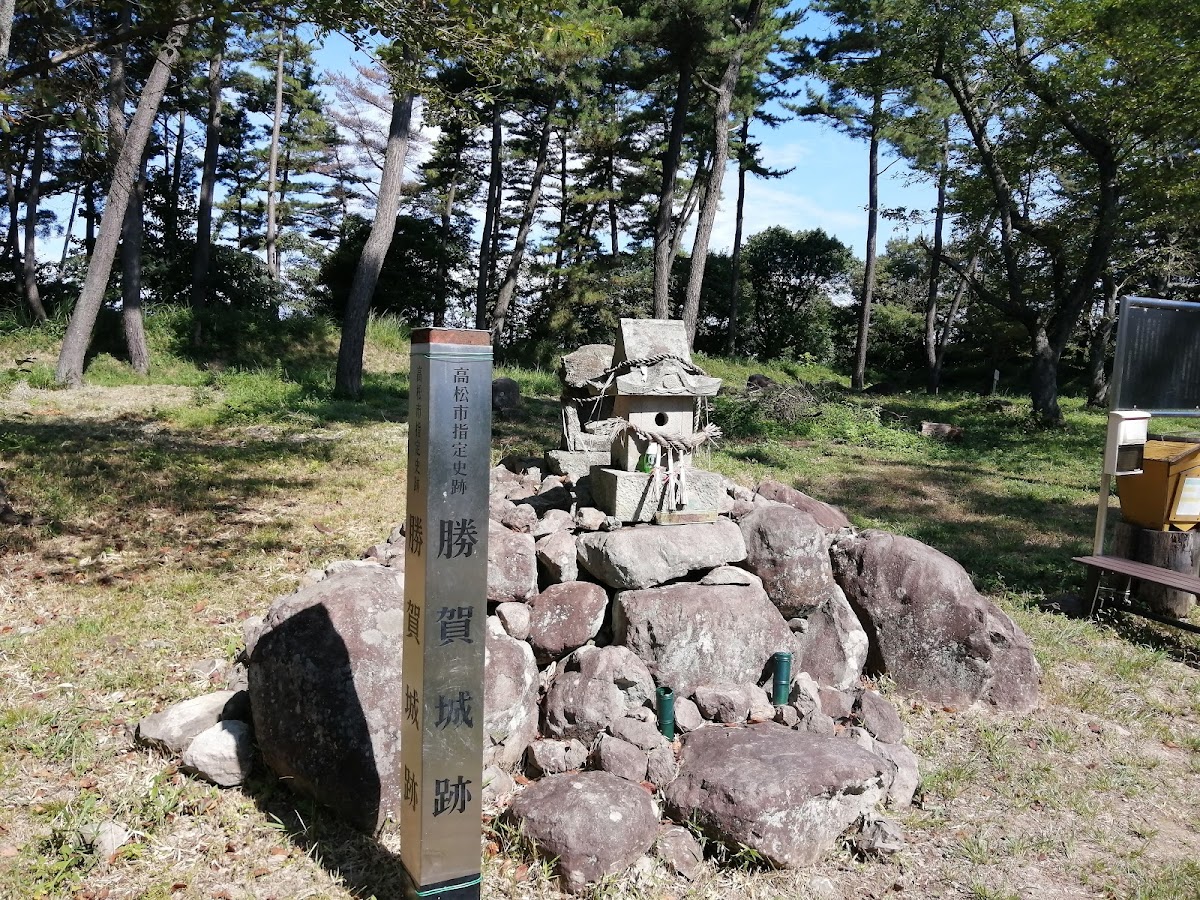
The Kōzai clan, who are believed to have built Kōhō Castle, were a powerful local family in Sanuki Province that wielded considerable influence throughout the Middle Ages. The Kōzai clan was based in western Sanuki Province, with their main base at Katsuga Castle (Kinashi-chō, Takamatsu City, Kagawa Prefecture). Kōhō Castle is thought to have served as a branch castle of Katsuga Castle, playing a role in monitoring maritime traffic in the Seto Inland Sea.
Sanuki Province, located at a strategic point in the Seto Inland Sea, has long flourished as a key hub for maritime traffic. The Kōzai clan leveraged this geographical advantage, building their economic base by controlling maritime transport. Kōhō Castle offered a panoramic view of Ikushima Bay, making it an ideal location for monitoring ship traffic.
Kōhō Castle in the Sengoku Period
During the Sengoku period (Warring States period), Sanuki Province became a battleground for surrounding powers such as the Miyoshi clan of Awa, the Chōsokabe clan of Tosa, and the Ukita clan of Bizen. The Kozai clan, too, was tossed about by the tides of the times, striving to survive by forming alliances and conflicts with various forces.
During the Tensho era (1573-1592), Chosokabe Motochika invaded Sanuki Province with the aim of unifying Shikoku. Katsuga Castle, the Kozai clan’s base, was also attacked by the Chosokabe clan and is believed to have eventually surrendered. It is highly likely that Kofu Castle was also abandoned around this time.
After Toyotomi Hideyoshi’s Conquest of Shikoku
In 1585 (Tensho 13), Toyotomi Hideyoshi conquered Shikoku, and Sanuki Province was given to Ikoma Chikamasa. After the Battle of Sekigahara in 1600 (Keicho 5), Sanuki Province became the territory of the Matsudaira clan, passing through the Nishijima clan. During this process, medieval mountain castles like Kofu Castle lost their military value and were completely abandoned.
In the Edo period, the Takamatsu Domain was established, and Takamatsu Castle (Tamamo Castle) became the center of the domain. Takamatsu Castle is known as a coastal castle and is considered one of Japan’s three greatest coastal castles. However, it has a flatland castle structure, in contrast to mountain castles like Huangfeng Castle.
Layout and Structure of Huangfeng Castle
Arrangement of the Main Enclosure and Baileys
Huangfeng Castle is a mountain castle with multiple baileys arranged around the summit of Mount Huangfeng. The main enclosure is located at the highest point of the mountaintop, surrounded by belt baileys and lower baileys. The main enclosure is relatively small, estimated to be about 30m on its long side and about 20m on its short side.
To the south of the main enclosure are the second and third baileys arranged in a stepped fashion, while smaller baileys are spread out to the north and east. These baileys are arranged along the ridgeline, utilizing the unique terrain of a mountain castle.
Features of the Stone Walls
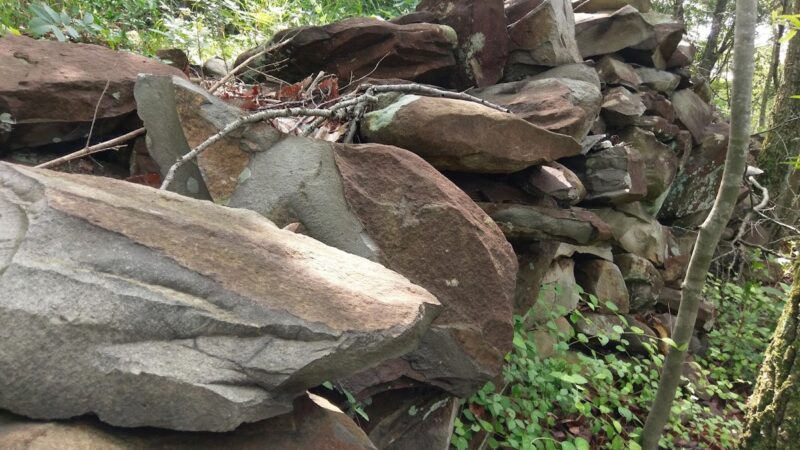
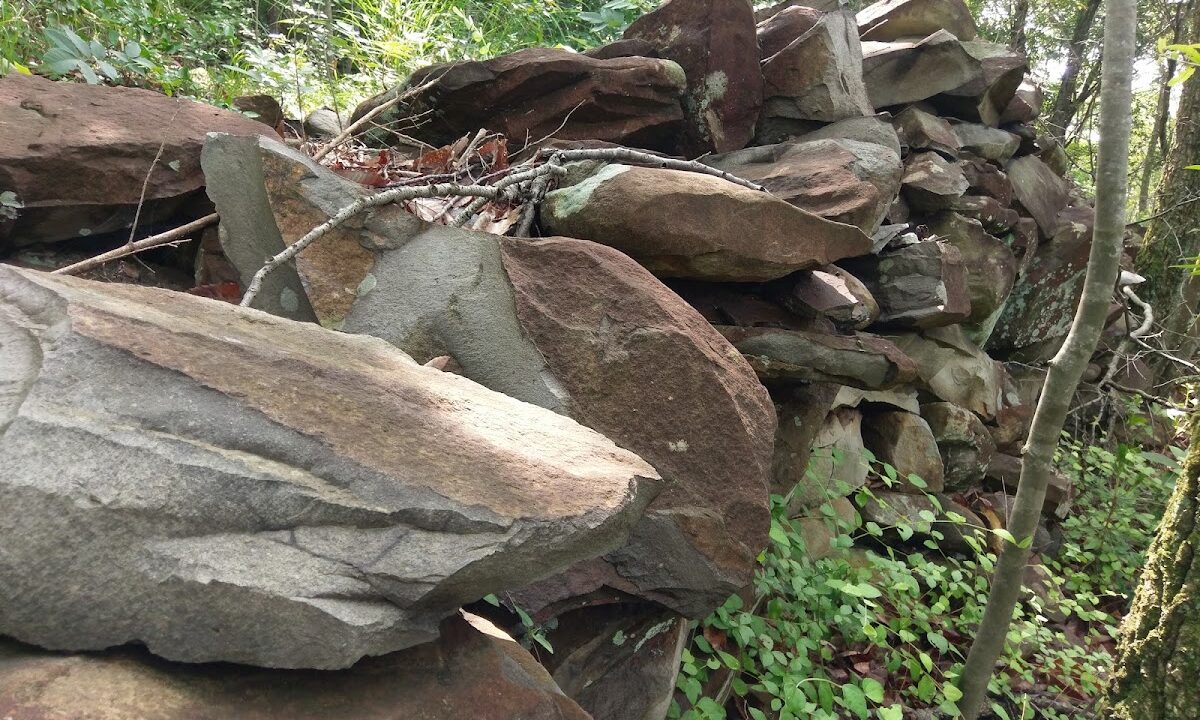
One of the major features of Huangfeng Castle is the stone walls that remain in various places. Many mountain castles in Sanuki Province feature stone walls, a testament to the local availability of high-quality granite (Sanuki stone). The stone walls of Kōhō Castle also utilize Sanuki stone in a rough, unfinished construction, with many remaining sections reaching a height of 1-2 meters.
The stone walls around the main enclosure are particularly well-preserved, providing valuable insights into the stonework techniques of the time. The construction method is a relatively rough, unfinished style, typical of mountain castles from the Sengoku period.
Earthworks and Moats
Along with the stone walls, earthworks also played a crucial role as defensive structures for the castle. Earthworks surround the main enclosure, and some sections can still be seen today as mounds exceeding 1 meter in height.
Furthermore, moats blocking the ridgeline have been identified in multiple locations. These moats prevented enemy intrusion and clearly demarcated the castle grounds. The moats are typically 2-3 meters deep and 5-8 meters wide.
Entrance and Ascent Route
The entrance to the castle, known as the “koguchi,” is believed to have been located on the south side of the main enclosure. Stone walls were positioned around the entrance, suggesting a strong defensive structure.
The main ascent route is thought to have followed the ridge on the south side, but multiple routes have now been identified. All are steep mountain paths, suggesting that attacking the castle would have been difficult.
Remains of Huangfeng Castle
Current Status of Existing Remains
The following remains can still be seen at the Huangfeng Castle site:
Major Remains:
- Stone Walls: Remaining in various locations, mainly around the main enclosure.
- Earthworks: Surrounding the main enclosure and each bailey.
- Baileys (Enclosures): Multiple enclosures including the main enclosure, second enclosure, and third enclosure.
- Moats: 3-4 locations along the ridge.
- Vertical Moats: Several on the slope.
- Entrance Gate: South side of the main enclosure, etc.
Reconstructed Structures: None
The castle site is basically a forest, and no structures remain. However, civil engineering remains such as stone walls and earthworks are relatively well preserved, allowing for an understanding of the castle’s structure in its heyday.
Preservation Status of Remains
While Huangfeng Castle Ruins are not designated as a historical site, they remain as a forest, untouched by development, and the remains are well preserved. However, some remains are difficult to see due to tree growth and fallen trees.
In recent years, investigations have been conducted by castle researchers and local history enthusiasts, and detailed layout maps have been created. These investigations have revealed that Kōhō Castle held an important position as a medieval mountain castle in Sanuki Province.
Kōhō Castle and Surrounding Castles
Relationship with Katsuga Castle
Kōhō Castle is thought to have functioned as a branch castle of Katsuga Castle, the base of the Kōzai clan. Katsuga Castle was a large mountain castle built on Mount Katsuga (elevation 364m) in Kinashi-chō, Takamatsu City, and was a symbol of the Kōzai clan’s power in western Sanuki Province.
Kōhō Castle is located about 5km northeast of Katsuga Castle and is presumed to have played a role as a forward base for monitoring maritime traffic in the Seto Inland Sea. It is thought that the two castles worked together to form a defense network in western Sanuki Province.
Comparison with Takamatsu Castle
Medieval mountain castles like Kōhō Castle and Takamatsu Castle (Tamamo Castle), built during the Edo period, differ significantly in their characteristics. Takamatsu Castle is a flatland castle located in Tamamo-chō, Takamatsu City, Kagawa Prefecture, and is known as a coastal castle facing the sea.
Takamatsu Castle was begun during the Keicho era (1596-1615) by Ikoma Chikamasa and later developed as the residence of the Matsudaira clan. Currently, it is maintained as Tamamo Park, and important cultural properties such as turrets and gates remain. It possesses unique characteristics of a coastal castle, such as sea bream swimming in its moat, which is filled with seawater.
On the other hand, Kōhō Castle is a practical mountain castle from the Sengoku period, with a defensive structure that takes advantage of the rugged mountain terrain. Comparing the two allows us to understand the changes in castle architecture from the medieval to the early modern period.
Access and Climbing Guide to Huangfeng Castle
Transportation Access
Public Transportation:
- Approximately 20 minutes by car from JR Takamatsu Station
- Approximately 30 minutes on foot from the trailhead after alighting at the Kotoden Bus “Kamezu” bus stop
Car:
- Approximately 15 minutes from the Takamatsu Expressway “Takamatsu Nishi IC”
- Approximately 20 minutes from central Takamatsu City via National Route 11
- Parking available near the trailhead (approximately 2-3 cars)
Address: Huangfeng Mountain, Kamezu-cho, Takamatsu City, Kagawa Prefecture
Precautions for Climbing
The following points should be noted when climbing to the ruins of Huangfeng Castle:
- Climbing Equipment: As it is a mountain castle at an altitude of 175m, hiking boots and comfortable clothing are necessary.
- Estimated Time: Approximately 30-40 minutes on foot from the trailhead to the main enclosure. Please allow 1.5-2 hours round trip.
- Trail Conditions: While there is a clear hiking trail, caution is advised as there are steep sections.
- Season: In summer, the undergrowth becomes thick, making it difficult to see the ruins. Visiting from autumn to spring is recommended.
- Bear Bells, etc.: As you are in the mountains, it is recommended to carry something that makes noise, such as a bear bell or radio.
Points to Note When visiting Huangfeng Castle Ruins, paying attention to the following points will help you understand the castle’s structure more deeply.
- Main Enclosure Stone Walls: You can see the best-preserved stone walls.
- Enclosure Layout: Observe the layout of the enclosures along the ridge.
- Moat: Pay attention to the depth and width of the moat that cuts off the ridge.
- View: Enjoy views of Ikushima Bay and the Seto Inland Sea from the main enclosure.
- Earthworks: Observe the shape of the earthworks surrounding each enclosure.
Points of Interest Around Kōhō Castle
Surrounding Castles
When visiting Kōhō Castle, visiting the surrounding castles will give you a deeper understanding of the castle history of Sanuki Province.
Katsuga Castle: The base of the Kōzai clan. Approximately 15 minutes by car from Kōhō Castle. Larger mountain castle remains remain.
Takamatsu Castle (Tamamo Park): One of Japan’s three great sea castles. Approximately 25 minutes by car from Kōhō Castle. Important cultural properties such as turrets and gates still exist.
Yashima: Famous as the site of the Genpei War. Remains of an ancient mountain castle also exist. Approximately 30 minutes by car from Kōhō Castle.
Nearby Historical Spots
Sanuki Kokubunji Temple Ruins: The ruins of a Kokubunji temple from the Nara period. An important historical site for understanding the ancient history of Sanuki Province.
Ishikiyooyama Tumulus Cluster: A group of tumuli from the Kofun period. Indicates the existence of ancient powerful clans in Sanuki.
Ritsurin Garden: A national special scenic spot. Highly regarded as a daimyo garden from the Edo period.
Photo Spots at Kōhō Castle
Here are some photo spots to visit when you come to the Kōhō Castle ruins.
Stone Walls of the Main Enclosure
The stone walls around the main enclosure are the biggest highlight of Kōhō Castle. You can photograph the rough-hewn stone walls up close. The morning hours when the light hits are ideal for photography.
View from the Main Enclosure
From the main enclosure, you can enjoy a panoramic view of Ikushima Bay and the Seto Inland Sea. On clear days, you can sometimes see as far as the Seto Ohashi Bridge. A wide-angle lens is recommended for photography.
Moats
Moats that cut off the ridge are interesting subjects as defensive structures of medieval mountain castles. Photographing from an angle that shows the depth of the moat conveys its defensive function.
Earthworks and Enclosures
Earthworks surrounding each enclosure and the elevation differences of the enclosures are also good photo opportunities. The autumn and winter leaf fall season makes the remains easier to see and is ideal for photography.
Research and Materials on Huangfeng Castle
References
Detailed information on Huangfeng Castle can be found in the following references.
- *Comprehensive Survey of Japanese Castles, Volume 15: Kagawa, Ehime, and Kochi* (Shin Jinbutsu Oraisha, 1980)
- *Place Names of Kagawa Prefecture* (Heibonsha, Comprehensive Survey of Japanese Historical Place Names)
- *Mountain Castles of Sanuki* (Kagawa Prefectural Board of Education)
- *Castle Wanderings* website (features detailed layout maps and photographs)
- *Nippon Castle Tour* website (basic information and reviews)
Academic Evaluation
Kōhō Castle is attracting attention from castle researchers as a typical example of a medieval mountain castle in Sanuki Province. In particular, the structure of the stone walls and the characteristics of the layout are important resources for the study of mountain castles in Sanuki Province.
Recent investigations suggest that Kōhō Castle may not have been merely a fort, but a permanently used castle. Based on the scale and structure of the remains, it is believed that a certain number of garrison soldiers were permanently stationed there.
Summary
Kōhō Castle is a valuable medieval mountain castle remains located in Takamatsu City, Kagawa Prefecture. Built by the Kozai clan of Sanuki Province, it served the purpose of monitoring maritime traffic in the Seto Inland Sea. The remains, including stone walls, earthworks, baileys, and moats, are well-preserved, conveying the appearance of a Sengoku period mountain castle.
Located relatively close to the center of Takamatsu City, yet retaining much of its original form, Kofu Castle is an indispensable historical site for understanding the history of Sanuki Province. While climbing requires some physical exertion, the views from the main enclosure and the well-preserved remains make it well worth the visit.
Kofu Castle offers a glimpse into the charm of a practical medieval mountain castle, distinct from modern castles like Takamatsu Castle (Tamamo Castle). For those interested in the history of Sanuki Province or mountain castle enthusiasts, this is a castle site you should definitely visit.