Momoai Castle (Takamatsu City) Complete Guide | Thorough Explanation of History, Remains, and Access
Momoai Castle, located in Busshozan-cho, Takamatsu City, Kagawa Prefecture, is an important castle site that tells the story of Sanuki’s history from the medieval to the early modern period. Although it is now residential land and farmland, making it difficult to imagine its former appearance, its historical value and the turbulent stories of its lords are essential elements for understanding the history of Kagawa Prefecture.
This article comprehensively introduces all information about Momoai Castle, including its history, the changes in its lords, the current state of the remains, access methods, and nearby tourist spots.
What is Momoai Castle?
Momoai Castle was a flatland castle built in Shirokyo, Busshozan-cho, Takamatsu City, Kagawa Prefecture. It is one of the castles that symbolizes the transitional period from the medieval to the early modern period in Sanuki Province, and is known as the residence of the Muneka clan.
Basic Information
- Location: Shirokyo, Busshozan-cho, Takamatsu City, Kagawa Prefecture
- Castle Structure: Flatland Castle
- Construction Period: Unknown (Estimated to be the medieval period)
- Main Lords: Muneka clan, Bessho Genbei Nagayuki
- Current Status: Residential land and farmland (No remains, only a stone monument remains)
- Cultural Property Designation: None
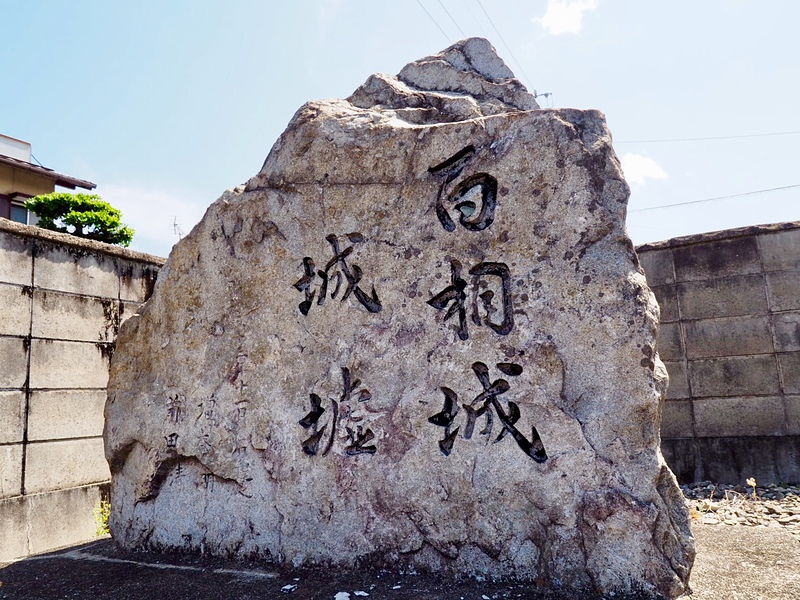
Hyakusho Castle is believed to have been built in the area northeast of Canaan Nursery School, which is now completely urbanized. Almost no remains exist, but a stone monument stands in a corner surrounded by a concrete block wall, commemorating the former existence of the castle.
History of Hyakusho Castle
The Era of the Muneka Clan
Hyakusho Castle was originally built as the residence of the Muneka clan. The Muneka clan was one of the local lords in Sanuki Province and is thought to have controlled the area around Busshozan.
In the Middle Ages, Sanuki Province, while under the control of powerful daimyo such as the Hosokawa and Miyoshi clans, was also home to many local lords. The Muneka clan was one such regional power, and Hyakusō Castle served as their base.
The Tragedy of Bessho Nagayuki and the Harima Bessho Clan
The most noteworthy period in the history of Hyakusō Castle is the era of Bessho Genbei Nagayuki.
Bessho Nagayuki is believed to be the son of Bessho Nagaharu, known as the lord of Miki Castle in Harima Province. Bessho Nagaharu rebelled against Oda Nobunaga and was defeated in the “Battle of Miki” (1578-1580) by Hashiba Hideyoshi (later Toyotomi Hideyoshi). Miki Castle fell, and Nagaharu was forced to commit suicide. At this time, the Bessho family was scattered.
After his father’s death, Nagayuki fled to Sanuki and is said to have become the lord of Hyakusō Castle by marrying a daughter of the Muneka clan. This is a valuable example of how the bloodline of a prestigious samurai family from Harima took root in Sanuki Province.
The Battle of Sekigahara and the End of the Bessho Clan
Bessho Nagayuki is said to have died in the Battle of Sekigahara (1600). However, due to a lack of historical records, details regarding which side he belonged to and which battlefield he died on remain unclear.
The Battle of Sekigahara was a decisive battle for control of Japan, pitting the Eastern Army led by Tokugawa Ieyasu against the Western Army led by Ishida Mitsunari. The various daimyo of Shikoku also joined one of these camps. At that time, Sanuki Province was ruled by Ikoma Chikamasa, and the Ikoma clan belonged to the Eastern Army.
With Bessho Nagayuki’s death, the history of Hyakusho Castle effectively came to an end. Afterward, this region was incorporated under the control of the Ikoma clan, and the castle likely lost its function.
Structure and Layout of Hyakusō Castle
Characteristics as a Flatland Castle
Hyakusō Castle is classified as a flatland castle. Unlike mountain castles that utilize rugged terrain for defense, it was a castle built on flat land. Located on Busshōzan Mountain in the plains of Sanuki Province, it was a strategically important transportation hub, suggesting its location was crucial for its function as a governing center.
Currently Available Information
Unfortunately, very little detailed layout information or historical records regarding the structure of Hyakusō Castle remain. Currently, the site is residential and farmland, and no archaeological excavations have been conducted. Therefore, only the following basic information is available:
- Location of the Main Enclosure: The area northeast of Canaan Nursery School
- Scope of the Castle: Details unknown (likely small)
- Moats and Earthworks: None exist, and no traces can be found
- Buildings: None remain
As a medieval local lord’s residence, it is highly likely that it had a simple, manor-like structure, and large-scale structures such as stone walls or a keep were not present.
Current Status of Baeksang Castle Ruins
Current Status of Remains
Currently, there are almost no remains at the Baeksang Castle ruins that evoke the castle’s past. The entire castle site has been completely urbanized, and the situation is as follows:
- Residential Development: Developed as a residential area, the traces of the castle have disappeared.
- Farmland: Part of the land is used for agriculture.
- Road: A modern road runs through the castle grounds.
- Nursery School: Canaan Nursery School has been built on the adjacent land.
Location and Current Status of the Stone Monument
The only physical evidence that tells us of the existence of Baeksang Castle is the stone monument erected at the castle site. This monument is preserved under the following conditions:
- Location: A corner of a garbage dump
- Protection: Within an area enclosed by a concrete block wall
- Condition: The monument itself is well preserved
- Inscription: Describes the existence of Baeksang Castle
This monument is believed to have been erected by local historians and volunteers, and is a valuable historical site that conveys the historical value of Baeksang Castle to future generations. However, the surrounding environment is not well maintained, making it somewhat difficult for visitors to find.
Points to Note When Visiting
When visiting the Hyakusho Castle Ruins, please note the following:
- Residential Area: The castle ruins are completely residential, so respect for residents’ privacy is necessary.
- No Remains: No remains such as moats or earthworks remain.
- Location of the Stone Monument: It is located within a block walled area and is difficult to see from the outside.
- Parking: There is no dedicated parking lot, so the use of public transportation is recommended.
- Information Boards: There are no detailed information boards on site, so prior research is necessary.
Access to Hyakusho Castle
Access by Public Transportation
By Train
- Nearest Station: Kotoden Kotohira Line “Busshozan Station”
- Distance from Station: Approximately 15-20 minutes on foot
- Route: Exit the station and head northeast towards Canaan Nursery School.
Busshozan Station is located about 15 minutes from central Takamatsu City on the Kotohira Line, making it relatively easy to access. There are also tourist facilities such as Busshozan Onsen (hot spring) near the station, so you can enjoy exploring the surrounding area in conjunction with visiting the castle ruins.
If using the bus:
If using the bus from Takamatsu City, take a bus bound for Busshozan and get off at the nearest bus stop. However, since the number of buses is limited, it is recommended to check the timetable in advance.
Busshozan Station is located about 15 minutes from central Takamatsu City on the Kotohira Line, making it relatively easy to access. There are also tourist facilities such as Busshozan Onsen near the station, so you can enjoy exploring the surrounding area in conjunction with visiting the castle ruins.
If using the bus:
If using the bus from Takamatsu City, take a bus bound for Busshozan and get off at the nearest bus stop. However, since the number of buses is limited, it is recommended to check the timetable in advance.
Access by Car
From Takamatsu City Center
- Travel Time: Approximately 20-25 minutes
- Main Road: Via Airport Street
- Route: Takamatsu City Center → Airport Street → Towards Busshozan-cho
- Parking: No dedicated parking (use nearby coin-operated parking)
From Takamatsu Airport
- Travel Time: Approximately 15 minutes
- Distance: Approximately 8 km
- Route: Head north on Airport Street
Access by car is convenient, but since there is no dedicated parking near the castle ruins, you will need to use nearby paid parking or park near Busshozan Station and walk.
Map and Navigation
You can search for Hyakusho Castle Ruins using “Kagawa Prefecture, Takamatsu City, Busshozan-cho, Castle Ruins,” but the most reliable way to pinpoint the exact location is to use “Kanan Nursery School” as a landmark. Search for “Kanan Nursery School, Takamatsu City” on your car navigation system or smartphone map app; the area to the northeast is the castle ruins.
Nearby Attractions and Tourist Spots
When visiting the Hyakusho Castle Ruins, exploring the surrounding tourist spots will enhance your historical walk.
Busshozan Onsen
This hot spring facility is located about a 10-minute walk from Busshozan Station and features a modern architectural design. It’s perfect for relaxing after exploring the castle ruins and is a popular spot among locals.
Honenji Temple
This historic temple is known as the family temple of the Matsudaira family, the lords of Takamatsu Domain. It’s also the origin of the name Busshozan, and boasts impressive temple buildings and gardens. It’s relatively close to the Hyakusho Castle Ruins, within walking distance.
Other Castle Ruins in Takamatsu City
Takamatsu Castle (Tamamo Castle)
A representative castle of Sanuki Province, it is counted among Japan’s 100 Famous Castles and one of Japan’s Three Great Sea Castles. Built by Ikoma Chikamasa, it later became the residence of the Matsudaira clan. Currently, it is maintained as Tamamo Park, and its important cultural property, the turret and gardens, are open to the public.
- Location: Tamamo-cho, Takamatsu City
- Access: Approximately 3 minutes on foot from JR Takamatsu Station
- Opening Hours: Varies depending on the season
- Admission Fee: 200 yen for adults
Kioka Castle
A medieval castle located within Takamatsu City, it, like Hyakusho Castle, was the residence of a local lord. Although few remains exist today, it is an important castle site for understanding the medieval history of Sanuki.
Kazuno Castle
A mountain castle located in Ikeda-cho, Takamatsu City, it is one of the castle sites that tell the story of the Sengoku period in Sanuki. Like Hyakusho Castle, few remains exist today, but research continues by local history enthusiasts.
Shikoku Castle Tour Route
Starting from Hyakusō Castle, you can also plan a historical route visiting other castle ruins in Shikoku:
- Takamatsu Castle: The central castle of Sanuki
- Marugame Castle: A famous castle with an existing keep
- Hikida Castle: A mountain castle known as a sea castle
- Katsuzui Castle: The site of the provincial governor’s residence in Awa Province
Current Status and Challenges of Hyakusō Castle Research
Limitations of Historical Sources
Historical sources concerning Hyakusō Castle are extremely limited, and the following challenges exist:
- Construction Period: The exact construction date is unknown
- Genealogy of the Castle Lord: The detailed genealogy of the Muneka clan is unknown
- Achievements of Bessho Nagayuki: His activities in Sanuki and his actions at Sekigahara are unclear
- Date of Abandonment: It is unknown when the castle lost its function
Possibility of Archaeological Excavation
Currently, the Hyakusō Castle site is completely urbanized, making large-scale archaeological excavation difficult. However, if opportunities arise in future redevelopment, the following investigations are expected:
- Confirmation of Remains: Discovery of traces of moats and earthworks
- Discovery of Artifacts: Excavation of ceramics, weapons, etc.
- Determination of Castle Area: Identification of the precise boundaries of the castle
- Dating: Identification of the construction and abandonment periods through scientific dating
Significance in Regional History Research
Hyakusō Castle is an important historical site for understanding the transition period from the medieval to the early modern period in Sanuki Province. In particular, as an example of the establishment of an outside force, the Bessho clan from Harima Province, in Sanuki, it serves as a valuable case study in the study of Sengoku period history in Shikoku.
Significance of Visiting Hyakusho Castle
Experiencing Historical Romance
Even though no remains of the castle exist, standing on the site allows for the following historical imaginations to flourish:
- The feelings of Bessho Nagayuki, who fled from Harima
- A new life through marriage to the daughter of the Muneshika clan
- The determination to head towards the Battle of Sekigahara
- The life of a samurai in Sanuki
The Importance of Local History
While small castle ruins like Hyakusho Castle receive less attention than large, famous castles, they are essential for understanding local history. Visiting these castle ruins offers the following perspectives:
- Life of Local Lords: The reality of small-scale lords who ruled their regions
- Structure of Medieval Society: The relationship between the central and local governments
- The Reality of the Sengoku Period: The battles of nameless samurai
- Local Memories: The transmission of local history
Resources and Information Sources Regarding Hyakusō Castle
Recommended Books
To learn about castles in Sanuki, including Hyakusō Castle, the following books are helpful:
- “Castles of Kagawa Prefecture” (published by various local history research societies)
- “Medieval Castles and Residences of Sanuki” (a local history research book)
- “Comprehensive Survey of Japanese Castles, Vol. 15: Kagawa, Tokushima, Kochi” (Shin Jinbutsu Ōraisha)
- “Research on the Bessho Clan” (a research book on the Harima Bessho clan)
Online Resources
- Castle Wanderings: A website comprehensively introducing castle ruins throughout Japan
- Castle Siege Group: Community Site for Castle Enthusiasts
- Takamatsu City Library: Digital Archive of Local History Materials
- Kagawa Prefectural Archives: Facility for Viewing and Researching Historical Documents
Interaction with Local Historians
If you wish to learn more about Hyakusō Castle, you may be able to obtain valuable information by contacting the Takamatsu City Local History Research Society or History Enthusiasts’ Society. There may also be local oral traditions or unpublished research findings.
Summary: The Historical Value of Hyakusō Castle
Although Hyakusō Castle is a small castle site with almost no remains today, it is an important historical witness to the transition period from the medieval to the early modern period in Sanuki Province.
It was the residence of the local lord, the Muneka clan, the place where the lineage of the prestigious Bessho clan of Harima Province took root in Sanuki, and the final resting place of a samurai caught up in the Battle of Sekigahara, a battle that decided the fate of Japan.
Although only a single stone monument remains, this small monument bears the memory of those who lived, fought, and perished in this land hundreds of years ago. When you visit Takamatsu City in Kagawa Prefecture, be sure to stop by the Hyakusho Castle ruins and reflect on a page of Sanuki’s history.
It may not be a large-scale tourist destination, but for history lovers, it is a place of irreplaceable value.