Sogō Castle (Takamatsu City, Kagawa Prefecture) Complete Guide | History, Castle Structure, Access, and Highlights Explained in Detail
What is Sogō Castle?
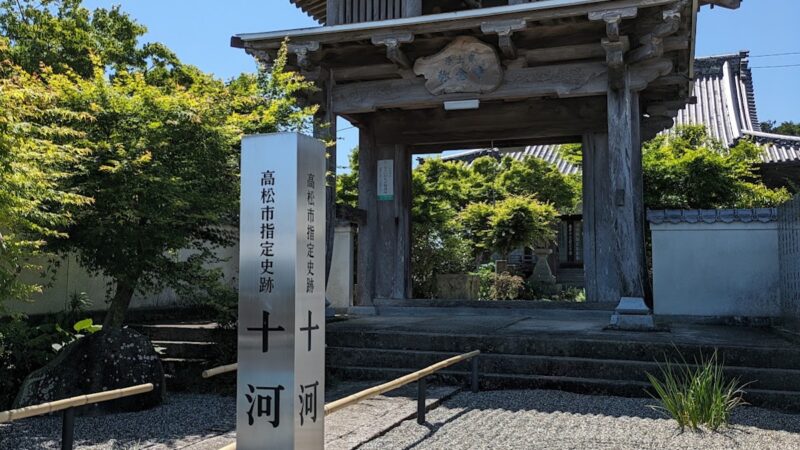
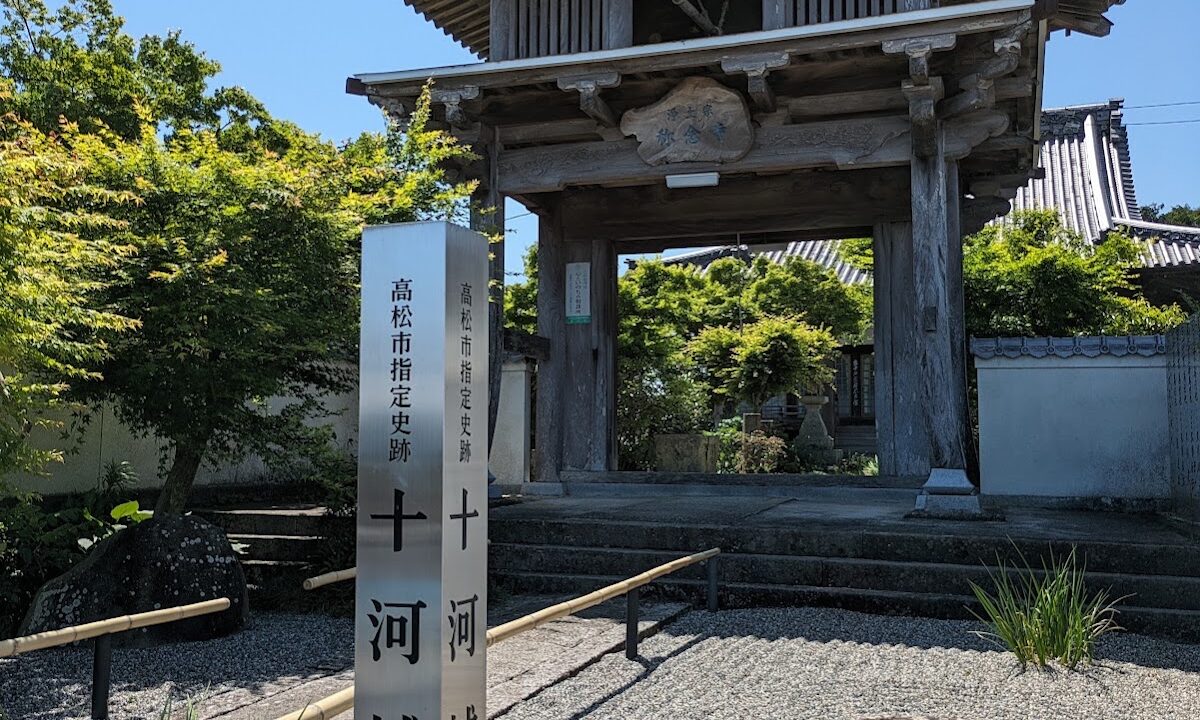
Sogō Castle is a historical site located in Sogō-Higashi-machi, Takamatsu City, Kagawa Prefecture. It served as the residence of the Sogō clan, a powerful local family in Sanuki Province, for approximately 230 years, from the Nanboku-chō period to the Momoyama period. The current Sogō Castle site spreads across an area centered around Shōnenji Temple and is protected as a Takamatsu City designated historical site.
Located in Sogō-gō, Yamada-gun, Sanuki Province (present-day Sogō-Higashi-machi, Takamatsu City), this castle, built on a plateau where the place name “castle” remains, boasted excellent views in all directions and possessed advantageous locational conditions as a defensive base. During the Sengoku period, Sogō Kazumasa, the younger brother of Miyoshi Nagayoshi, was adopted into the family and, as a fearsome warrior known as “Oni Sogō” (Demon Sogō), he conquered the entire Sanuki region, playing a crucial role in the history of the Sengoku period in Sanuki.
History and Development of Sogō Castle
Construction during the Nanboku-chō Period and the Origins of the Sogō Clan
There are various theories regarding the construction period of Sogō Castle, but the most widely accepted theory is that it was built by Sogō Yoshiyasu during the Nanboku-chō period. Historical records confirm that the Sogō clan already led a samurai group in the early stages of the establishment of the Muromachi Shogunate, and it is believed that a castle existed in the Sogō (Togawa) area during this period.
The Sogō clan expanded their power as a local powerful family in Sanuki and ruled this area for generations. Sogō Castle was not merely a military base, but also functioned as the political and economic center of the Sogō clan, playing a role as a base for controlling the surrounding region.
The Sengoku Period and the Achievements of Sogō Kazumasa
The most important period in the history of Sogō Castle is the era of Sogō Kazumasa during the Sengoku period. Kazumasa, the younger brother of Miyoshi Nagayoshi, was adopted into the Sogō clan and became the lord of Sogō Castle.
Sogō Kazumasa was a fierce warrior feared as “Oni Sogō” (Demon Sogō), and his bravery was widely known not only within Sanuki Province but also in the Kinai region. Under Kazumasa’s rule, Sogō Castle functioned as a base for controlling Sanuki, and at one point boasted a power that allowed him to control almost the entire Sanuki region. However, Kazumasa was killed in the Battle of Kumeda in 1561, and his son, Sogō Masayasu, succeeded him as head of the family.
The First Battle of Sogō Castle
In 1578, when Chōsokabe Motochika, a Sengoku daimyo of Tosa Province, intensified his invasion of Sanuki, Sogō Castle became the site of fierce battles. In the First Battle of Sogō Castle, the defending forces led by Sogō Masayasu clashed with the Chōsokabe army.
In this battle, Chōsokabe Motochika’s skillful tactics and overwhelming military strength resulted in Sogō Castle temporarily falling into the hands of the Chōsokabe clan. This battle marked a crucial turning point in the Sengoku period history of Sanuki Province, paving the way for the Chōsokabe clan’s control of Sanuki.
Second Battle of Sogō Castle
In 1582, as Oda Nobunaga’s plan to conquer Shikoku intensified, Sogō Masayasu found himself on the Oda side, confronting the Chōsokabe clan. In the Second Battle of Sogō Castle, Sogō Masayasu, supported by the Oda clan, attempted to recapture Sogō Castle.
However, with the death of Oda Nobunaga in the Honnō-ji Incident, the situation in Shikoku changed dramatically. Subsequently, Toyotomi Hideyoshi’s conquest of Shikoku progressed, and in 1585, during the Shikoku campaign, the Chosokabe clan surrendered. This marked the end of the Sengoku period for Sogō Castle.
Sogō Castle in the Early Modern Period
After Toyotomi Hideyoshi’s conquest of Shikoku, Sanuki Province came under the control of the Ikoma clan, and Sogō Castle was abandoned. During the Edo period, it became part of the Takamatsu Domain, and Shōnenji Temple, associated with the Sogō clan, was built on the castle site.
In 1978, it was designated a historical site by Takamatsu City and has been protected as a local historical heritage to this day. While much of the castle site has been developed into residential and agricultural land, remnants such as dry moats and earthworks remain around Shōnenji Temple, allowing visitors to imagine its former glory.
The Castle Structure of Sogō Castle
Location and Topographical Characteristics
Although Sogō Castle is classified as a flatland castle, it was actually built on a hill extending north-south, situated higher than the plains on both the east and west sides. This topographical feature gave it advantageous defensive conditions despite being a flatland castle.
Located on a plateau where the place name “castle” remains, its excellent vantage point offered both a surveillance function to detect enemy movements early and a function as a political center for governing the surrounding area. The castle’s layout, which made the most of this terrain, demonstrates the high level of castle-building skill of the local Sogō clan.
The Main Enclosure and Major Baileys
The area around the current Shōnenji Temple grounds is believed to be the site of the main enclosure. The main enclosure was the core of the castle, and it is presumed that the lord’s residence and buildings for conducting administrative affairs were located there. The area where the main hall of Shōnenji Temple now stands is thought to have been the center of the former main enclosure, and traces of earthworks and dry moats can be seen around it.
The main enclosure (Honmaru) is estimated to have measured approximately 100 meters east-west and 150 meters north-south, a standard size for a castle of a local powerful family in Sanuki Province. The Honmaru was the central point, with enclosures (Kuruwa) positioned to the north, east, and west, forming multiple lines of defense.
Dry Moats and Defensive Structures
The core of Sogō Castle’s defensive system was the dry moats that demarcated each enclosure. Even today, remnants of dry moats remain north and west of Shōnenji Temple, and their depth is estimated to have been up to 3-4 meters.
The dry moats not only demarcated the enclosures but were also crucial defensive structures that prevented enemy intrusion. The dry moats around the Honmaru, in particular, were wide and deep, making them essential for the Honmaru’s defense. Furthermore, archaeological excavations have revealed that earthen ramparts were built outside the dry moats, forming a double line of defense.
Layout and Design of the Enclosures
Sogawa Castle had a layout of interconnected enclosures, with multiple enclosures arranged to the north, east, and west of the main enclosure (Honmaru). Each enclosure was demarcated by dry moats and earthen ramparts, functioning as an independent defensive unit.
The northern enclosure was responsible for defending the rear entrance (Karamete), while the eastern and western enclosures served as a defensive line against attacks from the main gate (Ote). This arrangement allowed for a tiered defensive structure regardless of the direction of the attack.
Each enclosure was smaller than the main enclosure and is thought to have been used for troop garrisons and supply storage. During wartime, troops were stationed in each enclosure, creating a multi-layered defense that enhanced the overall defensive strength of the castle.
Current State and Remains of Sogawa Castle Site
Shonenji Temple and the Main Enclosure Site
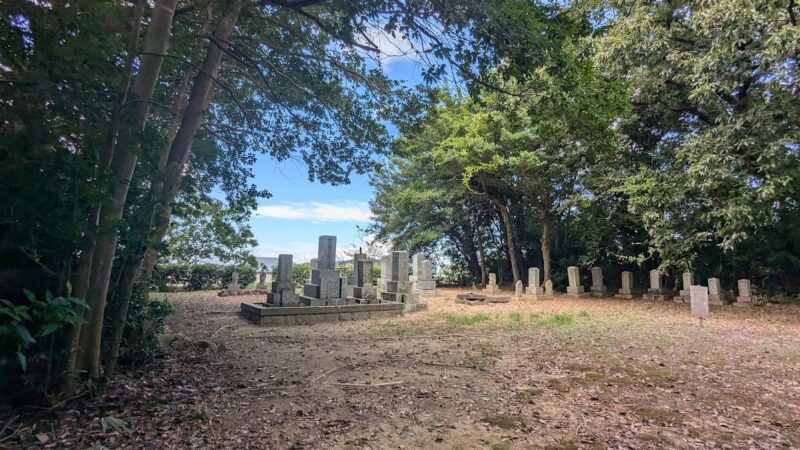
The current center of the Sogawa Castle site is the grounds of Shonenji Temple. Shonenji Temple is a temple associated with the Sogawa clan and was built on this site after the castle was abandoned. The site where the main hall stands is believed to be the former center of the castle’s main enclosure, and walking around the temple grounds allows you to appreciate the scale of the enclosure in its heyday.
Within the grounds of Shonenji Temple, there is an explanatory sign indicating that it is a castle site, where you can learn about the history and structure of Sogō Castle. Furthermore, you can enjoy panoramic views of the surrounding area, experiencing the excellent location with its scenic vistas.
Remaining Structures
The following remains can be observed at the Sogō Castle site:
Dry Moat: Traces of the dry moat remain on the north and west sides of Shonenji Temple. Although it is now largely filled in, its location can be confirmed from the topography. The northern moat, in particular, is relatively well-preserved, allowing you to appreciate its scale.
Earthwork: A portion of the earthwork built along the dry moat remains. It is currently about 1-2 meters high, but it is estimated to have been 3-4 meters high in the past.
Remains of Enclosures: Traces of former enclosures remain in the topography around the main keep. While many areas are now residential or farmland, the layout of the enclosures can be estimated by observing the micro-topography.
Moat: On the north side of the castle, traces of a moat cutting through the hillside can be seen. This was an important defensive structure to prevent invasion from the north.
Historic Site Designation and Protection
The Sogō Castle ruins were designated a historical site by Takamatsu City in 1978. As a result, important remains of the castle are protected, and development activities are restricted.
The Takamatsu City Board of Education is working to preserve and utilize the Sogō Castle ruins, conducting regular grass cutting and installing explanatory signs. Furthermore, preservation activities are carried out by local residents, and the site is carefully protected as a local historical heritage.
The Sogō Clan and the Sengoku Period History of Sanuki
Genealogy of the Sogō Clan
The Sogō clan was a local powerful family in Sanuki Province, maintaining their influence from the Nanboku-chō period through the Sengoku period. While there are various theories regarding the Sogō clan’s origins, it is confirmed that they were active early on as one of the powerful samurai groups in Sanuki.
During the Muromachi period, they served as vassals of the Hosokawa clan, establishing their position within Sanuki. Entering the Sengoku period, they strengthened their relationship with the Miyoshi clan, adopting Miyoshi Nagayoshi’s younger brother, Kazumasa, and thus taking on the role of a base for the Miyoshi clan’s control of Sanuki.
Sogō Kazumasa and the Nickname “Oni Sogō” (Demon Sogō)
Sogō Kazumasa was the younger brother of Miyoshi Nagayoshi. He was adopted into the Sogō clan during the Eiroku era and became the lord of Sogō Castle. Kazumasa was a samurai warrior renowned for his bravery and feared by the nickname “Oni Sogō” (Demon Sogō).
Ichimasa supported his older brother, Nagayoshi, and fought in various battles throughout the Kinai region, achieving numerous military successes. In particular, at the Battle of Kumeda, he fought bravely against an overwhelming enemy force, meeting a heroic end. His ferocity was admired by both friend and foe, and he is remembered as one of the most representative warriors of the Sengoku period.
After Ichimasa’s death, his son, Sogō Nobuyasu, inherited the family headship, but the Sogō clan faced difficulties due to Chōsokabe Motochika’s invasion of Sanuki.
Chōsokabe Motochika’s Invasion of Sanuki
During the Tenshō era, Chōsokabe Motochika, a Sengoku daimyo of Tosa, began his invasion of Sanuki with the aim of unifying Shikoku. The Chōsokabe army, with its skillful tactics and overwhelming force, captured castles in Sanuki one after another.
Sogō Castle also became a target of the Chōsokabe army, and fierce battles ensued. Sogō Nobuyasu continued to resist desperately, but ultimately fell under the control of the Chōsokabe clan. This invasion of Sanuki allowed Chōsokabe Motochika to successfully bring almost all of Shikoku under his control.
Toyotomi Hideyoshi’s Conquest of Shikoku and the End of the Sogō Clan
In 1585 (Tenshō 13), Toyotomi Hideyoshi dispatched a large army to conquer Shikoku. A massive force of over 100,000 men, led by Hideyoshi’s younger brother, Hashiba Hidenaga, invaded Sanuki from Awa, overwhelming the Chōsokabe clan.
Chōsokabe Motochika surrendered, and Sanuki came under the control of the Ikoma clan. At this point, Sogō Castle was abandoned, bringing to an end its approximately 230-year history as the residence of the Sogō clan. Sogō Masayasu continued to fight in various battles, but ultimately died in the Battle of Hetsugigawa, ending the main line of the Sogō clan.
Highlights of Sogō Castle
Strolling through the grounds of Shōnenji Temple
Shōnenji Temple is the central point of interest when visiting the Sogō Castle ruins. You can freely stroll through the temple grounds and experience the atmosphere of the former main keep. Walking around the main hall, imagining the castle lord’s residence once standing here, you can feel the spirit of the Sengoku period.
From the temple grounds, you can overlook the surrounding landscape, appreciating the excellent location with its panoramic views. Especially on a clear day, you can see the entire Sanuki Plain, helping you understand why this location was chosen for the castle.
Observing the dry moats and earthworks
To the north and west of Shōnenji Temple, traces of the former dry moats and earthworks remain. By observing these remains, you can learn about the defensive system of a medieval castle.
Although the dry moats are now largely filled in, you can confirm their scale and layout by carefully observing the topography. Furthermore, the remaining sections of the earthworks allow you to imagine the former defensive structures.
Surrounding Historical Landscape
The area around the Sogō Castle ruins still retains place names containing the character for “castle,” giving a sense of the town’s past as a castle town. Furthermore, numerous historical sites related to the Sogō clan are scattered throughout the area, and visiting them together allows for a deeper understanding of the Sogō clan’s history.
Local legends about Sogō Castle also remain, and through interaction with locals, you can glimpse aspects of history not recorded in historical documents.
Sogō Sengoku Castle Festival
Every year, the Sogō district hosts the “Sogō Sengoku Castle Festival.” This event features a parade of armored warriors marching through the town of Sogō, as well as various events themed around the Sengoku period (Warring States period).
This is the first full-scale armored warrior parade in Kagawa Prefecture, providing a valuable opportunity to convey the history of Sogō Castle to the present day. During the festival, the usually quiet area around the castle ruins is enveloped in the atmosphere of the Sengoku period, attracting many history enthusiasts.
Access to Sogawa Castle Ruins
Access by Public Transportation
Train and Bus: Take a local bus from JR Takamatsu Station. From the Takamatsu Station bus terminal, take the bus bound for “Fujigran Sogawa” and arrive at the “Fujigran Sogawa” bus stop in approximately 45 minutes. From the bus stop, it’s about a 20-minute walk to Sogawa Castle Ruins (Shonenji Temple).
Kotoden: The nearest stations are “Yakuri Station” or “Rokumanji Station” on the Kotoden Shido Line. From the station, it’s about a 30-minute walk or a 10-minute taxi ride.
Access by Car
From Takamatsu City Center: Head east on National Route 11 and turn onto Prefectural Route 13 (Shido Kaido). Follow the signs for the Sogawa area, and you will arrive in about 20 minutes.
From Takamatsu Expressway: Exit at Shido IC, take Prefectural Route 3, and then Prefectural Route 13. It takes approximately 15 minutes from the interchange.
Parking: Shonenji Temple has parking spaces for visitors, but the number of spaces is limited. If you are visiting in a large group, we recommend contacting them in advance.
Address and Basic Information
Location: 869-1 Togawa-Higashi-machi, Takamatsu City, Kagawa Prefecture (Shonenji Temple)
Visiting Hours: The temple grounds are generally open for free viewing, but please avoid visiting early in the morning or late at night.
Admission Fee: Free
Estimated Time Required: Approximately 30 minutes to 1 hour for a stroll through the temple grounds and observation of the surrounding ruins.
Inquiries: Takamatsu City Board of Education, Cultural Properties Division (TEL: 087-839-2660)
Notes for Visitors
- Shonenji Temple is an active temple. Please observe proper etiquette and view the temple quietly.
- Some of the ruins are on private property. Please do not enter areas where entry is prohibited.
- During the summer, the grass can grow thick, making it difficult to observe the ruins. Visiting in spring or autumn is recommended.
- We recommend bringing insect repellent and a hat, as these are suitable for outdoor walks.
- The ground can become slippery in rainy weather. Please wear appropriate footwear.
Nearby Tourist Attractions
Yashima
Located about 15 minutes by car from the Sogō Castle ruins, Yashima is a nationally designated historical site known as the stage of the Genpei War. With tourist facilities such as Yashima-ji Temple and the Shin-Yashima Aquarium, it’s ideal to visit in conjunction with the Sogō Castle ruins. From the top of Yashima, you can enjoy a spectacular view of the Seto Inland Sea.
Takamatsu Castle Ruins (Tamamo Park)
Located in the center of Takamatsu City, Takamatsu Castle ruins were a thriving coastal castle that served as the residence of the Ikoma and Matsudaira clans. Currently, it is maintained as Tamamo Park, with structures such as turrets and gates remaining. Visiting it in comparison to Sogō Castle will help you understand the differences between medieval and early modern castles.
Sanuki Kokubunji Temple Ruins
These are the ruins of Sanuki Kokubunji Temple, built during the Nara period, and are a nationally designated Special Historic Site. Located about 20 minutes by car from the Sogō Castle Ruins, you can experience the flow of Sanuki’s history from ancient to medieval times.
Shido-ji Temple
Shido-ji Temple, the 86th temple of the Shikoku 88 Temple Pilgrimage, is about 10 minutes by car from the Sogō Castle Ruins. It features a main hall and a five-story pagoda, both designated Important Cultural Properties, allowing visitors to admire historical buildings.
Historical Significance of Sogō Castle
Sogō Castle holds a significant position in the history of Sanuki during the Sengoku period. It served as the residence of the local powerful Sogō clan for approximately 230 years, functioning as a political and military center within Sanuki.
Especially during the Sengoku period, it became the stage for fierce battles between the two major powers, the Miyoshi and Chōsokabe clans. These battles marked a crucial turning point in the Sengoku period history of Shikoku, ultimately leading to Toyotomi Hideyoshi’s conquest of Shikoku.
Currently, the Sogō Castle ruins are protected as a designated historical site by Takamatsu City and are carefully preserved as a regional historical heritage. While many of the remains have been lost, the remaining dry moats, earthworks, and topography allow us to imagine the appearance of the medieval castle.
Visiting the Sogō Castle ruins is a valuable opportunity to learn about the Sengoku period history of Sanuki and to experience the lives and battles of the local powerful families. Standing in the tranquil grounds of Shōnenji Temple and reflecting on the historical drama that unfolded here will deepen your understanding of the Sengoku period.
Summary
Sogō Castle is a valuable medieval castle ruin remaining in Takamatsu City, Kagawa Prefecture. From the Nanboku-cho period to the Momoyama period, Sogō Castle served as the residence of the powerful Sogō clan of Sanuki Province. Particularly during the Sengoku period, it was the home of Sogō Kazumasa, feared as “Oni Sogō” (Demon Sogō), and the site of fierce battles against Chōsokabe Motochika, leaving a significant mark on Sanuki’s history.
Currently, it is a quiet historical site centered around Shōnenji Temple, but the remaining dry moats and earthworks allow us to imagine the castle’s former glory. Its excellent location with panoramic views, skillful layout, and turbulent history make it an attractive destination for castle enthusiasts and history buffs.
Access is relatively easy, about a 20-minute drive from central Takamatsu City, and it can also be reached by public transport. There are many other tourist attractions nearby, such as Yashima and Takamatsu Castle Ruins, making it an ideal place to visit as part of a trip exploring Sanuki’s history.
Why not visit Sogō Castle Ruins, reflect on the Sengoku period history of Sanuki, and experience the era in which the local powerful clan lived? Standing in the tranquil temple grounds and imagining the historical dramas that once unfolded here, you are sure to gain new insights and be moved by the experience.