Complete Guide to Otowa Castle (Hino-cho, Gamo-gun, Shiga Prefecture) | A Thorough Explanation of the History and Highlights of the Gamo Clan
What is Otowa Castle?
Otowa Castle is a medieval mountain castle located in Otowa, Hino-cho, Gamo-gun, Shiga Prefecture. Built at a strategic point in eastern Omi Province, this castle is known as the base of the Gamo clan, ancestors of Gamo Ujisato, who was active during the Sengoku period. It was built by Gamo Sadahide during the Ōnin-Bunmei era (around 1467) and functioned as the Gamo clan’s residence for approximately 60 years.
The current Otowa Castle site is maintained as Otowa Mountain Park, and the remains such as earthworks, dry moats, and baileys are well-preserved. Built on a hill overlooking the Hino River, it was a natural stronghold, strategically important with Mount Hōden (Inohana-ga-take) behind it.
History of Otowa Castle
Background of Construction and the Gamo Clan
The Onin-Bunmei era, when Otowa Castle was built, was a time when Japan was engulfed in war due to the Onin War (1467-1477). In Omi Province, the influence of the Sasaki Rokkaku clan, the shugo (provincial governor), was strong, and the Gamo clan, as powerful vassals of the Rokkaku clan, controlled the eastern Omi region.
The Gamo clan were local lords deeply rooted in Gamo County since ancient times, ruling over territory centered around Hinoya. It is believed that Gamo Sadahide, judging that a more robust defensive structure was necessary in preparation for the turbulent times, built Otowa Castle on a strategically important site between the Hino River and Mount Hoden.
The Era of Gamo Sadahide
Gamo Sadahide, the first lord of Otowa Castle, built the castle during the chaotic period of the Onin War, solidifying the Gamo clan’s power base. While maintaining relations with the Rokkaku clan, Sadahide established his own sphere of influence.
During the two battles of the Meio era (1492-1501) and the Bunki era (1501-1504), Gamo Sadahide achieved great victories against the Sasaki clan, the governors of Omi Province, and his reputation grew throughout Omi. Otowa Castle served as an impregnable fortress in these battles, becoming a symbol of the Gamo clan’s authority.
The End of Gamo Hideki and Otowa Castle
The history of Otowa Castle reached a major turning point in the spring of Daiei 7 (1527). Gamo Hideki, the lord of the castle at the time, surrendered to his uncle, Gamo Takasato, due to an internal conflict.
This internal conflict stemmed from a dispute over the succession of the family headship within the Gamo clan. After Hideki’s surrender to Takasato, the castle was demolished, bringing to an end the approximately 60-year history of Otowa Castle. Subsequently, the Gamo clan’s base of operations moved to Hino Castle, ushering in a new era for the Gamo clan.
Relocation to Hino Castle and the Gamo Clan’s Later History
After the abandonment of Otowa Castle, the Gamo clan established Hino Castle as their new base. Hino Castle was closer to the plains than Otowa Castle, making it a more suitable location for managing their territory. The Gamo clan survived the Sengoku period, and during the time of Gamo Ujisato, they served Oda Nobunaga and Toyotomi Hideyoshi, growing into a powerful daimyo with a domain of 920,000 koku in Aizu.
Although Otowa Castle was abandoned, its historical value as an important castle that laid the foundation for the Gamo clan’s development is still appreciated today.
Structure and Characteristics of Otowa Castle
Location and Layout
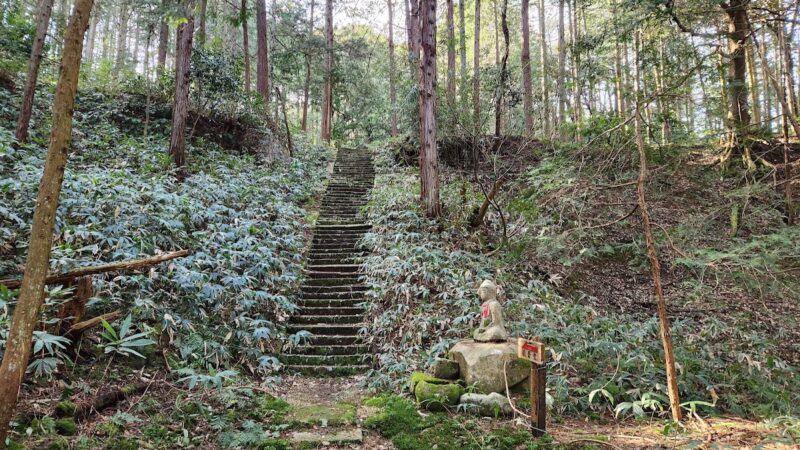
Otowa Castle is a mountain castle built on a hill approximately 30 meters high. With the Hino River flowing to the east and Mount Hoden (Inohana-ga-take) towering behind it to the west, its layout takes advantage of the natural fortified terrain.
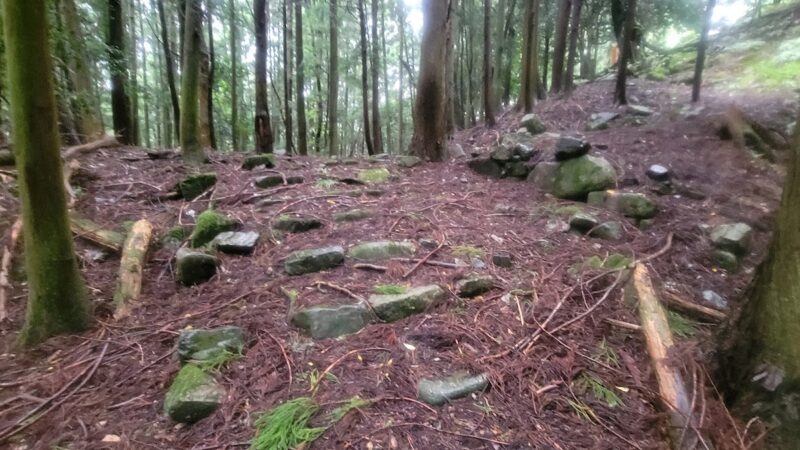
The castle’s structure is a typical medieval mountain castle design, with a central main enclosure (honmaru) surrounded by other enclosures such as the second and third baileys. The main enclosure is located in the center of the current Otowayama Park and was surrounded by earthworks and dry moats, creating a highly defensible structure.
Major Remains
Main Enclosure (Honmaru Site)
Located at the highest point of Otowayama Park, it is believed to have been the residence of the castle lord and a command post. Although partially altered by park construction since the Meiji era, the shape of the enclosure can still be seen.
Earthworks
The remains of earthworks are well-preserved, mainly on the south side of the main enclosure. The height varies depending on the location, but the best-preserved sections maintain a height of approximately 1.5 meters. These earthworks served to prevent enemy intrusion and also provided a foundation for installing fences and walls on top.
Dry Moats and Trenches
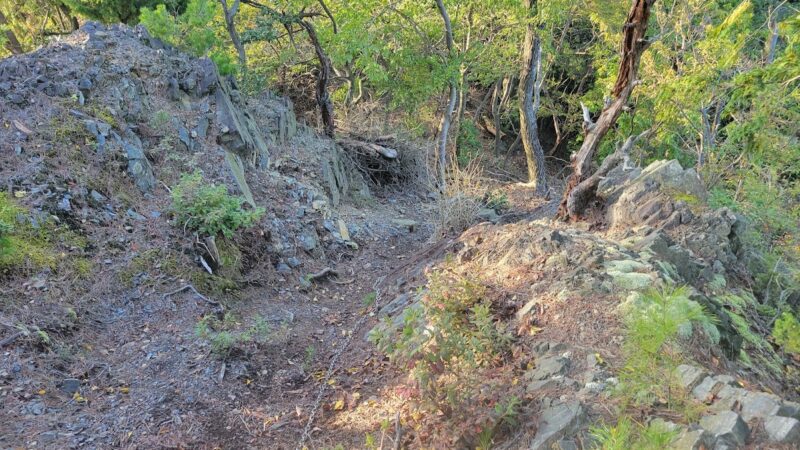
One of the greatest highlights of Otowa Castle is the beautifully preserved dry moats and trenches. The moats separating the outer bailey and the samurai residences, and the moat on the southern outer bailey, are particularly impressive in both depth and width, conveying their defensive function at the time. Moats were crucial defensive structures that cut across the ridge and hindered enemy advances.
Earthen Bridge
An earthen bridge crossing the moat can also be seen. This bridge was a passage created by leaving some of the moat unexcavated, suggesting it was easily destroyed in times of conflict.
Well Remains
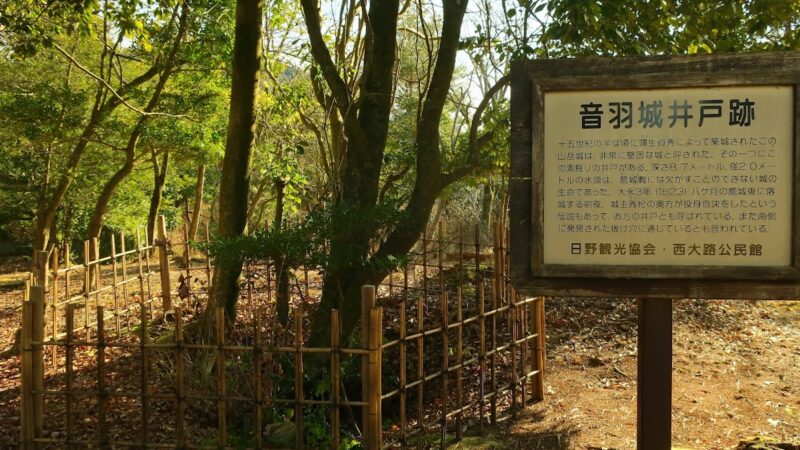
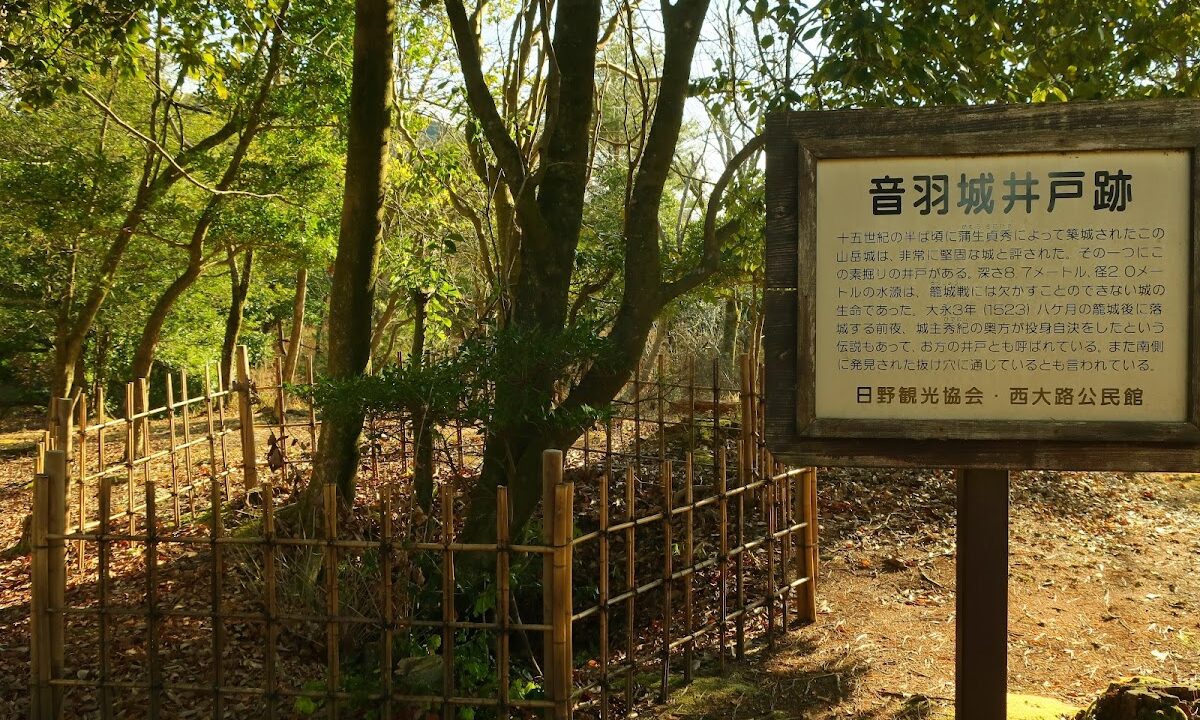
The remains of a well are found near the main bailey. Securing water was a matter of life and death for mountain castles, and this well was an important water source during sieges. Although now filled in, some of the stonework can be seen.
Outer Bailey
An outer bailey is located in the northwest, with a small shrine nestled in the grass. This outer bailey functioned as a forward position to reinforce the defenses of the main bailey.
Alterations Since the Meiji Era
The Otowa Castle ruins have been partially altered since the Meiji era due to several park construction projects and the extraction of soil for reservoir embankments. In particular, the area around the main enclosure has been developed as a park, with gardens and playground equipment installed.
However, the basic structure of the medieval mountain castle remains, and major remains such as earthworks, dry moats, and baileys are well-preserved. By comparing the altered parts with the original remains, one can understand the historical changes of the castle.
Highlights of Otowa Castle
Moat and Earthen Bridge
A must-see when visiting Otowa Castle is the moat and earthen bridge on the southern outwork. The deeply excavated moat speaks to the high level of medieval castle construction technology. Looking up from the bottom of the moat, one is overwhelmed by the height of the cliffs on both sides.
The earthen bridge is a narrow passage crossing the moat, only about 2 meters wide. This narrow passage was designed to allow attacks from both sides as enemies passed through. Walking across the earthen bridge allows you to experience firsthand the ingenuity of a medieval castle, designed to be both easy to defend and difficult to attack.
Earthworks around the Main Enclosure
The earthworks surrounding the main enclosure were crucial to the defense of Otowa Castle. The southern earthworks, in particular, are well-preserved and retain much of their original appearance. There are places where you can walk along the top of the earthworks, allowing you to survey the surroundings from the perspective of the castle lord.
Inside the earthworks, a flat enclosure spreads out, where it is imagined that buildings once stood. The basic structure of a medieval mountain castle—earthworks, enclosures, and moats—can be clearly observed at Otowa Castle.
View of the Hino River
The magnificent location of Otowa Castle lies in the view from the main enclosure. The Hino River flows to the east, and beyond it lies the townscape of Hino. On a clear day, you can even see as far as Lake Biwa.
This view was not merely aesthetically pleasing, but also held military significance. By monitoring the surroundings from a high vantage point, enemy movements could be detected early. The castle lords likely gazed upon their territory from this vantage point, contemplating the management of their domain.
Well Remains and Traces of Life
The well remains near the main enclosure are valuable historical relics that convey traces of the people who lived at Otowa Castle. Life in a mountain castle was by no means easy; securing water and food was always a challenge.
Observing the area around the well reveals parts of stonework and flat spaces, suggesting the presence of a building. This allows us to imagine Otowa Castle not only as a battlefield but also as a place of daily life.
Development as Otowayama Park
Park Overview
The current Otowa Castle site has been developed as “Otowayama Park,” a place of relaxation for local residents. The park includes playground equipment, gazebos, and restrooms, creating an environment enjoyable for families.
In spring, cherry blossoms bloom, making it a popular spot for cherry blossom viewing. Furthermore, the autumn foliage is beautiful, allowing visitors to enjoy nature throughout the seasons. It’s an attractive park where you can enjoy historical exploration and nature walks simultaneously.
Preservation of the Ruins
Despite being developed as a park, the main remains of Otowa Castle are well-preserved. The earthworks and dry moats are maintained through grass cutting and other maintenance, making them easy to visit.
Information boards and explanatory signs are also installed, ensuring that even first-time visitors can understand the castle’s history and structure. It can be said that appropriate preservation and utilization are being carried out as a regional historical heritage site.
Access and Parking Information
Location
Address: Otowa, Hino-cho, Gamo-gun, Shiga Prefecture
Location: Within Otowayama Park
Access by Car
From the Meishin Expressway
- Approximately 20 minutes from Yokaichi IC
- Approximately 25 minutes from Ryuo IC
Proceed along National Route 477 towards Hino-cho, and from the Hino-cho town center towards the Otowa area. Following the signs will lead you to Otowayama Park.
Parking Otowayama Park has a free parking lot. It can accommodate approximately 10 regular-sized cars. The castle ruins are just a few minutes’ walk from the parking lot.
Access by Public Transportation
By Train/Bus – From JR Biwako Line “Omihachiman Station,” take the Omi Railway bus and get off at “Hino-cho Yakuba-mae” (Hino Town Hall), then walk for about 20 minutes.
- From Omi Railway “Hino Station,” walk for about 30 minutes, or take a taxi for about 5 minutes.
Access by public transportation is somewhat inconvenient, so we recommend visiting by car.
Visiting Hours and Precautions
Visiting Hours: Always open (as it is a park)
Admission Fee: Free
Estimated Time Required: Approximately 30 minutes to 1 hour
Precautions:
- As it is a mountain castle, comfortable walking shoes are recommended.
- Insect repellent is useful during the summer months.
- Be careful as the ground can be slippery in rainy weather.
- There are restrooms in the park, but it’s best to use them beforehand.
Nearby Attractions
Hino Castle Ruins
The Hino Castle Ruins, where the Gamo clan moved after the abandonment of Otowa Castle, are also located in Hino Town. It’s about a 10-minute drive from Otowa Castle, and visiting both together will give you a deeper understanding of the Gamo clan’s history. The Hino Castle Ruins retain remnants of stone walls and moats, allowing you to learn about the development process of the castle into a modern fortress.
Historic Townscape of Hino Town
Hino Town is known as one of the birthplaces of Omi merchants, and its historical townscape remains. Strolling through the streets lined with old merchant houses and storehouses, you can feel the atmosphere of the Edo period.
Mount Watamuki
Mount Watamuki (elevation 1,110m), a symbol of Hino Town, is a popular spot for mountain climbing and hiking. You can also view Mount Watamuki from Otowa Castle, giving you a real sense of the vastness of the Gamo clan’s territory.
Historical Significance of Otowa Castle
Foundation of the Gamo Clan’s Development
Otowa Castle laid the foundation for the development of the Gamo clan, who later became daimyo with a domain of 920,000 koku in Aizu. During the turbulent Onin War, Gamo Sadahide built a strong castle, establishing the Gamo clan’s position as a powerful local lord in eastern Omi Province.
The approximately 60 years spent at Otowa Castle were a crucial period for the Gamo clan, during which they honed their military strength and governing abilities. It can be said that the experience gained during this period led to the later success of Gamo Ujisato.
A Typical Example of a Medieval Mountain Castle
Otowa Castle, built during the Ōnin and Bunmei eras, holds a significant position in the study of castle history as a typical example of a medieval mountain castle. Its structure, skillfully utilizing natural terrain and fortified with earthworks and dry moats, clearly demonstrates the castle-building techniques of this period.
Despite being an earthen castle without stone walls, Otowa Castle possessed formidable defensive capabilities, proving the high level of technology in medieval mountain castle construction.
Its Place in Regional History
Otowa Castle played a crucial role in the history of eastern Ōmi Province. As the base of the Gamō clan, vassals of the Rokkaku clan yet maintaining their own independent power, it continuously influenced the political and military balance of the region.
The victory in the Meiō-Bunki battles demonstrated the Gamō clan’s military strength within Ōmi Province and laid the foundation for their subsequent development. Otowa Castle was not merely a regional castle, but a vital base that shaped the history of Ōmi Province.
The Charm of Otowa Castle
Well-Preserved Remains
The greatest charm of Otowa Castle lies in the remarkably well-preserved remains of this medieval mountain castle. While many mountain castles have been lost due to development and weathering, Otowa Castle clearly displays its main structures, including earthworks, dry moats, trenches, and baileys.
The preservation of the trenches, in particular, is superb; the deeply excavated moats and steep cliffs convey their original appearance. For castle enthusiasts, it serves as an excellent learning resource for understanding the structure of medieval mountain castles.
Easy Access
Despite being a mountain castle, its relative elevation is relatively low at approximately 30 meters, making it easily accessible from the parking lot. No serious mountaineering equipment is required, making it a convenient visit.
It’s also easily accessible for the elderly and families with children, making it ideal for family history learning. As it’s developed as a park, restrooms and rest facilities are available.
Experiencing the History of the Gamo Clan
Visiting Otowa Castle allows you to trace the roots of Gamo Ujisato, who played an active role during the Sengoku period. Imagining Ujisato’s ancestors managing their territory and preparing for battle from this castle makes history feel more tangible.
While Gamo Ujisato is known as the lord of Aizu-Wakamatsu Castle (Tsuruga Castle), knowing that the origins of his family lay in this small mountain castle in Gamo District, Shiga Prefecture, allows you to truly appreciate the continuity and fascination of history.
Summary
Otowa Castle is a valuable medieval mountain castle site remaining in Hino Town, Gamo District, Shiga Prefecture. Built by Gamo Sadahide during the Ōnin and Bunmei eras, it functioned as the Gamo clan’s base for approximately 60 years. Although it was abandoned in 1527, the Gamo clan continued to prosper, growing into a powerful daimyo during the time of Gamo Ujisato.
Currently developed as Otowayama Park, the remains of the castle, including earthworks, dry moats, trenches, and baileys, are well-preserved. It’s a valuable historical site where you can learn about the structure of a medieval mountain castle and experience the history of the Gamo clan, making it a popular spot for history and castle enthusiasts.
Access is relatively easy, and free parking is available, making it a convenient visit. Visiting it in conjunction with the Hino Castle ruins and the historic townscape of Hino will make for a more fulfilling historical exploration.
When visiting Shiga Prefecture, be sure to visit the Otowayama Castle ruins and experience the atmosphere of a medieval mountain castle and the history of the Gamo clan.