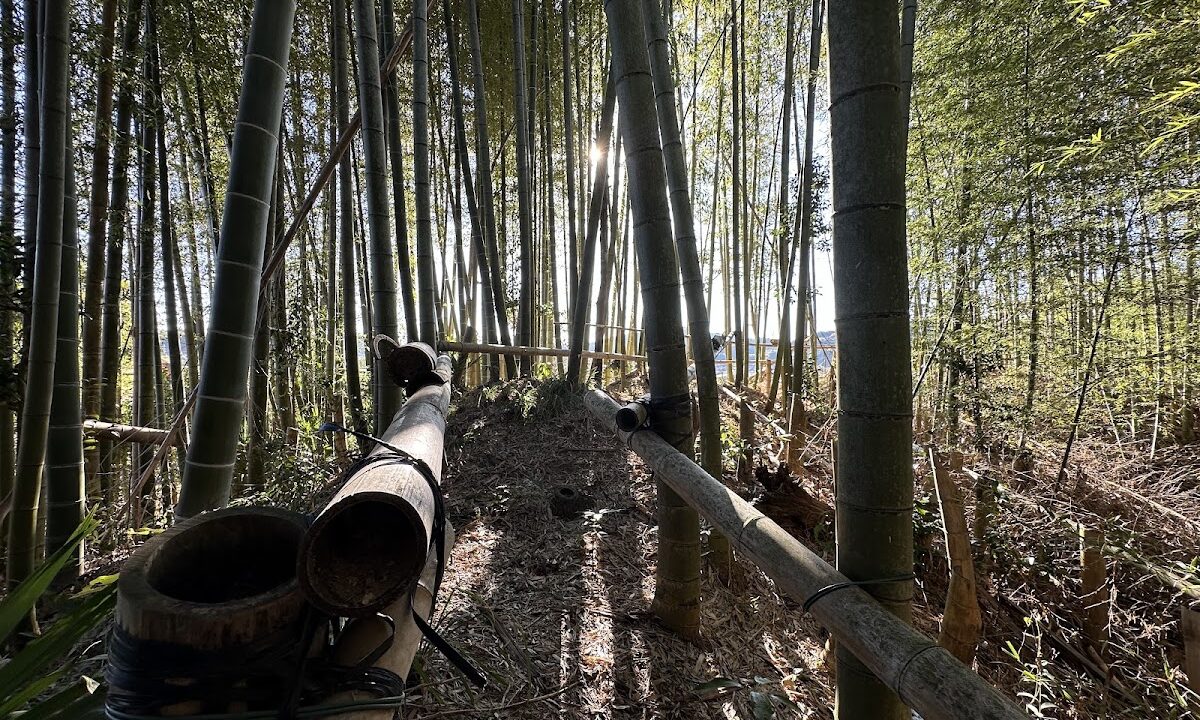
Takenaka Castle (Koka City) Complete Guide | A Typical Square Residence in the Koka District Nakasō Archaeological Sites, Designated as a National Historic Site
Located in Niihari, Konan-cho, Koka City, Shiga Prefecture, the Takenaka Castle ruins are a valuable historical site that strongly preserves the characteristics of medieval castles in the Koka region. Designated as a National Historic Site as part of the Koka District Nakasō Archaeological Sites, it preserves the structure of a typical square residence. This article provides a detailed explanation of Takenaka Castle’s history, structure, highlights, and access methods, for a wide range of readers, from castle enthusiasts to those interested in local history.
What is Takenaka Castle? | A Representative Medieval Castle in the Koka Region
Takenaka Castle is a medieval castle site located in Kumao, Niihari, Konan-cho, Koka City, Shiga Prefecture. Built on a river terrace of the Sugitani River flowing to the west, it is known as a typical residence-type castle surrounded by a moat and earthen ramparts.
Positioning within the Koga-gun Chuso Archaeological Sites
Takenaka Castle is one of the five castles (Teramae Castle, Murasame Castle, Shingu Castle, Shingu Branch Castle, and Takenaka Castle) that make up the Koga-gun Chuso Archaeological Sites. These castles were designated a National Historic Site in 2013 (Heisei 25) as important archaeological sites that tell the story of the existence of the Koga-gun Chuso, a regional self-governing organization in the medieval period.
The Koga-gun Chuso was a self-governing organization of local samurai formed in the Koga region during the Sengoku period. Powerful local lords known as the Koga Fifty-Three Families formed an alliance to manage and defend the region. Takenaka Castle holds extremely important historical value as material evidence of this unique social structure in Koga.
Selected as one of the “46 Castles of Omi”
Takenaka Castle was also selected as one of the “46 Castles of Omi” by the Shiga Prefectural Board of Education, and is recognized as one of Shiga Prefecture’s representative castles. This selection, made as part of the commemorative project for the opening of the Lake Biwa Ring Road, was based on the opinions of the residents of Omi Province and represents the selection of a castle representative of the region, demonstrating the widespread recognition of Takenaka Castle’s historical and cultural value.
History of Takenaka Castle | The Mystery of the Builder and Lord
Many mysteries remain surrounding the history of Takenaka Castle. The name of Takenaka Castle does not appear in historical documents, and the exact construction period and lord are unknown. This is a characteristic common to castles in the Koka region.
Estimated Construction Period
While the exact construction period is unknown, based on the castle’s structure and the period of activity of the Koka County Council, it is estimated to have been built during the late Muromachi period to the Sengoku period (late 15th to 16th centuries). This period corresponds to the time after the Onin War (1467-1477), when central government control weakened and local lords built castles for self-defense.
Estimated Construction Period
While the exact construction period is unknown, based on the castle’s structure and the period of activity of the Koka County Council, it is estimated to have been built during the late Muromachi period to the Sengoku period (late 15th to 16th centuries). This period corresponds to the time after the Onin War (1467-1477), when central government control weakened and local lords built castles for self-defense. In the Koga region, many local lords fortified their residences during this period, forming a comprehensive defense network throughout the region. Takenaka Castle is thought to have functioned as part of this regional defense system.
Various Theories Regarding the Castle Lord
There is a theory that Takenaka Castle was ruled by the Kuraji clan, one of the 53 families of Koga, but there is no conclusive evidence. The 53 families of Koga is a collective term for powerful local lords who constituted the Koga County Council, and it is believed that there were actually more than 53 families.
The Kuraji clan was one of the local lords active in the Koga region, and is said to have held power in the Arachi area. Because Takenaka Castle is located in Arachi, a connection to the Kuraji clan is speculated, but since there is no documentary evidence to support this, it remains purely speculative.
Connection with Koga Ninjas
The Koga region is nationally known as the home of the Koga-ryu ninja. Many of the 53 families of Koga mastered ninjutsu and, during the Sengoku period, served various daimyo, engaging in espionage and special operations. The castles and fortifications within the Koga-gun Nakasō archaeological site group, including Takenaka Castle, may have served as bases of activity for these ninja groups. A semi-agricultural, semi-military lifestyle was characteristic of the Koga region, where people engaged in agriculture during peacetime and intelligence gathering and combat during times of conflict. Residences like Takenaka Castle served as both living spaces and bases for regional defense.
Structure and Layout of Takenaka Castle | A Typical Square Single-Enclosure Residence
The most distinctive feature of Takenaka Castle is its extremely simple and typical structure: a square single enclosure with sides of approximately 50 meters. This form is widely seen in medieval castles and fortifications in the Koga region, providing an important clue to understanding the region’s castle culture.
Planar Structure of a Square Single-Enclosure
Takenaka Castle is based on a nearly square enclosure (kuruwa). A size of approximately 50 meters per side is medium-sized for a residence, an appropriate size for living space including family members and retainers.
This rectangular plan is a style widely seen in the residences of manor lords and samurai from ancient to medieval times. It is a rational design that considers a balance between defense and habitability, and this style was particularly favored in the Koga region.
Earthworks: Arrangement and Current Status
Earthworks surrounded Takenaka Castle. Earthworks are earthen walls constructed by piling up earth, serving to prevent enemy intrusion and to shield the interior from outside view.
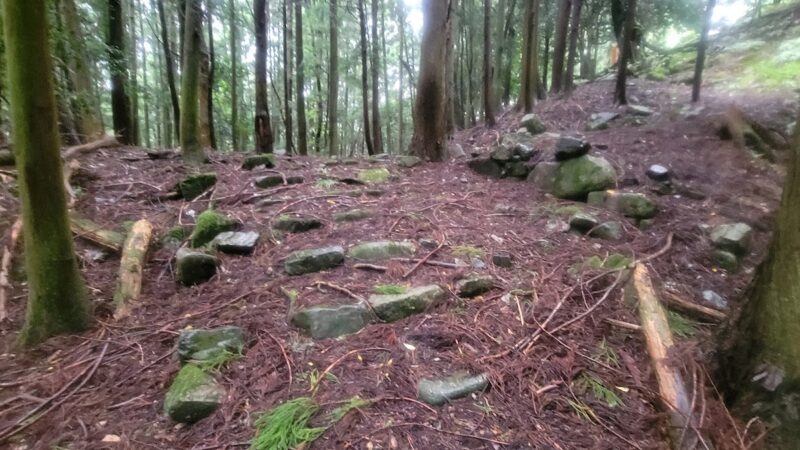
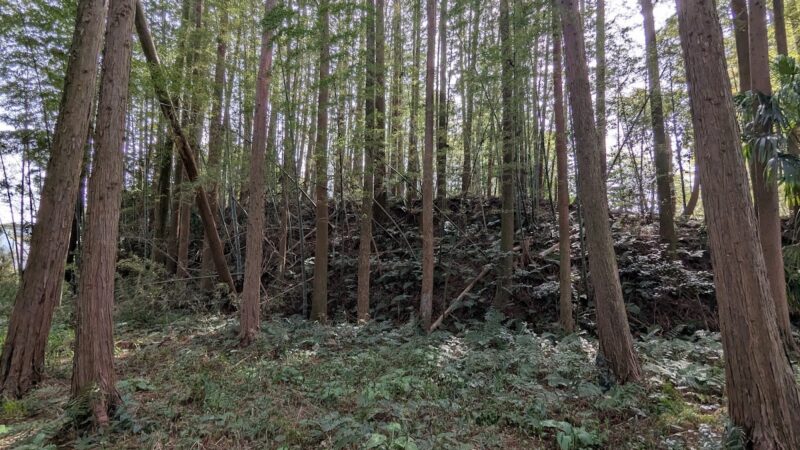
Currently, parts of Takenaka Castle’s earthworks remain. The earthworks at the northeast corner, in particular, have been significantly eroded by later destruction, but other parts remain in relatively good condition. The height and width of the earthworks allow us to infer the defensive structure of the time.
It is highly likely that fences or walls were built on top of the earthworks, further enhancing their defensive capabilities. Furthermore, buildings were located inside the earthworks, where the castle lord, his family, and retainers lived.
Moat Arrangement and Remains
The moat surrounding Takenaka Castle played a crucial role in its defense. The moat remains well-preserved on the north, west, and south sides, relatively well conveying its original appearance.
While the width and depth of the moat vary depending on the location, it is estimated to have been several meters wide and several meters deep, similar to the moats of typical medieval castles. It is highly likely that it was a dry moat (a moat that does not hold water), a characteristic common to castles in the Koga region.
The moat not only prevented enemy intrusion but also served as a site for excavating soil for building earthworks. In other words, a two-in-one construction method was employed, using the soil excavated from the moat to build earthworks.
Structure of the Entrance (Koguchi)
The entrance to a castle is called a koguchi (gate). At Takenaka Castle, the koguchi is believed to have been on the south side, and this is thought to have been the main entrance.
The koguchi is the most important point in the defense of a castle. To prevent enemy intrusion while allowing for daily entry and exit, various ingenious measures were employed. While the exact structure of Takenaka Castle’s entrance is unknown, typical medieval castles employed structures that hindered direct enemy advances, such as staggered entrances and square-shaped entrances.
Defensive Structure Protecting Three Sides
Takenaka Castle was protected on three sides (north, west, and south) by moats and earthworks. The situation on the east side is unclear due to topographical constraints and later alterations, but it is presumed that some kind of defensive structure existed there as well.
Takenaka Castle’s location on the river terrace of the Sugitani River is thought to have been utilized, combining natural terrain with artificial defensive structures to create an effective defensive system. The elevation difference of the terrace may also have been used for defense.
Highlights of Takenaka Castle | Remains Visible on-site
This section introduces notable remains and highlights to see when visiting the Takenaka Castle ruins. As a designated National Historic Site, it contains valuable remains for understanding the structure of medieval castles.
Well-Preserved Moat Remains
The most impressive remains at Takenaka Castle are the moat remains on the north, west, and south sides. The fact that these defensive structures from approximately 500 years ago are still clearly visible is extremely valuable for castle history research.
Observing the cross-section of the moat allows us to understand the excavation techniques and defensive philosophies of the time. The shape of the moat bottom, the angle of the slopes, and the width of the moat allow us to infer what kind of defensive effect was intended.
Remaining Earthworks
The earthworks, which remain relatively well-preserved except for the northeast corner, are also an important point of interest. Looking at the cross-section of the earthworks, it is possible that a technique called rammed earth construction, where soil is compacted in layers, was used.
The height of the earthworks varies depending on the location, but the original height can be estimated from the remaining sections. Furthermore, walking on top of the earthworks allows us to experience the view overlooking the castle and how it appeared from the outside.
The Overall Picture of the Rectangular Plan
Standing on-site, you can truly appreciate the rectangular plan, approximately 50 meters on each side. Experiencing the scale of the castle is a valuable experience that cannot be gained from documents or drawings alone.
As you walk through the castle’s interior, try to imagine what it was like when buildings stood here and people lived. While no building foundations have been confirmed, archaeological excavations may reveal the building layout and traces of daily life.
Surrounding Landscape and Location
The location and environment of Takenaka Castle are also important points of interest. The topography on the river terrace of the Sugitani River, the surrounding rural landscape, and the distant mountains allow you to experience the environment in which a medieval castle stood.
The contrast between the tranquil mountain village landscape unique to the Koka region and the castle remains that convey the tension of the Sengoku period is also a fascinating point.
Understanding the Entire Koga-gun Nakasō Archaeological Site Group | Relationships between the Five Castles
To deeply understand Takenaka Castle, it is important to know its position within the entire Koga-gun Nakasō Archaeological Site Group. While each of the five castles was independent, they functioned as part of a regional defense network.
Relationship with Teramae Castle
Teramae Castle is a castle adjacent to the north of Murasame Castle. It is located around Ōtani Pond, several kilometers from Takenaka Castle. These castles are thought to have cooperated with each other to defend the region.
Characteristics of Murasame Castle
Murasame Castle is a castle built on a hill west of Ōtani Pond, and its topographical features differ from Takenaka Castle. Its location on a hill suggests a more defensive layout.
Shingū Castle and its Branch Castles
Shingū Castle and its branch castles also constitute the Koga-gun Nakasō Archaeological Site Group. The relationship between the main castle and its subsidiary castles demonstrates the complexity of the castle system, suggesting the existence of a defensive system involving multiple interconnected strongholds rather than a single, isolated castle.
Function as a Regional Defense Network
These five castles formed the physical foundation of the Koga-gun Chuso, a self-governing organization. By coordinating with each castle, they constructed a wide-area defense network to prepare for enemy invasions.
It is presumed that an organized defense system existed, including information transmission using signal fire platforms and watchtowers, and mutual support in times of emergency. This may also be related to the information network of the Koga ninja.
Cultural Value of Takenaka Castle | Why it was designated a National Historic Site
The reason the Koga-gun Chuso archaeological site, including Takenaka Castle, was designated a National Historic Site is its high historical and academic value.
Physical Evidence of a Medieval Regional Self-Governing Organization
These castles are extremely important as physical evidence of the existence of the Koga-gun Chuso, a regional self-governing organization. The existence of actual remains, in addition to historical documents, allows for a more concrete understanding of the realities of medieval society.
A Typical Example of a Koga-Type Castle
Takenaka Castle is a typical example of a square, single-enclosure residence characteristic of the Koga region. It is an indispensable resource for understanding the castle culture of this region and holds significant importance for comparative research with castles in other regions.
Excellent Preservation of Remains
The relatively little destruction caused by later development, and the well-preserved moats and earthworks, further enhance its value as a cultural property. Examples of medieval castle remains with such clear preservation are limited nationwide, making it a valuable resource.
Contribution to Regional History Research
The castle complex, including Takenaka Castle, is indispensable for elucidating the history of the Koga region, particularly the aspects of regional society during the Sengoku period. Further information is expected to be obtained through future excavations and research.
Access to Takenaka Castle | Points to Note When Visiting
This section introduces how to access the Takenaka Castle ruins and points to note when visiting. ### Access by Public Transportation
The nearest station is Konan Station on the JR Kusatsu Line. It takes approximately 30 to 40 minutes to walk from Konan Station to the Takenaka Castle Ruins. The route from the station is relatively flat, but due to the distance, it is recommended to allow ample time for your visit.
Bus service is also available, but the number of buses is limited, so it is important to check the timetable in advance.
Access by Car
Access by car is the most convenient. It takes approximately 10 minutes from the Konan Interchange on the Shin-Meishin Expressway. However, there may not be a dedicated parking lot, so please be careful not to inconvenience local residents if parking on the street.
If using a car navigation system, it is recommended to set “Shiga Prefecture, Koka City, Konan-cho, Niihari” as your destination.
Precautions During Visit
The Takenaka Castle Ruins are designated as a National Historic Site, but they are not a tourist facility that is open to the public at all times. Please observe the following points during your visit:
- Consideration for Private Property: Private property may be included in the area surrounding the castle ruins. Please do not enter areas marked “No Entry.”
- Protection of Historical Structures: Please view the historical structures carefully to avoid damaging them, such as earthworks and moats. Climbing or digging is strictly prohibited.
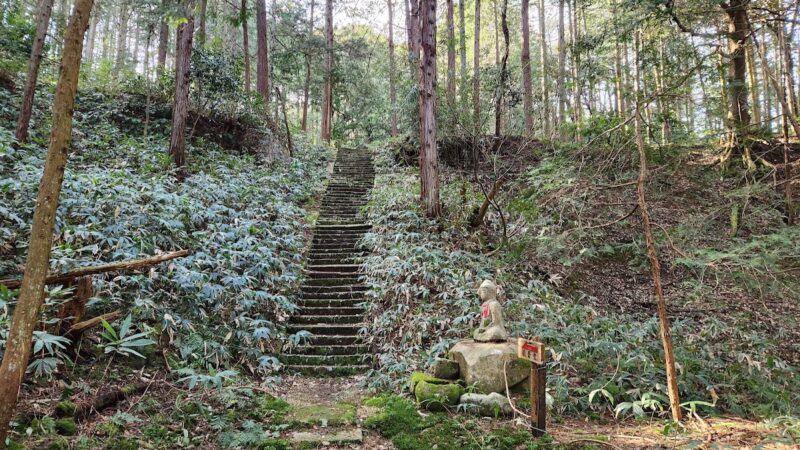
- Safety Management: Some areas have uneven ground, so please wear comfortable shoes. Areas are especially slippery during and after rain.
- Take Your Trash Home: To protect the surrounding environment, please be sure to take your trash with you.
- Season and Time of Day: In summer, vegetation can be overgrown, making the historical structures difficult to see. Winter may be a more suitable time for viewing. Also, plan your visit to finish before sunset.
Nearby Attractions
When visiting Takenaka Castle, we recommend also visiting nearby tourist spots.
- Other Castles in the Koga-gun Nakasō Archaeological Site Group: If you have time, consider visiting Murasame Castle, Teramae Castle, and Shingu Castle.
- Koga Ninja Village: A facility where you can learn about the history and culture of Koga-ryu ninjas.
- Around Konan Station: An area known as the home of Koga-ryu ninjas, where you can enjoy the peaceful scenery of a mountain village.
Future Challenges and Prospects for Takenaka Castle
Although Takenaka Castle has been designated a national historical site, challenges remain regarding its future preservation and utilization.
Challenges in Preservation and Management
The remains need to be protected from the effects of the natural environment, such as weathering and overgrowth of vegetation. Continuous preservation and management, such as regular mowing and surveying, is required.
The Need for Archaeological Excavation
Regarding Takenaka Castle, a full-scale archaeological excavation has not yet been conducted. If detailed information such as building layout, excavated artifacts, and age can be obtained through archaeological excavation, the true nature of the castle will become clearer.
Promoting Utilization and Public Access
Currently, the Takenaka Castle ruins are not widely known to the general public. It is desirable to create an environment that makes it easier for more people to visit, such as by installing information boards, improving the viewing paths, and conducting guided tours.
Collaboration with the Local Community
It is important to collaborate with local residents, tourism associations, and educational institutions to utilize Takenaka Castle as a local historical resource. Using it as teaching material for local studies and promoting it as a tourist resource will contribute to regional revitalization.
Summary | The History of Koka as Told by Takenaka Castle
At first glance, Takenaka Castle may seem like an unassuming historical site. It lacks a magnificent keep, and there are no dramatic historical episodes associated with it. However, that is precisely why this castle site is so valuable.
During the Sengoku period, local samurai in Koka cooperated to govern themselves and protect their region. Takenaka Castle was the place where these people lived and defended themselves, and it was the physical foundation that supported the unique social system of Koka-gun Chuso.
A square residence with sides of approximately 50 meters, surrounded by a moat and earthen ramparts. The wisdom and ingenuity of the people of that time are condensed within its simple structure. In this region known as the home of the Koga ninja, Takenaka Castle was the actual place where local lords who employed ninjutsu lived.
Designated a National Historic Site and selected as one of the “46 Best Castles of Omi,” Takenaka Castle’s value lies not in its ostentation, but in its undeniable evidence of the realities of medieval Japanese society.
If you have the opportunity to visit Koga City in Shiga Prefecture, be sure to visit the ruins of Takenaka Castle. Standing before the moats and earthworks remaining amidst the tranquil rural landscape, you can reflect on the lives of the people of Koga approximately 500 years ago. There, you will find living history that you won’t find in textbooks.