Hondo Castle (Amakusa City, Kumamoto Prefecture) Complete Guide | History, Highlights, and Access Information
Located in Amakusa City, Kumamoto Prefecture, Hondo Castle is an important castle site indispensable to understanding the history of the Amakusa region. Flourished as the residence of the Amakusa clan, and deeply connected to Christian culture and the Shimabara Rebellion, this castle continues to attract many history enthusiasts and tourists as a valuable historical site that conveys the history of Amakusa to the present day.
This article comprehensively explains everything you need to know before visiting Hondo Castle, from its historical background to its current highlights and access methods.
What is Hondo Castle?
Hondo Castle (Hondo-jo) was a flatland castle that once existed in Hondo-machi, Amakusa City, Kumamoto Prefecture. It was built on a hill overlooking the town of Hondo in the northern part of Shimoshima Island in the Amakusa Islands.
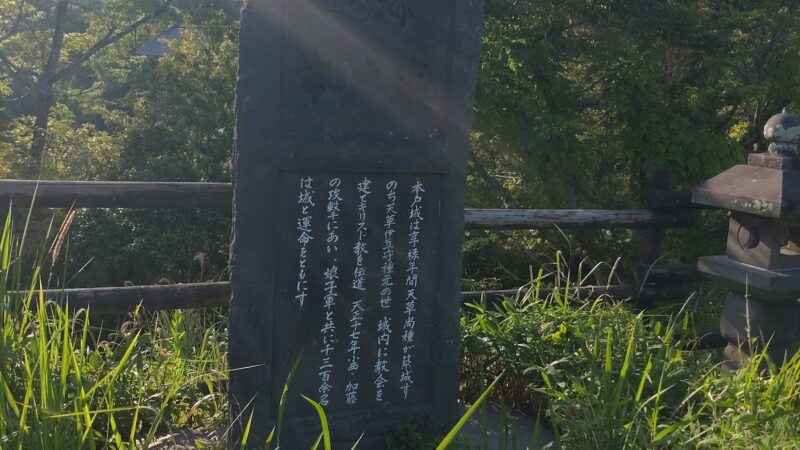
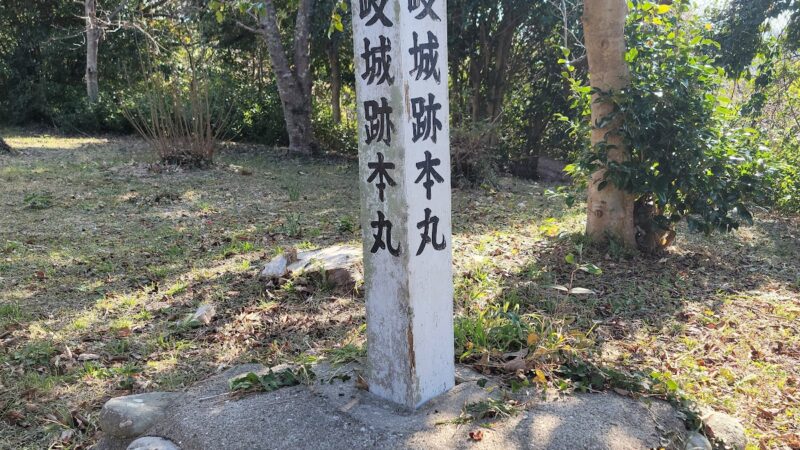
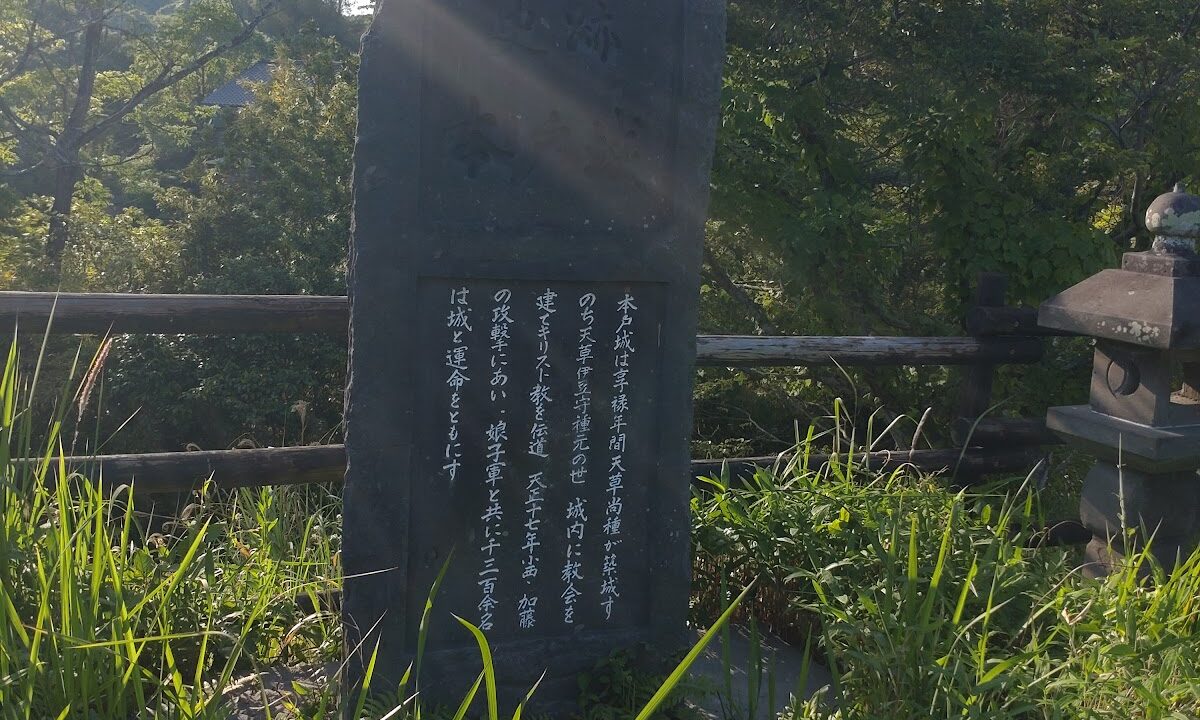
Although most of the castle grounds have been lost, a martyrdom park has been developed on the site of the main keep, and the Amakusa Christian Martyrdom Memorial Monument has been erected. From the castle ruins, you can enjoy a panoramic view of Amakusa city and the Ariake Sea, making it a place where you can experience both the history and nature of Amakusa.
Basic Information on Hondo Castle
- Location: Hondo-machi, Amakusa City, Kumamoto Prefecture
- Castle Structure: Hilltop Castle
- Year of Construction: Late Kamakura period to Nanboku-cho period (estimated)
- Builder: Amakusa clan
- Main Lords: Amakusa clan, Karatsu Domain (Terazawa clan), Tomioka Domain (Yamazaki clan)
- Year of Abandonment: Early Edo period
- Remains: Remains of baileys, part of earthworks
- Designated Cultural Property: Amakusa City Designated Historic Site
History of Hondo Castle
Amakusa Clan’s Residence Period
The history of Hondo Castle is said to have begun with the Amakusa clan, who ruled this area from the late Kamakura period to the Nanboku-cho period. The Amakusa clan were powerful local lords of Higo Province, controlling the entire Amakusa Islands.
The Amakusa clan used Hondo Castle as their residence for generations, developing it into the political and economic center of the Amakusa region. During the Sengoku period (Warring States period), the castle is believed to have been renovated and expanded several times amidst conflicts with surrounding daimyo (feudal lords).
Christian Daimyo and Hondo Castle
In the mid-16th century, during the time of Amakusa Hisatane, the head of the Amakusa clan, Christianity was introduced to the Amakusa region. While Amakusa Hisatane himself was not baptized, during the time of his son, Amakusa Tanemoto (not the father of the later Amakusa Shiro), Amakusa became a place where Christian culture flourished.
In 1566 (Eiroku 9), the Jesuit missionary Luis de Almeida visited Amakusa, and missionary work was carried out in the town of Hondo Castle. During this period, many of Amakusa’s inhabitants converted to Christianity, and Amakusa became known as the “Island of Christians.”
Toyotomi Hideyoshi’s Conquest of Kyushu and the Fall of the Amakusa Clan
In 1587 (Tensho 15), with Toyotomi Hideyoshi’s conquest of Kyushu, the Amakusa clan lost their territory, and a system of joint rule by local lords known as the Amakusa Five was established. During this period, the importance of Honjo Castle is thought to have relatively declined.
The Amakusa Five consisted of five families: the Shiki, Amakusa, Sumoto, Oyano, and Kamitsura clans, each controlling a part of Amakusa. However, this system did not last long.
Terazawa Clan Rule and the Shimabara Rebellion
After the Battle of Sekigahara, Amakusa became the territory of Terazawa Hirotaka, the lord of the Karatsu Domain. The Terazawa clan carried out harsh persecution of Christians and imposed harsh taxes, leading to growing discontent among the inhabitants.
In 1637 (Kanei 14), this discontent erupted, leading to the Shimabara Rebellion (Shimabara-Amakusa Revolt). The area around Hondo Castle became part of the rebels’ activities, and the castle was affected by the conflict.
Although the Shimabara Rebellion was suppressed the following year, it is believed that Hondo Castle ceased to serve its military purpose and was abandoned after the rebellion. The Terazawa clan was also held responsible for the rebellion and was ultimately stripped of their domain.
After the Edo Period
After the Shimabara Rebellion, Amakusa became a shogunate-controlled territory (tenryo), and a magistrate’s office was established in Tomioka. Hondo continued to develop as the economic center of Amakusa, but it lost its function as a castle.
After the Meiji era, much of the castle site was urbanized and converted into farmland, and many of the remains were lost. However, the site of the main keep has been developed into a park and preserved as a place that tells the history of Amakusa.
Structure and Layout of Hondo Castle
Castle Location
Hondo Castle is a flatland castle built on a hill approximately 80 meters above sea level, north of the town of Hondo. The east and south sides are protected by steep slopes, while the north and west sides have relatively gentle terrain.
This location was ideal for monitoring maritime traffic around the Amakusa Islands and defending the town of Hondo. The castle offered views of the Ariake Sea and Amakusa Sea, providing the advantage of early detection of approaching enemies from the sea.
Layout of Enclosures
While detailed layout maps of Hondo Castle do not exist, field surveys and historical documents suggest the following structure:
- Honmaru: The central part of the castle, located at the highest point. The current Martyrdom Park corresponds to the site of this Honmaru.
- Ninokuruwa: It is believed to have been located east or south of the Honmaru.
- Third Bailey: Located further out, it formed the boundary with the castle town.
- Outwork: Small outworks may have been constructed at key locations to strengthen the castle’s defenses.
Defensive Facilities
Hondo Castle is believed to have possessed defensive facilities typical of castles from the medieval to early modern periods.
- Earthwork: Earthworks surrounded the baileys, and some traces remain today.
- Dry Moat: Dry moats separated the baileys.
- Tiger’s Mouth: Tiger’s mouths (koguchi) were constructed at the entrances to the castle to prevent enemy intrusion.
- Watchtower: It is presumed that watchtowers and defensive watchtowers were built at key locations.
Stone walls were not used; it is believed to have been an earthen castle. This is due to the availability of stone in the Amakusa region and the technological limitations of the era in which the castle was built.
Highlights of Hondo Castle Ruins
Martyrdom Park and Amakusa Christian Martyrdom Memorial
The site of Hondo Castle’s main keep is now home to the “Martyrdom Park.” At the center of this park stands the Amakusa Christian Martyrdom Memorial, commemorating the many Christians who perished in the Shimabara Rebellion.
The memorial, erected in 1962 (Showa 37), features an impressive white tower shaped like a cross. A memorial ceremony is held in front of the memorial every November.
Scenic Views
The views from Hondo Castle Ruins are a major attraction for visitors. From the hilltop approximately 80 meters above sea level, you can enjoy the following scenery:
- Hondo City: A panoramic view of the central city of Amakusa spreads out below.
- Amakusa Sea: The beautiful Amakusa Sea stretches out to the west.
- Ariake Sea: The Ariake Sea can be seen to the north.
- Surrounding Islands: On clear days, you can sometimes see the surrounding islands and even the Shimabara Peninsula in Nagasaki Prefecture across the bay.
The view at sunset is particularly beautiful and is a popular spot for photography.
Remaining Structures
A few remains of the original structure remain at the Hondo Castle ruins.
- Kuruwa (Enclosure) Remains: The topography of the enclosures centered around the main keep can still be seen.
- Traces of Earthworks: Earthen mounds, believed to be remnants of former earthworks, can be seen in part of the park.
- Topographical Undulations: Artificial topographical undulations characteristic of castles remain throughout the park.
These remains provide clues to imagining the castle’s appearance in its heyday.
Nearby Historical Spots
When visiting the Hondo Castle ruins, we recommend also visiting the nearby historical spots.
- Amakusa Christian Museum: A museum located in the town of Hondo, exhibiting valuable materials related to the history of Christianity in Amakusa and the Shimabara Rebellion. It is about a 5-minute drive from the Hondo Castle ruins.
- Amakusa Collegio Museum: A museum dedicated to the Amakusa Collegio, a Jesuit school that was located in Amakusa.
- Gion Bridge: A stone bridge built during the Edo period, designated as a National Important Cultural Property.
- Hondo Suwa Shrine: A shrine that has long been revered as the guardian shrine of Hondo.
How to Access Hondo Castle
Access by Public Transportation
If using an airplane
- From Amakusa Airport (Amakusa Airfield):
- Approximately 20 minutes by Amakusa Airlines shuttle bus or local bus from Amakusa Airport to Hondo Bus Center
- Approximately 15 minutes on foot from Hondo Bus Center to Hondo Castle Ruins
- From Kumamoto Airport:
- Take a bus from Kumamoto Airport to Kumamoto Station or Kumamoto Transportation Center
- Approximately 2 hours and 30 minutes by the “Amakusa” express bus from Kumamoto Transportation Center to Hondo Bus Center
- Approximately 15 minutes on foot from Hondo Bus Center
If using a bus
- From Kumamoto City: Approximately 2 hours and 30 minutes by Sanko Bus express bus “Amakusa” from Kumamoto Transportation Center to Hondo Bus Center
- From Misumi Station: Approximately 1 hour by local bus from JR Misumi Line Misumi Station to Hondo Bus Center
Access by Car
From Kumamoto City
- Head west on National Route 57, passing through the Uto Peninsula.
- From Misumi, take National Route 266 and cross the Amakusa Five Bridges.
- Pass through Matsushima Town and take National Routes 324 and 266 to Hondo city center.
- Travel time: Approximately 2 hours (approximately 100 km)
From Shimabara City, Nagasaki Prefecture
- Take a ferry from Shimabara Port to Oniike Port (approximately 30 minutes).
- From Oniike Port, take National Routes 389 and 324 to Hondo city center.
- Travel time: Approximately 1 hour (including ferry).
Parking Information
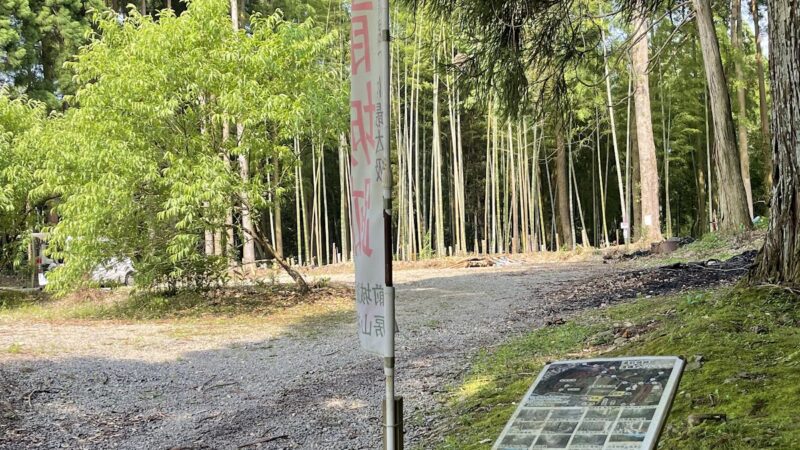
There is a dedicated parking lot at Hondo Castle Ruins (Martyrdom Park).
- Parking Capacity: Approximately 20 cars
- Fee: Free
- Operating Hours: 24 hours (However, please note that there is no lighting at night)
It is rarely crowded, but it may become full during events. In that case, you can use the public parking lot in Hondo town and access the park on foot.
Car Navigation Settings
- Address: Hondo-machi, Amakusa City, Kumamoto Prefecture
- Facility Name: Martyrdom Park, Hondo Castle Ruins
- Landmark: Amakusa Christian Martyrdom Memorial
Notes and Recommended Time to Visit
Notes for Visiting
- Clothing and Equipment
- Although the park is paved, there are some stairs and slopes, so we recommend wearing comfortable shoes.
- In summer, there is little shade, so bring a hat, parasol, and drinking water.
- In winter, the sea breeze can be strong, so warm clothing is necessary.
- Safety Considerations
- Some areas at the edges of the park lack fences, so caution is advised for those with small children.
- Lighting is limited at night, so visiting before sunset is recommended.
- Manners
- The Martyrs’ Memorial is a religious memorial site, so please visit with respect.
- Please take your trash with you.
Recommended Visiting Season
Spring (March-May)
Spring is the best season to visit Amakusa. The weather is mild, and you can enjoy beautiful cherry blossoms in and around the park during the blooming season. Late March to early April is especially recommended.
Autumn (October-November)
Autumn also offers pleasant weather, and the surrounding nature is beautifully colored during the autumn foliage season. A memorial ceremony is held in front of the Martyrs’ Memorial in November, making this a particularly recommended time to visit for those interested in the Christian history of Amakusa.
Summer (June-September)
Summer is extremely hot and the sun is strong, so early morning or evening visits are recommended. However, the rainy season (June-early July) is rainy, and the weather can be unstable during typhoon season (August-September).
Winter (December-February)
Winter is relatively mild, but the sea breeze can feel cold. Since there are fewer tourists during this time, it’s suitable for those who want to quietly reflect on history.
To Learn More About Honjo Castle and Amakusa’s History
Related Books
For those who want to learn more about Honjo Castle and Amakusa’s history, the following books are recommended.
- *The Shimabara Rebellion of Amakusa* (by Akira Yoshimura): A historical novel detailing the Shimabara Rebellion.
- *History of Christianity in Amakusa*: A scholarly explanation of the history of Christianity in the Amakusa region.
- *Castles of Kumamoto*: A comprehensive collection of materials on castles in Kumamoto Prefecture.
Local Museums and Historical Sites
- Amakusa Christian Museum: A museum located in Hondo-machi, Amakusa City, exhibiting a wealth of materials on the history of Christianity in Amakusa and the Shimabara Rebellion.
- Amakusa Municipal Amakusa Christian Museum: Features detailed exhibits on Amakusa Shiro and the Shimabara Rebellion.
- Amakusa Collegio: Exhibits materials related to the Jesuit school that was established in Amakusa.
Guided Tours
The Amakusa City Tourism Association offers guided tours explaining the history and culture of Amakusa. There are tours that visit Christian historical sites in Amakusa, including the ruins of Hondo Castle, allowing you to gain a deeper understanding of the history while listening to explanations from expert guides.
Reservations are often required in advance, so we recommend checking the latest information on the Amakusa City Tourism Association website.
Tourist Attractions Around Hondo Castle
When visiting the ruins of Hondo Castle, you can also enjoy tourist attractions in Amakusa City and the surrounding area.
Amakusa Five Bridges (Amakusa Pearl Line)
This scenic route consists of five bridges connecting the Amakusa Islands to the mainland. You can enjoy a drive while admiring the beautiful ocean scenery.
Dolphin Watching
In the waters off Amakusa, you have a high chance of observing pods of wild bottlenose dolphins. Dolphin watching boats depart from Hondo Port.
Sakitsu Settlement
This is one of the constituent sites of the World Cultural Heritage site “Hidden Christian Sites in the Nagasaki Region and Amakusa.” The beautiful fishing village scenery and Sakitsu Church are highlights.
Amakusa Seafood Cuisine
Amakusa is a treasure trove of fresh seafood. The town of Hondo boasts numerous restaurants serving dishes made with local seafood. Amakusa’s kuruma prawns, sea urchins, and octopus are particularly exquisite.
Hot Springs
Amakusa has several hot spring resorts, including facilities around Hondo. They are perfect for relaxing after a day of sightseeing.
Summary
Hondo Castle is an important historical site that tells the story of Amakusa’s history from the medieval to early modern periods. Flourishing as the residence of the Amakusa clan, and having experienced the turbulent times of the rise of Christian culture and the Shimabara Rebellion, this castle remains a symbol of Amakusa’s historical identity and is cherished by the local people.
While the castle’s remains are limited, the view from the Martyrdom Park, developed on the site of the main keep, is magnificent, allowing visitors to experience Amakusa’s beautiful nature and history simultaneously. The Amakusa Christian Martyrs’ Memorial is a place to commemorate the many who lost their lives in the Shimabara Rebellion, conveying the weight of history to visitors.
When visiting the Hondo Castle ruins, visiting nearby museums such as the Amakusa Christian Museum will allow you to gain a deeper understanding of Amakusa’s history. Furthermore, sightseeing spots such as the Amakusa Five Bridges and the Sakitsu settlement, as well as enjoying the local cuisine featuring fresh seafood, will enhance the appeal of your visit to Amakusa.
When visiting Amakusa City in Kumamoto Prefecture, be sure to visit the Hondo Castle ruins and experience Amakusa’s rich history and culture.