Complete Guide to Furufumoto Castle (Yatsushiro City, Kumamoto Prefecture): The Full Picture of a Mountain Castle with 250 Years of History
What is Furufumoto Castle?
Furufumoto Castle is a general term for a medieval mountain castle located in Furufumoto-cho, Yatsushiro City, Kumamoto Prefecture. It functioned as a center of power for the Yatsushiro region for over 250 years, from around 1335 during the Nanboku-cho period to 1588 at the end of the Sengoku period. Built on a hill on the right bank of the Kuma River, at an altitude of approximately 140 meters, this castle was called “Yatsushiro Castle” at the time and was the political and military center of the Yatsushiro region.
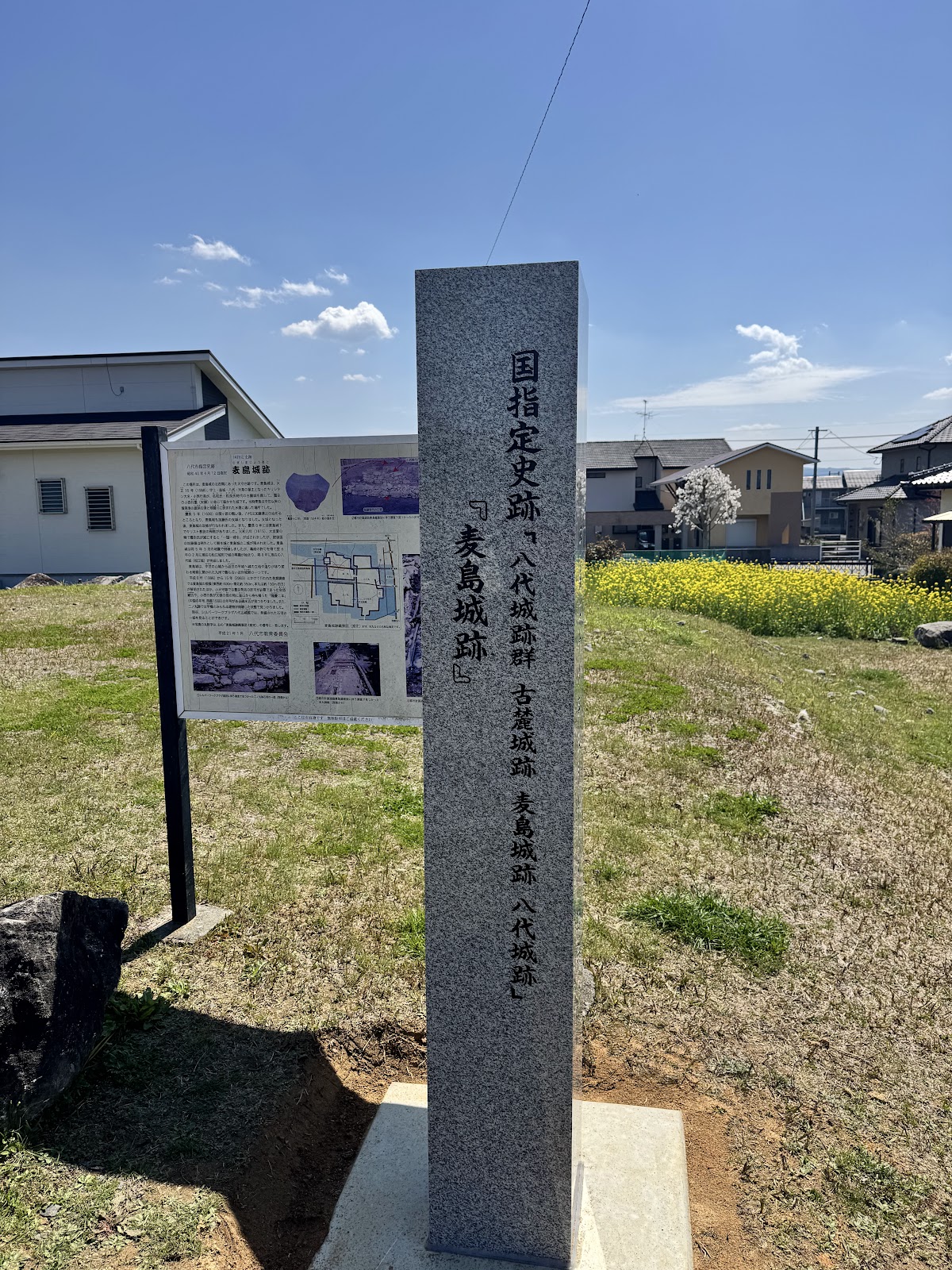
On March 18, 2014, the Furufumoto Castle ruins, along with the Mugishima Castle ruins, Yatsushiro Castle ruins (Matsue Castle), Hirayama Tile Kiln ruins, and Matsui Family Cemetery, were designated a National Historic Site as part of the “Yatsushiro Castle Ruins Group.” This indicates that Yatsushiro occupied an extremely important strategic position as a key point for land and water transportation from the medieval to the early modern period.
Location and Topographical Features of Furufukujo Castle
Furufukujo Castle was built on a strategically advantageous location overlooking the Yatsushiro Plain. Its proximity to the mouth of the Kuma River and strategic position allowed for simultaneous monitoring of both water transport to the Yatsushiro Sea (Shiranui Sea) and land transportation routes.
Its topographical advantages as a mountain castle are remarkable, with steep slopes serving as natural defensive walls. The castle grounds extend approximately 600 meters east-west and 400 meters north-south, characterized by a layout that skillfully utilizes the mountain ridges. Each enclosure is separated by a moat, making enemy intrusion difficult.
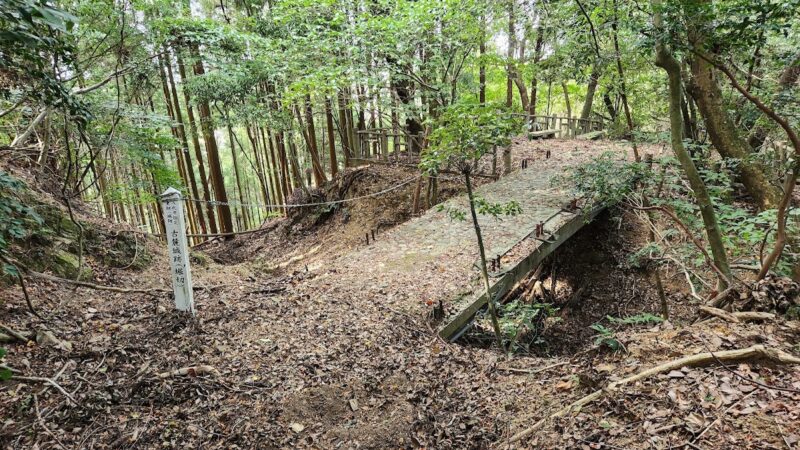
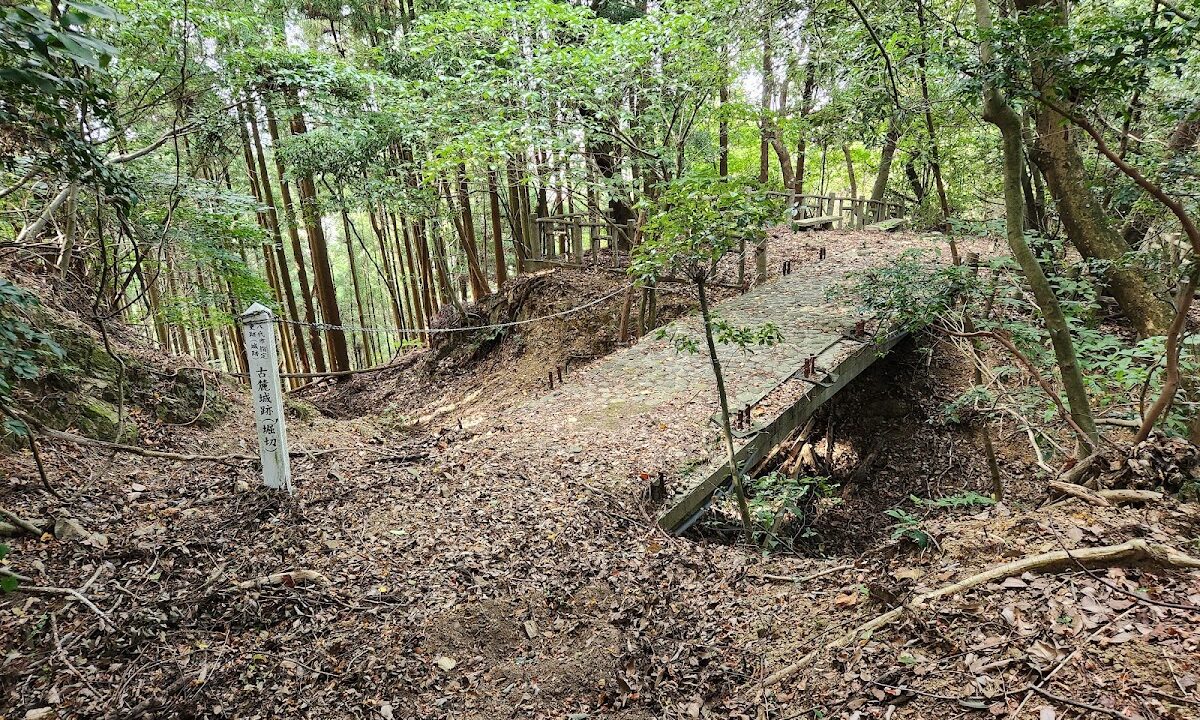
Even today, clear remains of the castle can be seen in the mountains, including enclosures, moats, earthworks, and vertical trenches. The moats, in particular, are deeply and sharply dug, demonstrating the high level of castle-building technology of the time.
The Seven Enclosures (Kuruwa) Constituting Furufumoto Castle
Furufumoto Castle is not a single castle, but a fortress complex composed of multiple enclosures (kuruma). It is generally believed to have consisted of seven main enclosures, commonly referred to as the “Seven Castles.”
Structure of the Main Enclosures
Each enclosure had its own independent defensive function, yet together they formed a single castle system. The main enclosure (Honmaru), located at the highest point, was at the center, with the second and third enclosures (Ninmaru and Sanomaru) arranged along the ridgeline, separated by moats.
This complex structure created a multi-layered defense system, ensuring that even if the enemy captured one enclosure, the next defensive line awaited. It can be said to be a structure that embodies the pinnacle of mountain castle construction technology during the Sengoku period.
The size of each enclosure varied, with the largest measuring approximately 50 meters east-west and 30 meters north-south. It is believed that buildings such as watchtowers, barracks, and warehouses were constructed within these enclosures.
History of Furumon Castle
The Nanboku-cho Period: Construction and Rule by the Nawa Clan
The history of Furumon Castle begins during the Nanboku-cho period. In 1334, Nawa Yoshitaka, a member of the Nawa family known as a loyal retainer of Emperor Go-Daigo, was appointed as the jitō (land steward) of Yatsushiro Manor. The following year, in 1335, Uchikawa Yoshimasa, a member of the family, descended to Yatsushiro as Yoshitaka’s deputy and is said to have built a mountain castle in Furumon in preparation for the Nanboku-cho period.
The Nawa clan, as powerful generals on the Southern Court side, developed this castle as one of the Southern Court’s strongholds in Kyushu. Nawa Yoshitaka and his son Akioki served as castle lords, confronting the forces of the Northern Court.
During the Nanboku-cho period, Furumon Castle functioned as an important military base for the Southern Court in southern Higo Province and was the site of numerous battles. While castles from this period were smaller in scale compared to later eras, it is believed that the basic structure of a fortified castle was already established.
Sengoku Period: Rule of the Sagara Clan
After the end of the Nanboku-cho period (Northern and Southern Courts period), the Yatsushiro region came under the rule of the Sagara clan. The Sagara clan was a Sengoku daimyo (feudal lord) based in the Kuma region (present-day Hitoyoshi and Kuma regions), and Yatsushiro was considered an important base for their northward expansion.
During the Sagara clan’s rule, Furufukujo Castle was significantly expanded and improved. Incorporating Sengoku period castle-building techniques, defensive facilities such as moats and vertical trenches were strengthened, and it developed into a full-fledged mountain castle with seven baileys. It is believed that many of the remains seen today were formed during this period.
The Sagara clan controlled maritime transport in the Yatsushiro Sea through Yatsushiro, making it an economically important base. Furufukujo Castle was both a military base and the center of governance for the Yatsushiro region.
Tensho Period: The Shimazu Clan’s Invasion and Domination
In 1581 (Tensho 9), the powerful Shimazu clan of Satsuma Province began their northward advance, forcing the Sagara clan to surrender. The Shimazu clan seized Furufumoto Castle, and Shimazu Tadahira (later Shimazu Yoshihiro) became its lord.
Shimazu Yoshihiro was a renowned general later feared as “Oni Shimazu” (Demon Shimazu). His decision to base himself at Furufumoto Castle indicates its strategic importance to the Shimazu clan, who aimed to unify Kyushu.
It is presumed that Furufumoto Castle underwent further renovations under Shimazu rule. The Shimazu clan’s castle-building techniques were cutting-edge even in Kyushu at the time, and this influence may be reflected in the castle’s structure.
Toyotomi Regime: Sasa Narimasa’s Entry and the Higo Provincial Uprising
In 1587 (Tensho 15), the Shimazu clan surrendered following Toyotomi Hideyoshi’s Kyushu campaign. Hideyoshi granted Higo Province to Sasa Narimasa, who entered Furufumoto Castle.
Sasa Narimasa was a samurai who served Oda Nobunaga and Toyotomi Hideyoshi. He was a lord of Etchu Province (present-day Toyama Prefecture), but was transferred to Higo Province due to a conflict with Hideyoshi. However, Narimasa’s harsh policies provoked resistance from the local samurai of Higo, and a large-scale Higo uprising broke out in 1588.
Narimasa failed to suppress this uprising and was held responsible, being ordered to commit seppuku (ritual suicide). This marked a major turning point in the history of Furufumoto Castle.
Abandonment of Furufumoto Castle: Konishi Yukinaga and Relocation to Mugishima Castle
After Sasa Narimasa’s death, southern Higo Province became the territory of Konishi Yukinaga. Konishi Yukinaga is known as a Christian daimyo and was a samurai who played an active role in the Korean campaigns.
Yukinaga judged that Furufukujo Castle, being a mountain castle, was inconvenient for modern governance, and in 1588, he built Mugishima Castle as a new castle in a location closer to the plains. This led to the abandonment of Furufukujo Castle, bringing to an end its approximately 250-year history as a mountain castle.
Mugishima Castle was a flatland castle built on the lowlands at the mouth of the Kuma River, a modern castle that prioritized the convenience of water transport and the development of the castle town. The relocation from Furufukujo Castle to Mugishima Castle symbolized a major turning point in the history of Japanese castles: the transition from medieval mountain castles to modern flatland castles.
List of Lords of Furumonjo Castle
Throughout the history of Furumonjo Castle, the following warlords and families served as its lords:
- Nawa Yoshitaka (1334–): Jito (land steward) of Yatsushiro Manor, Southern Court general
- Uchikawa Yoshimasa (1335–): Deputy of the Nawa clan, de facto builder of the castle
- Nawa Akioki (son of Nawa Yoshitaka): Lord of the castle during the Nanboku-cho period
- Sagara clan (after the unification of the Nanboku-cho period–1581): Sengoku daimyo of the Kuma region
- Shimazu Tadahira (Shimazu Yoshihiro) (1581–1587): Sengoku daimyo of Satsuma
- Sasa Narimasa (1587–1588): Lord of Higo Province under the Toyotomi regime
Each lord renovated and expanded the castle in accordance with the demands of the times, making Furumonjo Castle function as a base for controlling the Yatsushiro region.
Remains and Highlights of Furufumoto Castle
Existing Remains
Even more than 400 years after its abandonment, many remains of Furufumoto Castle are still well-preserved.
Kuruwa (Enclosures): The flat areas of the seven main enclosures remain clearly visible, allowing visitors to experience the castle’s layout at the time. The main enclosure site, in particular, is a relatively large, flat area, allowing for easy visualization of where the main buildings stood.
Moat: Multiple moats separating the enclosures remain. Some are 5-10 meters deep and 3-5 meters wide, clearly demonstrating their function as defensive structures.
Vertical Moats: Vertical moats dug into the slopes can also be observed. These were designed to prevent lateral movement of enemies and attack those climbing the slopes from the flanks.
Earthworks: Traces of earthworks remain in some enclosures, suggesting they reinforced the defensive line.
Traces of Stone Walls: Traces of stone structures can be seen in some areas, suggesting that it wasn’t simply an earthen castle, but that stonework was used in some parts.
Points for Climbing and Visiting the Castle
As the Kofumoto Castle ruins are a mountain castle, a certain level of physical fitness and equipment is required for the climb. While the hiking trails are well-maintained, there are steep slopes and slippery sections, so appropriate footwear and clothing are recommended.
There are several routes to the castle, but the main climb from the entrance to the main keep takes approximately 30-40 minutes. By observing the various enclosures and moats along the way, you can gain a tangible understanding of the structure of a medieval mountain castle.
From the main keep, you can enjoy a panoramic view of the Yatsushiro Plain and the Yatsushiro Sea, realizing the castle’s excellent location for monitoring a strategic transportation hub. On a clear day, you can even see the Amakusa Islands in the distance, making it a valuable place to relive the view seen by the castle’s lords of the time.
Value of the Yatsushiro Castle Ruins Group
While Furufukujo Castle is an important historical site on its own, its historical value is further enhanced when it is evaluated together with Mugishima Castle Ruins and Yatsushiro Castle Ruins (Matsue Castle) as part of the “Yatsushiro Castle Ruins Group.”
Castle Transitions from Medieval to Early Modern Periods
The transition from Furufukujo Castle (medieval mountain castle) → Mugishima Castle (flatland castle during the transition to the early modern period) → Yatsushiro Castle (full-fledged early modern castle of the Edo period) represents an important developmental process in the history of Japanese castles.
Medieval mountain castles prioritized defense and were built utilizing rugged terrain. However, in the early modern period, efficiency of governance, convenience of economic activity, and the development of castle towns became more important, and castles began to be built in locations closer to flat land.
The relocation from Furufukujo Castle to Mugishima Castle (1588) is a symbolic event of this transitional period. Furthermore, after Mugishima Castle collapsed in an earthquake, Yatsushiro Castle (Matsue Castle), built in 1622 (Genna 8), was developed as a complete early modern castle.
Integrated Value with Related Historical Sites
The Yatsushiro Castle Ruins include not only the castle ruins but also the Hirayama Tile Kiln Site and the Matsui Family Cemetery.
The Hirayama Tile Kiln Site is the remains of a kiln used to fire roof tiles during the construction of Yatsushiro Castle (Matsue Castle). As a production site for castle construction, it is important for understanding the castle’s construction process.
The Matsui Family Cemetery is the burial ground of the Matsui family (retainers of the Hosokawa family), who were entrusted with Yatsushiro Castle during the Edo period. The Matsui family ruled Yatsushiro for approximately 250 years and made a significant contribution to the development of Yatsushiro.
The entire Yatsushiro Castle Ruins, including these related historical sites, allows for a comprehensive understanding of the history of the Yatsushiro region from the medieval period to the early modern and modern periods.
The Historical Importance of Furufukujo Castle and Yatsushiro
A Key Point for Land and Water Transportation
The primary reason for Yatsushiro’s historical importance lies in its geographical location. Situated at the mouth of the Kuma River, it was a crucial point for water transport connecting the inland Kuma region with the sea. Furthermore, it was a vital transportation hub on land routes, connecting the southern Satsuma Province (Kagoshima Prefecture) with the northern center of Higo Province (around Kumamoto City).
Furufukujo Castle overlooked this strategic location and functioned to monitor and manage the flow of goods and people passing through Yatsushiro. Economically and militarily, controlling Yatsushiro meant superiority in southern Kyushu.
Its Position in Kyushu During the Nanboku-cho and Sengoku Periods
During the Nanboku-cho period, Kyushu became the stage for fierce conflict between the Southern and Northern Courts. Furufukujo Castle, as an important base for the Southern Court, contributed to maintaining the Southern Court’s power in Kyushu.
During the Sengoku period (Warring States period), Yatsushiro was one of the front lines where the powerful Shimazu clan of southern Kyushu and the Ryuzoji and Otomo clans of the north clashed. The Sagara and Shimazu clans valued this castle because Yatsushiro was a strategically important location that held the key to unifying Kyushu.
Even after Toyotomi Hideyoshi’s conquest of Kyushu, Furufumoto Castle continued to play an important role as a governing base for Higo Province. The fact that Sasa Narimasa was stationed there, and that this site continued to be chosen until Konishi Yukinaga built a new castle, speaks to the importance of Yatsushiro.
Preservation and Utilization of Furufumoto Castle
Significance of National Historic Site Designation
With the designation of Furufumoto Castle as a National Historic Site in 2014, the site became a legally protected Important Cultural Property. This institutionally guarantees the preservation and appropriate utilization of the ruins.
The designation as a National Historic Site aims not only to protect the ruins but also to widely publicize their historical value and utilize them as educational and tourism resources. The Furufukujo Castle Ruins are a valuable cultural heritage site of Yatsushiro City and contribute to the formation of the region’s identity.
Current Preservation Status and Challenges
Because the Furufukujo Castle Ruins are located in a mountainous forest, the remains are undergoing weathering due to natural forces and being overgrown with vegetation. While regular mowing and tree management are carried out, continuous effort is necessary to preserve mountain castle ruins.
On the other hand, excessive development could damage the remains, so a balance between preservation and utilization is crucial. Currently, minimal development is being carried out to ensure visitor safety and promote understanding, without compromising the essential value of the remains.
Utilization as a Tourism and Educational Resource
Yatsushiro City is promoting initiatives to utilize the Yatsushiro Castle Ruins, including the Furufukujo Castle Ruins, as a tourism and educational resource. This includes the installation of information boards, the creation of brochures, and the implementation of guided tours.
In school education, Furufukujo Castle is also being used as teaching material for learning local history. Visiting the castle ruins in person allows for a living historical experience that cannot be learned from textbooks.
In recent years, interest in “castle tourism” and “historical tourism” has been growing, and castle enthusiasts from all over Japan are visiting Furufukujo Castle. It is also expected to contribute to the local economy.
Access and Visiting Information
Location
Furufukucho, Yatsushiro City, Kumamoto Prefecture
Access Methods
Public Transportation: Approximately 15 minutes by car from JR Kagoshima Main Line “Yatsushiro Station,” or by bus followed by a walk.
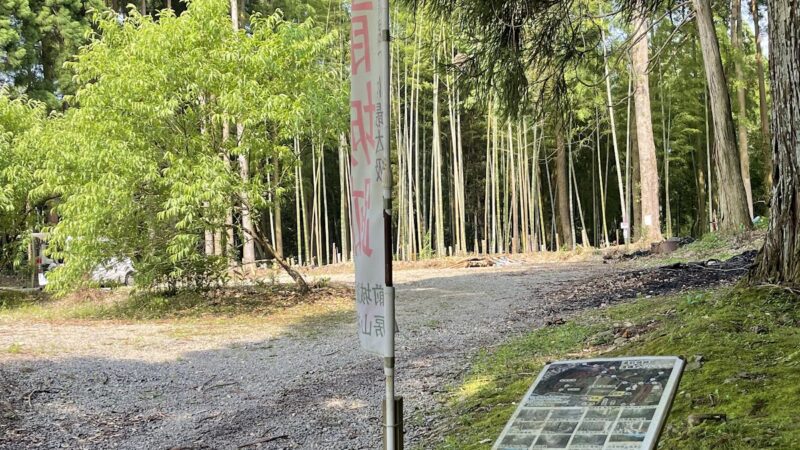
Private Car: Approximately 10 minutes from Kyushu Expressway “Yatsushiro IC.” Parking is available near the castle entrance (limited number of spaces).
Visiting Hours and Precautions
- Free to visit (no admission fee)
- Requires approximately 30-40 minutes to climb the castle
- As it is a mountain castle, appropriate clothing and shoes for trekking are recommended
- Insect repellent and bringing drinking water are recommended during the summer
- Caution is needed as the ground can be slippery during and after rain
- Information boards and explanatory signs are installed, but obtaining materials in advance will deepen your understanding.
Related Facilities in the Surrounding Area
When visiting the Kofumoto Castle Ruins, we recommend also visiting the following related facilities:
- Yatsushiro Castle Ruins (Matsue Castle Ruins): The ruins of an Edo period castle located in the center of Yatsushiro City. Stone walls and moats remain, and the area has been developed into a park.
- Yatsushiro City Museum Mirai no Mori Museum: Exhibits the history and culture of Yatsushiro. Materials related to Kofumoto Castle are also on display.
- Matsui Bunko: A facility that houses and exhibits valuable cultural artifacts passed down through the Matsui family. By visiting these sites, you can gain a comprehensive understanding of Yatsushiro’s history from the medieval to the early modern period.
Summary: Historical Significance of Furufukujo Castle
Furufukujo Castle is a mountain castle that functioned as the center of the Yatsushiro region for approximately 250 years, from the Nanboku-cho period to the end of the Sengoku period. Distinguished warlords such as the Nawa, Sagara, Shimazu, and Sasa Narimasa served as its lords, playing a crucial role in the history of Kyushu.
Its complex structure, consisting of seven baileys, represents the pinnacle of medieval mountain castle construction technology, and the well-preserved remains convey the appearance of that time. Its location overlooking the mouth of the Kuma River and the Yatsushiro Plain indicates that this castle was a strategically important location controlling a vital transportation hub.
With its designation as a National Historic Site in 2014, Furufukujo Castle, along with Mugishima Castle and Yatsushiro Castle, is now evaluated as part of the “Yatsushiro Castle Ruins Group.” This is a valuable example of the transition of castles from the medieval to the early modern period, occupying an important position in the history of Japanese castles. Currently, the ruins of Furufukujo Castle are being preserved and utilized as an important cultural heritage site of Yatsushiro City. While retaining the unique atmosphere of a mountain castle, it welcomes history enthusiasts and tourists. When you visit Yatsushiro, we highly recommend climbing this historic mountain castle and experiencing the spirit of the Middle Ages.
The history of Furufukujo Castle is not merely the history of a single castle; it is the history of the Yatsushiro region, and by extension, a part of the medieval history of Kyushu and Japan. Understanding its value and passing it on to future generations is our responsibility.