Sadamitsu Castle (Mima District, Tokushima Prefecture): History and Highlights | A Complete Guide to Sengoku Period Mountain Castle Ruins
Table of Contents
- What is Sadamitsu Castle?
- History of Sadamitsu Castle
- Geography and Location of Sadamitsu Castle
- Structure and Remains of Sadamitsu Castle
- Battles and the Fall of Sadamitsu Castle
- Access to the Current Sadamitsu Castle Ruins
- Tourist Spots in the Sadamitsu Area
- Related Historical Sites and Castles
What is Sadamitsu Castle?
Sadamitsu Castle (Sadamitsu-jo) was a Japanese mountain castle located in Sadamitsu, Tsurugi-cho, Mima District, Tokushima Prefecture. Also known as Noguchi Castle, it was an important military base in western Awa Province, built during the Tensho era of the Sengoku period.
The current Tsurugi-cho, Mima District, Tokushima Prefecture, is a municipality formed on March 1, 2005 (Heisei 17) through the merger of the former Sadamitsu Town, Handa Town, and Ichiu Village. Sadamitsu Castle was built on a mountaintop near the center of the former Sadamitsu town.
The castle ruins are located on a mountaintop approximately 300 meters above sea level, overlooking the point where the Sadamitsu River merges with the Yoshino River. It functioned as a strategic stronghold for monitoring and defending the Yoshino River basin. Although only a portion of the remains survive today, it is known as an important historical site that tells the story of the power struggles in Awa Province during the Sengoku period.
History of Sadamitsu Castle
Construction History
Sadamitsu Castle is believed to have been built in 1577 (Tensho 5). Regarding the builder, records indicate that Ogasawara Nagamasa, whose base was Shigekiyo Castle (present-day Mima-cho, Mima City), built it to station his eldest son, Ogasawara Nagasada, as its commander.
The Ogasawara clan were local lords with power in the western part of Awa Province. At that time, the power of the Miyoshi clan in Awa Province was declining, and the invasion by Chōsokabe Motochika of Tosa Province, who aimed to unify Shikoku, was intensifying. Ogasawara Nagamasa, in preparation for the Chōsokabe clan’s northward advance, built a new castle in Sadamitsu, a strategic point along the Yoshino River, to strengthen his defenses.
The Chōsokabe Invasion and the Fall of the Castle
In 1577 (Tenshō 5), the same year the castle was built, or shortly thereafter, Sadamitsu Castle was attacked by Chōsokabe Motochika’s forces. The Chōsokabe clan had intensified their invasion from Tosa into Awa Province, capturing castles one after another along the Yoshino River basin.
Ogasawara Nagasada defended the castle and resisted, but was defeated by the overwhelming military power of the Chōsokabe clan. The castle fell, and the Ogasawara clan was driven out of western Awa Province. It is believed that Sadamitsu Castle was abandoned shortly after its construction due to this fall. ### The Subsequent Development of the Sadamitsu Region
After the fall of Sadamitsu Castle, Awa Province came under the control of the Chosokabe clan. Later, with Toyotomi Hideyoshi’s conquest of Shikoku (1585), the Chosokabe clan was reduced to Tosa Province, and Hachisuka Iemasa took control of Awa Province. Throughout the Edo period, Awa Province became part of the Tokushima Domain, ruled by the Hachisuka clan, and Sadamitsu developed as a region within the domain.
The town of Sadamitsu flourished as a valley settlement located at the confluence of the Yoshino River and the Sadamitsu River, and became known as the entrance to the climbing trail to Mount Tsurugi. During the Edo period, commerce developed, and the townscape with its distinctive two-tiered udatsu (firewalls) that still remain today was formed. This udatsu townscape is a rare architectural style nationwide and a tourist attraction.
Geography and Location of Sadamitsu Castle
Geographical Location
Sadamitsu Castle is located on a mountaintop in the Sadamitsu district of Tsurugi Town, Mima District, Tokushima Prefecture. Tsurugi Town is located in the northwestern part of Tokushima Prefecture, a mountainous region surrounded by the Tsurugi Mountain Range. The Yoshino River flows east-west through the center of the town, and the Sadamitsu River joins it from the south.
Sadamitsu Castle was built on a mountaintop near the confluence of the Sadamitsu and Yoshino Rivers, at an elevation of approximately 300 meters. From the castle, one could overlook the flow of the Yoshino River and the road extending along its banks, making it a strategically important location.
Strategic Importance
The Sadamitsu area has long been known as a crucial transportation hub. The road along the Yoshino River was a major route connecting the eastern and western parts of Awa Province, and a road leading towards Mount Tsurugi also extended along the Sadamitsu River.
When Chosokabe Motochika invaded Awa from Tosa, the route along the Yoshino River was the most important marching route. Capturing Sadamitsu Castle was strategically essential for expanding into western Awa Province and further into Sanuki Province.
Ogasawara Nagamasa built a castle at Sadamitsu precisely because he recognized this geographical importance. By developing Sadamitsu Castle as a subsidiary castle of Shigechiyo Castle, he aimed to prevent the Chosokabe clan’s northward advance.
Structure and Remains of Sadamitsu Castle
Castle Structure
Sadamitsu Castle is a typical mountain castle of the Sengoku period. It is presumed to have had a main enclosure (honmaru) at the mountaintop, surrounded by multiple baileys (kuruwa). It was a natural stronghold utilizing the steep terrain, and it is thought that defensive trenches and earthworks were constructed on the mountain slopes.
Unlike castles on flat land, mountain castles are defensive structures that make maximum use of the terrain. Attackers had to fight while climbing steep slopes, while defenders had the advantage of attacking from higher ground.
Existing Remains
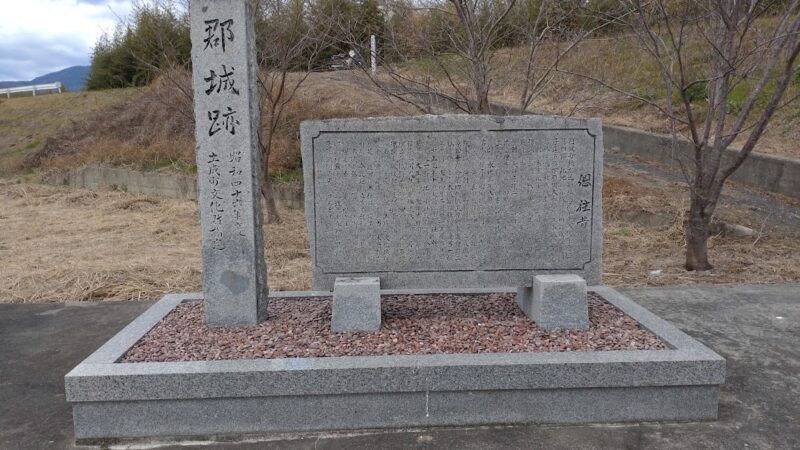
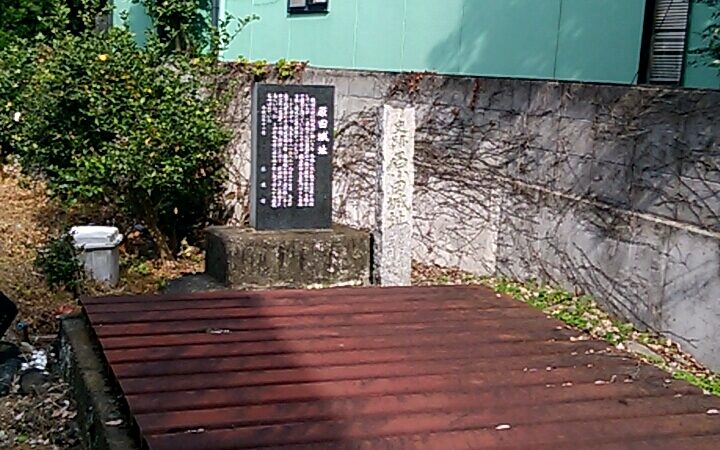
Currently, no clear structures remain at the Sadamitsu Castle site, but a flat area believed to be the remains of a bailey can be seen on the mountaintop. Traces of moats and earthworks are also said to partially remain.
Access to the castle site is not easy, requiring a climb up a mountain path. While the preservation of the remains is not necessarily excellent, it is a valuable historical site that allows one to experience the atmosphere of a Sengoku period mountain castle.
Detailed archaeological excavations have not been conducted, and many aspects of the castle’s exact size and structure remain unknown. Further research is expected to reveal a more detailed picture of the castle.
Battles and the Fall of Sadamitsu Castle
Chosokabe Motochika’s Strategy for Unifying Shikoku
After unifying Tosa Province (present-day Kochi Prefecture), Chosokabe Motochika began invading surrounding provinces with the aim of conquering all of Shikoku. Awa Province, located north of Tosa, was an important region serving as a foothold for expansion into Sanuki and Iyo Provinces.
From the 1570s, Motochika intensified his invasion of Awa Province, successively capturing castles along the Yoshino River basin. At that time, the Miyoshi clan’s power in Awa Province was declining, and local lords maintained their independent strength. The Chosokabe clan exploited this fragmentation, conquering Awa Province through a strategy of defeating each lord individually.
The Ogasawara Clan’s Resistance and Defeat
Ogasawara Nagamasa, based at Shigechika Castle, was a powerful local lord with influence in western Awa Province. To counter the Chosokabe invasion, he built Sadamitsu Castle and stationed his eldest son, Nagasada, there, establishing a defensive system.
However, the Chosokabe clan’s military power was overwhelming. Motochika was known as a skilled strategist and actively introduced new weapons such as firearms. He was also adept at stratagem (converting enemy generals to their side), inducing internal collapse of the enemy in various regions.
Details of the attack on Sadamitsu Castle are scarce due to a lack of historical records, but the castle fell to the Chosokabe army. While there are no clear records of Ogasawara Nagasada’s fate, it is believed he either perished with the castle or escaped.
Impact after the fall of the castle
The fall of Sadamitsu Castle significantly weakened the Ogasawara clan. Shigechiyo Castle was eventually captured by the Chosokabe clan, and western Awa Province came completely under their control.
The Chosokabe clan’s rule in this region continued until Toyotomi Hideyoshi’s conquest of Shikoku in 1585. Following Hideyoshi’s conquest of Shikoku, Chosokabe Motochika surrendered and was granted only Tosa Province. Hachisuka Iemasa was appointed to Awa Province, which remained part of the Tokushima Domain throughout the Edo period.
Access to the current Sadamitsu Castle ruins
Transportation access
Sadamitsu Castle ruins are accessible by both public transport and private car.
Access by Train:
- The nearest station is Sadamitsu Station on the JR Tokushima Line.
- From the station to the castle ruins, walking and hiking are required, taking about 1 hour one way.
Access by Car:
- Approximately 15 minutes from Mima IC on the Tokushima Expressway via National Route 438.
- Head towards the Sadamitsu area from the center of Tsurugi Town and aim for the trailhead.
- Parking is limited, so it is recommended to use nearby public facilities or roadside stations.
Precautions for Visiting the Castle
Sadamitsu Castle Ruins are a mountain castle and not a developed tourist facility. Please note the following points when visiting:
- Mountaineering equipment required: Wear athletic shoes or hiking boots and comfortable clothing.
- Unclear path: Since there may not be a clearly marked path to the castle, it is recommended to carry a map or GPS.
- Safety precautions: Avoid climbing alone; travel in groups.
- Season and weather: The ground can be slippery and dangerous during rainy weather and winter. Visiting in good weather is recommended.
- Prior confirmation: Please check the latest information with the Tsurugi Town Hall or the Tourist Association before visiting.
Tourist attractions in the Sadamitsu area
When visiting Sadamitsu Castle ruins, it is recommended to also visit the surrounding tourist attractions.
The townscape of Sadamitsu’s two-story udatsu (firewall) architecture
In the center of Sadamitsu, a townscape of merchant houses built from the Edo period to the Meiji period is preserved. Its most distinctive feature is the architectural style known as two-story udatsu.
Udatsu are firewalls built along the boundaries of neighboring houses, and were a symbol of wealthy merchant families. The udatsu in Sadamitsu are two-tiered, and the front is decorated with pictures (kote-e) symbolizing wishes for longevity and good fortune. This streetscape, with many such two-tiered udatsu, is rare nationwide and is a valuable cultural heritage.
The streetscape is perfect for a stroll and conveys the prosperity of commerce during the Edo period.
Tsurugi Town Summer Festival Awa Odori Dance Competition
Every year from August 15th to 16th, the “Tsurugi Town Summer Festival Awa Odori Dance Competition” is held in the Sadamitsu area. From 7 PM to 10 PM, Awa Odori dance troupes parade through the streets, creating a lively atmosphere with traditional dance and music.
This is a rare opportunity to enjoy Awa Odori, a representative traditional performing art of Tokushima Prefecture, within the historic townscape.
Sadamitsu Yuuyuukan Roadside Station
Located along National Route 438, this roadside station is convenient for obtaining tourist information about Tsurugi Town and purchasing local specialty products. The restaurant serves dishes made with local ingredients.
It’s a good place to stop before or after visiting the Sadamitsu Castle Ruins for a break and to gather information.
Kira’s Edohigan Cherry Tree
This is the largest Edohigan cherry tree in Tokushima Prefecture, estimated to be around 400 years old, and designated as a prefectural natural monument. In spring, it blooms beautifully, attracting many visitors.
Near the cherry tree is the Amenohiwashi Shrine, where the Imbe clan, who pioneered Awa in ancient times, is said to have enshrined their ancestral deity.
Mount Tsurugi
Tsurugi Town is also known as the entrance to the climbing trail to Mount Tsurugi. Mount Tsurugi, at 1,955 meters above sea level, is the second highest peak in western Japan. During the climbing season, many climbers head to Mount Tsurugi via Sadamitsu.
Related Historical Sites and Castles
When visiting Sadamitsu Castle, visiting the surrounding related historical sites will allow you to gain a deeper understanding of the region’s history.
Shigechiyo Castle (Mima City)
Shigechiyo Castle, the base of Ogasawara Nagamasa, was located in what is now Mima-cho, Mima City. It was an important castle, serving as the main castle of Sadamitsu Castle, and it also fell to the Chosokabe clan’s invasion. Remains still exist today, and visiting it along with Sadamitsu Castle allows you to experience the extent of the Ogasawara clan’s influence.
Ichiu Castle (Tsurugi Town)
Located in the Ichiu district of Tsurugi Town, this castle was also an important base in western Awa Province during the Sengoku period. Like Sadamitsu Castle, it was a mountain castle, providing valuable insight into the defense system of the time.
Wakimachi (Mima City)
Located east of Sadamitsu in Wakimachi, Mima City, is a townscape designated as a National Important Preservation District for Groups of Traditional Buildings, known as the “Udatsu Townscape.” By visiting and comparing it with the udatsu (firewalls) of Sadamitsu, you can deepen your understanding of the commercial culture of this region.
Tokushima Castle (Tokushima City)
This was the residence of the Hachisuka clan, who ruled Awa Province during the Edo period. Visiting the base of the daimyo who governed this region after Sadamitsu Castle was abandoned allows you to trace the historical flow from the Sengoku period to the Edo period.
Summary
Sadamitsu Castle is an important historical site that tells the story of the power struggles in Awa Province during the Sengoku period. Although it had a short history, falling shortly after its construction, it conveys the ambition of Chosokabe Motochika to unify Shikoku and the local forces that resisted him.
The Sadamitsu area today is a tourist destination known for its two-story udatsu townscape and as a starting point for climbing Mount Tsurugi. By visiting these tourist spots in conjunction with a visit to the castle ruins, you can experience the history and culture of this region from the Sengoku period to the present day.
Climbing to the mountain castle requires preparation and caution, but the view of the Yoshino River from the castle ruins and the experience of reflecting on the history of the warlords who fought in this place will surely be a valuable one for history buffs.