

Complete Guide to Shokaku Castle (Anan City, Tokushima Prefecture) | History and Highlights of a Coastal Castle that Became a Base for the Awa Navy
Basic Information on Shokaku Castle
Shokaku Castle is a flatland castle located in Tsubakidomari-cho, Anan City, Tokushima Prefecture, also known as “Tsubakidomari Castle.” Built on the easternmost tip of a peninsula jutting out into the Kii Channel, at the easternmost point of the Tsubakidomari settlement, this castle served as the residence of the Mori Jingobei family, known as the commanders of the Awa Navy, and continued to protect a strategic point for maritime traffic throughout the Edo period.
Location: Tsubakidomari-cho, Anan City, Tokushima Prefecture (Current Tsubakidomari Elementary School site)
Former Province: Awa Province
Classification/Structure: Flatland Castle, Coastal Castle
Construction Period: Early Edo Period
Lord: Mori Family (Awa Naval Force)
Remains: Stone walls, bailey remains
Currently, Tsubakidomari Elementary School stands on the site of Matsutsuru Castle. While most of the original castle structure has been lost, the surrounding stone walls still exist, preserving the castle’s character as a coastal fortress.
History of Matsutsuru Castle
The Rise of the Awa Naval Force and the Mori Family
The history of Matsutsuru Castle is closely intertwined with the history of the Awa Naval Force. From the Sengoku period to the early Edo period, the Awa Naval Force, which controlled the Kii Channel, was an important military force for the Tokushima Domain (Hachisuka family).
The Mori family played a central role in the Awa naval force from the late Sengoku period, and even after the establishment of the Tokushima Domain, they held the important position of “maritime commander.” The Mori family, centered around Mori Jingobei, was granted a stipend of approximately 3,000 koku, comparable to that of a minor daimyo, and built Matsutsuru Castle in Tsubakidomari.
Maritime Defense Base in the Edo Period
In the Edo period, Matsutsuru Castle served as the frontline base for the Tokushima Domain’s maritime defense. Its main duties included monitoring ships navigating the Kii Channel, suppressing piracy, and providing maritime defense in times of emergency.
The Mori family served the Tokushima Domain for generations as commanders of the Awa naval force, and developed the town of Tsubakidomari as a castle town for Matsutsuru Castle. Taking advantage of Tsubakidomari Bay, a natural harbor, many ships called at the port, and the town is recorded as having flourished greatly.
Changes After the Meiji Restoration
With the abolition of the Tokushima Domain following the Meiji Restoration, Matsutsuru Castle also ceased to serve its purpose. Most of the castle was dismantled, and the site was repurposed as a local public facility. Currently, Tsubakidomari Elementary School stands on the site, but remnants of the original stone walls remain around the school, giving a glimpse into the former scale of the castle.
Structure and Characteristics of Matsutsuru Castle
Location as a Coastal Castle
The most distinctive feature of Matsutsuru Castle lies in its location. Situated at the tip of a peninsula facing the Kii Channel, it was built as a coastal castle, taking advantage of its topography surrounded by the sea on three sides. This location allowed for a favorable defensive posture against attacks from the sea, while simultaneously enabling wide-ranging surveillance of ships navigating the Kii Channel.
The view from the castle was magnificent; on clear days, it is said that one could see the entire Kii Channel and even the Kii Peninsula in the distance.
Structure of the Castle Town
The settlement of Tsubakidomari has a unique shape, developing in a long, narrow strip from east to west, centered around Matsutsuru Castle. Houses line the coastline of Tsubakidomari Bay for approximately 1.5 to 2 kilometers, and even today, the roads are so narrow that only one small car can barely pass at a time.
This long, narrow townscape is believed to be a remnant of a defensive urban plan designed to prevent enemy invasions. It is thought that when the Mori family developed the castle town, they intentionally made the roads narrow and winding to make it difficult for enemies to invade.
Characteristics of the Stone Walls
The existing stone walls are the most important remains of Matsutsuru Castle. The stone walls surrounding Tsubakidomari Elementary School were built using the nozurazumi technique, exhibiting characteristics of early Edo period castle architecture.
The height of the stone walls varies depending on the location, but the highest point is about 3 meters, conveying the scale of the castle at that time. The stone walls, which have survived for hundreds of years despite being exposed to wind and rain from the sea, speak to the high level of stonemasonry skills of the time.
Remains and Highlights of Matsutsuru Castle
Tsubakidomari Elementary School Grounds (Main Enclosure Site)
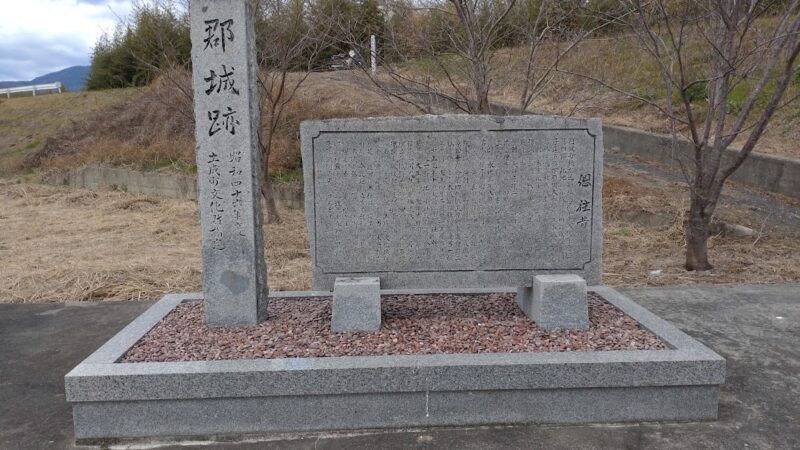
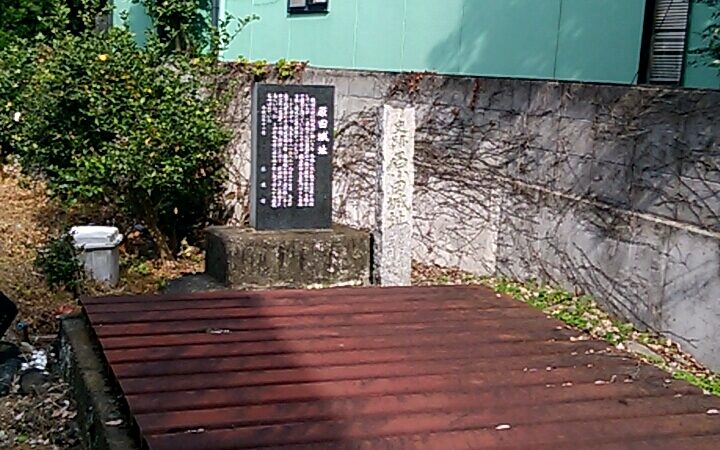
The current site of Tsubakidomari Elementary School is believed to be the location of the former main enclosure of Matsutsuru Castle. A stone monument marking the “Matsutsuru Castle Site” stands next to the school’s main gate, indicating that this was once the castle site.
While entry into the school grounds is prohibited, the stone walls can be observed from the surrounding area. The view from the sea side, in particular, is an excellent point to appreciate the castle’s advantageous location as a coastal castle.
Existing Stone Walls
Stone walls remain in good condition around Tsubakidomari Elementary School, especially on the east and south sides. These stone walls demarcated the baileys of Matsutsuru Castle and functioned as defensive structures for the castle.
When observing the stone walls, paying attention to the way the stones are stacked and the types of stones used can lead to interesting discoveries. The castle was primarily constructed using locally sourced stone, and, as befits a castle near the coast, hard, erosive stones were chosen to withstand the waves.
Mori Family Cemetery of the Awa Naval Force
Near the Matsutsuru Castle ruins lies the cemetery of the successive heads of the Mori family, who led the Awa Naval Force. A sign reading “Mori Family Cemetery of the Awa Naval Force” serves as a landmark, and it is an important historical site where one can reflect on the history of the Mori family, who built the town of Tsubakidomari.
The cemetery contains the gravestones of the Mori family heads who served as commanders of the Awa Naval Force throughout the Edo period, and its scale demonstrates the important position the Mori family held within the Tokushima Domain.
Townscape of Tsubakidomari
The townscape of Tsubakidomari, which developed as a castle town of Matsutsuru Castle, is itself an important historical heritage site. The houses densely packed on both sides of the narrow streets retain a strong resemblance to an Edo-period castle town.
Of particular note are the buildings from the early Showa period, when the town prospered from deep-sea fishing. Magnificent houses from the time when it flourished as a fishing town are scattered throughout, conveying the spirit of the fishermen who inherited the traditions of the Awa Suigun (Awa Naval Force).
History and Culture of Tsubakidomari
Tradition of the Awa Suigun
Tsubakidomari is not merely a castle town, but a place that fostered a unique culture as the base of the Awa Suigun. The traditions of the naval force were passed down in the form of fishing even after the Meiji era, and Tsubakidomari developed into one of Tokushima Prefecture’s leading fishing ports.
In particular, conger eel fishing is a representative fishery of Tsubakidomari, and the high-quality conger eels caught in the Kii Channel are known as a specialty product of Tokushima Prefecture. The navigation and fishing techniques cultivated during the Awa Suigun era are still utilized in modern fishing.
A Key Point for Maritime Transportation
During the Edo period, Tsubakidomari was an important port of call on the maritime route connecting Osaka (present-day Osaka) and Shikoku. For ships navigating the Kii Channel, Tsubakidomari Bay, a natural harbor, played a crucial role as a port for waiting for favorable winds and as a supply base.
With numerous ships coming and going, Tsubakidomari became a hub for goods and information from various regions, and despite being a small fishing village, it flourished as a culturally and economically prosperous town.
Prosperity as a Fishing Town
From the Meiji era onward, Tsubakidomari developed significantly as a base for deep-sea fishing. In the early Showa period, many fishing boats departed from Tsubakidomari, venturing into the distant southern seas. The prosperity of this era can still be seen in the magnificent houses that remain today.
The wealth gained from fishing was invested in the town’s development, and social infrastructure such as schools and port facilities were established. Even today, Tsubakidomari Fishing Port is actively operating and is known as a landing site for fresh seafood.
Access and Transportation to Matsutsuru Castle
Access by Public Transportation
When visiting Matsutsuru Castle Ruins (Tsubakidomari Elementary School) by public transportation, the nearest station is Anan Station on the JR Mugi Line. The following routes are available from Anan Station:
By Bus from Anan Station:
- Take the Anan City Bus “Tsubakidomari Line”
- Get off at the “Tsubakidomari” bus stop
- Approximately 20-30 minutes on foot from the bus stop
However, since the number of buses is limited, it is recommended to check the timetable in advance.
Access by Car
If visiting by car, the following route is convenient:
From Tokushima City:
- Head south on National Route 55
- Pass through Anan city center
- Take the prefectural road towards Tsubakidomari
- Travel time: Approximately 50-60 minutes from central Tokushima City
Note:
The roads within the Tsubakidomari settlement are very narrow, making it difficult for large vehicles to pass. Even small cars have difficulty passing oncoming vehicles in many places, so extra caution is required when driving. If there is a parking space near the entrance to the settlement, we recommend exploring on foot from there.
A Tour with Cape Kamoda, the Easternmost Point of Shikoku
When visiting the Matsutsuru Castle Ruins, we recommend visiting Cape Kamoda, a nearby tourist spot. Cape Kamoda is the easternmost cape of Shikoku, and is about a 15-minute drive from Tsubakidomari.
Combining Cape Kamoda, where you can enjoy the magnificent view of the Kii Channel, with the historically romantic Matsutsuru Castle Ruins creates a fulfilling itinerary where you can enjoy both the nature and history of Anan City.
Nearby Attractions and Spot Information
Tsubakidomari Fishing Port
Tsubakidomari Fishing Port, located very close to the Matsutsuru Castle Ruins, is still an active fishing port. In the early morning, you can see fishing boats coming and going, and fresh seafood being unloaded. Especially during the conger eel (hamo) landing season (June to August), you can see high-quality conger eels, a specialty of Tokushima Prefecture.
There are also fish shops around the fishing port where you can purchase fresh seafood caught locally.
Exploring the Townscape of Tsubakidomari
The townscape of Tsubakidomari, with its narrow alleys, is a tourist attraction in itself. The unique landscape, a mix of town layouts that retain the atmosphere of an Edo-period castle town and buildings that convey the prosperity of the early Showa period, is a popular subject for photography.
When walking through the town, pay attention to the eaves of the houses. You’re sure to find interesting discoveries, such as fishing gear typical of a fishing town and details of old architectural styles.
Gamoda Cape
Located at the easternmost point of Shikoku, Gamoda Cape is about a 15-minute drive from the Matsutsuru Castle ruins. From the tip of the cape, a magnificent view of the Pacific Ocean and the Kii Channel unfolds, and on a clear day, you can see as far as Wakayama Prefecture.
The area around the cape is rich in nature, and especially from spring to early summer, various wildflowers bloom in abundance. There is also a lighthouse on the cape, which continues to ensure the safety of maritime traffic.
Other Historical Sites in Anan City
Besides Matsutsuru Castle, several other castle ruins and historical sites remain in Anan City. For those interested, a historical exploration trip visiting these sites is highly recommended.
Points to Note When Visiting Matsutsuru Castle
Considerations When Visiting
The Matsutsuru Castle site is currently the grounds of Tsubakidomari Elementary School, so please note the following:
- Unauthorized entry onto school grounds is strictly prohibited.
- Please view the site from the school’s perimeter.
- Please maintain silence, especially during class hours, and be considerate of the students’ educational activities.
- When taking photographs, please be careful not to include students in your shots.
Road Conditions
The roads leading to the Tsubakidomari settlement are very narrow, so please note the following:
- There are many places where it is difficult to pass oncoming vehicles.
- Please drive slowly within the settlement.
- If possible, we recommend parking near the entrance to the settlement and exploring on foot.
- Please avoid entering with large vehicles.
Best Time to Visit
Matsutsuru Castle Ruins are open year-round, but the following times are especially recommended:
Spring (March-May): The weather is mild and ideal for strolling. The ocean views are beautiful, and you can enjoy the surrounding nature.
Autumn (September-November): The summer heat subsides, and the scenery of the Kii Channel is at its most beautiful.
Time to Avoid: During typhoon season (August-September), the sea is often rough, and road conditions may deteriorate.
Historical Value and Preservation of Matsutsuru Castle
Importance in the Study of Coastal Castles
Matsutsuru Castle holds an important position in the history of Japanese castles as a typical example of a coastal castle. Its location, surrounded by the sea on three sides, its function as a naval base, and the unique structure of its castle town provide valuable case studies for the study of maritime castles.
In particular, castles that continued to function as naval bases throughout the Edo period are rare nationwide, making Matsutsuru Castle an important historical site for the study of maritime defense systems.
Significance in the History of the Awa Naval Force
The Awa naval force was an important military organization that controlled the Kii Channel from the Sengoku period to the Edo period and was responsible for the maritime defense of the Tokushima Domain. Matsutsuru Castle, as its headquarters, is a valuable historical site that conveys the history of the Awa naval force to the present day.
The history of Matsutsuru Castle, which functioned as the residence of the Mori family and as a maritime base, provides important materials for the study of Japanese naval history.
Challenges in Preservation and Utilization
Currently, most of the Matsutsuru Castle site is school grounds, and there are challenges in the preservation and utilization of the castle remains. However, the existing stone walls are recognized as valuable cultural assets of the region, and preservation activities continue locally.
Preserving the historical landscape, including the entire townscape of Tsubakidomari, is a crucial issue, and efforts are needed to pass on the townscape, which retains its characteristics as a castle town, to future generations.
References and Related Materials
For those who wish to learn more about Matsutsuru Castle and the Awa Suigun (Awa Naval Force), the following references are helpful.
Main References
“Comprehensive Survey of Japanese Castles,” Volume 15: Kagawa, Tokushima, and Kochi (Shin Jinbutsu Oraisha)
- Contains detailed descriptions of castles in Tokushima Prefecture, including Matsutsuru Castle. The structure, history, and current state of the castles are systematically summarized.
Tokushima Prefecture History
- A comprehensive historical document describing the history of Tokushima Prefecture, including descriptions of the Awa Suigun and the Mori family.
Anan City History
- A local history detailing the history of Anan City, providing detailed information on the development of Tsubakidomari and the history of Matsutsuru Castle.
Related Historical Materials
Historical Materials Related to the Maritime Affairs of the Tokushima Domain
- Historical materials held at the Tokushima Prefectural Library and Anan City Library contain records of the activities of the Awa Navy and the Mori family.
Mori Family Documents
- Ancient documents passed down through the Mori family contain valuable records of the operation of Matsutsuru Castle and the activities of the Awa Navy.
Gathering Information on-site
When visiting the Matsutsuru Castle ruins, you can obtain related information at the following facilities:
- Anan City Tourism Association: Tourist brochures and maps are available.
- Anan City Library: Materials related to local history can be viewed.
- Tsubakidomari Area Information Boards: Information boards about Matsutsuru Castle and the Awa Navy are installed on-site.
Summary
Matsutsuru Castle is a historic maritime castle located in Tsubakidomari-cho, Anan City, Tokushima Prefecture, which flourished as a base for the Awa Navy. Taking advantage of its location at the tip of a peninsula facing the Kii Channel, Matsutsuru Castle served as the front line of maritime defense for the Tokushima Domain throughout the Edo period.
Although now the site of Tsubakidomari Elementary School, the remaining stone walls and unique townscape convey the prosperity of its time. Matsutsuru Castle, which served as the residence of the Mori family, the commanders of the Awa naval force, and played a crucial role as a key point for maritime traffic, offers a valuable example in both the history of Japanese castles and naval forces.
The townscape of Tsubakidomari, with its narrow alleys, strongly retains the atmosphere of a castle town, allowing visitors to experience a time slip back to the Edo period. Combining a visit with nearby attractions such as the fishing port known for its conger eel fishing and Cape Gamoda, the easternmost point of Shikoku, will make for a fulfilling trip where you can enjoy both the history and nature of Anan City.
Transportation is somewhat inconvenient, and the roads are narrow, but this is precisely why it retains its original appearance so well. For those interested in history, castle enthusiasts, and those who want to enjoy the atmosphere of a quiet fishing village, Matsutsuru Castle ruins and the town of Tsubakidomari are well worth a visit.
--800x450.png)