Kamabuta Castle, Unzen City, Nagasaki Prefecture – A Complete Guide to the Historic Mountain Castle Defended by the Father of Miguel Chijiwa
Kamabuta Castle, located in Chijiwa-cho, Unzen City, Nagasaki Prefecture, is an important mountain castle that played a significant role in the history of the Shimabara Peninsula from the late Sengoku period to the Azuchi-Momoyama period. Built on a mountaintop 154 meters above sea level, this castle is known for being the residence of Naokazu Chijiwa, the father of Miguel Chijiwa, known as one of the Tensho Embassy to Europe. Currently preserved as a designated historical site of Unzen City, it is also a popular viewpoint offering panoramic views of the Shimabara Peninsula and the Ariake Sea.
History and Origins of Kamabuta Castle
Background of Construction and the Chijiwa Clan
Kamabuta Castle was built by the Chijiwa clan, based in Chijiwa Village, Takaki District, Hizen Province (present-day Shiroyama, Kogura, Chijiwa-cho, Unzen City, Nagasaki Prefecture), from the late Muromachi period to the Sengoku period. The Chijiwa clan was a powerful vassal family of the Arima clan, entrusted with governing the southern part of the Shimabara Peninsula.
Kamabuta Castle, which functioned as the Chijiwa clan’s residence, was strategically located on the Ariake Sea, playing an important role in monitoring maritime traffic and defending their territory. There are several theories about the origin of the castle’s name, “Kamabuta,” but the most likely explanation is that it was named because the shape of the mountain resembled a lid on a pot.
Chijiwa Naokazu and Chijiwa Miguel
The most famous lord of Kamabuta Castle was Chijiwa Awaji-no-kami Naokazu. Naokazu served as a senior retainer of the Arima clan, under Arima Harunobu, a daimyo known for his Christian faith. Naokazu himself converted to Christianity, and his son, Chijiwa Miguel, was sent to Rome in 1582 as one of the Tenshō Embassy to Europe.
Chijiwa Miguel, along with Ito Mansho, Nakaura Julian, and Hara Martino, was a historical figure who became one of the first Japanese to visit Europe and meet Pope Gregory XIII. This great achievement was underpinned by his father Naokazu’s faith and the power of the Chijiwa clan, based at Kamabuta Castle.
The Battle of Eiroku and the Fall of the Castle
The most important event in the history of Kamabuta Castle was the battle against Ryūzōji Takanobu in Eiroku 12 (1569). At that time, Ryūzōji Takanobu, who was gaining hegemony over Hizen Province, began his invasion of the Shimabara Peninsula.
Chijiwa Naokazu, acting on orders from the Arima clan, holed up in Kamabuta Castle and resisted the attack of the Ryuzoji army. However, the expected reinforcements from the main Arima force were delayed, leaving the castle isolated and without support. After a fierce battle, Naokazu and his retainers committed suicide within the castle, and Kamabuta Castle fell.
This battle significantly weakened the Chijiwa clan, and Kamabuta Castle lost its function as a military base. Later, during the Edo period, the castle was abandoned, and its remains have survived to this day.
Structure and Characteristics of Kamabuta Castle
Location as a Mountain Castle
Kamabuta Castle is a typical mountain castle built on a mountaintop 154 meters above sea level. Its location facing the Ariake Sea was ideal for monitoring enemy movements from the sea, and at the same time, it was a formidable stronghold that could utilize its geographical advantage against attacks from land.
The castle is surrounded by steep slopes, and a defensive system that skillfully utilized the natural terrain was constructed. Even today, walking along the path to the castle, one can feel the ingenuity of the defensive measures of that time.
Enclosures and Remains
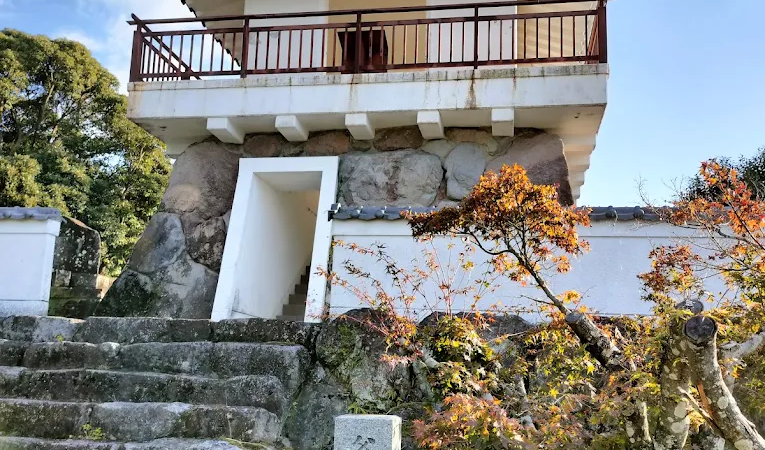
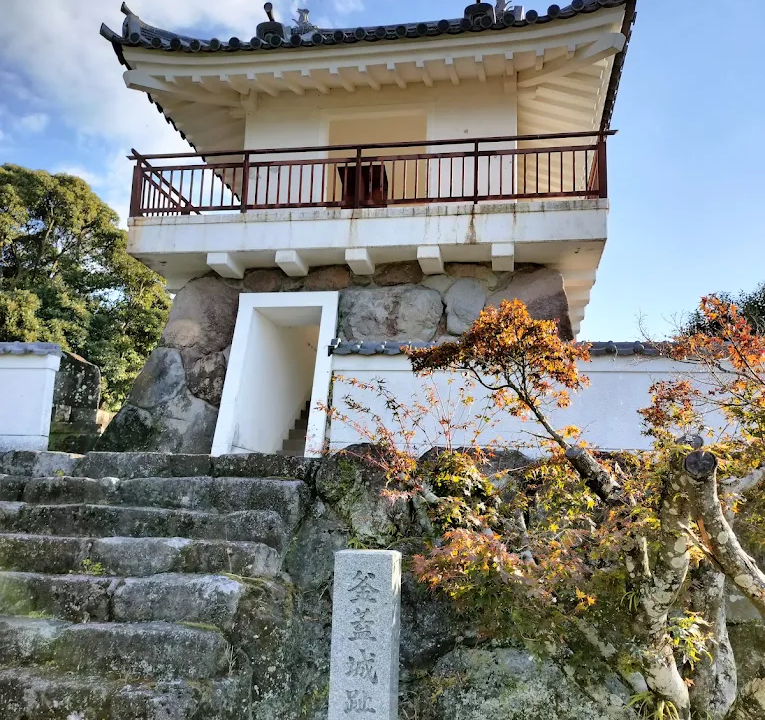
The layout of Kamabuta Castle consists of multiple enclosures (kuruwa) arranged around the main enclosure at the mountaintop. The main enclosure is the central part of the castle and is thought to have housed the lord’s residence and important facilities.
The remaining remains include the following:
- Earthwork Remains: Traces of defensive structures made of piled-up earth surrounding the enclosures
- Moat: Traces of dry moats dug to cut across the ridges
- Stone Walls: Partially remaining foundations of stone walls
- Flat Areas: Flat areas that were used as enclosures
These remains are valuable resources for understanding the structure of mountain castles during the Sengoku period.
View from the Observation Deck
Currently, an observation deck has been installed in the main enclosure of the Kamabuta Castle ruins, allowing visitors to enjoy a 360-degree panoramic view. On a clear day, you can see the following:
- Ariake Sea: Calm waters and passing ships
- Shimabara Peninsula: Mountains of the peninsula, including Mount Unzen
- Chijiwa Bay: A beautifully curving coastline
- Mount Unzen Fugen: A majestic mountain with a history of eruptions
- Amakusa Islands: On clear days, the distant silhouette of Amakusa Islands can be seen
The magnificence of this view is one of the major attractions of visiting Kamabuta Castle. The castle lords of the Sengoku period must have also watched over the safety of their territories while gazing at this scenery.
Highlights and Points of Interest at Kamabuta Castle
Chijiwa Miguel Memorial Monument
Next to the observation deck stands a monument commemorating the achievements of Chijiwa Miguel. This monument was erected to commemorate the achievements of Miguel Chijiwa, who visited Europe as part of the Tensho Embassy to Europe. The inscription details his life and accomplishments.
While it is believed that Miguel Chijiwa renounced Christianity after returning to Japan, research into the truth of this matter continues. This monument, commemorating an important figure in the history of cultural exchange between Japan and Europe, is a popular spot for history enthusiasts.
Walking Trails at the Castle Ruins
The Kamabuta Castle ruins have well-maintained walking trails, allowing visitors to safely explore the castle grounds. The trails are relatively gentle and ideal for history buffs and those who enjoy a light hike.
Information boards are placed along the trails, allowing visitors to learn about the castle’s history and structure as they walk. The one-way trip from the base to the summit takes approximately 20-30 minutes; a round trip should take about an hour.
Seasonal Charms
Kamabuta Castle Ruins is a spot where you can enjoy the beauty of nature in every season:
Spring (March-May): The fresh greenery is beautiful, and the mild climate makes it the perfect season for a stroll. During cherry blossom season, you can also enjoy cherry blossom viewing in the surrounding Chijiwa area.
Summer (June-August): The greenery becomes lush, and the blue of the Ariake Sea stands out. However, heat protection and hydration are essential.
Autumn (September-November): The mountains are colored with autumn leaves, and the clear air allows for excellent views of the surrounding area. The scenery at sunset is particularly beautiful.
Winter (December-February): The air is clear, allowing for distant views, and you may even be able to enjoy the snow-covered scenery of Mount Unzen. Be sure to dress warmly when visiting.
Access and Visiting Information
Access by Car
The most convenient way to access Kamabuta Castle Ruins is by car:
From Nagasaki City:
- Head south on National Route 251 towards Chijiwa Town
- Travel time: Approximately 1 hour 30 minutes
- Alternatively, take National Route 57 from Isahaya IC.
From Shimabara City:
- Head north on National Route 251 towards Chijiwa Town
- Travel time: Approximately 30 minutes
From Kumamoto:
- Take a ferry from Shimabara Port to the Shimabara Peninsula and use National Route 251
- Ferry travel time: Approximately 30 minutes
A parking lot is available at the foot of the castle ruins and is free of charge. However, parking space is limited, so early arrival is recommended on holidays and during peak tourist seasons.
Access by Public Transportation
Train and Bus:
- Take the Shimabara Railway Bus bound for Unzen or Obama from Isahaya Station.
- Get off at the Chijiwa bus stop and walk approximately 30 minutes to the castle entrance.
- Bus journey time: Approximately 1 hour
Important Notes:
- Bus service is limited, so check the timetable in advance.
- Plan your visit considering the return bus schedule.
Precautions for Visiting
When visiting Kamabuta Castle Ruins, please note the following:
- Clothing: As it is a mountain castle, comfortable walking shoes and clothing are essential. Avoid wearing sandals or heels.
- Items to Bring: Prepare drinking water, a towel, insect repellent (in summer), a hat, etc.
- Weather: The ground can become slippery in rainy weather, so avoid visiting or exercise extreme caution.
- Time: Since it gets dark after sunset, we recommend visiting during daylight hours.
- Manners: Please be mindful that this is a historical site and refrain from damaging the remains or littering.
Nearby Tourist Attractions
Tachibana Shrine
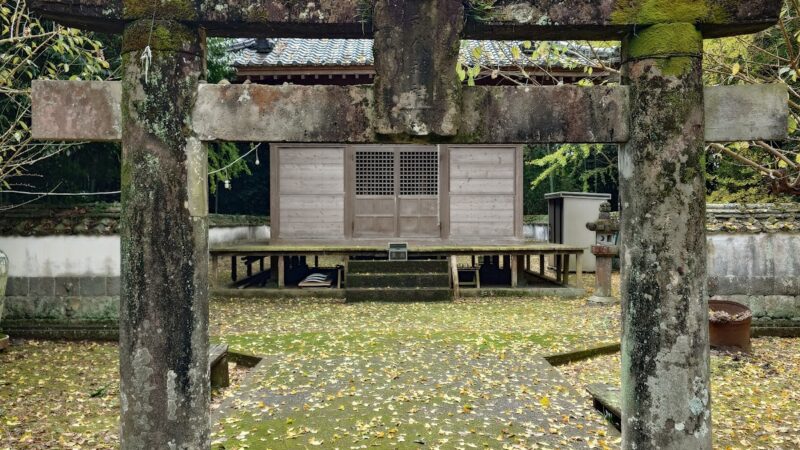
Located about a 5-minute drive from the Kamabuta Castle Ruins, Tachibana Shrine is a representative shrine of the Chijiwa area. It has a deep connection to Chijiwa Miguel and is an important spot for understanding the region’s history. Its beautiful grounds and seasonal festivals are its main attractions.
Chijiwa Observatory
From the Chijiwa Observatory along National Route 251, you can enjoy spectacular views of the Ariake Sea and the Shimabara Peninsula. It is particularly known for the beauty of its sunsets and has been selected as one of “Japan’s Top 100 Sunsets.” The observatory also has souvenir shops and restaurants where you can enjoy the local specialty, “Jagachan” (potato tempura).
Unzen Onsen
Located about 30 minutes by car from the Kamabuta Castle ruins, Unzen Onsen is one of Japan’s leading hot spring resorts. Enjoy strolling through the sulfurous “Unzen Jigoku” (Unzen Hell) and relaxing in historic hot spring inns. A day trip combining a castle ruins visit and a hot spring bath is also recommended.
Shimabara Castle
Shimabara Castle, essential to understanding the history of the Shimabara Peninsula, is located about 40 minutes by car from the Kamabuta Castle ruins. Built in the early Edo period, the reconstructed keep is now open to the public as a museum. Comparing it to Kamabuta Castle in terms of the differences in era would be interesting.
Historical Background of Kamabuta Castle and the Shimabara Peninsula
The Arima Clan and the Rule of the Shimabara Peninsula
To understand the history of Kamabuta Castle, it is important to know the history of the Arima clan, who ruled the Shimabara Peninsula. The Arima clan was a powerful family that ruled the Shimabara Peninsula from the Kamakura period to the Sengoku period, and the Chijiwa clan were their influential vassals.
Towards the end of the Sengoku period, the Arima clan embraced Christianity, and Christian culture flourished within their territory. During this time, the Tenshō Embassy to Europe, led by Chijiwa Miguel, was dispatched, realizing cultural exchange between Japan and Europe.
Conflict with the Ryūzōji Clan
In the latter half of the 16th century, Ryūzōji Takanobu rapidly expanded his power in Hizen Province. Based in Saga, Takanobu, feared as the “Bear of Hizen,” possessed formidable military strength.
The conflict between the Arima and Ryūzōji clans intensified, leading to the Battle of Kamabuta Castle in 1569. This battle marked a crucial turning point in the struggle for control of the Shimabara Peninsula. Although Kamabuta Castle fell after Chijiwa Naokazu’s suicide, the Arima clan ultimately succeeded in maintaining control of the Shimabara Peninsula.
Christian Culture and the Ban on Christianity
The influence of Christian culture cannot be ignored when discussing the history of Kamabuta Castle. The Chijiwa clan’s acceptance of Christianity led to the construction of churches in the region and the baptism of many villagers.
However, with the arrival of the Edo period, the shogunate’s ban on Christianity led to the persecution of Christians. Chijiwa Miguel himself is said to have renounced his faith, and the Christian culture of the Shimabara Peninsula was forced underground. This history would later lead to the Shimabara Rebellion.
Preservation and Utilization of Kamabuta Castle
Protection as a Designated Historic Site of Unzen City
Kamabuta Castle ruins are recognized for their historical value and are protected as a designated historic site of Unzen City. Regular surveys and maintenance are carried out by local governments and the board of education, and efforts continue to ensure that these valuable remains are passed on to future generations.
In recent years, efforts have been made to create an environment where visitors can safely learn about history, including the installation of information boards and the development of walking paths. Furthermore, research activities by local historical research groups are active, accumulating new discoveries and knowledge.
Regional Development and Tourism Resources
Kamabuta Castle Ruins are positioned as an important tourism resource in Unzen City. The connection to the internationally renowned figure, Miguel Chijiwa, is being utilized to attract tourists from overseas.
The region is considering developing historical sightseeing routes that include Kamabuta Castle Ruins, as well as conducting guided tours. Efforts to promote regional development utilizing historical heritage are expected to further develop in the future.
Use in Educational Activities
Kamabuta Castle Ruins are also an important teaching material in local school education. Field trips to the castle ruins are conducted as part of local history and regional studies in elementary and junior high schools, providing children with an opportunity to experience local history firsthand.
Furthermore, it is recognized by history enthusiasts and castle researchers as a valuable field for learning about the structure of mountain castles from the Sengoku period.
Significance of Visiting Kamabuta Castle
Kamabuta Castle Ruins are a place of value that goes beyond mere historical sites. Here, the spirit of the people who lived during the Sengoku period, the footsteps of Chijiwa Miguel, a pioneer of international exchange, and the complex history of the Shimabara Peninsula are etched.
The view of the Ariake Sea from the 154-meter-high mountaintop is likely almost identical to the scenery seen by the castle lords of that time. The greatest appeal of visiting Kamabuta Castle ruins is the opportunity to enjoy this view while reflecting on history from over 400 years ago.
When visiting Unzen City, Nagasaki Prefecture, be sure to visit Kamabuta Castle ruins. This place, where the weight of history and the beauty of nature merge, is sure to bring deep emotion and new discoveries to visitors. Experiencing the atmosphere of a Sengoku-era mountain castle while learning about the story of the Chijiwa clan and Chijiwa Miguel will surely be an unforgettable memory.
Summary
Kamabuta Castle is a mountain castle located at an altitude of 154 meters in Chijiwa-cho, Unzen City, Nagasaki Prefecture. It is a historically important castle site that served as a base for the Chijiwa clan at the end of the Sengoku period. The castle was ruled by Chijiwa Naokazu, the father of Chijiwa Miguel, one of the Tensho Embassy to Europe, and fell in 1569 during a battle with Ryuzoji Takanobu.
Currently, it is preserved as a designated historical site of Unzen City, and from the observation deck, you can enjoy spectacular views of the Ariake Sea, the Shimabara Peninsula, and Mount Unzen. Remains such as earthworks and moats also exist, making it a valuable place to learn about the structure of a mountain castle from the Sengoku period.
Access is convenient by car, approximately 1 hour and 30 minutes from Nagasaki City and 30 minutes from Shimabara City. Nearby attractions include Tachibana Shrine, Chijiwa Observation Deck, and Unzen Onsen, allowing for a fulfilling itinerary combining historical exploration and sightseeing.
This spot is recommended not only for history buffs but also for those who want to enjoy beautiful scenery and light hiking. Please visit the Kamabuta Castle ruins for a valuable opportunity to experience the history and culture of the Shimabara Peninsula.
-680x450.png)