Sajikihara Castle (Tsushima City, Nagasaki Prefecture) Complete Guide | History, Highlights, and Access Information
What is Sajikihara Castle?
Sajikihara Castle is a Japanese castle ruin located in Sajikihara, Izuhara-cho, Tsushima City, Nagasaki Prefecture. Also known as Sajikibaru Yakata, it was built during the Edo period as the new capital city of the Tsushima-Fuchu Domain. Currently, most of the castle ruins are used as the Japan Ground Self-Defense Force Tsushima Garrison, and public access is restricted. However, valuable remains still exist in the surrounding area.
Tsushima has historically been an important base connecting Japan and the Korean Peninsula. Sajikihara Castle, built in Izuhara (formerly known as Tsushima-Fuchu), the central hub of Tsushima, played a crucial role as the political and diplomatic center of the Tsushima Domain. After Tsushima-Fuchu was renamed Izuhara in 1869 (Meiji 2), it also came to be known as Izuhara Castle.
History of Sanbara Castle
Background and Circumstances of Construction
The construction of Sanbara Castle was planned during the time of So Yoshizane, the third lord of the Tsushima-Fuchu Domain. Kaneshi Castle, which had served as the Tsushima Domain’s residence for approximately 150 years, had several problems.
Kaneshi Castle was located near the port and was too small, making it unsuitable for receiving the Korean envoys from the Joseon Dynasty. For the Tsushima Domain at that time, diplomatic and trade relations with Korea were extremely important, supporting the domain’s economic base. A Japanese-style trading post was established in Dongnae, Busan, and active trade was taking place.
Under these circumstances, So Yoshizane decided to construct a new lord’s residence in parallel with the expansion and improvement of Kaneshi Castle. Construction began in March 1660 (Manji 3) and was completed in 1678 (Enpo 6), a massive undertaking that took a full 18 years.
The Prosperity of the Silver Mine and Large-Scale Projects
The era of So Yoshimasa coincided with the peak of the silver mine’s prosperity in Tsushima. Against this backdrop of economic prosperity, multiple large-scale projects were simultaneously undertaken, including the construction of Sanbara Castle, the development of the castle town, the relocation of the Japanese residence from Busan, and the construction of the Ofunakoshi moat, which connected the east and west sides of Tsushima by waterway.
These projects were strategic investments aimed at demonstrating the prestige of the Tsushima domain, facilitating diplomatic relations with Korea, and maximizing profits from trade. Sanbara Castle, as its central facility, became an important base combining the functions of the domain’s administrative offices and the residence of the lord.
Function as a Prefectural Castle
After its completion in 1678 (Enpo 6), Sanbara Castle replaced Kaneshi Castle as the new prefectural castle of the Tsushima domain. Domain administration was conducted here, and important diplomatic events, including those involving the Korean diplomatic missions, were held here. Its vast grounds and well-developed facilities were sufficient to demonstrate the authority of the Tsushima domain.
Sanbara Castle continued to function as the central hub of the Tsushima Domain throughout the Edo period. After the Meiji Restoration, in 1869 (Meiji 2), Tsushima Fuchu was renamed Izuhara, and the castle also came to be called Izuhara Castle. However, it was soon abandoned.
Changes After the Meiji Era
With the arrival of the Meiji era, like castles throughout Japan, Sanbara Castle was swept away by the changing times. In 1891 (Meiji 24), the castle’s structure was dismantled, and its function as a castle was completely lost. Afterward, the castle site was used for various purposes, but with the establishment of the Japan Ground Self-Defense Force Tsushima Garrison during the Showa period, it has been used as a defensive facility to this day.
Structure and Characteristics of Sanbara Castle
Location and Layout
Sanbara Castle was built on a small hill in the northern part of Izuhara. This location was strategically advantageous, maintaining a suitable distance from the port while overlooking the castle town. The larger grounds compared to Kaneshi Castle allowed the castle to fully function as both a residence for the feudal lord and a government office.
The castle’s layout incorporated the style of flatland castles of the time, consisting of multiple enclosures (kuruwa) demarcated by stone walls. It is believed that the feudal lord’s residence (yakata) was located in the center, surrounded by buildings housing government functions.
Stone Walls and Remains
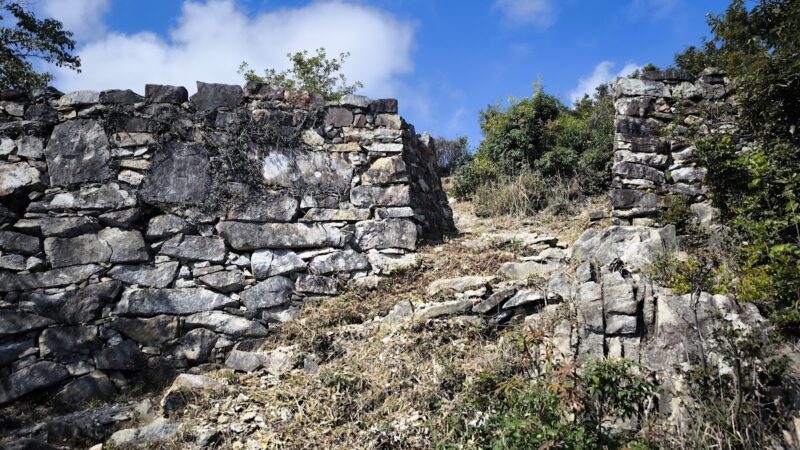
Even today, the Sanbara Castle ruins retain valuable remains that convey the atmosphere of the time. Most notably, the stone walls are well-preserved in some areas. These stone walls are important historical materials that demonstrate the castle-building techniques of the early to mid-Edo period.
The stone walls, built using stone from Tsushima, reflect the geological characteristics of the region and exhibit a unique appearance different from castles on the mainland. The stacking methods and processing techniques provide insight into the level of stonemasonry in Tsushima at that time.
Architectural Style
While detailed records of the Sanbara Yakata’s architectural style are scarce, it is presumed to have been in the style of a daimyo’s residence from the mid-Edo period. It likely had appropriately arranged spaces for receiving Korean envoys, the lord’s living quarters, and administrative offices.
Given Tsushima’s geographical characteristics, it’s possible it was influenced by Korean architectural styles, but it’s generally believed to have followed the traditions of Japanese castle architecture.
Highlights of Sanbara Castle
Existing Stone Walls
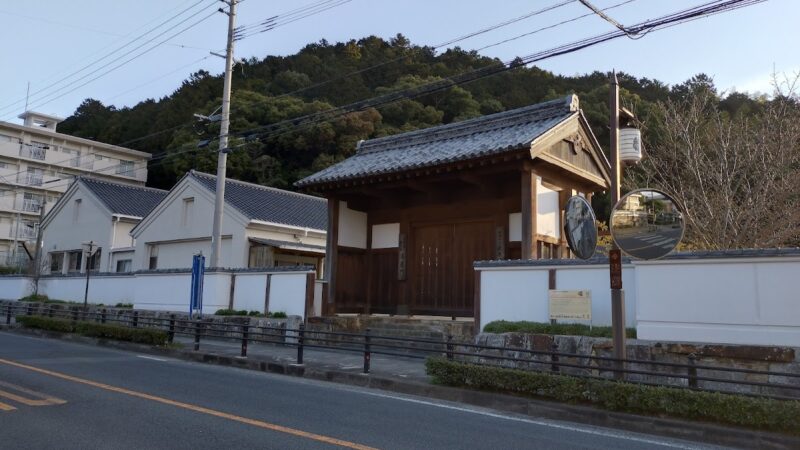
The most noteworthy remains at the Sanbara Castle site are the existing stone walls. Because they are located within the grounds of the Japan Ground Self-Defense Force Tsushima Garrison, it’s difficult to view them up close, but parts can be observed from the surrounding roads. These stone walls are valuable cultural assets that convey Edo-period castle-building techniques.
The construction methods, stone selection, and processing techniques reveal the technological level of Tsushima at the time and the extent of technological exchange with mainland Japan. The intricate construction techniques, particularly the corner blocks, demonstrate the advanced technology of the time.
Castle Gate and Wall Remains
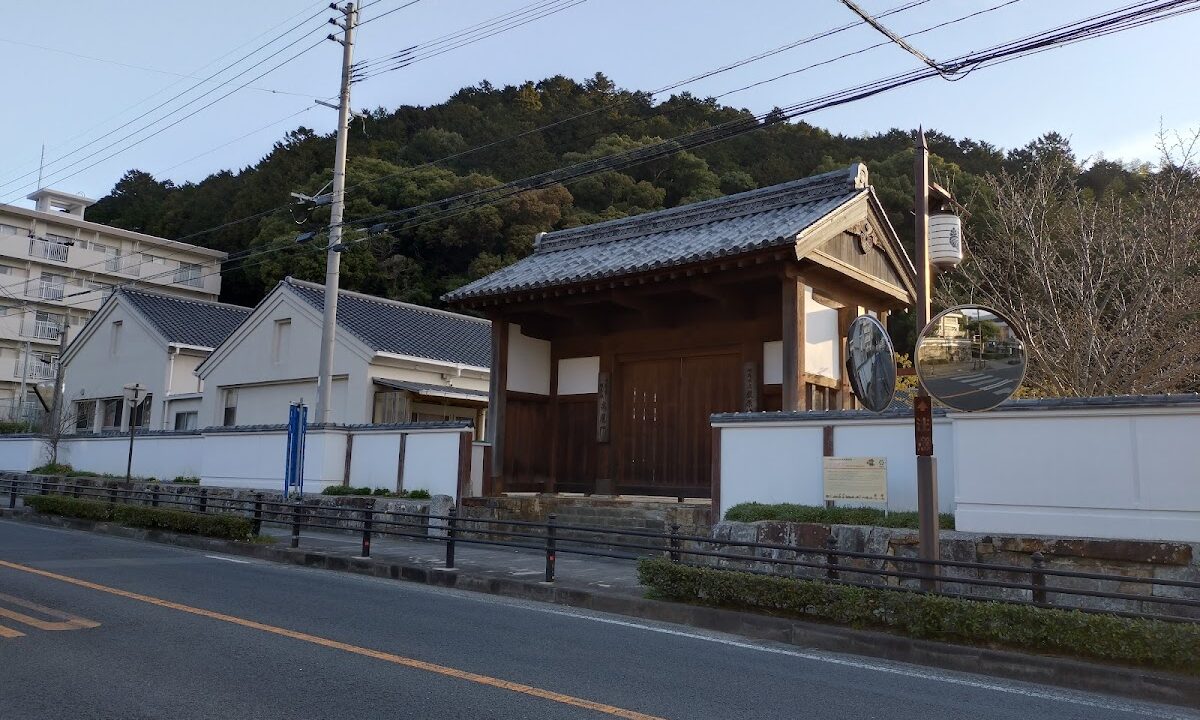
The remains of the castle gate and parts of the castle walls are still present, providing clues to the scale of the former castle. These remains indicate that Sanbara Castle was not merely a residence, but a full-fledged castle with defensive capabilities.
Surrounding Historical Landscape
The area around the Sanbara Castle ruins retains a landscape that evokes the Edo period castle town. The townscape of Izuhara preserves the layout from when it was developed as a castle town of the Tsushima Domain, allowing us to trace the urban planning centered around Sanbara Castle.
Relationship with Kaneshi Castle
History of Kaneshi Castle
Understanding Sanbara Castle requires understanding its predecessor, Kaneshi Castle. Kaneshi Castle served as the residence of the Tsushima So family for approximately 150 years and was the center of politics and diplomacy for the Tsushima Domain. Currently, the Kaneshi Castle ruins are maintained as a sports park, with the castle walls, gate remains, and garden ponds still remaining. Kaneshi Castle is designated a national historical site and is an important historical site for understanding the history of Tsushima. The castle’s residence existed until its dismantling in 1891 (Meiji 24).
Division of Roles of the Two Castles
Even after the completion of Sanbara Castle, Kaneshi Castle was not completely abandoned. The two castles played different roles depending on the period, supporting the Tsushima Domain’s governing system. Kaneshi Castle likely maintained its function as a hub for maritime traffic, taking advantage of its location near the port.
On the other hand, Sanbara Castle specialized in serving as the domain’s administrative center and the lord’s residence, becoming a venue for more formal diplomatic events and important government affairs. This two-castle system reflects the unique geopolitical position and diplomatic role of the Tsushima Domain.
Tsushima Domain and Korean Diplomacy
The Unique Position of the Tsushima Domain
Throughout the Edo period, the Tsushima Domain played an extremely important role as a window for diplomacy and trade between Japan and the Korean dynasty. The Tsushima Domain was entrusted by the shogunate with all negotiations with Korea, and this diplomatic income was a major pillar of the domain’s finances.
Sanbara Castle symbolized this unique position of the Tsushima Domain. It possessed ample space and formality to receive Korean envoys, demonstrating the domain’s prestige and functioning as a stage for maintaining smooth diplomatic relations.
Cooperation with the Busan Waegwan
The Tsushima Domain established a Waegwan (Japanese trading post) in Busan, Korea, and dispatched permanent officials. The Busan Waegwan was the frontline base for Japan-Korea trade, and Sanbara Castle functioned as a rear support base. Through the cooperation of these two bases, the Tsushima Domain was able to maintain stable trade relations with Korea.
During the time of So Yoshimasa, efforts were made to strengthen the trade system, including relocating the Waegwan to Dongnae. The proactive foreign policy of this period and the construction of Sanbara Castle were closely related.
Current Status of Sanbara Castle Ruins
Japan Ground Self-Defense Force Tsushima Garrison
Currently, the main part of the Sanbara Castle ruins is used as the Japan Ground Self-Defense Force Tsushima Garrison. Therefore, access to the central part of the castle ruins is restricted, making public visits difficult. However, it is possible to view the garrison and some of the remains from the surrounding roads.
The use of the site as a defensive facility can be said to have, in a sense, carried on the characteristics of Sanbara Castle as a defensive stronghold into the modern era. Tsushima’s geopolitical importance remains unchanged even today, and it continues to function as a base protecting the border island.
Preservation Status and Challenges
While some of the remains are protected due to their use as a Japan Ground Self-Defense Force facility, this also presents challenges in detailed investigation and public access. Appropriate preservation and management are required for remains such as stone walls.
Tsushima City and cultural property protection organizations are working to widely communicate the historical value of the Sanbara Castle ruins. In the future, it is hoped that an environment will be developed where more people can learn about Tsushima’s history.
History and Culture of Izuhara
Development as a Castle Town
Izuhara (formerly known as Tsushima-Fuchu) is a castle town that developed around Sanbara Castle. During the Edo period, it flourished as the political, economic, and cultural center of the Tsushima Domain. Even today, historical streetscapes and temples remain, allowing visitors to experience the atmosphere of the past.
The castle town’s layout was based on a planned urban design with Sanbara Castle at its apex, with samurai residences, merchant districts, and temple districts appropriately arranged. This basic urban structure is still reflected in the current streetscape of Izuhara.
Cultural Heritage of Tsushima
Besides the ruins of Sanbara Castle, many other historical sites remain around Izuhara. Important cultural properties that tell the history of Tsushima are scattered throughout the area, including the ruins of Kaneshi Castle, Banshoin Temple (the family temple of the So clan), and Hachimangu Shrine.
These legacies demonstrate that Tsushima is not merely a border island, but a historical region that has cultivated its own unique culture. Sanbara Castle, as a central element of its cultural landscape, is an indispensable element in telling the history of Tsushima.
Visitor Guide
Access
From Fukuoka to Tsushima
- Airplane: Approximately 30 minutes from Fukuoka Airport to Tsushima Airport (ANA, Oriental Air Bridge)
- Ferry: Approximately 4 hours 30 minutes to 6 hours from Hakata Port to Izuhara Port (Kyushu Yusen)
- Jetfoil: Approximately 2 hours 15 minutes from Hakata Port to Izuhara Port (High-speed ferry)
From Nagasaki to Tsushima
- Airplane: Approximately 35 minutes from Nagasaki Airport to Tsushima Airport
From Izuhara Port/Tsushima Airport to Sanbara Castle Ruins
- From Izuhara Port: Approximately 20 minutes on foot, approximately 5 minutes by taxi
- From Tsushima Airport: Approximately 20 minutes by car
- Rental cars and bicycles are also convenient.
Notes for Visitors
The main part of the Sanbara Castle Ruins is located within the Japan Ground Self-Defense Force Tsushima Garrison, therefore entry into the grounds is prohibited. Visitors will be able to view the exterior from the surrounding roads. Regarding photography, please be mindful of the fact that it is a defense facility and take it with restraint.
Please note the following points when visiting:
- Do not enter the base grounds
- Be considerate when photographing defense facilities
- View quietly so as not to disturb local residents
- Please take all your trash with you.
Nearby Tourist Spots
When visiting the Sanbara Castle Ruins, we recommend also visiting the surrounding historical sites.
Kanaishi Castle Ruins
This castle was the predecessor of Sanbara Castle and is now a sports park. It is designated as a national historical site, and remnants such as the castle walls and garden pond remain. Approximately 15 minutes on foot from the Sanbara Castle Ruins.
Banshoin Temple
This is the family temple of the Tsushima So clan and contains the tombs of successive feudal lords. It boasts many points of interest, including the stone steps known as Hyakugangi and the three ritual implements gifted by the King of Korea.
Tsushima Museum
Opened in 2022, this new museum offers a comprehensive look at Tsushima’s history and culture. It also features exhibits on Sanbara Castle and the Tsushima Domain.
Izuhara Samurai Residence Street
This street retains the atmosphere of Edo-period samurai residences, allowing visitors to enjoy a historical townscape.
Accommodation and Cuisine
Izuhara has several hotels and inns, making it a convenient base for Tsushima sightseeing. You can enjoy fresh seafood from Tsushima, as well as local cuisine such as Tsushima soba and Rokubee (sweet potato noodles).
Tsushima is also known for its stone-grilled dishes and conger eel dishes, and dishes using local ingredients are popular with visitors. Tsushima’s local sake is also worth trying.
Estimated Sightseeing Time
While a visit to the Sanbara Castle ruins itself takes about 30 minutes, if you plan to visit surrounding historical sites, allow half a day to a full day. For sightseeing throughout Tsushima, a 2-3 day stay is recommended.
The History of Tsushima and the Significance of Sanbara Castle
A History of Exchange from Ancient Times
Tsushima has been an important transit point connecting Japan, the Korean Peninsula, and the Chinese mainland since ancient times. It is mentioned in the “Records of Wei: Account of the Wa People,” and has been a stage for international exchange since the time of Yamatai-koku.
In the Middle Ages, it was the front line during the Mongol invasions, and in the early modern period, it functioned as a window for diplomacy and trade with Korea. Sanbara Castle was an important facility built as a diplomatic base during the Edo period, within this long history of international exchange in Tsushima.
The Role of a Border Island
Tsushima is located at the westernmost point of Japan, and on a clear day, it is a border island from which Busan, South Korea, can be seen. This geographical characteristic has characterized Tsushima’s history.
Sanbara Castle, as a governing center for this border island and a stage for diplomacy, was a symbolic presence demonstrating the prestige of the Tsushima Domain. The enormous expense and labor invested in the construction of the castle speaks to how important Korean diplomacy was to the Tsushima Domain.
The Role of a Border Island
Tsushima is located at the westernmost point of Japan, and on a clear day, it is a border island from which Busan, South Korea, can be seen. This geographical characteristic has characterized Tsushima’s history.
Sanbara Castle, as a governing center for this border island and a stage for diplomacy, was a symbolic presence demonstrating the prestige of the Tsushima Domain. The construction of the castle required enormous expense and labor, which speaks to how important Korean diplomacy was to the Tsushima Domain.
Historical Significance in the Modern Era
Even today, the Sanbara Castle ruins remain an important heritage site for understanding the history of Tsushima. It is a historical site with research value from diverse perspectives, including the history of exchange between Japan and the Korean Peninsula, the diplomatic history of the Edo period, and the history of castle architecture.
Furthermore, it plays an important role in shaping the region’s identity. For the people of Tsushima, Sanbara Castle is a proud historical heritage built by their ancestors and symbolizes the region’s historical individuality.
Future Preservation and Utilization
Value as a Cultural Property
The Sanbara Castle ruins are a valuable cultural property that conveys the history of Tsushima, and appropriate preservation and utilization are required. Currently, it is used as a facility of the Japan Ground Self-Defense Force, making public access difficult, but some form of public access or utilization is expected in the future.
Regular surveys and preservation treatment are necessary for the remains such as the stone walls. Furthermore, detailed surveys and archaeological excavations are important to clarify the overall picture of the castle.
Potential as a Tourism Resource
Tsushima City is promoting initiatives to utilize historical heritage, including the Sanbara Castle ruins, as a tourism resource. Improvements are underway to create an environment where visitors can learn about Tsushima’s history, including exhibits at the Tsushima Museum, the installation of information boards, and the implementation of guided tours.
While access to the Sanbara Castle ruins themselves is restricted, developing historical sightseeing routes that combine the surrounding historical landscape with sites such as the Kaneshi Castle ruins can effectively showcase the charm of Tsushima.
Utilization in Local Education
The history of Sanbara Castle serves as important teaching material for local children learning about their hometown history. Learning about Sanbara Castle in school education and lifelong learning settings fosters a sense of attachment to the region and raises awareness of cultural property preservation.
Tsushima City is developing educational programs that utilize local historical heritage, and Sanbara Castle is positioned as an important element in these programs.
Summary
Sanbara Castle is an Edo period castle site located in Izuhara-cho, Tsushima City, Nagasaki Prefecture. It was built between 1660 and 1678 by So Yoshimasa, the third lord of the Tsushima-Fuchu Domain. Also known as Sanbara Yakata, this castle served as a new administrative center replacing Kaneshi Castle, and was an important facility that combined the functions of the Tsushima Domain’s government offices with the residence of the lord.
It possessed the formality and scale necessary to receive Korean envoys and played a crucial role as a stage for Japan-Korea diplomacy. Currently, it is used as the Tsushima Garrison of the Japan Ground Self-Defense Force, and public access is restricted, but valuable remains such as stone walls remain in the surrounding area.
Sanbara Castle, indispensable to understanding Tsushima’s history, continues to hold significant historical value today as a diplomatic base on a border island and as an example of Edo period castle architecture. When visiting Tsushima, why not take some time to reflect on this historic castle site?
-680x450.png)