Complete Guide to Isahaya Castle (Takajo) | A Thorough Explanation of its History and Highlights in Isahaya City, Nagasaki Prefecture
Isahaya Castle, located in Takajo-cho, Isahaya City, Nagasaki Prefecture, is a flatland castle that functioned as an important base in Hizen Province from the Sengoku period to the Edo period. Also known as Takajo, Kijo, and Isahaya Castle, it is now a popular Isahaya Park. This article comprehensively explains everything you need to know before visiting Isahaya Castle, including its history, castle structure, existing remains, and access methods.
Basic Information on Isahaya Castle
Isahaya Castle is a flatland castle built on an isolated hill approximately 50m above sea level and 40m above ground level. It was a strong fortress that skillfully utilized the natural terrain.
Location: Takajo-cho, Isahaya City, Nagasaki Prefecture
Other Names: Takajo, Kamejo, Isahaya Castle, Takajo Castle
Castle Structure: Hilltop Castle
Year of Construction: Sengoku period (late 15th to early 16th century)
Builder: Saigo Naoyoshi
Main Lords: Saigo clan, Ryuzoji clan, Isahaya clan
Year of Abandonment: Early Meiji period
Current Status: Isahaya Park (One of Japan’s 100 Best Historical Parks)
History of Isahaya Castle
Construction and Rule by the Saigo Clan
The history of Isahaya Castle begins with Saigo Naoyoshi, who unified the Isahaya region during the Sengoku period. The Saigo clan expanded their power as local lords in Hizen Province and brought the Isahaya region under their control.
Naoyoshi focused on this hilly area with its natural bedrock and built a castle with superior defenses. The castle, called “Takajo” (High Castle), utilized the Honmyo River as a natural moat on the north side and the cliffs on the south side, making the most of its advantageous topography.
The Saigo clan ruled Isahaya for several generations, but a major turning point occurred during the time of Saigo Sumitaka.
Toyotomi Hideyoshi’s Kyushu Campaign and Territory Confiscation
In 1587 (Tensho 15), Toyotomi Hideyoshi launched his Kyushu campaign. At this time, Saigo Sumitaka disobeyed Hideyoshi’s orders and received the harsh punishment of having his territory confiscated.
Hideyoshi granted the Isahaya area to Ryuzoji Ieharu, a member of the Ryuzoji clan, a powerful daimyo family in Hizen Province. As a result, Isahaya Castle came under the control of the Ryuzoji clan.
The Establishment of the Isahaya Clan and Ryūzōji Iehara
Ryūzōji Iehara entered Isahaya Castle and began governing the area. Iehara’s son, Ryūzōji Naotaka, changed his name to “Isahaya Clan,” taking the place name from Isahaya. This marked the beginning of the Isahaya Clan.
The Isahaya Clan continued to rule the area as the lords of the Isahaya Domain throughout the Edo period. With a rice yield of around 30,000 koku, they survived as an outside daimyo until the end of the Edo period. The Isahaya Clan dedicated themselves to the development of the castle and the castle town, and Isahaya prospered as an important key city in Hizen Province.
Isahaya Castle in the Edo Period
During the Edo period, Isahaya Castle underwent renovations to adapt to the peaceful times. Emphasis was placed on its function as a government office rather than its military function, and the development of the castle town progressed.
The Isahaya clan, for generations, focused on developing their territory and implementing flood control projects, with flood control of the Honmyo River being a particularly important issue. Samurai residences were located around the castle, and a merchant town also developed, making Isahaya a thriving castle town, one of the leading in Hizen Province.
Meiji Restoration and Abolition of the Castle
After the Meiji Restoration, the Isahaya Domain was abolished due to the establishment of prefectures and the abolition of the feudal domains, and Isahaya Castle was also abandoned. Many of the castle’s structures were demolished, and the site was developed into a park.
In 1959 (Showa 34), it officially opened as Isahaya Park and became a popular recreational area for citizens. In 2006 (Heisei 18), it was selected as one of “Japan’s 100 Best Historical Parks,” recognizing its historical value.
Layout and Structure of Isahaya Castle
Defensive System Utilizing the Terrain
Isahaya Castle is a flatland castle that skillfully utilizes the terrain of an isolated hill. The Honmyo River flows to the north of the castle, functioning as a natural moat. The south side is a steep cliff, making it an extremely difficult terrain for attackers.
The castle was protected by double and triple moats, and as its name “Takajo” (High Castle) suggests, the main keep was located on high ground overlooking the surrounding area. Its alternative name, “Kamejo” (Turtle Castle), is said to originate from the castle’s shape resembling a turtle’s shell.
Arrangement of Major Enclosures
Isahaya Castle consisted of multiple enclosures (kuruwa).
Honmaru: The central part of the castle, located at the highest point. It remains as a plaza today, and a large camphor tree, estimated to be 600 to 800 years old, stands there. This camphor tree is a living witness that has watched over the castle’s history.
Higashi-no-maru: Located on the east side of the main keep, it is now a beautiful garden planted with azaleas. Magnificent flowers bloom in the spring.
Sakura-baba: This enclosure was located in the southeastern part of the castle, near the Meganebashi Bridge. It is believed to have been used for horse training.
These enclosures were separated by dry moats and earthworks, forming a tiered defensive line.
Koguchi and Defensive Structures
The koguchi (gates) leading to the castle had complex structures to prevent enemy intrusion. Some remains of the koguchi can still be seen today, allowing us to appreciate the defensive ingenuity of the time.
Parts of the earthworks and stone walls also remain. Although some parts have been lost due to the park’s development, these are valuable remains that allow us to feel the atmosphere of the castle.
Existing Remains and Points of Interest
Main Keep Site and the Great Camphor Tree
The main keep site, located in the center of Isahaya Park, is a spacious open area. The large camphor tree standing here is estimated to be 600 to 800 years old, and it is possible that it took root in this area even before the construction of Isahaya Castle.
This giant tree is designated as a natural monument of Nagasaki Prefecture, and its trunk circumference reaches approximately 10 meters. Standing beneath this camphor tree, which has quietly watched over the history of the castle, one can feel the weight of history that transcends time.
Remains of the Dry Moat
Within the park, a portion of the original dry moat remains in good condition. The dry moat around the main keep, in particular, is deep and is an important remains for understanding the castle’s defensive system.
The dry moat not only physically prevented enemy intrusion but also served to obstruct visibility and create blind spots for attacks. Seeing it in person allows one to appreciate the high level of defensive technology of medieval castles.
Earthworks and Stone Walls
While many earthworks were leveled when the area was converted into a park, some areas still show traces of the original earthworks. Parts of the stone walls also remain, allowing visitors to see the stonework techniques of the time.
Earthworks and Stone Walls The stone walls of Isahaya Castle are built using an old technique called “nozurazumi,” which utilizes natural stones in their original state, resulting in a simple and beautiful appearance.
Meganebashi Bridge and Sakurababa
Meganebashi Bridge spans the southeastern part of the castle grounds, and Sakurabababa (Cherry Blossom Horse Riding Ground) was located nearby. Meganebashi Bridge is a stone bridge built during the Edo period and is designated as an Important Cultural Property.
Named for its double arches, which resemble spectacles when reflected in the water, this bridge is one of Isahaya’s representative historical structures. It is a valuable legacy that conveys the atmosphere of the castle town to the present day.
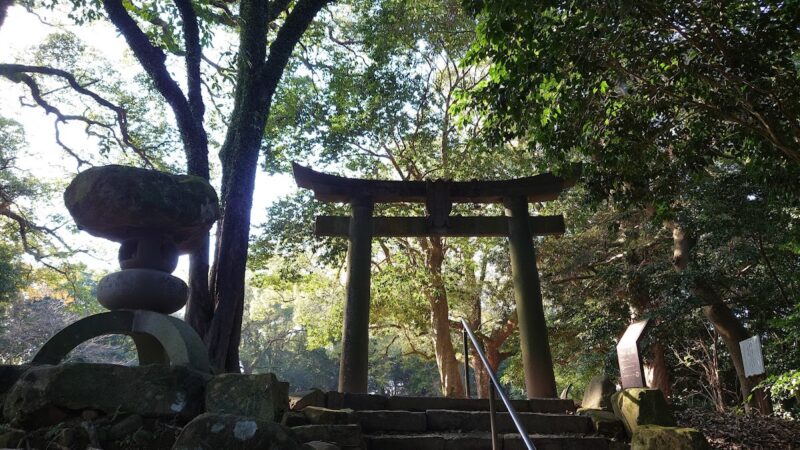
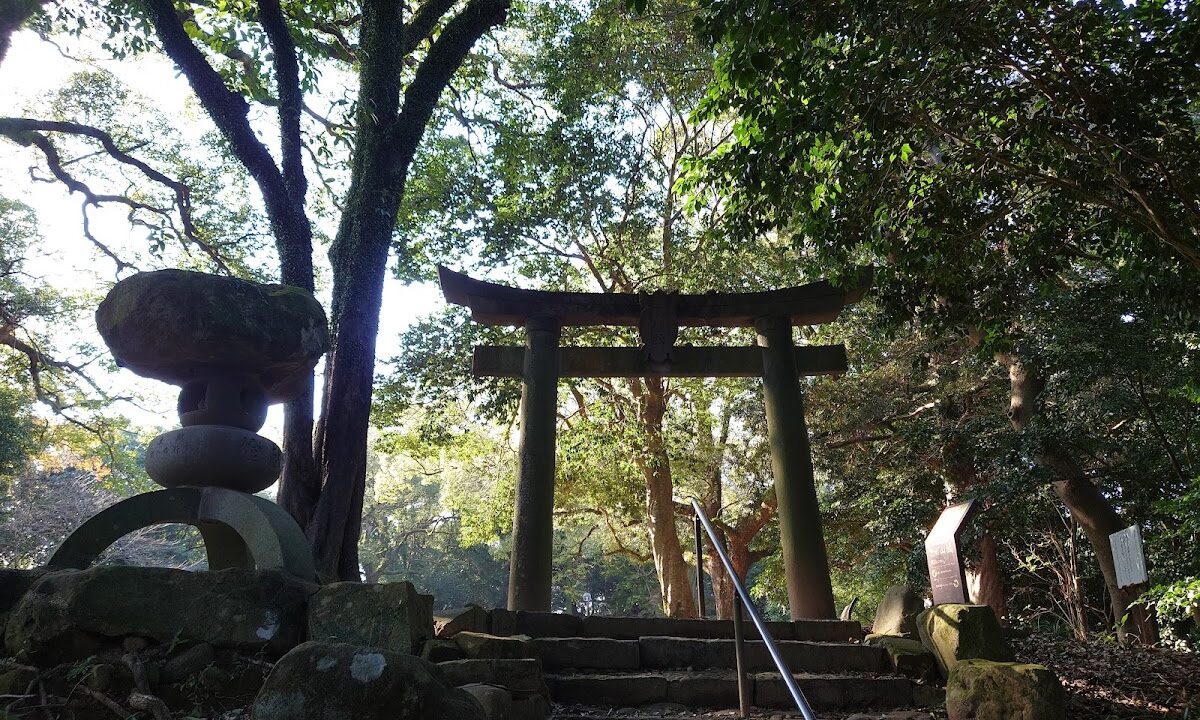
Takagi Shrine
Takagi Shrine is located at the foot of the mountain east of the castle. This shrine has deep ties to Isahaya Castle and has been revered as the castle’s guardian deity. From the shrine grounds, you can look up at the castle mountain, making it a place worth visiting to understand the castle’s location.
The Charms of Isahaya Park
Natural Beauty Through the Seasons
Isahaya Park is not only selected as one of “Japan’s 100 Best Historical Parks,” but it is also a place of relaxation for citizens where they can enjoy the beauty of nature throughout the seasons.
Spring: Known as a famous cherry blossom viewing spot, approximately 350 cherry trees bloom in profusion. The cherry trees planted around the main keep and along the park paths are magnificent, attracting many visitors. The azaleas in the East Bailey also bloom beautifully.
Summer: The park, enveloped in deep greenery, becomes a popular walking course for citizens seeking respite from the heat. The shade of the large camphor tree is especially cool and ideal for a rest.
Autumn: The autumn foliage is beautiful, and the changing colors of the maple and ginkgo trees are particularly impressive.
Winter: Once the deciduous trees shed their leaves, the castle’s topography and remains become more clearly visible.
Observation Spot
From the site of the main keep, you can enjoy a panoramic view of Isahaya city. The Honmyo River flows below, and on some days, you can even see the Ariake Sea in the distance. This view is surely one that the castle lords enjoyed, and it helps you understand why the castle was called “Takajo” (High Castle).
Walking Course
The park has well-maintained walking paths, allowing you to easily enjoy a historical stroll. The path to the main keep is a gentle slope, making it easy for the elderly and children to climb.
On the other hand, if you proceed beyond the main keep, you will enter an area where the atmosphere of a mountain castle remains strongly present. Here, you can gain a deeper understanding of the castle’s structure, which utilized the natural terrain.
Access and Visiting Guide
Access by Public Transportation
From JR Nagasaki Main Line Isahaya Station:
- Approximately 15 minutes on foot
- Exit the station and head southeast, following the Honmyo River until you see Shiroyama Hill
- Look for Meganebashi Bridge as a landmark.
By Local Bus:
- Take the city loop bus from in front of Isahaya Station and get off at “Isahaya Park Entrance” bus stop.
Access by Car
From Nagasaki Expressway Isahaya IC:
- Approximately 10 minutes
- Take National Route 34 towards the city center.
Parking:
- Isahaya Park has its own parking lot (free).
- Due to limited spaces, using public transportation is recommended during peak seasons such as cherry blossom season.
Visiting Information
Opening Hours: Open 24 hours (as it is a park)
Admission Fee: Free
Estimated Time Required: The round trip to the main keep takes approximately 40 minutes; a thorough visit will take 1 to 1.5 hours.
Toilets: Several toilets are available within the grounds.
Rest Areas: Benches are placed throughout the grounds.
Notes for Visitors
- The area beyond the main keep is a mountain path, so comfortable walking shoes are recommended.
- Insect repellent is useful during the summer months.
- Caution is advised during rainy weather as the ground can be slippery.
- Signposts are placed throughout the grounds, making it easy to navigate even for first-time visitors.
Nearby Attractions
Meganebashi Bridge
Located a few minutes’ walk from the Isahaya Castle ruins, Meganebashi Bridge is designated as a National Important Cultural Property. This stone bridge, believed to have been built in 1634, is one of the oldest stone arch bridges in Japan. As a valuable structure that retains the atmosphere of the castle town, it’s a must-see spot to visit along with Isahaya Castle.
Honmyo River Riverbed
The Honmyo River riverbed, which once served as a natural moat for the castle, is now developed as a walking path. You can observe the castle’s location while walking along the river.
Isahaya City Museum of Art and History
This municipal facility, located near Isahaya Station, features exhibits on the history and culture of Isahaya. It also displays materials related to Isahaya Castle and the Isahaya clan, making a visit before or after visiting the castle ruins a valuable experience.
Historical Value of Isahaya Castle
Position in Hizen Province
Isahaya Castle was an important base in Hizen Province (present-day Saga and Nagasaki Prefectures) from the Sengoku period through the Edo period. Located at the western edge of the Ryuzoji clan’s sphere of influence, it functioned as a control center for the Ariake Sea coastal region.
Characteristics of Castle Architecture
Isahaya Castle is characterized by its layout that makes maximum use of the natural terrain. The design, which incorporates natural elements such as bedrock and rivers into the defensive system without relying on large-scale artificial civil engineering, demonstrates the pinnacle of castle-building technology during the Sengoku period.
Significance in the Modern Era
Currently, Isahaya Castle ruins are enjoyed by citizens as a park, while simultaneously being preserved as a valuable historical heritage site. Its selection as one of “Japan’s 100 Best Historical Parks” is proof of its widely recognized historical and cultural value.
In the midst of increasing urbanization, the effort to preserve and utilize castle ruins as a park is a prime example of balancing historical preservation with modern use.
Summary
Isahaya Castle (Takajo/Kamejo) in Isahaya City, Nagasaki Prefecture, is a historical castle that lasted from its construction by the Saigo clan during the Sengoku period, through the confiscation of its territory during Toyotomi Hideyoshi’s Kyushu campaign, through the rule of Ryuzoji Iehara and the Isahaya clan, until the end of the Edo period.
Currently developed as Isahaya Park, the site of the former castle, including the large camphor tree at the main keep, the dry moat, and earthworks, remains. The castle’s layout, utilizing natural bedrock and the Honmyo River, is a valuable historical legacy that conveys the castle-building techniques of the Sengoku period.
With its easy access (approximately 15 minutes on foot from JR Isahaya Station), the beauty of nature throughout the seasons, and the surrounding historical buildings such as the Meganebashi Bridge, it’s a must-see spot when visiting Nagasaki Prefecture.
Isahaya Castle Ruins offers diverse attractions for history buffs, nature lovers, and those interested in local history and culture. Learning about the castle’s history, examining the remains, and gazing upon the views seen by its former lords will undoubtedly be a precious experience, a dialogue across time.
-680x450.png)