Complete Guide to the History and Highlights of Iwami Maruyama Castle (Kawamoto-cho, Ochi-gun, Shimane Prefecture)
Iwami Maruyama Castle is a medieval mountain castle located in Mihara, Kawamoto-cho, Ochi-gun, Shimane Prefecture. Built on the summit of Mt. Maruyama at an altitude of 482 meters, this castle is known as the only castle in Iwami Province built entirely of stone walls, and was designated a Shimane Prefecture Historic Site in 2016. Constructed in 1585 by Ogasawara Nagatsugu, the head of the Iwami Ogasawara clan, this castle was an important base deeply involved in the control of the Iwami Silver Mine.
History of Iwami Maruyama Castle
Background of Construction and the Ogasawara Clan
The year 1585, when Iwami Maruyama Castle was built, was a turbulent time at the end of the Sengoku period (Warring States period). The Iwami Ogasawara clan was originally a prestigious samurai family from Shinano Province, who migrated to Iwami Province during the Sengoku period. The head of the clan, Ogasawara Nagatsune, needed a new base in this region amidst the complex political situation surrounding the control of the Iwami Silver Mine.
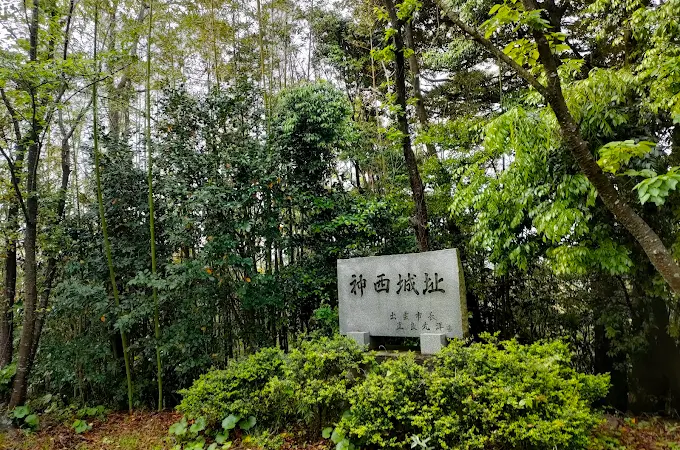
The Ogasawara clan had previously used Nukuyu Castle as their base, but built Maruyama Castle as a fortress that combined greater defensive and administrative functions. The fact that it was built entirely of stone walls, an advanced construction technique for the time, despite its high altitude of 482 meters, demonstrates the Ogasawara clan’s wealth and technical prowess.
Relationship with the Mori Clan
During the Sengoku period, Iwami Province was within the sphere of influence of the Mori clan, the dominant power in the Chugoku region. While under the Mori clan’s control, the Ogasawara clan is believed to have been entrusted with the management of the Iwami Silver Mine, an important economic center. The construction of Maruyama Castle is thought to have been carried out with the Mori clan’s approval, and is positioned as part of the Mori clan’s governing system in Iwami Province.
The Tensho era was a time when the Mori clan was exploring its relationship with Toyotomi Hideyoshi, and stable control of the Iwami Silver Mine was extremely important to the Mori clan both economically and politically. Maruyama Castle played a crucial role in this broader political situation.
The Castle’s Demise
Maruyama Castle’s period of use was relatively short, and it is believed to have been abandoned by the early Edo period. After the Battle of Sekigahara, when the Mori clan’s territory was reduced to the two provinces of Suo and Nagato, Iwami Province came under the direct control of the shogunate and the rule of hereditary daimyo. It is presumed that Maruyama Castle, as a mountain castle, ended its role in this political upheaval.
Castle Structure and Characteristics
Rare Feature: All-Stone Wall Construction
The most distinctive feature of Iwami Maruyama Castle is that it is the only castle in Iwami Province, and a rare example nationwide of a medieval mountain castle, being “all-stone wall construction.” Medieval mountain castles typically featured defensive structures primarily consisting of earthworks and moats, but Maruyama Castle employs a structure closer to that of early modern castles, with its baileys surrounded by stone walls.
The height of the stone walls varies depending on the location, but the highest points reach over 3 meters. The stone used is locally sourced andesite, constructed using the nozura-zumi technique, where natural stones are stacked as they are. These stone walls remain in excellent condition even after more than 400 years, demonstrating the high level of stonemasonry skill of the time.
Connected Bailey Layout
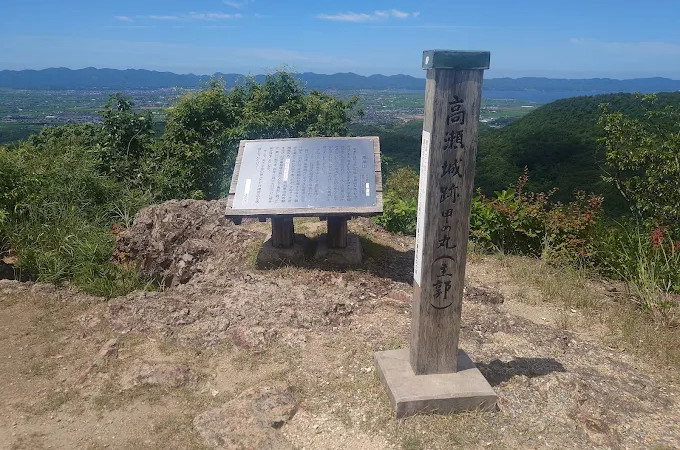
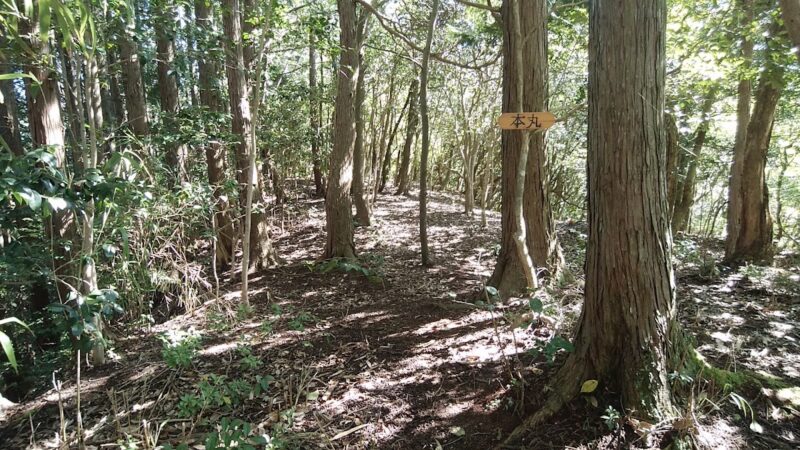
Maruyama Castle is a mountain castle with a connected bailey layout. The main bailey (honmaru) is located at the summit of Mount Maruyama, with the Nishinomaru (western bailey) to the north, connected by the Sannomaru (third bailey). The main bailey is located at the highest point on the south side, measuring approximately 40 meters east-west and 30 meters north-south.
Nishinomaru is located about 50 meters north of Honmaru and is slightly smaller than Honmaru, but is also surrounded by stone walls. San-no-kuruwa is a long, narrow enclosure connecting Honmaru and Nishinomaru, serving to ensure movement within the castle.
Furthermore, smaller enclosures are arranged on the east, south, and north sides, making the castle grounds relatively compact overall, yet possessing a robust structure with key points reinforced by stone walls.
Character as a “Mountaintop Residence”
Another characteristic of Maruyama Castle is the almost complete absence of defensive structures. While typical medieval mountain castles feature numerous defensive structures such as moats, trenches, and earthworks, these are almost entirely absent at Maruyama Castle.
From this, it is believed that Maruyama Castle had a stronger character as a lord’s residence than as a purely military base. Its imposing structure, boasting all-stone walls, is thought to have served more as a symbol of authority than as a defensive structure—a “castle to be seen,” so to speak. Due to these characteristics, Maruyama Castle is also known as the “Mountaintop Mansion” and is valued as a rare archaeological site not only within the prefecture but also nationwide.
Well and Living Facilities
The remains of a well have been confirmed within the castle grounds, indicating that water was available despite its mountaintop location. This well is located in the northeast corner of the main enclosure; its depth is unknown, but traces of stonework remain. Securing a water source was a crucial element directly related to survival in mountain castles, and the existence of this well is an important relic demonstrating the practicality of the castle.
Furthermore, the arrangement of stones believed to be building foundations has been confirmed in some areas, suggesting that buildings such as a main hall stood in the main enclosure. However, further research is needed to determine the detailed structure of the buildings.
Current Status of Maruyama Castle Ruins
Maruyama Forest Bathing Park Wanpaku no Mori
Currently, the Maruyama Castle ruins have been developed as “Maruyama Forest Bathing Park Wanpaku no Mori.” The path to the castle ruins is maintained as a park and is relatively easy to climb, but as it is a full-fledged mountain castle at an altitude of 482 meters and a relative height difference of approximately 280 meters from the base, a certain level of physical fitness and equipment is required.
The path to the castle starts from the Mihara district of Kawamoto Town, and there are guide signs along the way. Although the hiking trail is maintained, there are steep slopes and stone steps, so appropriate footwear such as trekking shoes is recommended. The climb to the castle takes about 40 minutes to an hour one way.
Preservation of the Ruins
The stone walls of Iwami Maruyama Castle remain in surprisingly good condition even after more than 400 years. In particular, the stone walls of the main keep and the western keep, although there are some collapsed sections, still retain much of their original appearance.
In recent years, preservation and maintenance projects have been carried out by Shimane Prefecture and Kawamoto Town, including the repair of dangerous areas and the installation of guide signs. Since its designation as a prefectural historical site in 2016, the protection system for cultural properties has been strengthened, and academic research has been continuously conducted.
Views and Sea of Clouds
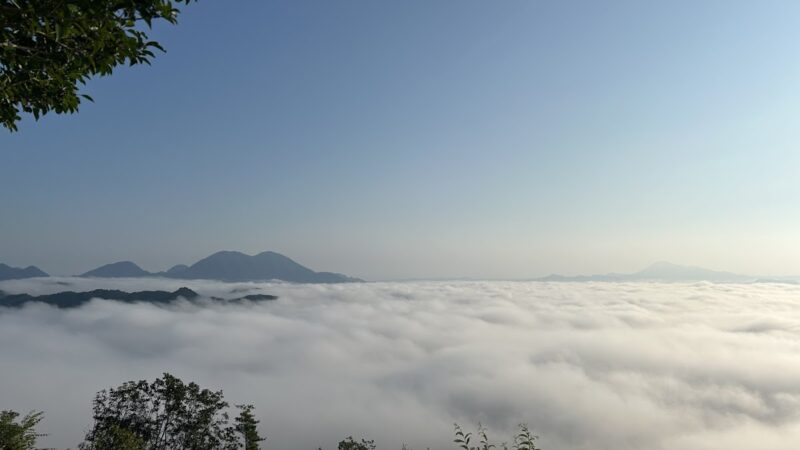
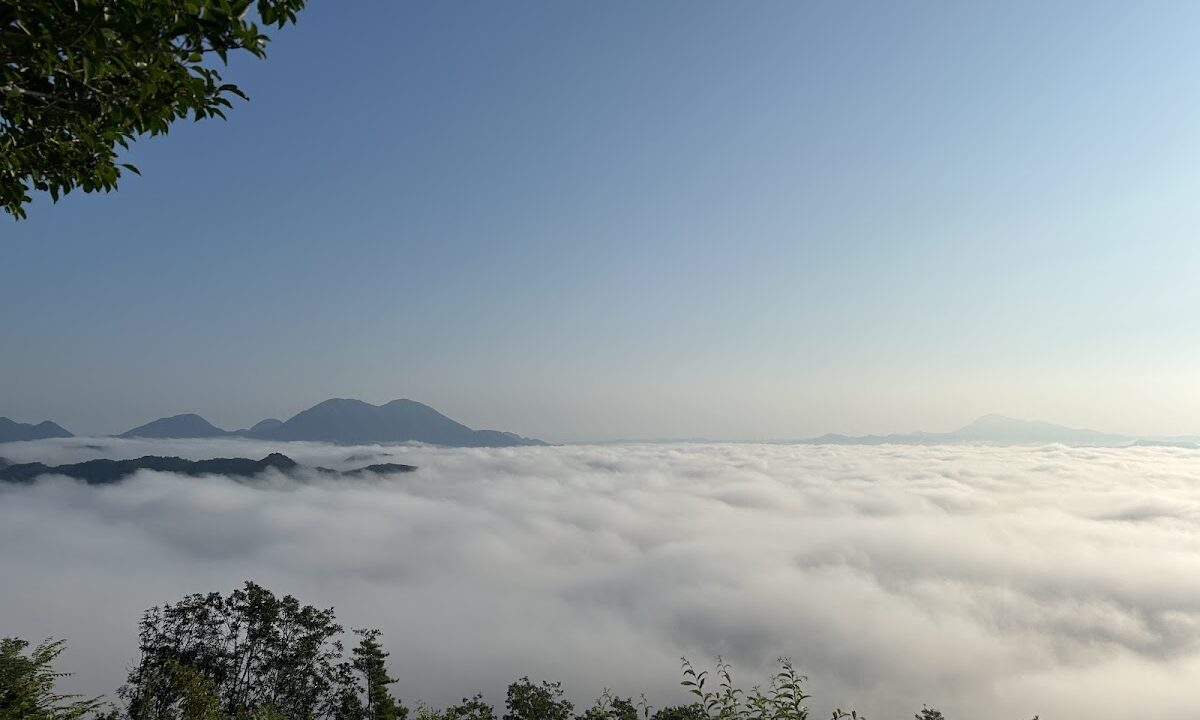
The views from Maruyama Castle ruins are magnificent, and on clear days, you can see the mountains of the Iwami region. It is especially known for the beautiful sea of clouds that spreads across the area below in the early morning. This sea of clouds is more likely to appear on clear mornings from autumn to winter, attracting many photography enthusiasts seeking this fantastical sight.
From the mountaintop, you can see the flow of the Gonokawa River, the town of Kawamoto, and the surrounding mountains, allowing you to imagine how the former lord of the castle looked out over his territory from this spot. This excellent view is thought to have been one of the reasons the Ogasawara clan chose this location as their castle site.
Access and Visiting Information
Access by Car
The most convenient way to access Iwami Maruyama Castle is by car. It is approximately 60 minutes from the Gozu Interchange on the San’in Expressway (Gozu Road) via National Route 261. From the center of Kawamoto Town, head towards the Mihara area and follow the signs to Maruyama Forest Bathing Park.
There is parking space near the trailhead, but the number of spaces is limited, so early arrival is recommended, especially on holidays. It’s a few minutes’ walk from the parking lot to the trailhead.
Access by Public Transportation
If using public transportation, since the JR Sanko Line was discontinued in 2018, you will need to use the bus. Take the Iwami Kotsu bus to Kawamoto Town, and from there take a taxi or town bus to the Mihara area. However, the number of services is limited, so prior confirmation is necessary.
In practice, renting a car is the most practical option. The nearest rental car offices are in Gotsu City or Hamada City.
Notes for Visitors
When visiting Maruyama Castle Ruins, please note the following:
- Clothing and Equipment: As it is a mountain castle, trekking shoes or athletic shoes and comfortable clothing are essential. Please bring insect repellent spray in the summer and warm clothing in the winter.
- Drinking Water: The climb to the summit takes 40 minutes to an hour, so please bring plenty of drinking water.
- Weather: The ground can be slippery during rainy weather or after rain, so please avoid visiting or exercise extreme caution.
- Time Allocation: Allow at least two hours for the round trip, and approximately three hours including visiting the castle ruins.
- Mobile Phone: Cell phone reception may be poor near the summit.
- Solo Visit: Visiting in groups is recommended if possible.
Best Season for Visiting
The best time to visit Maruyama Castle Ruins is spring (April-May) and autumn (October-November). The weather is mild during these times, and the climb is relatively easy. Autumn, in particular, is highly recommended due to the beautiful autumn foliage and the frequent appearance of sea of clouds.
During the summer months (July-August), early morning visits are recommended due to the heat and numerous insects. During the winter months (December-February), snow and ice are possible, so it’s advisable to check the conditions beforehand at the Kawamoto Town Hall.
Nearby Tourist Attractions
Highlights of Kawamoto Town
When visiting Iwami Maruyama Castle, be sure to also visit other tourist attractions in Kawamoto Town. Kawamoto Town developed along the Gonokawa River, boasting beautiful nature and numerous historical sites.
Kawamoto Onsen: This hot spring facility is perfect for relaxing after descending from the Maruyama Castle ruins. Day trips are available, and it’s popular with locals.
Inbara Megalithic Site: Located in the Inbara district of Kawamoto Town, this megalithic site is believed to be an ancient ritual site. It’s a place with a mystical atmosphere.
Other Castle Ruins in Ochi District
Besides Maruyama Castle, many other medieval castle ruins remain in Iwami Province. For those who enjoy visiting castles, the following castle ruins are also recommended:
Onyu Castle: This castle was the base of the Ogasawara clan before Maruyama Castle. Located in the Onyu district of Kawamoto Town, visiting it together with Maruyama Castle will provide a deeper understanding of the Ogasawara clan’s history.
Castle Ruins Related to Iwami Silver Mine: Many castle ruins related to the control of the silver mine remain around the Iwami Silver Mine in Oda City. Visiting these together with the Iwami Silver Mine World Heritage Center will allow you to comprehensively learn about the history of Iwami Province during the Sengoku period.
Cultural Value of Iwami Maruyama Castle
Academic Importance
Iwami Maruyama Castle is an extremely important site in the study of medieval castles. In addition to being the only medieval mountain castle in Iwami Province built entirely of stone walls, its unique characteristic as a “mountaintop residence” with almost no defensive structures makes it a prime example of the diversity of castles in the late Sengoku period.
In particular, Maruyama Castle holds an important position in the study of the changes in castles during the transition from the medieval to the early modern period. The technique of constructing entirely of stone walls represents the beginnings of the technology that developed into later early modern castles, making it a valuable resource in the study of castle history.
As a Regional Historical Heritage Site
For Kawamoto Town, the Maruyama Castle ruins are an important heritage site symbolizing the history and culture of the region. The designation as a Shimane Prefecture Historic Site in 2016 officially recognized the value of these castle ruins, and efforts toward future preservation and utilization are expected.
Kawamoto Town is promoting historical tourism centered around the Maruyama Castle ruins, and is carrying out information board maintenance and public relations activities. It is also used as a place for local history education, and is a subject of local history studies for elementary and junior high school students.
Future Preservation and Utilization
Regarding the preservation and utilization of the Iwami Maruyama Castle ruins, there are several challenges and possibilities. Some parts of the stone walls are at risk of collapse, requiring continuous investigation and restoration by experts. Shimane Prefecture and Kawamoto Town are cooperating to formulate a preservation plan and are proceeding with systematic development.
In terms of utilization, strengthening information dissemination to history enthusiasts and castle fans is expected. VR restoration using digital technology and the creation of detailed explanatory pamphlets are also being considered. Furthermore, there is potential for tourism promotion that leverages its appeal as a sea of clouds viewing spot.
The Iwami Ogasawara Clan and the Sengoku History of Iwami Province
The Ogasawara Clan’s Migration to Iwami
The Iwami Ogasawara clan originated from a branch of the prestigious Ogasawara clan of Shinano Province who migrated to Iwami Province during the Sengoku period. The Shinano Ogasawara clan was defeated in conflict with Takeda Shingen, and the family dispersed to various locations. It is believed that some of them moved to Iwami Province and became subordinate to the Sengoku daimyo, the Mori clan.
The Ogasawara clan in Iwami Province primarily established their power centered around Ochi District and are particularly known for their deep involvement in the management of the Iwami Silver Mine. At the time, the Iwami Silver Mine was the largest silver mine in Japan, generating immense wealth, and its control was crucial for Sengoku-period daimyo (feudal lords).
Iwami Silver Mine and Maruyama Castle
During the Tensho era, the Iwami Silver Mine was under the control of the Mori clan. The year 1585 (Tensho 13), when Ogasawara Nagatsune built Maruyama Castle, was a time when Toyotomi Hideyoshi had pacified Shikoku and was expanding his power into Kyushu. While seeking a relationship with Hideyoshi, the Mori clan needed to maintain stable control over the Iwami Silver Mine.
Maruyama Castle is located approximately 20 kilometers northeast of the Iwami Silver Mine, built in a strategic location to monitor the transportation routes to the mine. The magnificent castle, constructed entirely of stone walls, is thought to have demonstrated the authority of the Ogasawara clan and symbolized its importance as a base for controlling the silver mine.
Iwami Province After the Battle of Sekigahara
After the Western Army’s defeat at the Battle of Sekigahara in 1600, the Mori clan’s territory was drastically reduced from 1.2 million koku to 360,000 koku, confining them to the two provinces of Suo and Nagato. Iwami Province became a direct territory of the Tokugawa shogunate and the domains of hereditary daimyo, and the Ogasawara clan is believed to have declined amidst these political changes.
During the Edo period, Iwami Province was divided into a shogunate-controlled territory (tenryo) centered around the Iwami Silver Mine, and domains such as the Hamada Domain and the Tsuwano Domain. Maruyama Castle had already been abandoned by the early Edo period and subsequently faded into history.
Summary
Iwami Maruyama Castle is a valuable historical site of a medieval mountain castle remaining in Kawamoto-cho, Ochi-gun, Shimane Prefecture. Built in 1585 by Ogasawara Nagatsune, this castle is unique in Iwami Province for being the only castle entirely constructed of stone walls, and it exhibits the characteristics of a rare “mountaintop residence” nationwide.
Located on the summit of Mount Maruyama at an altitude of 482 meters, the castle ruins are now maintained as “Maruyama Forest Bathing Park Wanpaku no Mori” and welcome visitors. The well-preserved stone walls and remains of the baileys, the magnificent views from the mountaintop, and the beautiful sea of clouds that appears in the early morning continue to captivate visitors.
Built during the late Sengoku period amidst the complex political situation surrounding the control of the Iwami Silver Mine, Maruyama Castle is an important cultural asset that conveys the history of the Ogasawara and Mori clans, and the Sengoku history of Iwami Province. Designated a Shimane Prefecture Historic Site in 2016, its value has now been officially recognized, and appropriate preservation and utilization are expected.
For history enthusiasts, castle fans, and those seeking beautiful nature, Iwami Maruyama Castle is a place well worth visiting. When you visit Kawamoto Town, be sure to take a look at this precious historical site.