Mitoya Castle, Unnan City, Shimane Prefecture | A Complete Guide to the History and Highlights of the Amago Ten Flagships
What is Mitoya Castle?
Mitoya Castle (Mitoya-jo) is a Japanese castle located in Mitoya-cho, Unnan City, Shimane Prefecture, dating from the medieval to the Sengoku period. Also known as “Ozaki Castle,” it was designated a Shimane Prefecture historical site in 1986. Built at a strategic transportation hub along the road connecting San’in and Sanyo, this castle was an important base for the Amago clan and one of the “Amago Ten Flagships,” functioning as a military and political center in the Izumo region during the Sengoku period.
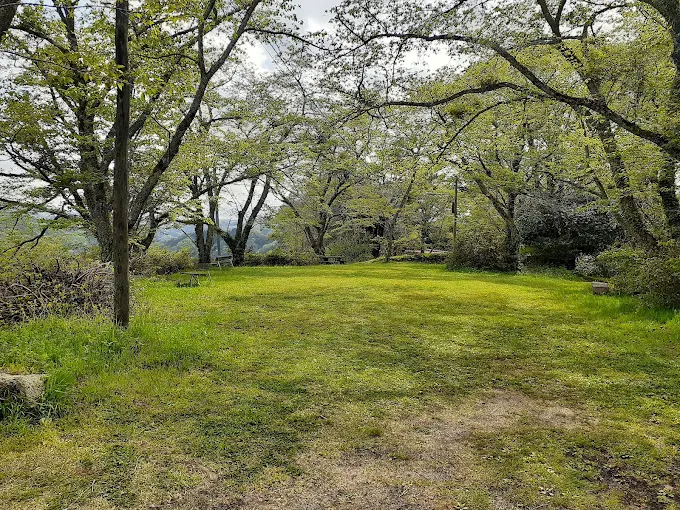
Currently, it is maintained as Mitoya Castle Ruins Park and is a popular recreational spot for citizens. It is particularly known as a cherry blossom viewing spot, attracting many visitors in spring. From the castle ruins, you can enjoy a panoramic view of Unnan City, making it a popular spot for historical walks and nature enjoyment.
History of Mitoya Castle
The Jōkyū War and the Construction of the Castle by Suwabe Sukenaga
The history of Mitoya Castle dates back to the Jōkyū War of 1221. Suwabe Sukenaga, who distinguished himself in this war, was granted the Mitoya district as a jitō (land steward) by the Kamakura Shogunate, and it is believed that he built the castle there.
The Suwabe clan was a prestigious family descended from the Seiwa Genji clan, and Sukenaga was entrusted with the governance of Mitoya district by Hōjō Yoshitoki. Initially, the Suwabe clan’s base was Mitoya-yama Castle (Ishimaru Castle), located to the north, and Mitoya Castle functioned as a subsidiary castle. The castle, built using a unique construction method called the “Jūusu-shiki” (heavy mortar style), was known for its strength.
The Era of the Mitoya Clan
The Suwabe clan later adopted the place name as their surname, and from the time of the 16th generation, Tamesuke, they began to call themselves the “Mitoya clan.” Entering the Sengoku period (Warring States period), the Mitoya clan moved their base from Mitoya-yama Castle to Mitoya Castle, and expanded their power from this location.
Mitoya Castle served as the residence of the Mitoya clan for 14 generations and 368 years. This long period of rule demonstrates the firm position the Mitoya clan had established in this region. The castle had numerous subsidiary castles and watchtowers positioned to the east, west, north, and south, and its vast scale and strong fortifications are highly regarded as a typical Sengoku period mountain castle representative of the San’in region.
Role as one of the Amago Ten Castles
During the Sengoku period, Mitoya Castle was counted as one of the “Amago Ten Castles,” an important subsidiary castle of the Amago clan, a Sengoku daimyo of Izumo Province. The Amago Ten Flags were ten important strongholds protecting the Amago clan’s sphere of influence, and Mitoya Castle occupied a strategically important position among them, controlling a crucial transportation hub.
Its location along the highway connecting the San’in and Sanyo regions was highly valuable both militarily and economically, and the Mitoya clan played a vital role as vassals of the Amago clan. The castle’s structure also emphasized defense, and remnants such as earthworks and moats still remain today.
Conquest and Abandonment by the Mori Clan
During the Tensho era (1573-1592), amidst the struggle for supremacy in the Chugoku region, the Mori clan invaded the Izumo region. As the Amago clan declined, Mitoya Castle also came under attack from the Mori clan.
During the time of the last head of the Mitoya clan, Hisasuke, their territory was confiscated by the Mori clan, bringing an end to the Mitoya clan’s long rule. Subsequently, in 1591, when Horio Yoshiharu entered Izumo Province as its lord, Mitoya Castle was abandoned. This marked the end of Mitoya Castle’s approximately 370-year history.
Structure and Layout of Mitoya Castle
The “Jūusu-shiki” Construction Method
The most distinctive feature of Mitoya Castle is the use of a construction method called the “Jūusu-shiki” (double-mortar style). This method utilizes the mountainous terrain to arrange multiple baileys (kuruma) in a stepped pattern, making enemy intrusion difficult. Each bailey was surrounded by earthen ramparts and separated by moats, functioning as an independent defensive stronghold.
This structure meant that even if one bailey fell, the defense could continue in the next bailey, significantly increasing the overall defensive strength of the castle. The Jūusu-shiki is a typical construction method for medieval mountain castles, and Mitoya Castle is considered an excellent example.
Major Remains
The current site of Mitoya Castle retains remarkably well-preserved remains from that time. The main remains include the following:
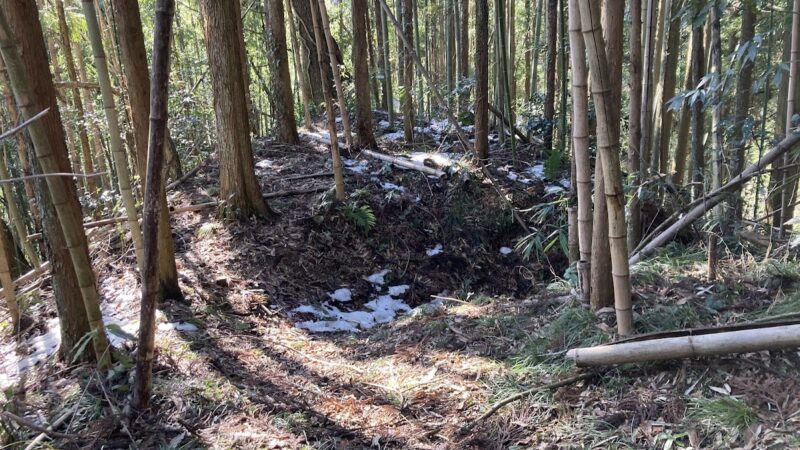
Earthworks: These are earthen walls built as defensive structures for the castle, surrounding the baileys. Their height varies depending on the location, but some impressive earthworks several meters high still exist.
Moats: These are moats dug to cut across the ridge, preventing enemy intrusion and serving to demarcate the baileys. Multiple moats can be found at Mitoya Castle, demonstrating the castle’s defensive ingenuity.
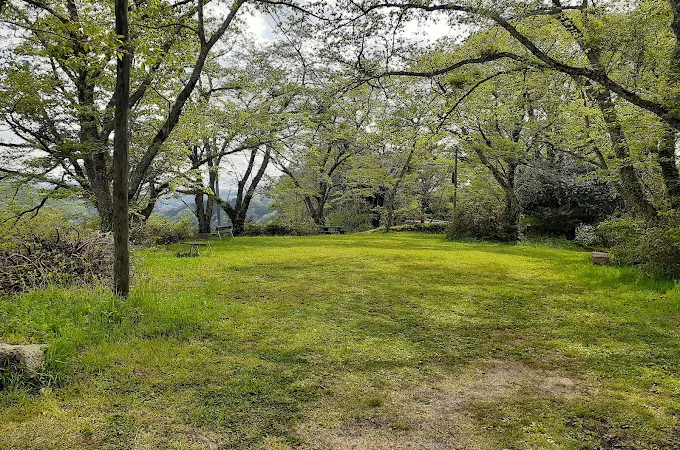
Baileys: These are flat, leveled areas used for buildings and soldier encampments. Multiple baileys are arranged in a stepped pattern around the main bailey.
Well Remains: The remains of wells used within the castle also exist, illustrating the importance of securing a water source during sieges.
Network of Sub-Castles
Mitoya Castle did not exist in isolation; it functioned as the center of a castle network with numerous sub-castles and watchtowers surrounding it. The sub-castles, including Mitoya-yama Castle (Ishimaru Castle) to the north, and positioned to the east, west, north, and south, formed a defensive line protecting the Mitoya clan’s territory.
This type of sub-castle network is characteristic of mountain castles during the Sengoku period, playing a role in detecting enemy movements early and delaying attacks on the main castle. The grandeur of Mitoya Castle was achieved through this comprehensive defensive system, including these sub-castles.
Highlights of Mitoya Castle Ruins Park
As a Cherry Blossom Viewing Spot
Currently, the Mitoya Castle ruins have been developed into “Mitoya Castle Ruins Park,” known as one of Shimane Prefecture’s leading cherry blossom viewing spots. Approximately 700 cherry trees are planted on the slopes of the castle ruins, creating a magnificent cherry blossom landscape in spring. The illuminated cherry blossoms at night are particularly enchanting, attracting many tourists and local residents. The park features well-maintained walking paths, allowing visitors to enjoy the cherry blossoms while exploring the castle ruins. It also connects seamlessly with the cherry tree-lined banks of the Mitoya River, offering a luxurious location to enjoy both the riverside and castle ruins’ cherry blossoms simultaneously.
Observation Spot
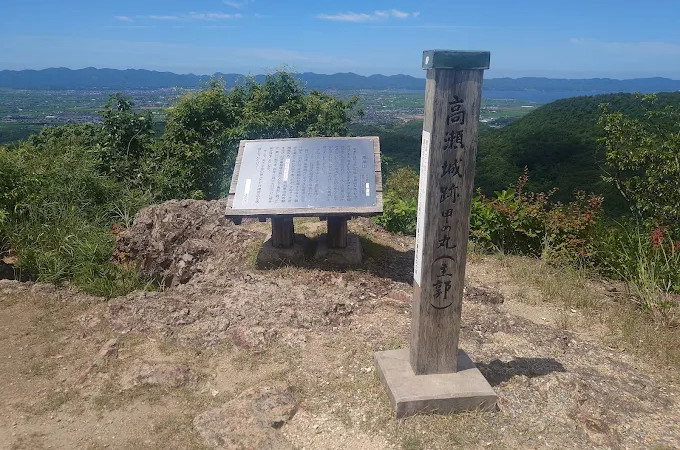
Located on a small hill, the Mitoya Castle ruins offer an excellent panoramic view of Unnan city. On clear days, you can even see the distant Chugoku Mountains, allowing you to imagine the Mitoya clan’s gaze upon their territory from this vantage point.
The view from near the main enclosure is particularly stunning and a popular spot for photography. With its beautiful scenery throughout the seasons, it’s worth visiting even outside of cherry blossom season.
Historical Information Boards and Guides
Several information boards explaining the history and structure of Mitoya Castle are installed throughout the park. Reading these boards while strolling through the grounds will deepen your understanding of the castle’s historical background and construction techniques.
Major ruins are marked with explanatory signs, allowing visitors to learn about the role of defensive structures such as earthworks and moats, and the appearance of the castle in its time. The information is easy to understand for both history enthusiasts and first-time visitors to castle ruins.
A Place of Relaxation for Citizens
Mitoya Castle Ruins Park is not only a historical site but also a place of relaxation for local residents. With well-maintained paths and rest facilities, it is used for various purposes such as walks, jogging, and picnics.
Especially during cherry blossom season, it is bustling with visitors enjoying the blossoms, and plays an important role as a community hub. It is a beloved park representing Unnan City, where history and modernity blend seamlessly.
Access and Visiting Guide
Location
Address: Mitoya, Mitoya-cho, Unnan City, Shimane Prefecture
Mitoya Castle Ruins Park is located in the center of Mitoya-cho, Unnan City, near the Mitoya Community Center (144-1 Mitoya, Mitoya-cho, Unnan City, Shimane Prefecture).
Access by Car
From the San’in Expressway:
- Approximately 5 minutes from the Mitoya-Kitsugi Interchange
- Free parking available (may be crowded during cherry blossom season)
From Matsue City:
- Approximately 40 minutes via National Route 54
From Izumo City:
- Approximately 30 minutes via National Route 54
Access by Public Transportation
Using the JR Kitsugi Line:
- Get off at JR Kitsugi Line “Kitsugi Station,” then approximately 10 minutes by taxi
- Or use a local bus (recommended to check in advance as the number of buses is limited)
Using an Expressway Bus:
- Take an express bus from Matsue Station or Izumo City Station towards Unnan City, get off at the Mitoya bus stop, then approximately 10 minutes on foot
Notes for Visitors
Visiting Hours: The park is open 24 hours, but caution is advised when visiting at night due to the risk of falling. Many people visit at night during the cherry blossom illumination period.
Attire: When exploring the castle ruins, comfortable walking shoes are recommended. Visiting the remains involves walking on slightly undulating terrain.
Season: The spring cherry blossom season (late March to early April) is the most popular time, but the scenery is also beautiful during the fresh green season and the autumn foliage season.
Facilities: Toilets and rest areas are available within the park.
Tourist Spots Around Mitoya Town
Mitoya River Riverside Park
A must-visit in conjunction with Mitoya Castle Ruins Park is the Mitoya River Riverside Park. A row of cherry trees stretches for approximately 2 kilometers along the river, and it has been selected as one of “Japan’s Top 100 Cherry Blossom Viewing Spots.” The reflection of the cherry blossoms on the river is exceptional, and the well-maintained walking paths allow you to enjoy the blossoms at your leisure.
Mitoya Community Center
This is a cultural and exchange hub in Mitoya Town, featuring exhibits on local history and culture. Since materials related to Mitoya Castle and the Mitoya clan are also on display, visiting before visiting the castle ruins will allow you to understand the history more deeply.
Suga Shrine
This ancient shrine located in Unnan City is a historical shrine also known as the first shrine in Japan. It enshrines Susanoo-no-Mikoto and Kushinada-hime and is known as a shrine for matchmaking. It is about a 20-minute drive from Mitoya Town.
The Mitoya Clan and the Sengoku Period History of Izumo
A Prestigious Family Descending from the Seiwa Genji
The Mitoya clan (Suwabe clan) was a samurai family descended from the Seiwa Genji. The Seiwa Genji was a branch of the Minamoto clan, descendants of Emperor Seiwa, and was a prestigious family that flourished as a samurai. Suwabe Sukechika’s achievements in the Jokyu War led to him obtaining the position of jitō (land steward) of Mitoya-go in Izumo Province, marking the beginning of the Mitoya clan’s history in Izumo.
Relationship with the Amago Clan
During the Sengoku period, the Mitoya clan served as important retainers of the Amago clan, a powerful daimyo family of Izumo Province. The Amago clan expanded their power throughout the San’in region, centered in Izumo Province, and at their peak, they controlled 11 provinces in the San’in and Sanyo regions.
Mitoya Castle was one of the “Ten Amago Castles,” a crucial stronghold protecting the Amago clan’s sphere of influence. The Ten Amago Castles were ten branch castles highly valued by the Amago clan, each strategically located and essential to their control over their territory. The Mitoya clan served the Amago clan faithfully and participated in numerous battles.
Conflict with the Mori Clan
From the mid-to-late 16th century, the Amago and Mori clans vied for supremacy in the Chugoku region. Initially, the Amago clan held the advantage, but the situation reversed due to the skillful strategies of Mori Motonari. In 1566 (Eiroku 9), the Amago clan’s stronghold, Gassan-Toda Castle, was captured by the Mori clan, leading to the Amago clan’s downfall.
After the Amago clan’s demise, the Mitoya clan also came under Mori rule. However, during the time of Mitoya Hisafusa, the Mori clan confiscated their territory, bringing an end to the Mitoya clan’s long rule. Later, when Horio Yoshiharu, a vassal of Toyotomi Hideyoshi, entered Izumo Province as its lord, Mitoya Castle was abandoned, its role coming to an end.
Cultural Value of Mitoya Castle
Designated as a Shimane Prefecture Historic Site
The Mitoya Castle ruins were designated as a Shimane Prefecture Historic Site in 1986 (Showa 61). This designation indicates the high historical and academic value of Mitoya Castle. The structure of this mountain castle from the medieval to Sengoku period remains well-preserved, making it a valuable site for understanding the castle-building techniques and defensive philosophies of the time.
Representative Mountain Castles of the San’in Region
Mitoya Castle is highly regarded as a typical Sengoku period mountain castle representative of the San’in region. The remains of the castle, including the mortar-type construction method, multiple baileys and earthworks, and moats, clearly demonstrate the characteristics of medieval mountain castles. Furthermore, the castle system, including the network of subsidiary castles, is important material for understanding the nature of regional governance during the Sengoku period.
Regional Historical Heritage
Mitoya Castle is an important cultural property indispensable to understanding the history of Unnan City. Having functioned as the center of the region for approximately 370 years, from the Jōkyū War to the end of the Sengoku period, it is also a symbol of the region’s identity. Even today, it is cherished by local residents and used as a place for historical education.
The Charm of Visiting Mitoya Castle
Experiencing Historical Romance
Visiting the ruins of Mitoya Castle allows you to feel firsthand the approximately 370 years of history from the Jōkyū War to the Sengoku period. While viewing the remains of earthworks and moats, you can reflect on the era when the Mitoya clan ruled this territory and fought for the Amago clan. The view from the castle ruins is almost the same as the view seen by the castle lords of that time, making it a valuable experience that allows you to feel connected to history.
Natural Beauty in Every Season
Mitoya Castle Ruins Park is a spot where you can enjoy beautiful natural scenery throughout the four seasons. While the cherry blossoms in spring are particularly famous, the fresh greenery of summer, the autumn leaves, and the snowscapes of winter each show different faces. It’s a space where nature and history harmonize, allowing you to refresh both mind and body.
Experiencing Local Culture
Mitoya Town is a historic area that developed around Mitoya Castle. By visiting the castle ruins, you can experience the history and culture of the region. Through interactions with locals and exploring nearby tourist spots, you can discover the charm of Unnan City.
Photo Spot
Mitoya Castle Ruins Park is an ideal spot for photography. Of course, there’s no shortage of subjects to photograph, from the cherry blossom season to the views from the castle ruins, historical remains, and the changing seasons. The cherry blossom illumination period, in particular, offers an excellent opportunity to capture fantastical photographs.
Summary
Mitoya Castle, located in Mitoya-cho, Unnan City, Shimane Prefecture, is a historic castle built in 1221 by Suwabe Sukechika, who distinguished himself in the Jokyu War, and served as the residence of the Mitoya clan for 368 years. It was counted as one of the ten castles of the Amago clan and played a significant role in the history of the Izumo region during the Sengoku period, as an important base protecting a crucial transportation hub connecting San’in and Sanyo.
It retains many characteristics of a Sengoku period mountain castle, including its sturdy structure built using the mortar-type construction method, earthworks and moats, and a network of subsidiary castles. It was designated a Shimane Prefecture historical site in 1986. Currently, it is maintained as Mitoya Castle Ruins Park, a popular cherry blossom viewing spot and a place of relaxation for citizens. Mitoya Castle, where historical romance, natural beauty, and local culture blend seamlessly, is a must-visit spot when you’re in Unnan City. It offers different charms throughout the seasons, not just during the cherry blossom season in spring, so you’ll discover something new each time you visit. Why not enjoy a historical stroll amidst beautiful nature while reflecting on the Sengoku period history of Izumo?