
Dobashi Castle (Tako-machi, Chiba Prefecture): A Complete Guide to its History and Highlights | A Medieval Castle that Became the Stage of the Downfall of the Chiba Clan’s Main Lineage
Located in Tako-machi, Katori-gun, Chiba Prefecture, Dobashi Castle is a historically significant castle that served as the stage for fierce conflicts among the Chiba clan during the medieval period. From the Nanboku-cho period to the Muromachi period, it played a central role in the “Chida-sho Rebellion,” which determined the fate of the Chiba clan’s main lineage, leaving a deep mark on Japanese history. This article thoroughly explains the charm of this castle, from its historical background to its current remains and access methods.
What is Dobashi Castle? | An Overview of a Medieval Castle Remaining in Tako-machi, Chiba Prefecture
Dobashi Castle is a flatland castle located in Tako-machi, Katori-gun, Chiba Prefecture, and was the central castle of the region formerly known as Chida-sho. Built on a plateau approximately 30 meters above sea level, the castle’s relative height is not particularly high at about 15 meters, but its structure cleverly utilizes the surrounding terrain.
The exact date of the castle’s construction is unclear, but it is believed to have existed since the Nanboku-cho period (mid-14th century). Known as the residence of Chida Chikamasa, there is also a legend that Ashikaga Shigeuji, the Koga Shogun, resided there for a time.
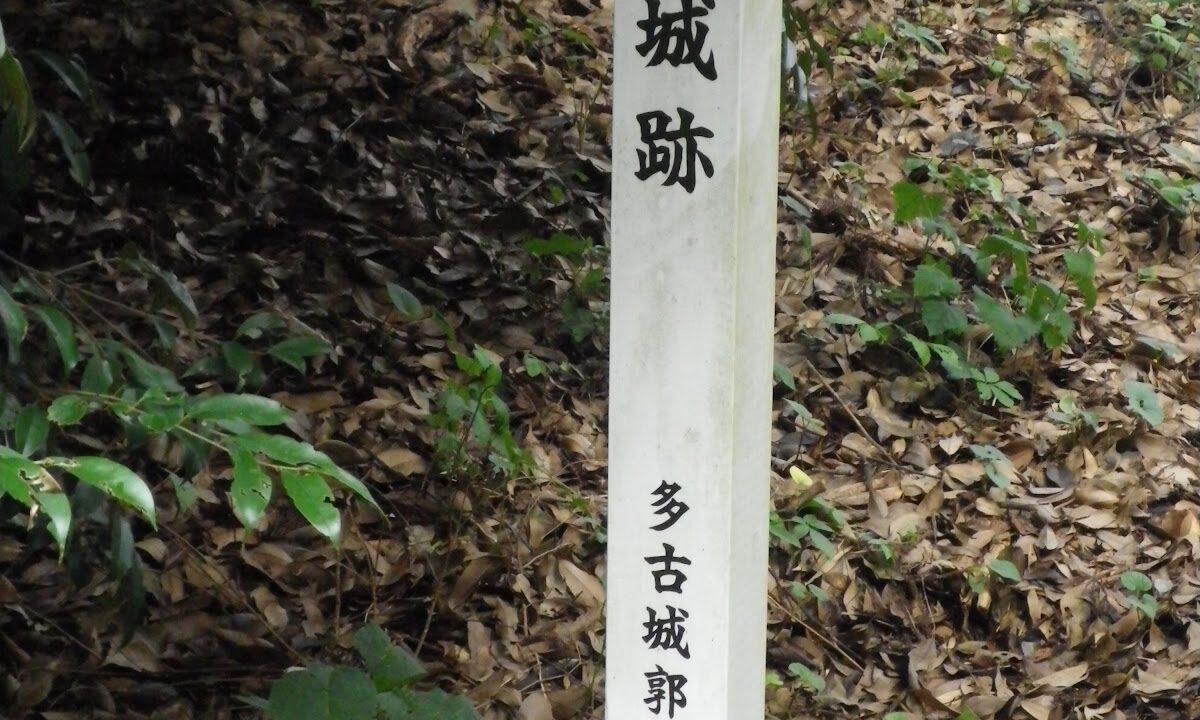
Currently, the Amenominakanushi-no-Mikoto Shrine stands on the site of the main keep. While much of the castle’s remains have been lost, traces of earthworks and moats can still be seen. Locally known as “Shiroyama” (Castle Mountain), it is an indispensable historical site when discussing the history of Tako Town.
Chida-sho Rebellion and Dobashi Castle | Chiba Clan Family Conflict during the Nanboku-cho Period
The Beginning of the Nanboku-cho Rebellion
When discussing the history of Dobashi Castle, it is impossible to avoid mentioning the “Chida-sho Rebellion,” which erupted during the Nanboku-cho period. This conflict was a fierce internal struggle within the Chiba clan, intertwined with the Nanboku-chō (Northern and Southern Courts) conflict, lasting for over 100 years.
According to the Ōamishirasato Town History, during the Nanboku-chō period, Chiba Sadatane (Southern Court faction), son of Chiba Tanemune, and Chida Tanetsada (Northern Court faction), son of Chiba Munetane, clashed. This conflict was not merely a succession dispute, but a complex political struggle linked to the division of the imperial court between the Southern and Northern Courts.
The Divided Structure of the Chiba Clan
The Chiba clan was a powerful samurai family based in Shimōsa Province, wielding considerable influence in the Kantō region from the Kamakura period to the Muromachi period. However, with the advent of the Nanboku-chō period, the clan split into Southern Court and Northern Court factions, and Chida Manor (present-day Tako Town area) became the main battlefield of this conflict.
The Chida clan, based at Dobashi Castle, was a branch of the Chiba clan and wielded considerable influence in this region. Along with Namiki Castle, it functioned as one of the two major strongholds of Chida Manor, and numerous subsidiary castles and residences were built in the surrounding area.
Capture by the Takemoto Clan of the Chiba Samurai Office
During the turmoil in Chida Manor, records show that Dobashi Castle, along with Namiki Castle, was attacked and captured by the Takemoto clan of the Chiba Samurai Office. This battle marked a crucial turning point that decisively led to the decline of the Chiba clan’s main lineage.
The Takemoto clan was a powerful family within the Chiba clan’s vassal group, serving in the Samurai Office (an office responsible for military and police functions), and was deeply involved in the internal conflicts of their lord, the Chiba clan. The capture of Dobashi Castle was not merely the seizure of a castle, but a decisive battle for control of the entire Chida Manor.
The Kyōtoku Rebellion and the Downfall of the Chiba Main Family | The End of the Muromachi Period as Seen Through Dobashi Castle
The Outbreak of the Kyōtoku Rebellion (1454)
Approximately 100 years after the Chida-shō Disturbance, in the first year of Kyōtoku (1454), the Kyōtoku Rebellion, a large-scale conflict engulfing the Kanto region, broke out. This rebellion began with a conflict between the Kamakura Shogun, Ashikaga Shigeuji, and the Kanto Kanrei (Deputy Shogun of the Kanto region), Uesugi Noritada, and became a long-term war that lasted for 28 years.
The area around Tako Town, where Dobashi Castle is located, became an important strategic base during the Kyōtoku Rebellion. The legend that Ashikaga Shigeuji, who became the Koga Shogun, resided in Dobashi Castle for a time indicates that this castle was not merely the residence of a local powerful family, but a fortress deeply connected to the political situation of the Kanto region.
The Downfall of the Chiba Main Family
During the Kyōtoku Rebellion, fierce internal conflicts again arose within the Chiba clan. This internal conflict culminated in the tragic downfall of the Chiba clan’s main branch. According to documents from the Tako Castle Preservation and Utilization Association, the main line of the Chiba clan was completely extinguished during this period, and the Chiba clan’s power declined significantly.
Tsuchibashi Castle, as a castle that directly witnessed the downfall of the Chiba clan’s main branch, is an important historical site in Japanese medieval history. The process by which the Chiba clan, one of the most prominent families in the Kanto region, self-destructed due to internal conflict, was also a harbinger of the arrival of the Sengoku period (Warring States period).
Structure and Layout of Tsuchibashi Castle | Understanding the Characteristics of Medieval Castles
Location as a Hilltop Castle
Tsuchibashi Castle is classified as a hilltop castle, built on a plateau approximately 15 meters higher than the surrounding plains. This location served both defensive advantages and the function of monitoring and controlling the surrounding area.
The Kuriyama River flows around the castle, and it is thought to have served as a natural moat. Furthermore, artificial cliffs were constructed along the edge of the plateau, a measure taken to make enemy intrusion difficult.
Honmaru and Amenominakanushi-no-Mikoto Shrine
Currently, the Amenominakanushi-no-Mikoto Shrine stands on the site of the former main keep of Tsuchibashi Castle. This shrine is believed to have been built on the location of the castle’s watchtower, and even today, it remains a high vantage point offering panoramic views of the surrounding area.
Within the grounds of the Amenominakanushi-no-Mikoto Shrine, traces of earthworks remain, allowing us to imagine the former castle structure. It has also been suggested that the shrine’s approach may be a remnant of the former main road (the road to the castle’s main entrance).
Remaining Structures
While most of the remains of Dobashi Castle have been lost due to years of development and weathering, careful observation reveals the following traces:
- Earthwork Remains: Partially remaining earthworks, approximately 1-2 meters high, can be found around the Amenominakanushi-no-Mikoto Shrine.
- Moat Remains: Shallow depressions resembling moats can be seen around the castle.
- Cut Cliffs: Artificial cliff marks can be seen along the edge of the plateau.
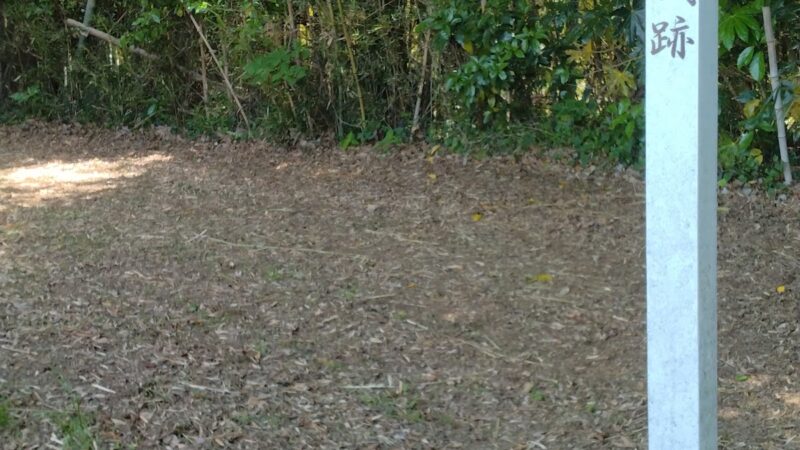
- Flat Areas: In addition to the main keep, several flat areas believed to be the second and third baileys exist.
The arrangement of “kuruwa” (enclosures), a typical structure of medieval castles, can be estimated to some extent from the current terrain. However, detailed archaeological excavations have not been conducted, so an accurate layout map has not been created.
Relationship with Tozenji Temple
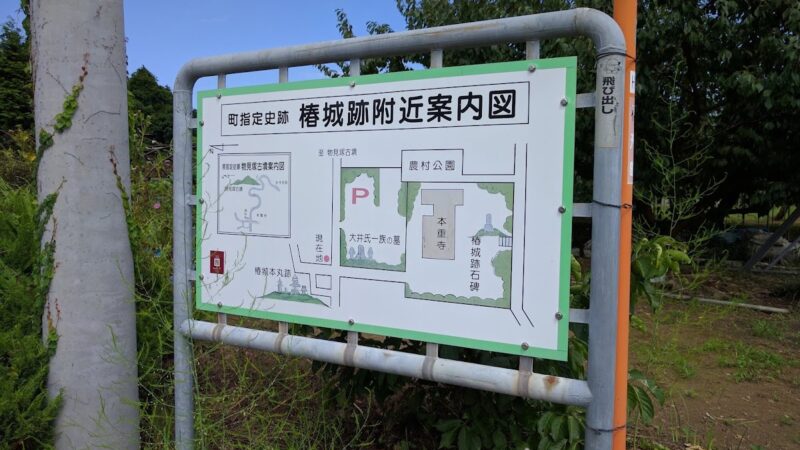
Near Dobashi Castle is a temple called Tozenji, and a deep connection between the castle and the temple has been suggested. In medieval castles, temples commonly functioned as part of the castle or played an important role as the lord’s family temple.
Tozenji Temple is considered to have had close ties to the Chida and Chiba clans, and may hold important historical materials for studying the castle’s history. The temple’s layout and structure suggest it may have functioned as an outer fortification of the castle.
History and Culture of Tako Town | The Medieval World of Chida Manor
The Chida Manor
The area around Tako Town was once home to a manor called “Chida Manor” during the medieval period. A manor was private land owned by nobles or temples and shrines, and it formed the basis of the economy and society in medieval Japan.
Chida Manor became a powerful territory controlled by the Chiba clan, and numerous religious facilities and residences were built there. Tsuchibashi Castle served as its central military base, responsible for the control and defense of the entire manor.
Medieval Castles of Tako Town
Besides Dobashi Castle, numerous other medieval castles existed in Tako Town. The main ones include:
- Namiki Castle: One of the two major strongholds of Chida-sho, along with Dobashi Castle.
- Tako Castle: A castle located in the center of the town.
- Other Branch Castles: Small forts and residences scattered throughout the surrounding area.
These castles worked together to form a network that defended the entire Chida-sho. The Tako Castle Preservation and Utilization Association is engaged in activities to comprehensively preserve and utilize these castles, and they are attracting attention as a regional historical and cultural resource.
Medieval Religious Culture
Numerous temples and shrines were built in Chida-sho, and a rich religious culture flourished. The Chiba clan was known as devout Buddhists, and they built and protected many temples within their territory.
Shrines, including the Amenominakanushi-no-Mikoto Shrine, also functioned as centers of local faith, closely related to the castles. In the era of syncretism between Shinto and Buddhism, these religious facilities were not merely places of worship, but also played a crucial role as centers of politics, military affairs, and culture.
Highlights and Visiting Guide to Dobashi Castle
Visiting the Amenominakanushi Shrine
The greatest highlight when visiting Dobashi Castle is the Amenominakanushi Shrine, located on the site of the castle’s main keep. This shrine is believed to be the location of the castle’s watchtower, and even today, it offers panoramic views of the surrounding landscape.
The shrine grounds are enveloped in a tranquil atmosphere, allowing you to feel the sacred air of the medieval castle. When visiting, pay attention to the remnants of the earthworks remaining at your feet and the undulations of the terrain within the grounds. These are remnants of the castle’s remains.
Points to Observe the Remains
Although most of the remains of Dobashi Castle have been lost, you can imagine the former appearance of the castle by paying attention to the following points:
- Earthworks around the Shrine: Slightly remaining earthwork elevations behind and to the side of the shrine building of Amenominakanushi-no-Mikoto Shrine.
- Edge of the Plateau: Walk along the edge of the plateau that forms the boundary of the castle area and look for traces of cut slopes.
- Topographical Undulations: Even in areas that appear flat, subtle differences in elevation may indicate the boundaries of the baileys.
- Surrounding Landscape: Observe the surrounding topography visible from the castle and consider its defensive advantages.
Related Historical Sites in the Surrounding Area
When visiting Dobashi Castle, we recommend also visiting the related historical sites in the surrounding area:
- Tozenji Temple: A temple closely related to the castle. Possibility of historical buildings and documents remaining
- Namiki Castle Ruins: A castle that was the center of Chida-sho along with Dobashi Castle
- Other Castle Ruins in Tako Town: A historical walk around medieval castles
- Michi-no-Eki Tako: Convenient for gathering local information and taking a break
Access Methods
Public Transportation:
- From JR Narita Line “Narita Station” or “Airport Terminal 2 Station,” take a Chiba Kotsu bus and get off at “Takodai Bus Terminal,” then walk for about 20 minutes.
- You can also take a bus from Keisei Electric Railway “Keisei Narita Station.”
By Car:
- Approximately 20 minutes from Higashi-Kanto Expressway “Narita IC”
- Take National Route 296 towards Tako Town
- Aim for Amenominakanushi-no-Mikoto Shrine (search by shrine name on car navigation)
- Use the parking space for shrine visitors (limited number of spaces)
Notes:
- The castle ruins include the grounds of a shrine and surrounding private land, so please be considerate of local residents when visiting.
- The remains are not clearly defined, so it is recommended to check the location in advance using reference materials.
- In summer, vegetation grows thickly, making observation of the remains difficult.
Historical Significance and Modern Value of Dobashi Castle
Importance in Chiba Clan Research
Dobashi Castle is an important historical site that tells the story of the rise and fall of the Chiba clan, one of the leading samurai families in the Kanto region. In particular, its role as the stage for the downfall of the main line of the Chiba clan, a significant event in Japanese medieval history, makes it extremely valuable for historical research.
The Chiba clan was a prominent family that maintained power in the Kanto region for approximately 400 years, from the late Heian period to the Sengoku period. The history of Dobashi Castle eloquently tells the story of the Chiba clan’s decline due to internal conflicts.
Contribution to Medieval Castle Research
Dobashi Castle occupies an important position in castle research as a castle with a typical structure of a medieval flatland castle. Although there are few clearly visible remains, the site’s location and layout offer insights into 14th and 15th-century castle techniques and strategic thinking.
In particular, the fact that the castle ruins have been preserved as a place of worship, the Amenominakanushi-no-Mikoto Shrine, is an interesting case study for considering the relationship between castles and religious facilities in Japan.
As a Local Historical and Cultural Resource
For Tako Town, Dobashi Castle is an important cultural asset symbolizing the region’s history. The preservation and utilization activities of local organizations such as the Tako Castle Preservation and Utilization Association are of great significance in shaping the region’s identity and utilizing it as a tourist resource.
Dobashi Castle and the other castles in Tako Town are valuable historical sites for understanding the reality of the medieval manor known as Chida-sho. Further research, studies, and development in the future have the potential to become a core element of local historical tourism.
How to Enjoy Visiting Dobashi Castle
Experiencing Historical Romance
The greatest appeal of visiting Dobashi Castle is the opportunity to immerse yourself in the historical romance of the medieval period. When you imagine that this now-quiet shrine was once the site of fierce battles fought by the Chiba clan, you can’t help but feel the weight of history.
Standing in the grounds of the Amenominakanushi Shrine and gazing at the surrounding scenery, try to imagine what thoughts and feelings the samurai of 700 years ago had in this place. The lives and emotions of people, not recorded in history books, certainly existed in this land.
Exploring Castle Ruins
For castle enthusiasts, there’s the joy of discovering the few remaining ruins. While there aren’t clearly defined stone walls or keeps, this is precisely why your ability to interpret the terrain and your imagination are put to the test.
By carefully observing the slight rises of earthworks, depressions that seem to be remnants of moats, and the cut slopes on the edge of the plateau, you can glimpse a part of medieval castle construction technology.
Enjoying Local Nature and Culture
Visiting Dobashi Castle is also a great opportunity to enjoy the nature and culture of Tako Town. Tako Town is a town that proclaims itself a “Tokainaka” (a rural area surprisingly close to the city), boasting a rich natural environment and agricultural culture.
In particular, Tako rice is known as a representative brand of rice in Chiba Prefecture, and local agricultural products can be purchased at the Tako Roadside Station. Combining a visit to the castle ruins with an experience of local food and culture will make for a more fulfilling historical walk.
Summary | The Medieval Memories Told by Dobashi Castle
Dobashi Castle in Tako Town, Chiba Prefecture, may lack a magnificent keep or stone walls, but it is a historically valuable castle that served as the stage for important events in Japanese medieval history. From the Nanboku-cho period to the Muromachi period, the castle witnessed the Chida-sho Rebellion and the Kyotoku Rebellion, two major conflicts that determined the fate of the main line of the Chiba clan. Dobashi Castle, having experienced these two major wars, quietly watched over the downfall of noble families due to internal conflicts.
Currently, the Amenominakanushi-no-Mikoto Shrine, located on the site of the former main keep, elevates the memories of past battles into a sacred place of prayer. The few remaining earthworks and moat remnants are precious witnesses that tell the story of people who lived more than 700 years ago.
Visiting Dobashi Castle is not simply about seeing the castle ruins; it’s an experience that allows you to reflect on the struggles, ambitions, and eventual fate of the people who lived in the Middle Ages. While experiencing the rich nature and historical culture of Tako Town, please do visit this tranquil castle site. There, a profound story, not recorded in history books, still quietly breathes.
Thanks to the efforts of local organizations such as the Tako Castle Preservation and Utilization Association, Dobashi Castle and other castles in Tako Town are being preserved and utilized as valuable historical and cultural resources of the region. As many people continue to visit this place and experience the memories of the Middle Ages, the historical value of Dobashi Castle will be passed on to future generations.

.png)