Complete Guide to Sakata Castle Ruins: The Charm of Yokoshibahikari Town’s Sengoku Period Relics and the Prefecture’s Largest Plum Grove
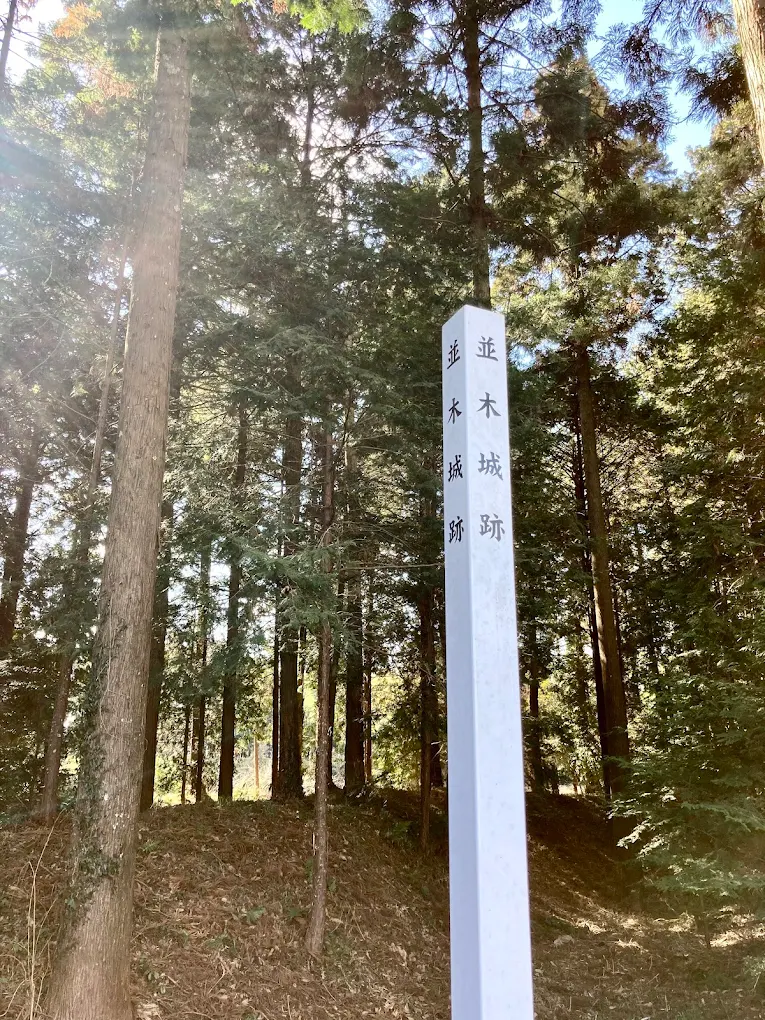
Located in Yokoshibahikari Town, Sanbu District, Chiba Prefecture, Sakata Castle Ruins is one of the prefecture’s leading medieval castle ruins, retaining strong traces of the Sengoku period. Built on a tongue-shaped plateau north of the current Sakataike Park, this castle played an important role as a base of operations for the Chiba clan, and even after more than 400 years, remains such as earthworks and dry moats still retain their original appearance. Furthermore, the castle ruins are home to one of the prefecture’s largest plum groves, and every spring, the “Sakata Castle Ruins Sky Plum Blossom Festival” is held, attracting many tourists. This article thoroughly explains the charm of this valuable historical site, from its historical background to its highlights and a visitor’s guide.
Table of Contents
- Overview and Historical Significance of Sakata Castle
- History of Castle Construction and the Rule of the Chiba Clan
- Successive Castle Lords and Changes in the Castle
- Fall and Abandonment of the Castle in 1590
- Details of the Castle Structure and Remains
- The Largest Plum Grove in the Prefecture and the Sky Plum Blossom Festival
- Relationship with Sakata Pond Park
- Access and Visitor Guide
- Nearby Tourist Attractions
- Preservation Status and Cultural Property Value
Overview and Historical Significance of Sakata Castle
Sakata Castle is a medieval castle site located in the Sakata district of Yokoshibahikari Town, Sanbu District, Chiba Prefecture. This castle is known as one of the largest Sengoku period castle ruins in Chiba Prefecture, and its excellent state of preservation has led to its high historical value.
The castle ruins are located on a tongue-shaped plateau approximately 30 meters above sea level, north of Sakataike Park, and exhibit a typical medieval castle structure that skillfully utilizes the natural terrain. Even today, several baileys, earthworks, dry moats, gates, and watchtower bases remain clearly visible, providing valuable information for understanding the castle’s structure at the time.
While many medieval castle ruins exist in Chiba Prefecture, few are as well-preserved as Sakata Castle, making it a significant site in the study of Sengoku period castles. In particular, the arrangement of earthworks and dry moats, constructed by cutting and piling up earth, is a valuable legacy that conveys the castle-building techniques of the time.
History of Castle Construction and Chiba Clan Rule
Regarding the construction period of Sakata Castle, the generally accepted theory is that it was built by the Chiba clan in the mid-14th century (early Muromachi period). The Chiba clan was a powerful samurai family that ruled Shimōsa Province (present-day northern Chiba Prefecture) from the late Heian period to the Sengoku period, and Sakata Castle functioned as an important base in the eastern part of their sphere of influence.
Since participating in Minamoto no Yoritomo’s uprising, the Chiba clan expanded their power as a powerful retainer of the Kamakura Shogunate, and during the Muromachi period, they served as the governor of Shimōsa Province, becoming one of the most powerful daimyo in the Kanto region. Sakata Castle is thought to be one of the castles built by the Chiba clan as a base for their eastward expansion and territorial control.
Although detailed records of the castle’s initial construction do not remain, its location and structure suggest that it was built to control a strategic transportation hub in the region and to control and defend the surrounding area. The use of Sakata Pond as a natural moat and the highly defensive layout that takes advantage of the tongue-shaped plateau topography demonstrate the high level of medieval castle construction technology.
Successive Lords and Changes in the Castle
Several lords of Sakata Castle are recorded in its history. According to historical sources such as the “Sōshū Yamamuro Fudenki,” the Mitani clan, who were local lords, served as the castle’s lords at one point.
The Mitani Clan’s Era
Mitani Daizen-no-suke Taneoki was a samurai known as a senior retainer of the Chiba clan and is recorded as the lord of Sakata Castle. The Mitani clan is thought to have been a branch of the Chiba clan or a powerful vassal, entrusted with governing this region. During the period when the Mitani clan were lords, Sakata Castle functioned as the political and military center of the surrounding area.
The Ida Clan’s Era
Some historical sources suggest that Sakata Castle was built or renovated by the Ida clan in the mid-15th century. The Ida clan is also thought to have been a branch of the Chiba clan or a vassal. While there are various theories regarding their relationship with the Mitani clan and the circumstances of their succession, it is certain that the castle was maintained and operated under the influence of the Chiba clan.
Sakata Castle in the Sengoku Period
With the arrival of the Sengoku period (Warring States period), the political situation in the Kanto region underwent significant changes due to the expansion of the Hojo clan’s power. The Chiba clan also came under the influence of the Hojo clan, and Sakata Castle was incorporated into their system of control. During this period, the castle’s defensive capabilities were strengthened, and many of the remains visible today are thought to have been constructed during this time.
The Fall and Abandonment of Sakata Castle in 1590
The history of Sakata Castle comes to an end with Toyotomi Hideyoshi’s siege of Odawara in 1590. In that year, Hideyoshi led a large army into Kanto to destroy the Hojo clan, the rulers of the region, and successively captured the castles of the Hojo clan and those under their control.
Because the Chiba clan was subordinate to the Hojo clan, Sakata Castle also became a target of attack by the Toyotomi forces. Although detailed records of the battles do not remain, it is believed that Sakata Castle surrendered or fell along with the fall of Odawara Castle.
After the Siege of Odawara, when Tokugawa Ieyasu entered the Kanto region, the Chiba clan’s territories were confiscated, and a new system of rule was established. Sakata Castle was abandoned at this point and subsequently lost its function as a military facility. It is believed that the land was used for agriculture after its abandonment, but the castle remains were not extensively destroyed, and therefore, the ruins remain in good condition today.
Details of the Castle Structure and Remains
The greatest appeal of Sakata Castle ruins is the clearly preserved remains of a medieval castle, even after more than 400 years. The following structures can still be seen today:
Arrangement of the Enclosures (Kuruwa)
Sakata Castle has a complex layout consisting of multiple enclosures. The main enclosure is at the center, with the second and third enclosures arranged in a stepped pattern, each separated by earthworks and dry moats. Each enclosure is positioned along the topography of the tongue-shaped plateau, ensuring efficient defense and space utilization.
The main enclosure is located in the center of the castle and is at the highest point. From here, one could survey the surrounding area, and it is believed that this location functioned as a military command center. Even today, traces of the flat surface of the main enclosure and the surrounding earthworks can be seen.
Earthworks and Dry Moats
Earthworks and dry moats, characteristic features of medieval castles, remain in excellent condition at Sakata Castle. The earthworks were built surrounding the enclosures, and while their height varies, many are around 2-3 meters high.
Dry moats were constructed between enclosures and were important defensive structures to prevent enemy intrusion. Some of Sakata Castle’s dry moats reach depths of several meters, demonstrating the advanced castle-building techniques of the time. The shape of the bottom and sides of the dry moats are also clearly preserved, making them valuable resources for the study of medieval castles.
Entrance Gates and Earthen Bridges
Entrance gates (koguchi) are the entrances to the castle, and several entrance gate sites have been identified at Sakata Castle. Because entrance gates are a weak point in a castle’s defenses, earthworks and dry moats were skillfully positioned to enhance their defensive capabilities. The earthen bridge was a bridge made of earth used to cross dry moats and was used in combination with the castle’s entrance. At Sakata Castle ruins, traces of earthen bridges spanning dry moats can be found, allowing us to understand the movement routes to the castle at that time.
Watchtower Base
A watchtower base (yaguradai) is a raised platform of earth built to support a watchtower. Several watchtower base remains are found at Sakata Castle ruins, and their locations allow us to infer important defensive points and lookout points of the castle.
Lower Enclosures
Smaller enclosures called lower enclosures (koshikuruwa) surround the main enclosures. These are thought to have served a supplementary defensive role, as well as being used as waiting areas for soldiers and storage for supplies.
Largest Plum Grove in the Prefecture and the Sky Plum Blossom Festival
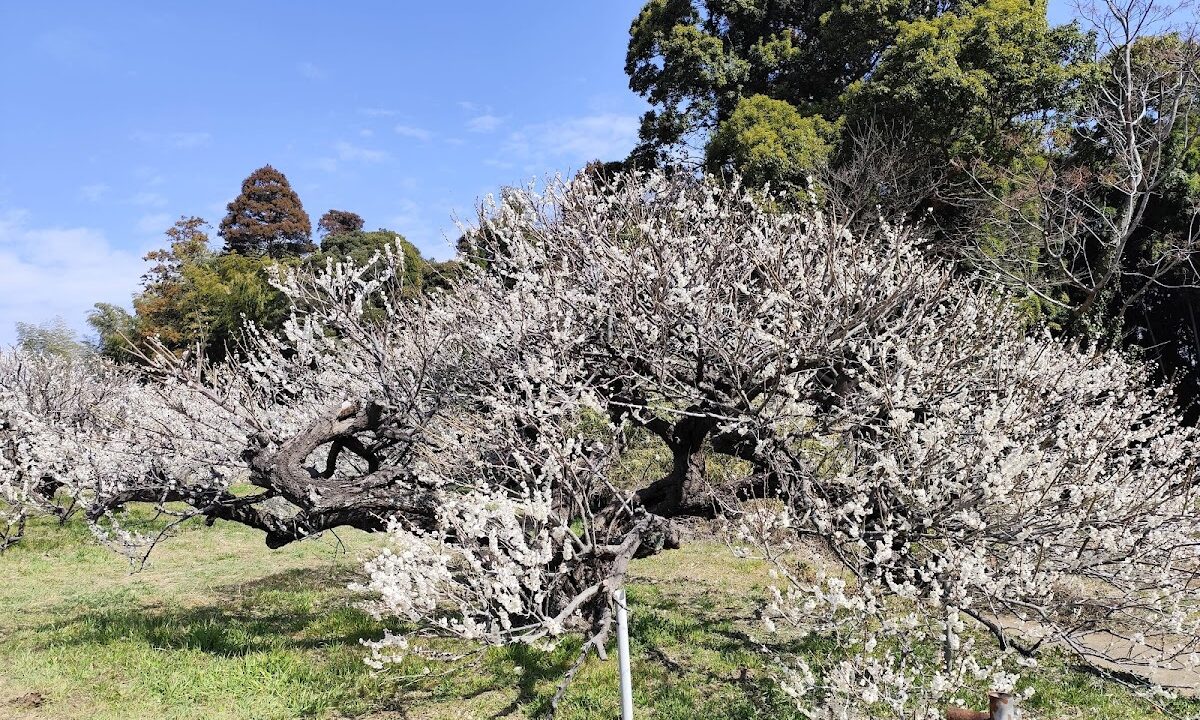
One of the major attractions of Sakata Castle ruins is the prefecture’s largest plum grove, which spreads across the castle grounds. Approximately 1,000 to 1,500 plum trees are planted here, and they bloom beautifully from late February to early March every year.
Characteristics of the Plum Grove
A notable feature of this plum grove is that it is not for ornamental purposes, but rather a grove of plums cultivated by local farmers for harvesting. Therefore, many of the plum trees are large, and the sight of these magnificent, aged trees in full bloom with pure white blossoms is breathtaking.
The plum varieties are mainly fruit-bearing varieties such as Shirokaga, characterized by their dignified, pure white flowers. The plum grove is also planted on the castle ruins’ baileys and earthworks, allowing visitors to enjoy a unique landscape created by the historical remains and the plum blossoms.
Sky Plum Blossom Festival
Every spring, the “Sakata Castle Ruins Sky Plum Blossom Festival” is held. The plum grove, spread across a plateau approximately 30 meters above sea level, presents a landscape truly worthy of being called a “sky plum grove,” attracting many tourists. During the festival period, local specialty products are sold and various events are held, making it a well-established spring tradition in Yokoshibahikari Town. It’s a valuable opportunity to stroll beneath the plum blossoms while exploring the remains of a castle from the Sengoku period.
Photo Spots
There are many excellent photo spots within the plum grove. The view from near the main enclosure is particularly magnificent, offering a panoramic view of the plum blossoms and the surrounding rural landscape. Furthermore, the composition of the earthworks, dry moats, and plum trees creates a unique beauty that evokes a harmony between history and nature.
Relationship with Sakataike Park
Sakataike Park stretches out immediately south of the Sakata Castle ruins. Sakataike Pond is thought to have been used as a natural moat during the castle’s construction, indicating a close relationship between the castle and the pond.
Overview of Sakataike Park
Currently, Sakataike Park is a nature-rich park centered around Sakataike Pond. A walking path surrounds the pond, allowing visitors to enjoy the changing seasons. The park also features facilities such as a campsite, barbecue area, and fishing area, making it a recreational spot that families can enjoy.
Enjoying the Castle Ruins and Park Together
When visiting Sakata Castle Ruins, you can have a more fulfilling experience by exploring Sakata Pond Park as well. The combination of learning history at the castle ruins and enjoying nature in the park is appealing to a wide range of ages.
Especially during the plum blossom festival, a popular activity is to visit the plum grove at the castle ruins and then enjoy a picnic in the park. The reflection of the plum blossoms on the pond’s surface and the view of the castle ruins from the pond’s edge are also highlights.
Access and Visiting Guide
This section summarizes access information and visiting details for Sakata Castle Ruins.
Location
Sakata, Yokoshibahikari-machi, Sanbu-gun, Chiba Prefecture
Access
By Train:
- Approximately 10 minutes by car from JR Sobu Main Line “Yokoshiba Station”
- Taking a taxi from JR Sobu Main Line “Yokoshiba Station” is convenient
- Local buses also operate, but the number of services is limited, so advance confirmation is necessary.
By Car:
- Approximately 40 minutes from Higashi-Kanto Expressway “Narita IC”
- Approximately 30 minutes from Higashi-Kanto Expressway “Daiei IC”
- Approximately 10 minutes from Choshi Connector Road “Yokoshibahikari IC”
- Parking: Temporary parking is available during the plum blossom festival.
Visiting Information
Visiting Hours: No particular restrictions (always open)
Admission Fee: Free
Estimated Time Required: Approximately 30 minutes to 1 hour for exploring the castle ruins, 1 to 2 hours including viewing the plum grove
Notes for Visitors
- The castle ruins are a historical site, so please be careful not to damage the remains.
- The plum grove is cultivated by local farmers, so please do not break branches or pick the fruit.
- As it is located on a plateau, we recommend wearing comfortable shoes.
- Crowds are expected during the plum blossom festival, so please allow ample time for your visit.
- Restrooms are located on the Sakataike Park side.
Best Time to Visit
Plum Blossom Season (Late February to Early March): The most popular time, when the Sky Plum Blossom Festival is held.
Spring to Early Summer (April to June): Beautiful fresh greenery, perfect for exploring the castle ruins.
Autumn (October to November): Enjoy the autumn foliage, and the weather is pleasant.
Winter (December to February): Fewer people, allowing for thorough observation of the remains.
Nearby Tourist Attractions
Here are some nearby tourist attractions you might want to visit when you come to Sakata Castle Ruins.
Tourist Facilities in Yokoshibahikari Town
Aviation Science Museum: Taking advantage of its location near Narita Airport, this aviation-specialized museum offers aircraft exhibits and flight simulators.
Kujukuri Beach: Located in the northern part of Kujukuri Beach, Yokoshibahikari Town boasts a beautiful coastline. Visitors can enjoy swimming, surfing, and seafood cuisine.
Yakata Coast: A beach in Yokoshibahikari Town, offering swimming in the summer and fishing year-round.
Nearby Historical Spots
Katori Shrine: Located about 30 minutes by car, this is one of the oldest shrines in the Kanto region. Known as the Ichinomiya (first-ranked shrine) of Shimosa Province, it features many attractions, including the main hall, a designated Important Cultural Property.
Sakura Castle Ruins: Located about 40 minutes by car, these are the ruins of an Edo-period castle. The National Museum of Japanese History is also adjacent.
Gourmet Spots
Yokoshibahikari Town has thriving agriculture and fishing industries, offering fresh agricultural and marine products. Dishes made with locally sourced vegetables and seafood from Kujukuri Beach are especially exquisite. During plum season, processed products such as pickled plums and plum wine made with locally grown plums are also sold.
Preservation Status and Cultural Value
Sakata Castle Ruins are highly regarded as one of the best-preserved medieval castle ruins in Chiba Prefecture.
Reasons for the Excellent Preservation
The following points contribute to the excellent state of preservation of Sakata Castle:
- Early Abandonment: After being abandoned in 1590, the site was not reused, thus preserving the remains.
- Use as Agricultural Land: After the castle’s abandonment, it was mainly used as agricultural land, such as plum orchards, and large-scale land alteration was avoided, thus preserving the castle ruins.
- Local Preservation Awareness: The preservation efforts of local residents and Yokoshibahikari Town have contributed to the protection of the ruins.
Designation as a Cultural Property
Sakata Castle Ruins are recognized as an important cultural property of the region due to their historical value and excellent state of preservation. They are a valuable resource for studying the structure of medieval castles and attract attention from researchers and castle enthusiasts.
Academic Value
Sakata Castle Ruins are academically important for the following reasons:
- A Typical Example of a Medieval Castle: The structure of a medieval castle, primarily consisting of earthworks and dry moats, is well-preserved, making it valuable for studying the castle-building techniques of the time.
- The Chiba Clan’s Rule System: As a base for the Chiba clan’s eastern control, it provides clues to understanding the medieval history of this region.
- Important Historical Material: An indispensable historical site for understanding the history of Yokoshibahikari Town and the surrounding areas.
Future Preservation and Utilization
Regarding the future of Sakata Castle Ruins, a balance between the preservation of the remains and their utilization as a tourist resource is crucial. Efforts are expected to be made to pass on its historical value to future generations while coexisting with the plum orchard.
It is important to let more people know about the charm of Sakata Castle Ruins through improved signage and explanatory panels, proper management of the remains, and outreach activities through events such as the Plum Blossom Festival.
Summary
Sakata Castle Ruins in Yokoshibahikari Town, Chiba Prefecture, is a valuable medieval castle site that conveys the spirit of the Sengoku period. Built by the Chiba clan and later ruled by the Mitani and Ida clans, the castle’s history ended with the Siege of Odawara in 1590, but its remains remain clearly visible even after more than 400 years.
Structural elements of medieval castles, such as baileys, earthworks, dry moats, gates, and watchtower bases, are well-preserved, making it a valuable historical site that allows us to understand the construction techniques and appearance of castles at the time. Furthermore, the prefecture’s largest plum grove, which spreads across the castle ruins, blooms with pure white flowers every spring, attracting many tourists to the “Sky Plum Blossom Festival.”
Sakata Castle Ruins, where historical value and natural beauty blend seamlessly, is a recommended spot not only for history buffs but also for families and photography enthusiasts. Visiting Sakata Pond Park in conjunction with the castle ruins will make for an even more fulfilling experience.
When visiting Yokoshibahikari Town, be sure to stop by Sakata Castle Ruins and enjoy the historical romance of the Sengoku period and the beautiful plum blossoms. Especially during the plum blossom season, a breathtaking view of the plum grove seemingly floating in the sky awaits you.