Complete Guide to Oshi Castle: A Thorough Explanation of the History and Highlights of the Floating Castle, One of the Seven Famous Castles of the Kanto Region
Oshi Castle, located in Gyoda City, Saitama Prefecture, is a historical castle counted among the seven famous castles of the Kanto region. Known as the “floating castle” that withstood the water siege by Ishida Mitsunari’s large army during Toyotomi Hideyoshi’s conquest of Kanto, its robust defenses were highly regarded throughout the Sengoku period. This article will fully convey the charm of this famous castle, from its approximately 400-year history from construction to its abandonment, to its architectural features and current highlights.
What is Oshi Castle?: Basic Information and Overview
Oshi Castle is a Japanese castle ruin located in Honmaru, Gyoda City, Saitama Prefecture. Also known as “Oshi’s Floating Castle” and “Turtle Castle,” its unique location and structure made it famous as one of the representative castles of the Kanto region.
Basic Data on Oshi Castle
- Location: 17-23 Honmaru, Gyoda City, Saitama Prefecture
- Year of Construction: Early Bunmei era (1469-1486)
- Builder: Narita Masato (some sources attribute it to Akiyasu)
- Castle Structure: Flatland castle (swamp castle)
- Designated Cultural Property: Saitama Prefecture Designated Historic Site
- Existing Remains: Part of the earthworks and moat
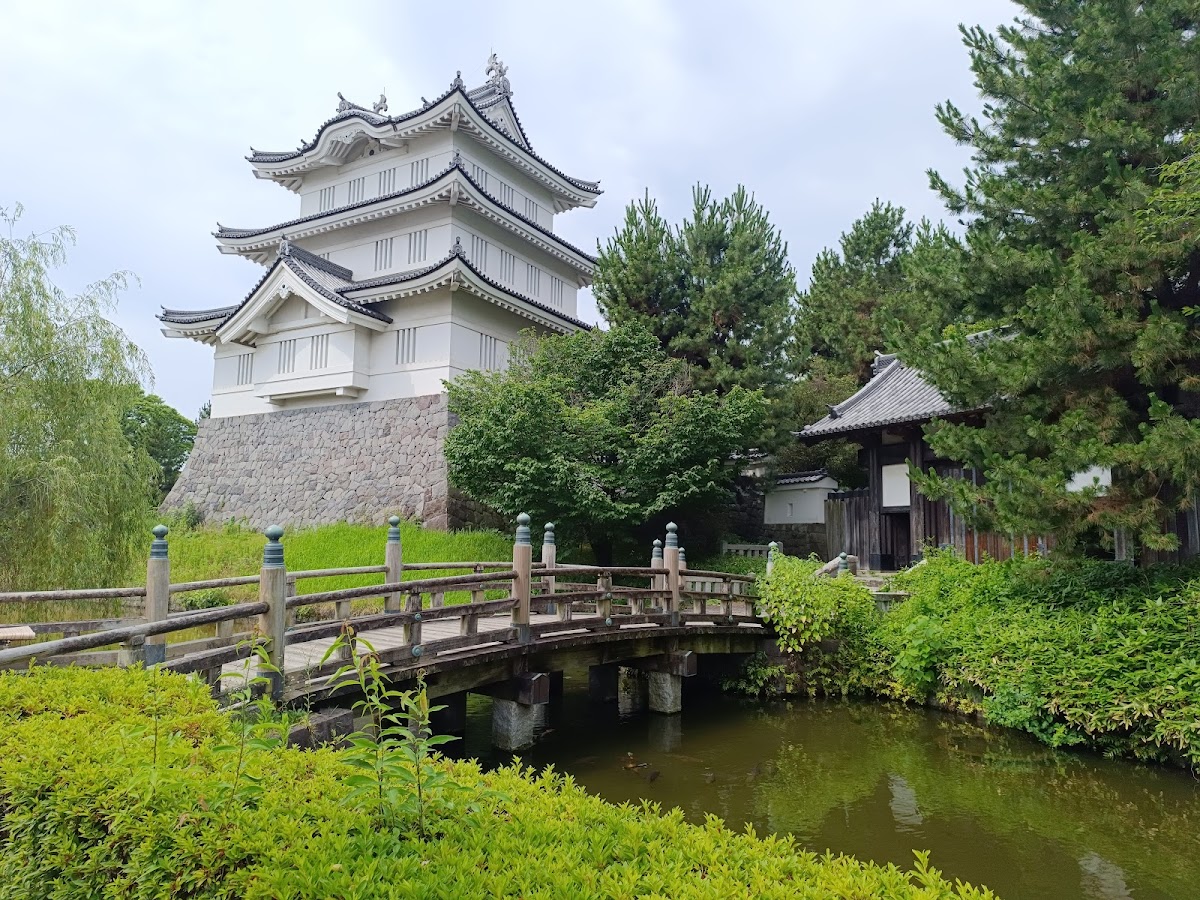
- Restored Structure: Three-story turret (Gosankai-yagura)
Oshi Castle is a flatland castle built utilizing the unique topography surrounded by swamps and wetlands. This geographical characteristic later gave rise to its nickname, “Floating Castle.” Currently, the Gyoda City Local History Museum is built on the site of the Honmaru, and the three-story turret has been restored.
History of Oshi Castle: From Construction to Abandonment
Muromachi Period: The Birth of Oshi Castle
While several theories exist regarding the construction of Oshi Castle, the most widely accepted theory is that it was built in the early Bunmei era (1469-1486) by Narita Masatomo or Narita Akiyasu.
At that time, this region was within the sphere of influence of the Ogigayatsu Uesugi clan and ruled by the local powerful family, the Oshi clan. The Narita clan was a powerful samurai group in Musashi Province, and it is believed that around 1478 (Bunmei 10), Narita Masatomo destroyed the Oshi clan, seized control of the area, and built Oshi Castle.
The site where Oshi Castle was built was a slightly elevated area near the old course of the Tone River and the floodplains of the Arakawa River, surrounded by vast swamps and wetlands. By skillfully utilizing this natural terrain, a formidable castle, difficult to attack and easy to defend, was completed.
Sengoku Period: Relationship with the Hojo Clan and Development
During the Sengoku period, Oshi Castle developed into an important base in the northern Musashi region. Initially, the Narita clan was subordinate to the Ogigayatsu Uesugi clan, but as the Later Hojo clan, the dominant power in the Kanto region, expanded its influence, the Narita clan gradually deepened its relationship with the Hojo clan.
Particularly during the time of Narita Nagayasu, Oshi Castle functioned as a powerful branch castle of the Hojo clan and became one of the defensive strongholds against Uesugi Kenshin’s invasion of Kanto. Even when Uesugi Kenshin advanced into Kanto in 1559 (Eiroku 2), Oshi Castle continued to resist on the Hojo side.
In the latter half of the 16th century, during the time of Narita Ujinaga, Oshi Castle reached its peak. The castle town was developed, and the Gyoda area prospered as the political and economic center of northern Musashi.
1590 (Tensho 18): Toyotomi Hideyoshi’s Water Siege
The name of Oshi Castle became known throughout Japan during Toyotomi Hideyoshi’s conquest of the Kanto region in 1590 (Tensho 18), particularly the siege of Oshi Castle commanded by Ishida Mitsunari. This battle is known as the “Water Siege of Oshi Castle” and is counted as one of Japan’s three greatest water sieges.
When Toyotomi Hideyoshi advanced into Kanto to conquer the Odawara Hojo clan, Narita Ujinaga, who belonged to the Hojo side, holed up in Odawara Castle. Meanwhile, his uncle, Narita Yasusue, and his senior retainers remained at Oshi Castle to defend it.
Ishida Mitsunari led a large army, said to number around 20,000, to besiege Oshi Castle, but the castle, surrounded by swamps, could not be easily captured. Therefore, Mitsunari decided to adopt the water siege tactic that Hideyoshi had used at Bitchu Takamatsu Castle.
Mitsunari constructed the Ishida Embankment, a massive levee approximately 28 kilometers long, to divert water from the Tone River. The plan was to flood the area around Oshi Castle, isolating it. However, Oshi Castle, originally built on wetland, was resistant to water sieges, and problems arose, such as the partial collapse of the embankment.
Ultimately, Oshi Castle held out until Odawara Castle surrendered, and finally surrendered through a peace agreement. This battle earned Oshi Castle the nickname “Floating Castle,” establishing its reputation as an impregnable fortress. The castle’s defenses numbered only about 3,000 men, and their valiant effort against a much larger army is particularly noteworthy.
Edo Period: As the Sector of the Oshi Domain
During the Edo period, Oshi Castle played a crucial role as the seat of the Oshi Domain. After the Battle of Sekigahara, Matsudaira Ietada became the lord of the Oshi Domain and entered Oshi Castle.
Throughout the Edo period, many fudai daimyo (hereditary feudal lords) were stationed at Oshi Castle. In particular, the Abe clan ruled the Oshi Domain for a long period, developing the castle and its surrounding town. The Abe clan was a prestigious family that produced many roju (senior councilors), and the Oshi Domain held an important position within the Edo shogunate.
During the Edo period, Oshi Castle had a concentric layout consisting of the main keep, second bailey, and third bailey, surrounded by a moat. While a main keep was not built, a three-story turret (Gosankai Yagura) was erected in the main keep, functioning as a substitute.
In the late 18th century, the Matsudaira clan took control, and the Matsudaira family ruled the Oshi Domain until the end of the Edo period. During the turbulent Bakumatsu period, the Oshi Domain acted on the side of the shogunate, but ultimately submitted to the new government.
Meiji Era: The Transformation of Castles and Ruins
After the Meiji Restoration, the Oshi Domain was abolished in 1871 (Meiji 4) with the abolition of the feudal domains and the establishment of prefectures, and Oshi Castle ceased to serve its purpose. In 1873 (Meiji 6), the Castle Abolition Order officially declared Oshi Castle abolished, and many of its structures were demolished.
The castle ruins were sold off to private individuals, and some were converted into farmland and residential areas. However, the site of the main keep was relatively well preserved and was later developed into a park.
The Architecture and Structure of Oshi Castle: The Secret of the Floating Castle
Location and Layout Characteristics
The most distinctive feature of Oshi Castle lies in its unique location. The castle was built in a low-lying wetland area between the Tone River and the Arakawa River, surrounded by swamps and wetlands. This terrain functioned as a natural defensive line, making enemy advances difficult.
The castle’s layout was a concentric design, with the main keep (Honmaru) at the center, surrounded by the second bailey (Ninokuruwa), and further out by the third bailey (Sannomaru). Each bailey was separated by a moat and connected by bridges. The total area covered approximately 8 hectares, making it a medium-sized castle for its time.
Moats and Defensive System
The core of Oshi Castle’s defensive system lay in its ingenious use of water. Water was drawn from the surrounding swamps and wetlands to form wide moats. These moats were not merely obstacles; they possessed multiple defensive functions, hindering the approach of siege weapons and making fire attacks difficult.
The castle’s ability to withstand water sieges stemmed from its original design to coexist with water. Buildings were positioned on slightly elevated ground, and calculations were made to prevent major facilities from being flooded even if the water level rose. It is also believed that the castle had a system to regulate water levels both inside and outside the castle through waterways.
The Three-Story Turret: A Substitute for the Keep
Although a keep was never built at Oshi Castle, a three-story turret called the “Three-Story Turret” stood in the main enclosure. This turret effectively served the role of the keep and functioned as a symbol of the castle.
The Three-Story Turret was maintained throughout the Edo period and served as a symbol of the castle lord’s authority. It was demolished under the Meiji-era decree abolishing castles, but its exterior was restored in 1988 (Showa 63) to coincide with the construction of the Gyoda City Local History Museum.
The current restored turret is a reproduction based on Edo-period drawings and records, and its interior is used as an exhibition room for the museum. From the top floor, you can enjoy a panoramic view of Gyoda city, experiencing the scenery seen by the castle lords of the past.
List of Successive Castle Lords: Warlords Who Ruled Oshi Castle
For approximately 400 years, from its construction to its abandonment, Oshi Castle was ruled by many warlords and daimyo.
Castle Lords during the Sengoku Period
- Narita Masatada (Akiyasu): Castle builder, Bunmei era
- Narita Nagayasu: Strengthened relations with the Hojo clan
- Narita Ujinaga: Underwent a water siege by Toyotomi Hideyoshi
- Narita Yasusue: Actually held out during the water siege of Oshi Castle
Castle Lords during the Edo Period
During the Edo period, many fudai daimyo were appointed as lords of the Oshi Domain.
- Matsudaira Ietada: 1590-1633, first lord of the Oshi Domain
- Abe Clan: 1633-1710, produced Rōjū (senior councilors)
- Matsudaira Clan: 1710-1871, continued until the end of the Edo period
In particular, during the Abe clan’s era, Abe Tadaaki participated in shogunate politics as a Rōjū, raising the status of the Oshi Domain. During the Matsudaira clan’s era, Matsudaira Tadakuni implemented domain reforms to stabilize the finances.
Current Oshi Castle: Highlights and Tourist Information
Gyoda City Local History Museum
Currently, the Gyoda City Local History Museum is built on the site of the former main keep of Oshi Castle. The museum opened in 1988 (Showa 63) and functions as a facility introducing the history and culture of Gyoda City.
Exhibits:
- Materials related to the history of Oshi Castle and the siege by water
- Exhibits related to the Narita clan and successive feudal lords
- History of Gyoda’s tabi (traditional Japanese socks) industry
- History of Gyoda from ancient times to the modern era
- Haniwa (clay figures) and artifacts from the Kofun period
The museum houses a wealth of actual artifacts, allowing visitors to learn deeply about the history of Oshi Castle and Gyoda City. The model of the Ishida Embankment used during the siege by water, and the weapons and armor from that period, are particularly impressive.
Restored Three-Story Turret
The museum building itself is modeled after the former three-story turret. The exterior is faithfully reproduced based on Edo period records, showcasing a beautiful contrast of white walls and black tiles, representing traditional Japanese architecture.
The top floor is an observation room, offering a 360-degree view of Gyoda city. On clear days, you can even see the distant Chichibu Mountains and Mount Fuji.
Castle Ruins Park
The area surrounding the Oshi Castle ruins has been developed into a castle ruins park, a place of relaxation for citizens. Within the park are:
- Earthwork Remains: Part of the original defensive structure is preserved.
- Moat: Part of it has been restored, conveying the atmosphere of the past.
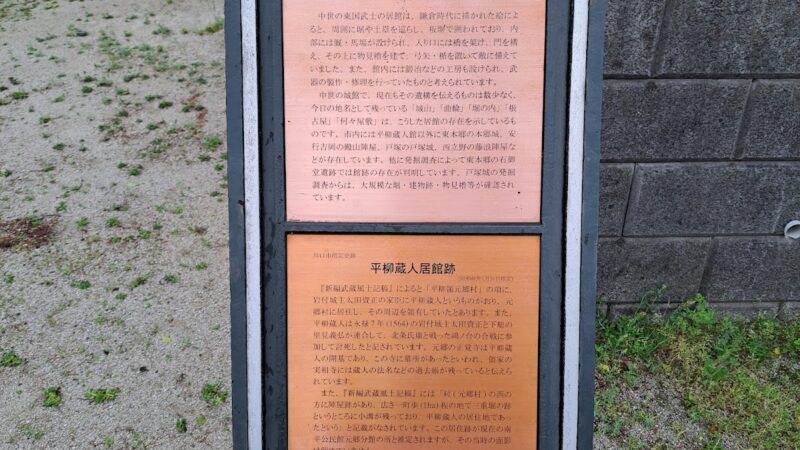
- Stone Monument: An information board explaining the history of Oshi Castle is installed.
- Cherry Blossom Trees: Beautiful cherry blossoms bloom in spring, making it a popular spot for cherry blossom viewing.
The park is a quiet environment surrounded by nature, perfect for walks and picnics.
Remains of the Ishida Embankment
Within the city, some remains of the “Ishida Embankment,” built by Ishida Mitsunari, are preserved. The embankment site has been developed into the “Ishida Embankment Historical Park,” allowing visitors to experience the scale of the civil engineering work at the time.
Of the embankment, which is believed to have stretched approximately 28 kilometers in length, about 250 meters remain and are designated as a national historic site. These remains are highly valued for their historical significance as valuable evidence of large-scale civil engineering work during Japan’s Sengoku period (Warring States period).
Access Information
Access by Train:
- Approximately 15 minutes by city loop bus “Tourist Hub Loop Course” from JR Takasaki Line “Gyoda Station,” get off at “Oshi Castle Ruins/Local History Museum” bus stop.
- Approximately 15 minutes on foot from Chichibu Railway “Gyoda-shi Station.”
Access by Car:
- Approximately 20 minutes from Tohoku Expressway “Hanyu IC.”
- Approximately 40 minutes from Kan-Etsu Expressway “Higashimatsuyama IC.”
- Parking: Free parking available (approximately 50 cars).
Opening Hours: 9:00 AM – 4:30 PM (Last entry at 4:00 PM)
Closed Days: Mondays (or the following day if Monday is a public holiday), the day after public holidays, New Year holidays
Admission Fee: Adults 200 yen, High school and university students 100 yen, Elementary and junior high school students 50 yen
Cultural Works Related to Oshi Castle
The history of Oshi Castle, especially the story of Ishida Mitsunari’s water siege, has been the subject of many cultural works.
The Novel “Nobou’s Castle”
Published in 2007 by Ryo Wada, “Nobou’s Castle” is a historical novel about the siege of Oshi Castle by water. The protagonist is Narita Nagachika (nicknamed “Nobou-sama”), a seemingly unreliable warrior who fights against a large army with his wit and courage.
This novel was a huge hit and was made into a film in 2012. In the film version, Mansai Nomura played Narita Nagachika, sparking a nationwide Oshi Castle boom.
Other Works
Oshi Castle frequently appears in historical novels, dramas, and games. Especially in works dealing with the Sengoku period, it is often depicted as an impregnable fortress, and its unique defensive system attracts attention.
Tourist Attractions Around Oshi Castle
When visiting Oshi Castle, we recommend also visiting the surrounding tourist attractions.
Ancient Lotus Village
Gyoda City is famous for its ancient lotus flowers. At the “Ancient Lotus Village” within the city, you can see ancient lotus flowers that germinated from seeds approximately 1400 to 3000 years ago. The best time to see them is from late June to early August, when beautiful flowers bloom across the vast lotus fields.
Sakitama Kofun Park
Gyoda City has a large group of ancient burial mounds, including the Inariyama Kofun, where the national treasure “Gold-Inlaid Iron Sword” was unearthed. It has been developed as Sakitama Kofun Park, where you can learn about the history of the Kofun period.
Town of Tabi Warehouses
Gyoda City is known as a production center for tabi (traditional Japanese socks), and many historical tabi warehouses remain in the city. Cafes and galleries utilizing these buildings are scattered throughout, allowing you to enjoy a retro atmosphere.
Historical Significance and Evaluation of Oshi Castle
Oshi Castle occupies an important position in the history of Japanese castles.
From the Perspective of Castle Construction Techniques
Oshi Castle is a fine example of castle construction that makes maximum use of the natural terrain. The defensive system, which cleverly utilized water to its advantage despite the seemingly disadvantageous low-lying, marshy terrain, demonstrates the high level of castle-building technology of the time.
The fact that it withstood attacks from large armies, despite being a flatland castle, speaks to the importance of terrain selection and layout design. The design philosophy of Oshi Castle is believed to have influenced later castle architecture.
Importance in Military History
In Toyotomi Hideyoshi’s unification of Japan, the resistance of Oshi Castle was a noteworthy event. The fact that even Ishida Mitsunari, a senior retainer of Hideyoshi, was unable to capture the small castle proves the high level of Oshi Castle’s defenses.
This battle was not merely a localized skirmish, but is recorded in history as one of Japan’s three greatest water sieges, and is an important case study for studying siege tactics of the Sengoku period.
Value as a Cultural Property
Currently, the Oshi Castle ruins are protected as a Saitama Prefecture designated historical site. The remains of the Ishida Embankment are a nationally designated historical site and are a valuable cultural property that conveys the civil engineering technology of the Sengoku period.
Gyoda City is promoting town development utilizing the historical heritage centered around Oshi Castle, and it plays an important role as a tourist resource.
Summary: The Charm of Oshi Castle and its Future Preservation
Oshi Castle is a famous castle representing the Kanto region, with a history of approximately 550 years since its construction. The legend of it being a “floating castle” that withstood Toyotomi Hideyoshi’s water siege continues to fascinate many people.
The current Oshi Castle site has been developed into the Gyoda City Local History Museum and Castle Ruins Park, making it easily accessible to everyone. The restored three-story turret, the preserved remains of the earthworks and moats, and the historical site of the Ishida Embankment convey the spirit of the Sengoku period to the present day.
When visiting Gyoda City, be sure to visit Oshi Castle and reflect on the history of this impregnable castle and the stories of the people who defended it. Through the museum’s exhibits, you will be able to gain a deep understanding of Oshi Castle’s importance in Japanese history.
Oshi Castle is a valuable historical heritage representing Japanese castle culture. It is hoped that appropriate preservation and utilization will continue in the future, ensuring its continuation for future generations. Whether you’re a history buff, interested in architecture or military history, or even just a family, we encourage you to visit Oshi Castle.