Oshi Castle: One of the Seven Famous Castles of the Kanto Region, the Floating Castle That Withstood Ishida Mitsunari’s Water Siege
Located in Gyoda City, Saitama Prefecture, Oshi Castle is one of the most famous castles of Japan’s Sengoku period. Known as an impregnable fortress that utilized the surrounding swamps and the Oshi River as a natural fortress, it is particularly famous for its ability to withstand Ishida Mitsunari’s water siege during Toyotomi Hideyoshi’s conquest of the Kanto region, earning it the nickname “Floating Castle.” This article provides a detailed explanation of this famous castle, including its history, construction, the famous water siege, and its current appearance.
History and Background of Oshi Castle’s Construction
Construction During the Bunmei Era of the Muromachi Period
Oshi Castle is said to have been built during the Bunmei era (1469-1486) of the Muromachi period. During this time, the Kanto region was on the verge of the Sengoku period, and powerful warlords were expanding their influence throughout the region. The Narita clan, who unified this region, built Oshi Castle.
The first lord of the castle, Narita Akiyasu, established the castle in Oshi, Saitama County, Musashi Province, and designed a defensive fortress that skillfully utilized the natural terrain of the surrounding marshes and the Oshi River. This choice of location would later become a crucial factor in making Oshi Castle an impregnable fortress.
Development as the Residence of Four Generations of the Narita Clan
For approximately 100 years, until 1590 (Tensho 18), Oshi Castle functioned as the residence of the Narita clan. It was passed down through four generations, from the first lord, Narita Akiyasu, to Chikayasu, Nagayasu, and then Ujinaga, during which time its functions as a fortress were enhanced.
The Narita clan formed an alliance with the Hojo clan, a powerful daimyo in the Kanto region, and survived the turbulent Sengoku period. Oshi Castle was not merely a military base, but also developed as a political and economic center of the region, and a castle town was formed around it.
Structure and Characteristics of Oshi Castle
A Natural Fortress Utilizing Marshland
The most distinctive feature of Oshi Castle lies in its location. Built in a low-lying wetland surrounded by marshland, the castle’s waterways, including the Oshi River, functioned as natural moats. This topographical characteristic made large-scale enemy attacks difficult, making the castle an impregnable fortress.
At that time, the area around Oshi Castle was a much larger marshland than it is today, and access to the castle was limited to only a few land routes. This natural defense system ironically led to Ishida Mitsunari’s later attack method of flooding the castle.
Evaluation as one of the Seven Famous Castles of Kanto
Oshi Castle is counted as one of the “Seven Famous Castles of Kanto.” The Seven Famous Castles of Kanto is a term referring to important castles in the Kanto region during the Sengoku period, and includes Odawara Castle, Kawagoe Castle, and Maebashi Castle, among others. This assessment demonstrates the military importance and strong defensive capabilities of Oshi Castle.
The castle’s structure was a concentric layout with the main keep at the center, surrounded by the second and third baileys. Although it lacked a main keep, it had numerous defensive structures such as turrets and gates, functioning as a practical fortress.
Battle of Oshi Castle: Ishida Mitsunari’s Water Siege
Toyotomi Hideyoshi’s Conquest of Kanto and the Siege of Odawara
In 1590, with the unification of Japan within his grasp, Toyotomi Hideyoshi launched his conquest of Kanto to eliminate the Hojo clan, his final obstacle. Hideyoshi led a large army to besiege Odawara Castle and simultaneously began attacks on the Hojo clan’s branch castles and allied forces.
Narita Ujinaga, the lord of Oshi Castle, was allied with the Hojo clan and therefore became a target of Hideyoshi’s army. Hideyoshi ordered his favorite retainer, Ishida Mitsunari, to capture Oshi Castle, and Mitsunari led a large army into battle. However, Oshi Castle, protected by surrounding swamps, did not fall easily.
Ishida Mitsunari’s Water Siege Strategy
Judging that Oshi Castle could not be captured through conventional siege tactics, Ishida Mitsunari implemented a bold strategy: a “water siege.” Mitsunari constructed a massive dike stretching approximately 28 kilometers around Oshi Castle, attempting to flood the castle by diverting water from the Tone River.
This water siege was modeled after Hideyoshi’s water siege of Bitchu Takamatsu Castle. Ishida Mitsunari invested enormous effort and time in building the dike, aiming to completely isolate Oshi Castle. This strategy literally turned Oshi Castle into a “floating castle.”
Impregnable Defense and Surrender
Despite Ishida Mitsunari’s water siege, the defenders of Oshi Castle continued to resist tenaciously. Lord Narita Ujinaga was stationed at Odawara Castle, while his daughter, Kaihime, and other senior retainers remained in Oshi Castle to maintain command. Despite being isolated by the water siege, the castle’s soldiers maintained their morale.
The water siege lasted for several months, but Oshi Castle did not fall. Ultimately, following the surrender of Odawara Castle, the main castle, Oshi Castle also surrendered. However, because Oshi Castle surrendered not by attack but by strategic decision, its high defensive capabilities became widely known.
Oshi Castle After the Edo Period
Tokugawa Ieyasu’s Rule of Kanto and the Establishment of the Oshi Domain
After Toyota Hideyoshi’s conquest of Kanto, Tokugawa Ieyasu entered the region, and Oshi Castle became one of the Tokugawa clan’s important strongholds. Throughout the Edo period, Oshi Castle functioned as the administrative center of the Oshi Domain, and various daimyo served as its lords.
During the Edo period, Oshi Castle was an important fortress ruled by hereditary daimyo such as the Matsudaira and Abe clans. Especially during the Abe clan’s rule, the castle town flourished, becoming a center of commerce and culture. The castle’s size was also expanded, playing a crucial role in the Edo shogunate’s control of the Kanto region.
The Meiji Restoration and the Dismantling of the Castle
After the Meiji Restoration, the Oshi Domain was abolished due to the abolition of the feudal system and the establishment of prefectures, and Oshi Castle ceased to exist. Following the Meiji government’s policies, many castle structures were demolished, and Oshi Castle was no exception. Major structures such as turrets and gates were dismantled, and the ruin castles were repurposed for public facilities and schools.
In the Showa era, the Oshi Castle ruins were designated as a historical site by Saitama Prefecture, and its historical value was re-recognized. Part of the castle ruins was developed into a park, becoming a place of relaxation for local residents.
Current Status of Oshi Castle: Restoration and Tourism Development
Restoration of the Three-Story Turret and Gyoda City Local History Museum
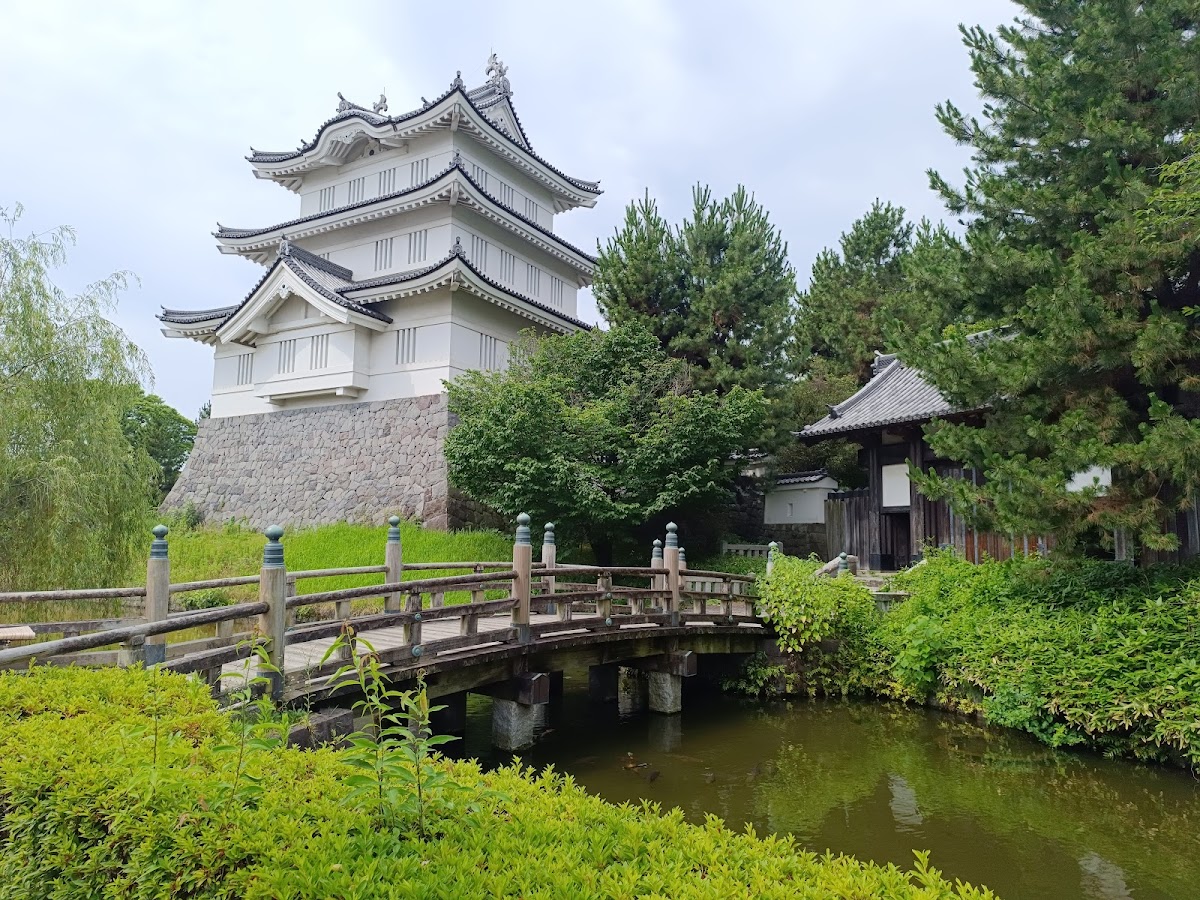
The current Oshi Castle is symbolized by its three-story turret, restored in 1988. This restored turret is built within the Oshi Castle Ruins Park, and its interior houses the Gyoda City Local History Museum. From the top floor, one can enjoy a panoramic view of Gyoda City, imagining the scenery seen by the castle’s former lords.
The museum exhibits the history of Oshi Castle, details of Ishida Mitsunari’s water siege, and materials related to the Narita clan and Edo-period castle lords. Visitors can also see models of the embankments built during the water siege, as well as weapons and historical documents from the time, allowing for a deep understanding of Oshi Castle’s history.
Attractiveness as a Tourist Spot
Oshi Castle is one of Saitama Prefecture’s leading tourist spots, attracting many visitors. For history and castle enthusiasts in particular, it holds great appeal as the site of Ishida Mitsunari’s water siege, a rare siege battle in Japanese history.
The castles park is also known as a famous cherry blossom viewing spot in spring, attracting many visitors. Furthermore, historical sites and information boards ruining the history of Oshi Castle are installed in the surrounding area, allowing visitors to learn about history while strolling around. Around the main keep of Gyoda City, remnants of the castle town’s streetscape remain.
Access and Visitor Information
The nearest stations to Oshi Castle are Gyoda Station on the JR Takasaki Line or Gyoda-shi Station on the Chichibu Railway. From the stations, you can reach the castle by bus, taxi, or on foot. A dedicated parking lot is available for those arriving by car.
The Gyoda City Local History Museum is usually open from 9:00 AM to 4:30 PM (last entry at 4:00 PM), and is closed on Mondays (or the following day if Monday is a public holiday) and during the New Year holidays. Admission is reasonably priced: 200 yen for adults, 100 yen for high school and university students, and 50 yen for elementary and junior high school students.
Oshi Castle and Local Culture
The Movie “Nobou’s Castle” and the Oshi Castle Boom
The movie “Nobou’s Castle,” released in 2012, depicted Ishida Mitsunari’s water siege and the defense of Oshi Castle, and became a major topic of conversation. This movie significantly increased the castle’s national recognition, attracting many tourists.
The movie is based on a novel by Ryo Wada, depicting the exploits of the warriors who defended Oshi Castle. The character of Narita Nagachika (represented as “Nobou-sama” in the movie) is particularly impressive, shedding new light on the history of Oshi Castle. After the movie’s release, events and merchandise sales related to Oshi Castle became popular in Gyoda City.
The Value of Oshi Castle as a Historical Heritage Site in Gyoda City
Oshi Castle is an important heritage site symbolizing the history and culture of Gyoda City. Besides Oshi Castle, the city boasts a variety of cultural assets, including ancient burial mounds and the history of the tabi (traditional Japanese socks) industry. Oshi Castle, as the core of these historical heritage sites, plays a crucial role in shaping the region’s identity.
Gyoda City is focusing on promoting historical tourism centered around Oshi Castle, and is working on developing tourist information centers and historical site tour routes. Furthermore, the history of Oshi Castle is being used as a subject for local history lessons in local schools, ensuring the transmission of history to future generations.
Significance of Oshi Castle as a Cultural Property
Protection as a Saitama Prefecture Designated Historic Site
Oshi Castle ruins are designated as a Saitama Prefecture historic site and are subject to cultural castle property protection. Excavations of the ruins are ongoing, and new discoveries and research findings are being reported. These investigations are gradually revealing the structure of Oshi Castle and the appearance of the castle town.
The Gyoda City Board of Education and local historical preservation organizations are involved in the cultural property protection activities, carrying out maintenance and awareness-raising activities for the historic site. Traces of the embankment built during the siege are also being investigated, and research is progressing on them as valuable materials for the history of Japanese castles.
Historical Value as One of Japan’s Three Great Water Sieges
The water siege of Oshi Castle is considered one of Japan’s “Three Great Water Sieges,” alongside the water sieges of Bitchu Takamatsu Castle and Kii Ota Castle. This tactic is a unique siege method from Japan’s Sengoku period and is an important subject of military history research.
The approximately 28-kilometer-long embankment built by Ishida Mitsunari demonstrates the advanced civil engineering technology of the time. The ability to carry out such a large-scale civil engineering project in such a short period is proof of the mobilization and organizational capabilities of the Toyotomi regime and is valued as an important example in Japanese history.
Points to Note When Visiting Oshi Castle
Highlights and Nearby Attractions
When visiting Oshi Castle, we recommend first visiting the reconstructed three-story turret and the Gyoda City Local History Museum. The museum offers a systematic learning experience of Oshi Castle’s history, detailed explanations of the water siege, and valuable historical materials.
Within the castle ruins park, remnants of the main keep and moats remain, allowing visitors to experience the scale of the former castle. Furthermore, historical sites indicating the remains of the embankment built during the siege are also present in the surrounding area, making it a well-maintained historical walking route.
Gyoda City also boasts other attractions, such as the Sakitama Kofun Park and the Tabi-gura (traditional Japanese socks storehouse). Visiting these in conjunction with Oshi Castle allows for a comprehensive experience of Gyoda City’s rich history and culture.
Seasonal Ways to Enjoy
Oshi Castle offers charm in every season. In spring, the cherry blossoms in the castle ruins park are in full bloom, attracting many visitors to this popular spot for cherry blossom viewing. The contrast between the cherry blossoms and the reconstructed turret makes for an excellent photo opportunity.
In summer, the lush green park offers a refreshing respite, while autumn’s vibrant foliage creates a beautiful landscape. Visiting the ruin castles in the quiet atmosphere of winter also provides a wonderful experience, allowing visitors to feel the weight of history. Oshi Castle, with its ever-changing seasonal appearance, offers new discoveries with every visit.
Summary
Oshi Castle, built by the Narita clan during the Bunmei era of the Muromachi period, served as their residence for approximately 100 years and is one of the seven famous castles of the Kanto region. During Toyotomi Hideyoshi’s conquest of Kanto in 1590, it defended itself without succumbing to Ishida Mitsunari’s large-scale water siege, earning it the nickname “Floating Castle.”
Known as an impregnable fortress utilizing the surrounding swamps and the Oshi River as a natural fortress, its high defensive capabilities are noteworthy in the history of Japanese castles. During the Edo period, it played an important role as the administrative center of the Oshi Domain. Although dismantled after the Meiji Restoration, a three-story turret was restored in the Showa era, and it now attracts many tourists as the Gyoda City Local History Museum.
Ishida Mitsunari’s water siege is one of Japan’s three greatest water sieges and is a historically significant example. The construction of the approximately 28-kilometer-long embankment demonstrates the advanced civil engineering technology of the time. The current Oshi Castle, while protected as a Saitama Prefecture designated historical site, serves as an important tourist resource that conveys the region’s history and culture, and has become nationally known as the setting for the movie “Nobou’s Castle.”
Located in Honmaru, Gyoda City, the Oshi Castle ruins are a valuable place where one can feel the historical romance of the Sengoku period, and are an important historical site for understanding Japanese castle culture. It is an attractive spot not only for history enthusiasts but also for general tourists, and its value is sure to increase in the future.