Complete Guide to the Asami Clan Residence (Minano Town, Saitama Prefecture) | The Charm of the Edo Period Samurai Residence and Stone Walls
Located in the Shimo-Hinozawa district of Minano Town, Chichibu District, Saitama Prefecture, the Asami Clan Residence is a valuable historical site with well-preserved remains of a samurai residence from the early Edo period. It features stone walls built during the Genroku era and a unique staggered gate, characteristic of stone construction, which is rare for samurai residences in the Kanto region. It is carefully preserved by the local community as a cultural asset.
History of the Asami Clan Residence and the Asami Clan
Origins of the Asami Clan and Their Connection to the Region
The Asami clan were local lords who had long been rooted in this region. There are various theories regarding the origin of the place name; some suggest it derives from a marshland called “Shallow Swamp” or “Shallow Sea,” while others claim the name originated from the residence of the Asami clan.
During the Sengoku period, this region belonged to the sphere of influence of the Later Hojo clan, and the Asami clan is believed to have been under their influence. It is presumed that the Asami clan was particularly active as local lords in the Chichibu region, within the territory controlled by Hojo Ujikuni, who was based at Hachigata Castle.
The Asami Clan as a Gōshi (Local Samurai) in the Early Edo Period
In the Edo period, the Asami clan came to play an important role in the local community as goshi (local samurai). Gōshi were a class of people who, while holding samurai status, lived in rural areas and assisted in maintaining local security and administration.
The stone walls of the Asami clan residence that remain today are believed to have been constructed around 1694 (Genroku 7). This period saw the stabilization of the Edo shogunate’s system of rule, and castles and residences were being developed throughout the country. It is said that a man named Asami Samanosuke was the owner of the residence, and this magnificent stone-walled residence demonstrates the Asami clan’s economic power and high social status at the time.
Structure and Layout of the Asami Clan Residence
Location and Topographical Features
The Asami Clan Residence is built on a site approximately 40 meters above sea level, relative to the Saitama Prefectural Road. The area behind it is connected to the mountains, resulting in a defensive layout that utilizes the natural terrain. A signpost indicating the entrance to the residence site is erected beside the prefectural road, making it an easily identifiable landmark for visitors.
The path leading to the residence site is a somewhat steep uphill climb, and this difference in elevation itself is thought to have functioned as part of the defensive structure. Compared to residences on flat ground, this difference in elevation made enemy intrusion more difficult.
Structure and Technique of the Stone Wall
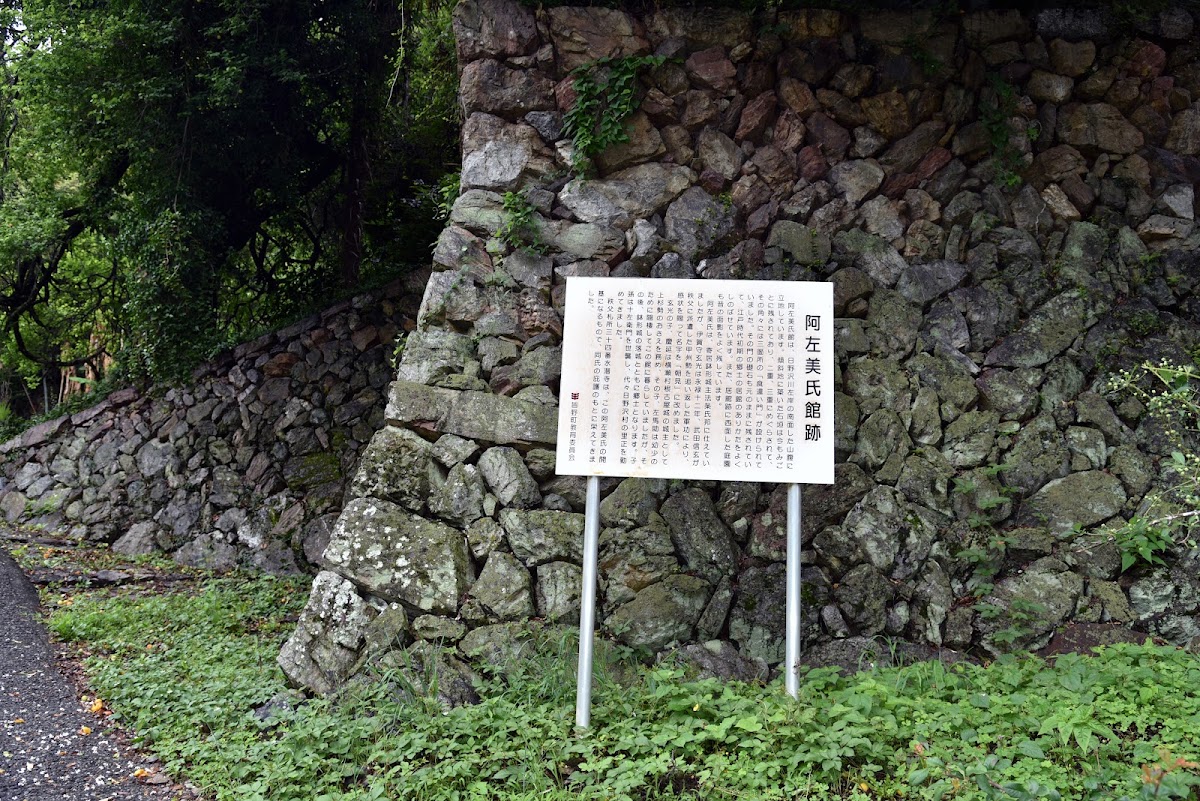
The most notable feature of the Asami Clan Residence is the magnificent stone wall built on the front. It is noteworthy that a full-fledged stone wall was used, which is rare for a samurai residence from the early Edo period.
The stone wall reaches a height of several meters, boasting an impressive scale for a samurai residence in the Kanto region. The stonework uses natural stones quarried locally and is constructed using the Nozura-zumi technique. This technique, which utilizes the natural shapes of the stones, was widely used from the Sengoku period to the early Edo period.
The stone walls are well-preserved and still retain much of their original appearance. While some traces of later restorations are visible, the basic structure is believed to be from the Genroku period.
Remains of a Staggered Entrance
The Asami Residence retains the remains of a staggered entrance (kuichigai koguchi). A staggered entrance is a defensive structure that deliberately staggers the entrances to make enemy intrusion difficult.
The structure, which prevents a direct frontal advance, forces the attacking side to stop and change direction, allowing the defenders to attack during that time. This technique developed from mountain castles of the Sengoku period and was also applied to residences of the Edo period.
The staggered gate of the Asami Clan Residence, combined with the stone walls, achieves a more effective defensive function. The design philosophy is evident in its consideration of ease of passage during peacetime, while simultaneously serving as a robust defensive stronghold in times of conflict.
Current Site and Private Houses
Currently, the site of the Asami Clan Residence is occupied by two private houses, one on the east and one on the west. These houses are built utilizing the remains of the residence, and historical structures such as the stone walls are integrated into daily life.
As it is private property, consideration for the residents is necessary when visiting. Unauthorized entry onto the property should be avoided, and basic etiquette is to view from the road or the publicly accessible areas. Even so, the structure of the stone walls and gate can be fully observed from the outside.
Highlights and Charms of the Asami Clan Residence
The Beauty of the Genroku Period Stone Walls
The greatest reason to visit the Asami Clan Residence is undoubtedly the beauty of the stone walls built during the Genroku period. The stone walls, standing firm for over 300 years, speak to the high level of stonemasonry skill of the time.
The surface of the stone walls shows signs of weathering from years of wind and rain, as well as moss growth, conveying a sense of historical weight. The stone walls, which display different appearances depending on the season, offer new discoveries with each visit. Especially during the hours when the morning or evening sun shines on them, the shadows of the stones are striking, highlighting their three-dimensional beauty.
Ingenious Defensive Features
One of the highlights is that, despite being a residence of a local samurai, it possesses full-fledged defensive features. The location, which utilizes the difference in elevation, the robust defenses of the stone walls, and the control of intrusion routes by the staggered gates—all these elements condense castle construction techniques inherited from the Sengoku period into a limited scale.
The relationship with the mountain behind is also interesting; the arrangement, which uses the mountain at its back to prevent attacks from the rear while forming the main defensive line with the stone walls in front, is a design that skillfully utilizes the terrain.
Value as a Local Historic Site
The Asami Clan Residence is designated as a historical site by Minano Town and is protected as an important cultural property that conveys the history of the region. It is a valuable resource for understanding the life and social structure of local samurai in the Chichibu region during the early Edo period.
While many castle and residence ruins remain in the Kanto region, examples of Edo-period samurai residences with such clearly preserved remains are rare. Although smaller in scale compared to large castles like Hachigata Castle, these smaller residence ruins provide even more valuable information for understanding the realities of the samurai class in local communities.
Access and Visiting Guide
Access by Public Transportation
To visit the Asami Clan Residence using public transportation, the nearest station is Minano Station on the Chichibu Railway. From Minano Station, take the town bus, the Hinozawa Line, and get off at the “Hino” bus stop. From the bus stop, it’s a few minutes’ walk, and you’ll see a signpost along the prefectural road.
Since bus services are limited, it is recommended to check the timetable in advance. It is especially important to know the return bus schedule.
Access by Car
If visiting by car, it takes about 30 minutes from the Kan-Etsu Expressway Hanazono Interchange via National Route 140. While driving along the prefectural road, you will see a signpost when you enter the Shimo-Hinozawa area.
Regarding parking, there is no dedicated parking space, so please be careful not to park on the street. It is advisable to use the parking lots of nearby public or commercial facilities and visit on foot from there. Since the visit will only take a short time, it is important to be considerate of surrounding traffic.
Precautions During Visit
The Asami Clan Residence Site is currently on the grounds of a private residence, so sufficient consideration is necessary when visiting. Please note the following:
- Unauthorized entry onto the premises is strictly prohibited.
- Please take photographs from the public road, respecting the privacy of residents and those living in the area.
- Please avoid loud conversations and noise, and observe quietly.
- Please take all your trash with you.
- Do not touch or climb on the stone walls or other historical remains.
The best time to visit is during the warm seasons from spring to autumn. In winter, the roads may freeze, so please be careful of your footing.
Estimated Time and Viewing Route
A visit to the Asami Clan Residence itself takes about 30 minutes to an hour. The basic viewing route involves climbing the slope from the signpost along the prefectural road and observing the stone walls and the remains of the staggered gate.
If you plan to take photographs or conduct detailed observations, it is recommended to allow a little more time. There are other historical sites and tourist attractions in the surrounding area, so a plan to enjoy a full day of historical exploration in the Chichibu region is also recommended.
Nearby Tourist Attractions and Castle Ruins
Hachigata Castle Ruins (National Historic Site)
Located about 20 minutes by car from the Asami Clan Residence, Hachigata Castle Ruins is a large mountain castle known as an important base for the Later Hojo clan. Hojo Ujikuni served as its lord, and it was a strong fortress that withstood attacks from Takeda Shingen and Uesugi Kenshin.
Currently designated as a national historic site, the vast castle grounds retain well-preserved remains such as earthworks and dry moats. The Hachigata Castle History Museum is also located on the premises, where you can learn about the history of the Chichibu region during the Sengoku period. Visiting both the Asami Clan Residence and Hachigata Castle Ruins allows you to compare castle architecture of different scales and characteristics: a castle of a daimyo (feudal lord) and a residence of a local samurai.
Other Historic Sites in Minano Town
In addition to the Asami Clan Residence, several other castle ruins remain in Minano Town. These include the Shitara Clan Residence, Urayama Castle, and Koike Clan Residence, all of which were bases for local lords who ruled this region from the medieval to the early modern period.
Visiting these historical sites will provide a comprehensive understanding of the development of samurai groups in the Chichibu region and the structure of the local community.
Asami Reizo Kanazaki Main Store
After exploring the history, a visit to the famous Asami Reizo Kanazaki Main Store in Minano Town is highly recommended. It is nationally known for its shaved ice made with natural ice, and is especially popular with tourists during the summer.
The name “Asami” originates from the same place name as the Asami clan of the Asami Clan Residence, allowing you to feel the historical connection to this region.
Sightseeing in the Chichibu Region
The Chichibu region boasts many tourist attractions, including the Nagatoro Rock Formations, Chichibu Shrine, and Mitsumine Shrine. Incorporating a visit to the Asami Clan Residence as part of a trip to enjoy the nature and history of the Chichibu region will make for a more fulfilling sightseeing experience.
Significance of Visiting the Asami Clan Residence
Importance of Local History Research
Small-scale historical sites like the Asami Clan Residence may receive less attention compared to large castles. However, these residences of local lords and samurai are crucial for understanding regional history.
Edo period regional society was supported not only by daimyo and hatamoto, but also by the middle class, such as samurai and village headmen. The Asami Clan Residence is a valuable historical site that concretely illustrates the lives and roles of these people.
Diversity of Castle Architecture
When thinking of Japanese castle architecture, one tends to imagine large-scale early modern castles like Himeji Castle and Osaka Castle, but in reality, castles of various sizes and forms existed. The Asami Clan Residence is a good example of the structure and defensive capabilities of a samurai-class residence.
The application of full-fledged castle techniques such as stone walls and gate structures to a small residence speaks to the spread of architectural technology in the early Edo period and the military tension in society. ### Understanding Cultural Property Preservation
Many historical sites, such as the Asami Clan Residence, are located on private land and are preserved through the cooperation of local residents. When visiting as a visitor, it is necessary to show respect for these preservation efforts and observe appropriate manners.
Cultural property preservation is supported not only by the government and experts, but also by the awareness of local residents and each individual visitor. Visiting the Asami Clan Residence is an opportunity to experience firsthand the efforts being made to preserve cultural properties.
Future Preservation and Utilization of the Asami Clan Residence
Preservation Status and Challenges
The stone walls and gate remains of the Asami Clan Residence are currently preserved in relatively good condition. However, more than 300 years have passed since its construction, and deterioration over time is unavoidable. In particular, some parts of the stone walls show damage from weathering and plant roots.
Because it is a historical site located on private land, balancing preservation and utilization is a challenge. How to pass on the historical site to future generations while respecting the lives of the residents is a matter that the entire community must consider.
Utilization as a Local Resource
The Asami Clan Residence is an important historical resource of Minano Town. With proper maintenance and information dissemination, it has the potential to be utilized as a local tourism resource.
Efforts to deepen visitors’ understanding are expected, such as improving information boards, creating explanatory materials, and conducting guided tours. At the same time, it could also be used as teaching material for local history education in local schools.
Progress in Research
Many aspects of the Asami Clan Residence remain unclear. Further research may reveal new facts regarding the detailed genealogy of the Asami clan, the exact construction date of the residence, the origin of the stone materials used, and related surrounding remains.
Archaeological surveys and the excavation of historical documents are expected to provide a more detailed understanding of the realities of local samurai in the Chichibu region during the early Edo period.
Summary
The Asami Clan Residence in Minano Town, Saitama Prefecture, is a valuable historical site, a samurai residence from the early Edo period, featuring impressive stone walls and a staggered gate. Built around 1694 (Genroku 7), this residence was the base of a local samurai named Asami Samanosuke, and it conveys the lifestyle and role of the samurai class in the local community at that time.
Built on a relative elevation of approximately 40 meters, the residence is protected by a mountain at the rear and features a defensive structure with stone walls at the front. This authentic stone structure, rare for a local samurai residence in the Kanto region, boasts remarkable craftsmanship and beauty.
While consideration is needed when visiting as the site is now privately owned, the stone walls and gate structure can be fully observed from the public road. It is accessible by bus from Minano Station on the Chichibu Railway, and with many other historical sites such as the Hachigata Castle ruins nearby, it is ideal for a historical exploration trip.
From the perspective of a samurai residence rooted in the local community, distinct from large-scale castles, the Asami Residence is a historical site of significant importance in understanding Japanese history and culture. When visiting Minano Town, be sure to visit this historical site.