A Historical Guide to Kaifu Castle and Kaifu District, Tokushima Prefecture: From the Sengoku Period to the Present
Kaifu District in Tokushima Prefecture is located in the southeastern part of Shikoku, a scenic area facing the Pacific Ocean. Essential to understanding the history of this region is Kaifu Castle, which once stood in Kaiyo Town. This article provides a comprehensive explanation, from the historical background of Kaifu Castle to the changes in Kaifu District and its appeal as a modern tourist spot.
History and Overview of Kaifu Castle
Background of the Construction of Kaifu Castle (Tomo Castle)
Kaifu Castle, also known as “Tomo Castle,” was a castle located in Tomoura, Kaiyo Town, Kaifu District, Tokushima Prefecture. It is believed to have been built during the Eiroku era (1558-1570) by Kaifu Sakon Shogen Tomomitsu.
The Kaifu clan originally had Yoshino Castle as their main base, but wary of the expanding power of Chosokabe Motochika of Tosa, who aimed to conquer Shikoku, they built a new castle in a strategic location overlooking the mouth of the Kaifu River. This location was ideal for monitoring incursions from the sea and controlling maritime traffic.
Castle Structure and Characteristics
Kaifu Castle was built as a mountain castle, with the main enclosure located at the highest point. Even today, the castle mountain can be seen from Tomoura Fishing Port, confirming its topographical advantage. The structure, with the main enclosure at the highest point of the castle mountain and enclosures located on the south side, is typical of mountain castles of that time.
The castle’s location on a hill overlooking the mouth of the Kaifu River was an important base controlling a key point for maritime traffic. This location indicates that the Kaifu clan valued both economic activity through maritime transport and military defense.
The Conflict Between Kaifu Castle and the Chosokabe Clan
The Origin of the Shima Chikamasu Incident
In 1571 (Genki 2), a major turning point occurred in the history of Kaifu Castle. Shima Chikamasu, the younger brother of Chosokabe Motochika, took refuge in an inlet below Kaifu Castle to avoid a gust of wind. However, Kaifu Tomomitsu, the lord of Kaifu Castle at the time, attacked Chikamasu’s ship and killed him.
This incident stemmed from the Kaifu clan’s vigilance against the Chosokabe clan’s ambition to unify Shikoku, and their strong will to protect their territory. However, this action would later drastically change the fate of the Kaifu clan.
The Conquest by Chosokabe Motochika
Enraged by the murder of his brother, Chosokabe Motochika captured Kaifu Castle in 1577 (Tensho 5). This battle marked the end of the Kaifu clan’s rule, and the Kaifu region came under the control of the Chosokabe clan.
In Chosokabe Motochika’s unification of Shikoku, the capture of Kaifu Castle was a crucial step in securing control of southern Awa Province. This battle was one of the events that reshaped the power dynamics of Shikoku during the Sengoku period.
Kaifu Castle in the Edo Period and its Abolition
As One of the Nine Castles of Awa
In the Edo period, Hachisuka Iemasa, the lord of Tokushima Domain, became the ruler of Awa Province, and Kaifu Castle was counted as one of the nine castles of Awa. The nine castles of Awa were the major castles located within Awa Province, centered around Tokushima Castle, and Kaifu Castle functioned as an important base in southern Awa Province.
The One Castle Per Province Decree and Castle Abolition
In 1638 (Kanei 15), Kaifu Castle was abolished due to the Edo Shogunate’s One Castle Per Province Decree. This was part of a nationwide policy aimed at limiting the military power of daimyo by leaving only one castle per domain and abolishing others.
After the abandonment of Kaifu Castle, a jinya (fortified residence) was built at the eastern foot of the castle, and the administrative functions of Kaifu County were moved there. This jinya functioned as a substitute office for Kaifu County and flourished as the administrative and economic center of the region until it was moved to present-day Minami-cho in 1807.
Historical Changes in Kaifu County
Kaifu County from Ancient to Medieval Times
The history of Kaifu County is long, with manors and villages such as Shishikui-no-sho, Fukui-sho, Kaifu-go, Asakawa-go, Mugi-go, and Hiwasaho being established from the Heian period to the Kamakura period. These areas developed independently, shaping the culture and economy of the entire Kaifu region.
The place name Kaifu is said to originate from the ancient “ama” (fishermen), indicating a region deeply connected to the sea. It is believed that the Kaifu clan also built their power by controlling maritime traffic in this region.
Administrative Divisions Since the Meiji Era
At the beginning of the Meiji era, the entire Kaifu District was part of the Awa Tokushima Domain. Following the Meiji Restoration and the abolition of the feudal domains and establishment of prefectures, Kaifu District became part of Tokushima Prefecture, and modern administrative divisions were established.
From the Showa to the Heisei era, town and village mergers progressed within Kaifu District. In particular, on March 31, 2006 (Heisei 18), the three towns of Kaifu, Kainan, and Shishikui merged to form Kaiyo Town, creating the modern form of Kaifu District.
Kaifu’s Townscape and Cultural Heritage
Unique “Mise-zukuri” Architecture
The Kaifu region retains a unique townscape known as “mise-zukuri.” The facades of the houses feature folding benches called “uwamise” and “shitamise,” which were formerly used as sales counters during the day and as shutters at night.
This architectural style is unique to the Kaifu region and preserves the traditional form of townhouses where commerce and residence were integrated. As a historical townscape, it is an important heritage site that demonstrates the cultural value of the region.
Cultural Properties of Kaiyo Town Museum
The Kaiyo Town Museum exhibits cultural heritage of the Kaifu region. Of particular note are the swords known as “Kaifu swords,” which are highly regarded by sword enthusiasts. Also, the “Oosato excavated coins” boast the 10th largest number of excavated coins in Japan, making them valuable historical materials that tell the story of the region’s economic prosperity.
These cultural properties provide crucial clues to understanding the history and culture of the Kaifu region from the time of Kaifu Castle to the Edo period.
Modern Kaifu Castle Ruins and Tourism
Current Status of Kaifu Castle Ruins
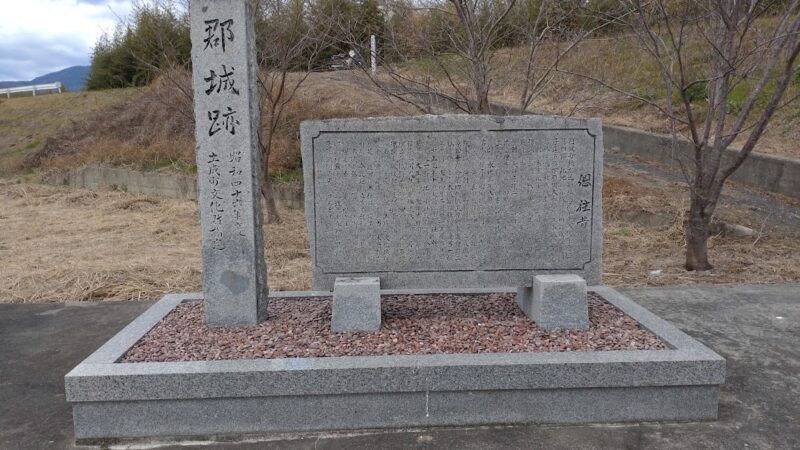
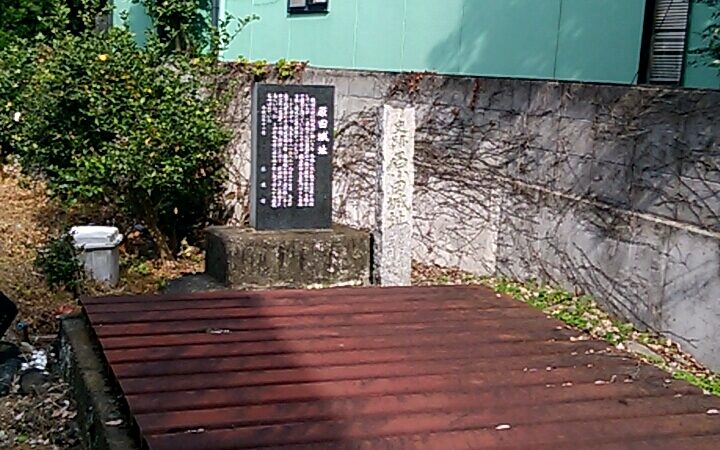
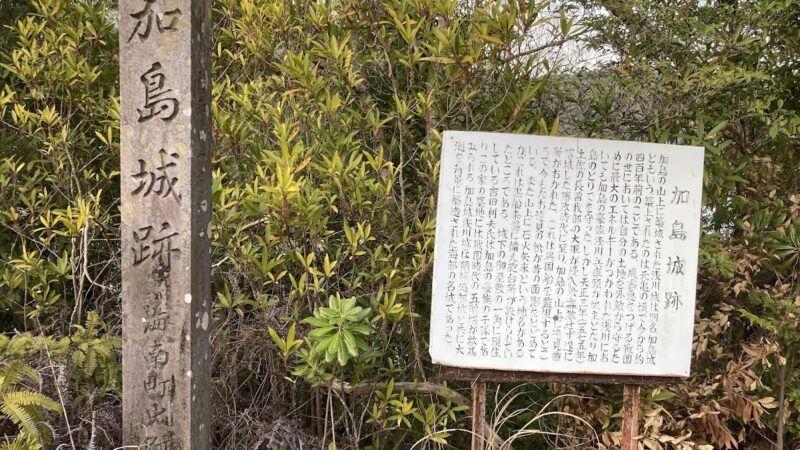
Currently, the Kaifu Castle ruins are a designated historical site of Kaiyo Town and serve as a local landmark as Shiroyama (Castle Hill). Shiroyama can be seen from Tomoura Fishing Port, allowing one to imagine the former grandeur of the castle.
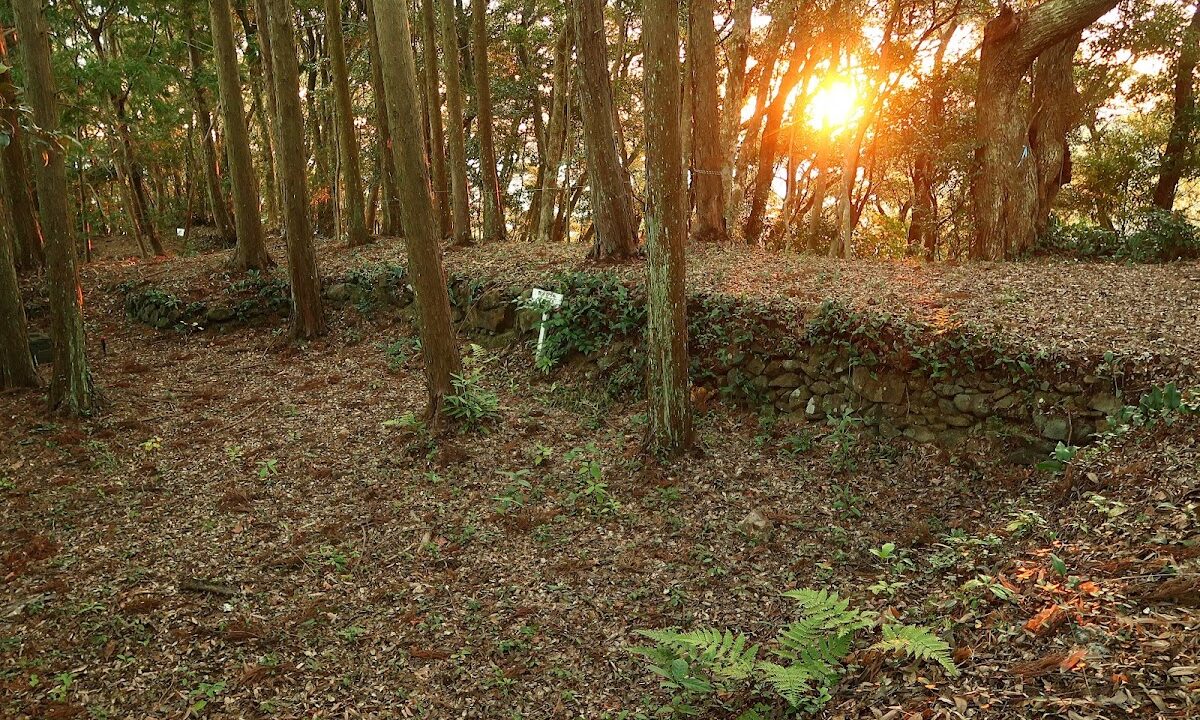
Remains of the castle still exist, allowing visitors to confirm the layout of the main enclosure and other enclosures. For history buffs and castle enthusiasts, this is a valuable place to learn about the structure of mountain castles from the Sengoku period.
Tourist Attractions in Kaiyo Town, Kaifu District
Besides the Kaifu Castle ruins, Kaiyo Town has many other tourist attractions. Its beautiful coastline, abundant nature, and historical townscape captivate visitors.
Of particular note is the Asa Coast Railway’s DMV (Dual-Mode Vehicle). As the world’s first fully operational DMV capable of running on both rail and road, it’s a popular spot attracting railway fans from all over Japan. You can obtain a “railway stamp” at Shishikui Station, drawing many tourists from far and wide.
Access and Tourist Information for the Kaifu Region
Transportation Access
Kaiyo Town in Kaifu District, Tokushima Prefecture, is approximately a 2-hour drive from Tokushima City and is also accessible from Kochi Prefecture. Using the Asa Coast Railway allows you to enjoy the beautiful coastal scenery along the way.
Located in the southeastern part of Shikoku, it possesses a unique charm as a region where the cultures of Tokushima and Kochi prefectures intersect. The scenic views facing the Pacific Ocean leave an unforgettable impression on visitors.
Nearby Attractions
When visiting the Kaifu Castle ruins, we recommend also exploring the surrounding historical sites. You can create a day-long sightseeing route that includes the townscape of Kaifu, the Kaiyo Town Museum, and the beautiful coastline.
The local food culture is also a major attraction, offering dishes made with fresh seafood. In particular, the seafood caught using the traditional fishing methods of the Kaifu region is exquisite.
Historical Significance of Kaifu Castle
Position in the History of Shikoku Unification
Kaifu Castle played a crucial role in the process of Chosokabe Motochika’s unification of Shikoku. The series of events from the Shima Chikamasu Incident to the capture of Kaifu Castle is recorded as a historical event symbolizing the power struggles in Shikoku during the Sengoku period.
The conflict between the Kaifu clan and the Chosokabe clan is also a classic example of the process by which local powerful families were absorbed into centralized Sengoku daimyo. This history serves as an important case study for understanding the changes in regional control during Japan’s Sengoku period (Warring States period).
Value of Regional History Research
Research into the history of Kaifu Castle and Kaifu County is indispensable for unraveling the regional history of southern Tokushima Prefecture. It offers multifaceted research themes, including its role as a key point for maritime traffic, the development of the regional economy, and the formation of culture.
Even today, the Kaifu Castle ruins are cherished by residents as a symbol of the region’s identity. Efforts to promote regional development utilizing historical heritage are also attracting attention as a model case for sustainable tourism development.
Summary: The Charm of Kaifu Castle and Kaifu County
Kaifu Castle, located in Kaiyo-cho, Kaifu County, Tokushima Prefecture, is an important historical site that tells the story of the turbulent history from the Sengoku period to the early Edo period. From its construction during the Eiroku era to its conflict with Chosokabe Motochika and its abandonment in Kan’ei 15 (1638), its approximately 80-year history provides valuable information for understanding the Sengoku history of Shikoku.
Modern Kaiyo Town in Kaifu District is leveraging this historical heritage to promote itself as a new tourist destination. Visiting the Kaifu Castle ruins allows you to feel the spirit of the Sengoku period and experience the charm of a region where beautiful nature and unique culture blend seamlessly.
When visiting Shikoku, be sure to stop by Kaiyo Town in Kaifu District and immerse yourself in the history of Kaifu Castle and the local culture. This region offers a rich experience not only for history buffs but for everyone who wants to enjoy nature and culture.
The view of the Pacific Ocean from the Kaifu Castle ruins is the same view that the castle’s lords once saw. Reflecting on that landscape and feeling the depth of Japan’s regional history—that is the charm of Kaifu Castle and Kaifu District.