Murokoyama Castle (Katsuyama City, Fukui Prefecture) Complete Guide | History, Ruins, and Access Information
What is Murokoyama Castle?
Murokoyama Castle (also known as Murokoyama-jo) was a Japanese mountain castle located in Terao, Muroko-cho, Katsuyama City, Fukui Prefecture. Built on the summit of Mt. Murokoyama (commonly known as Mt. Otateyama), which is 301 meters above sea level, this castle was the stage for fierce battles between the Ikkō-ikki rebellion and the forces of Oda Nobunaga in Echizen during the late Sengoku period.
This castle site, which is said to be deeply connected to the origin of the current place name of Katsuyama City, is an important historical site indispensable to understanding the medieval history of Fukui Prefecture, and attracts attention from castle enthusiasts and history lovers.
History of Murokoyama Castle
Background of Construction and the Ikkō-ikki Rebellion
The history of Murokoyama Castle begins in April of Tenshō 2 (1574). According to the “Asakura Shimatsuki,” the Ikkō-ikki forces, centered around the Nanayama family who controlled the Ōno, Minamibukuro, and Kitabukuro areas, constructed a castle overnight, building walls, fences, and moats to serve as a base for attacking Hakusan Heisenji Temple.
In 1573, after Asakura Yoshikage was killed by Oda Nobunaga and the Asakura clan was destroyed, Ikkō-ikki uprisings broke out throughout Echizen Province. Asakura Kageakira, who had surrendered to Nobunaga, was also pursued by the rebels and forced to seek refuge at Heisenji Temple. Amidst this chaos, the Ikkō-ikki forces of the Minamibukuro Nanayama family built Murayama Castle to fight against the Heisenji Temple followers.
Origin of the Place Name “Katsuyama”
One of the most interesting anecdotes related to Murayama Castle is the origin of the place name Katsuyama City. During the attack on Hiraizumi-ji Temple in April of Tensho 2 (1574), the rebel forces achieved victory, leading to the name Murayama being called “Kachiyama” (Victory Mountain). This is said to be the origin of the place name “Katsuyama” (Victory Mountain).
This victory by the rebels in the battle had a significant impact on the region’s history and has remained as a place name to this day.
Oda Nobunaga’s Suppression of the Rebellion and the Shibata Clan’s Rule
In Tensho 3 (1575), Oda Nobunaga launched an attack to suppress the Echizen Ikko-ikki rebellion. Nobunaga’s army inflicted a devastating blow on the rebel forces, and Murayama Castle came under Oda control.
After the suppression of the rebellion, Shibata Yoshinobu was appointed as the lord of Murayama Castle. Shibata Yoshinobu is said to be a member of the Shibata Katsuie family. However, resistance from remnants of the rebellion continued, and Yoshinobu was eventually killed by them.
After Yoshinobu’s death, his adopted son, Shibata Katsuyasu (later Shibata Katsumasa), became the lord of the castle. As the adopted son of Shibata Katsuie, Katsuyasu played a crucial role in the system of rule under Katsuie, who became the lord of Kitasho Castle in Echizen Province.
Relocation to Katsuyama Castle and Abandonment of the Castle
In 1580, Shibata Katsuyasu decided to build a new castle in Fukuroda at the foot of the mountain. While the mountain castle, Murayama Castle, was militarily advantageous, it was inconvenient for peacetime governance and economic activities.
The new castle built by Katsuyasu was named “Katsuyama Castle,” after “Katsuyama,” another name for Murayama. This Katsuyama Castle was built as a flatland castle, measuring approximately 396 meters north-south and 293 meters east-west. The current location of the Katsuyama City Hall and Katsuyama Civic Center is believed to be the site of the former main keep and castle tower of Katsuyama Castle.
With the relocation to Katsuyama Castle, Murayama Castle was abandoned in 1580 (Tensho 8). Although it existed for only a short period of six years, Murayama Castle played an important role as a symbolic representation of the conflict between the Echizen uprisings and the Oda forces.
The Katsuyama Region Afterwards
In 1583 (Tensho 11), when Shibata Katsuie was defeated by Hashiba Hideyoshi (Toyotomi Hideyoshi) at the Battle of Shizugatake, the Shibata clan was destroyed. Afterward, Katsuyama Castle saw successive lords: Narita Shigemasa and Hasegawa Hidekazu.
After the Battle of Sekigahara, in 1601, when Yuki Hideyasu entered Fukui as the lord of Echizen Province with a domain of 680,000 koku, Katsuyama Castle was positioned as one of Fukui Castle’s branch castles, and the Katsuyama region came under the control of the Echizen Matsudaira family.
Structure and Remains of Murayama Castle
Castle Location and Layout
Murayama Castle’s main enclosure is located on the summit of Mt. Otateyama, at an elevation of 301 meters, approximately 1.5 kilometers north of the Katsuyama city center, east of Murayama town. With a relative elevation difference of approximately 150 meters, it exhibits a typical mountain castle structure utilizing the steep terrain.
While there is a legend that it was built overnight, it is believed that in reality, the existing terrain was skillfully utilized, and measures were taken to enhance defensive capabilities with minimal construction.
Major Remains
Currently, the following remains are well-preserved at the Murayama Castle site.
Main Enclosure (Honmaru)
Located on the mountaintop, the main enclosure served as the central part of the castle. It was surrounded by defensive earthworks and moats.
Horizontal Moats and Earthen Bridges
Horizontal moats were constructed around the main enclosure, with several earthen bridges spanning them. These horizontal moats are crucial defensive structures of the castle. The earthen bridges served as both passageways and to restrict enemy incursions.
Gate (Entrance)
The gate (entrance to the castle) is clearly visible from the approach road. The gate’s shape is designed to effectively prevent enemy incursions, showcasing the castle-building techniques of the Sengoku period.
Enclosures (Kuruwa)
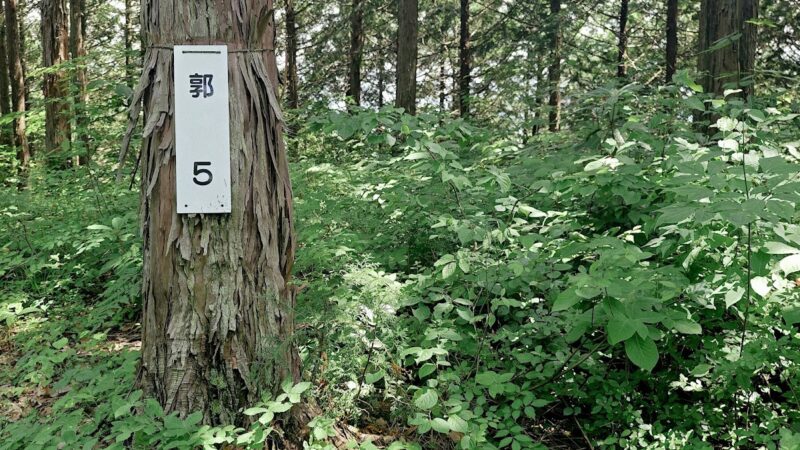
Several enclosures (kuruwa) are located around the main enclosure. The group of enclosures extending to the right from the entrance are thought to have been used for stationing soldiers and storing supplies.
Ridge-shaped Vertical Moats
A series of ridge-shaped vertical moats are constructed on the right-hand slope of the castle. These are defensive structures designed to prevent attacks from the enemy’s flanks and are characteristic features of mountain castles from the Sengoku period. The parallel construction of multiple vertical moats restricts the movement of enemy soldiers climbing the slope, enhancing the defensive effect.
Moat Cut
Moats cutting across the ridge have also been identified, clearly defining the castle area and serving as an important defensive line to prevent enemy intrusion.
Preservation of the Remains
More than 400 years have passed since the abandonment of Murayama Castle, but because it has been preserved as a forest, the remains such as earthworks and moats remain in relatively good condition. In recent years, investigations have been conducted by local history enthusiasts and castle researchers, leading to a renewed recognition of its historical value.
Currently, the castle site has been kept to a minimum, preserving the remains in a quiet, natural setting. Therefore, care must be taken not to damage the ruins when visiting.
Access Route and Information
Entrance and Parking
There are mainly two entrances to Muraokayama Castle.
Muraoka Shrine Route (Recommended)
The most common route is from Muraoka Shrine, located north of Muraoka Elementary School. Parking is available at the Muraoka Community Center (prior permission is recommended). The entrance to the castle path is to the right of the shrine.
Terao Settlement Route
Another route is from Terao Settlement on the northeast side. This is also usable, but the Muraoka Shrine route is easier to follow and better maintained.
Time and Difficulty of the Ascent
The ascent route from Muraoka Shrine is a steep climb with an elevation difference of approximately 150 meters. The path is a mountain trail, and caution is necessary, especially during rainy weather and winter, as it can become slippery.
- Estimated Time: Ascent approximately 20-30 minutes, descent approximately 15-20 minutes
- Difficulty: Intermediate (There are steep inclines, so a certain level of physical fitness is required)
- Equipment: Trekking shoes or hiking boots, drinking water, towel, insect repellent (summer)
If you climb slowly and take breaks, even people with average physical fitness can reach the castle. However, elderly people and those with mobility issues should not overexert themselves.
Notes on Visiting
- Season: Spring to autumn is the best time to visit. Snow is possible during winter.
- Clothing: Long sleeves and long pants are recommended (to protect yourself from plants and insects).
- Time of Day: Visit during daylight hours and descend before sunset.
- Solo Travel: Visiting with multiple people is safer if possible.
- Mobile Phone: Be aware that there are areas with weak cell phone reception in the mountains.
- Garbage: Please take all your trash with you.
Access
By Car
- Approximately 30 minutes from Fukui Kita IC on the Hokuriku Expressway via National Route 416.
- Approximately 10 minutes from Katsuyama IC on the Chubu Jukan Expressway.
- Aim for Muraoka Community Center (Terao, Muraoka-cho, Katsuyama City, Fukui Prefecture).
By Public Transportation
- Approximately 10 minutes by community bus or taxi from Katsuyama Station on the Echizen Railway Katsuyama-Eiheiji Line.
- Approximately 40 minutes on foot from Katsuyama Station.
Nearby Attractions
Katsuyama Castle Ruins (Flatland Castle)
If you visit Murayama Castle, you should definitely also visit the ruins of Katsuyama Castle, built by Shibata Katsuyasu. Currently, the Katsuyama City Hall and Katsuyama Civic Center stand on the site, and a monument marking the castle ruins is located in front of the Civic Center. While very few remains are left, you can stand on the site where the former main keep and castle tower once stood.
Katsuyama Castle Museum
Katsuyama City is home to the “Katsuyama Castle Museum,” a building characterized by its exterior modeled after a castle tower. Inside, armor, swords, and other weapons, as well as historical materials, are on display, allowing visitors to learn about the history of the Katsuyama region. However, please note that this museum is a modern facility and is located in a different place from the historical site of Katsuyama Castle.
Hakusan Heisenji Temple
Hakusan Heisenji Temple, deeply connected to the history of Murayama Castle, is a representative historical site of Katsuyama City. It was once a major religious city with 8,000 warrior monks, but it was destroyed by fire during a battle with the Ikkō-ikki rebellion. Currently known for its beautiful moss-covered grounds, it is designated as a national historic site. It is approximately a 15-minute drive from Murayama Castle.
Fukui Prefectural Dinosaur Museum
Katsuyama City is also famous as a dinosaur fossil excavation site, and is home to the Fukui Prefectural Dinosaur Museum, one of the world’s three major dinosaur museums. Visiting it in conjunction with a tour of the castle ruins allows you to enjoy both history and natural science.
Historical Significance of Murayama Castle
Importance in the Study of the Ikko-ikki Rebellion
Murayama Castle is an important historic site for understanding the reality of the Ikko-ikki rebellion in Echizen Province. As an example of a castle built by the rebels in a short period of time and actually functioning as a military base, it is valuable evidence demonstrating the power and organizational ability of the people in the Middle Ages.
Oda Nobunaga’s Rule over Echizen
Furthermore, it is an important historic site that shows a part of the process of Oda Nobunaga’s rule over Echizen, particularly the rule system centered on Shibata Katsuie. The Shibata clan’s relocation of their base from Murayama Castle to the flatland castle of Katsuyama Castle symbolizes the changing role of castles during the transition from the Sengoku period to the early modern period.
Core of Regional Identity
Murayama Castle, which may be the origin of the place name “Katsuyama,” is a historical site that serves as the core of the region’s identity. Local legends about “Kachiyama” are still passed down, playing an important role in regional history education and fostering local pride.
The Charm of Visiting Murayama Castle
Experiencing Historical Romance
Visiting the ruins of Murayama Castle allows you to reflect on the fierce battles between the Ikko-ikki rebels and the Oda army over 400 years ago. Standing on the main enclosure at the mountaintop and gazing at the surrounding scenery, the historical drama that unfolded in this place seems to come alive before your eyes.
Well-Preserved Ruins
The characteristic remains of a Sengoku period mountain castle, such as horizontal moats, earthen bridges, and ridged vertical moats, are well-preserved, making it a worthwhile spot for castle enthusiasts. Because it hasn’t been excessively maintained, you can experience the atmosphere of the time firsthand.
Enjoyable as a Moderate Hike
At an altitude of 301 meters and a relative height difference of approximately 150 meters, it’s not quite a full-fledged mountain climb, but it’s enjoyable as a moderate exercise. The views from the approach to the castle are excellent, overlooking the city of Katsuyama and the surrounding mountains.
Quiet Environment
As it’s not as crowded as famous tourist spots, you can quietly contemplate history. Especially on weekdays, there are fewer visitors, allowing you to leisurely observe the ruins and enjoy taking photographs.
Summary
Murayama Castle existed for only a short period of six years, from 1574 to 1580, but it is an important historical site deeply connected to the conflict between the Ikkō-ikki rebels and the Oda forces in Echizen Province, and to the origin of the place name Katsuyama.
The legend that the Ikkō-ikki forces built it overnight, the place name “Katsuyama” which originated from their victory at Heisenji Temple, and the relocation to Hirajo by Shibata Katsuyasu—all these elements condense a dramatic history into this short period.
Even today, the remains of the main enclosure, horizontal moats, earthen bridges, and ridged vertical moats are well-preserved on the mountaintop, conveying the appearance of a Sengoku period mountain castle. When you visit Katsuyama City, be sure to visit this historically romantic mountain castle site. The ruins that spread out after climbing the steep path, and the view from there, will surely be an unforgettable experience.
Murayama Castle is a valuable cultural heritage site that tells the story of Fukui Prefecture’s medieval history and should be carefully preserved for future generations. When visiting, please be careful not to damage the remains and help preserve this precious historical heritage for future generations.