Daishoji Castle (Kaga City, Ishikawa Prefecture) Complete Guide | The Kaga Ikko-ikki’s Stronghold Castle Sleeping on Kinjo Mountain
What is Daishoji Castle? | A Historic Castle in Kaga City, Ishikawa Prefecture
Daishoji Castle is a flatland castle located in Nishikimachi, Daishoji, Kaga City, Ishikawa Prefecture. Also known as “Kinjo Castle,” it is a historical castle that existed for approximately 260 years, from the Nanboku-cho period to the early Edo period.
The current castle ruins spread across Kinjo Mountain (approximately 70 meters above sea level) and are designated as a national historic site. Built at a strategic point near the Daishoji River, close to the border with Echizen Province (present-day Fukui Prefecture) at the southern tip of Kaga Province, this castle is known as an important base for the Kaga Ikko-ikki rebellion and as a castle controlled by powerful figures from the Sengoku period to the early modern period, such as Oda Nobunaga, Toyotomi Hideyoshi, and the Maeda clan.
The Current Appearance as Kinjozan Park
Currently, the site of Daishoji Castle has been developed into Kinjozan Park, a place of relaxation for citizens. Within the park is the “Choryu-tei” tea house, designated as a National Important Cultural Property, and is believed to have been designed by Kobori Enshu. It is also a popular spot for cherry blossoms in spring, creating a space where the historical value of the castle ruins and the beauty of nature harmonize.
History of Daishoji Castle | From the Nanboku-cho Period to the Edo Period
Construction and Early History during the Nanboku-cho Period
There are various theories regarding the construction date of Daishoji Castle, but it is generally believed to have been built from the late Kamakura period to the Nanboku-cho period. The castle’s name first appears in the “Taiheiki” (a historical chronicle) in 1355, confirming that it was already functioning as a fortress at that time.
However, the prevailing theory is that the castle described in the “Taiheiki” was not the current Kinjozan, but rather Tsuba Castle, located behind it. During the Nanboku-chō period, records show that the Kano clan, a local powerful family, attacked the Nagoshi clan, remnants of the Kamakura shogunate, from this castle.
Sengoku Period | A Key Base for the Kaga Ikko-ikki Rebellion
With the arrival of the Sengoku period, Daishoji Castle became a crucial base for the Kaga Ikko-ikki rebellion. Kaga Province was known as “a province owned by peasants” due to the strong influence of the Ikko-ikki, and Daishoji Castle functioned as a vital defensive point in its south.
It was the site of fierce battles between the castle and the Asakura clan, a powerful daimyo of Echizen Province, and was frequently occupied during the Asakura invasions of Echizen. The battles centered around Daishoji Castle during this period were the front lines of the power struggle between Kaga and Echizen.
Oda and Toyotomi Periods | The Waves of Unification and Changes in Castle Lords
In 1575, as Oda Nobunaga’s conquest of Kaga Province progressed, Daishoji Castle came under the control of the Oda clan. Nobunaga ordered Shibata Katsuie to repair the castle, making it one of the bases for his control of Kaga.
After Shibata Katsuie’s defeat by Hashiba Hideyoshi (later Toyotomi Hideyoshi) at the Battle of Shizugatake in 1583, Daishoji Castle was incorporated into the Toyotomi regime. At this time, Mizoguchi Hidekatsu entered the castle as a retainer of Niwa Nagahide with a stipend of 44,000 koku. Much of the castle’s layout (design) seen today is thought to have been developed during Mizoguchi Hidekatsu’s time.
In 1598, Yamaguchi Genba Munenaga, a retainer of Kobayakawa Hideaki, became the castle lord. This Yamaguchi Genba Munenaga would later dramatically alter the fate of Daishoji Castle in the Battle of Sekigahara.
The Battle of Sekigahara and the Fall of the Castle
In 1600 (Keicho 5), the decisive Battle of Sekigahara broke out. The castle lord, Yamaguchi Genba Munenaga, sided with the Western Army (Toyotomi side). On the other hand, Maeda Toshinaga of Kaga acted on the Eastern Army (Tokugawa side).
Maeda Toshinaga led a large army of 25,000 men to attack Daishoji Castle. It is said that Daishoji Castle fell in just one day due to the overwhelming difference in troop numbers. As a result of this battle, Yamaguchi Genba Munenaga was defeated, and Daishoji Castle came under the control of the Maeda clan.
Edo Period | From Maeda Clan Castle to Abandonment
After the Battle of Sekigahara, Daishoji Castle became a castle owned by the Maeda clan, and a castle governor was appointed to manage it. However, with the “One Castle Per Province” decree of 1615, the maintenance of castles other than Kanazawa Castle was prohibited in Kaga Province, and Daishoji Castle was officially abandoned.
In 1639, Maeda Toshiharu, the third son of Maeda Toshitsune, the third lord of the Kaga Domain, was granted a fief of 70,000 koku, establishing the Daishoji Domain. However, Toshiharu did not reside on the castle mountain (Kinjozan), but built his domain residence at the foot of the mountain. Because Kinjozan was designated a “Forbidden Mountain” (Otomeyama) and entry was prohibited, the castle ruins were well preserved.
Therefore, the Daishoji Domain continued under the Maeda clan for fourteen generations, ruling the castle town of Daishoji for approximately 230 years until the Meiji Restoration.
Daishoji Castle’s Layout and Structure | Honmaru, Ninomaru, and Umadashi Kuruwa
Daishoji Castle is a flatland castle built on the Kinjozan mountain, approximately 70 meters above sea level, and boasts a vast castle area. The layout, established during the Oda-Toyotomi period, remains remarkably well-preserved, making it a valuable historical site for understanding castle structures from the late Sengoku period to the early modern era.
Honmaru (Main Enclosure)
The Honmaru is located at the highest point of Kinjozan mountain and was the central area of Daishoji Castle during the Oda-Toyotomi period. It is believed that the lord’s residence and major defensive facilities were located here. From the Honmaru, one can see a panoramic view of the Daishoji town area and the surrounding terrain, highlighting its strategic importance.
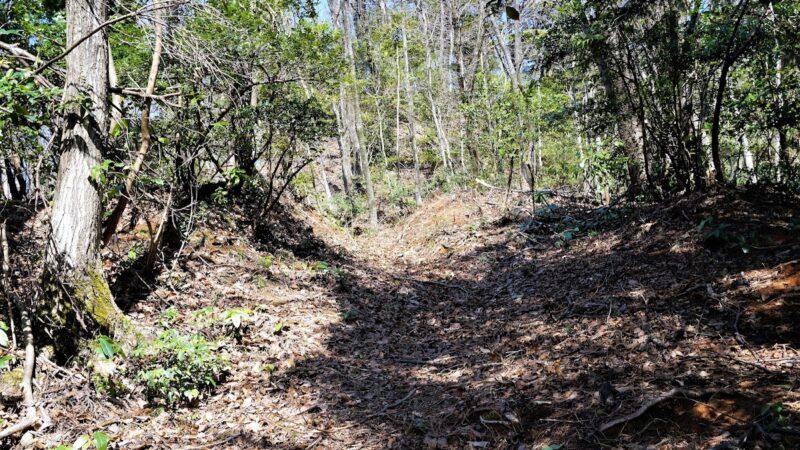
Even today, a flat, leveled area remains at the Honmaru site, and traces of earthworks can be seen around it. Parts of the stone walls also exist, offering a glimpse into the stonework techniques of the time.
Ninomaru (Second Enclosure)
The Ninomaru was a large enclosure (kuruwa) adjacent to the Honmaru (main enclosure), serving as an important section supporting the Honmaru. Earthen ramparts surrounded the north and west sides, and their scale and excellent state of preservation are particularly noteworthy.
The Ninomaru is thought to have strengthened the Honmaru’s defenses and was also used for troop garrisoning and supply storage. A large, flat area remains today, allowing visitors to appreciate its former scale.
Umadashi Kuruwa (Horse-Out Enclosure)
The Umadashi Kuruwa was an outpost built in front of the Honmaru for sorties. A “Umadashi” is a facility that functions as a gathering place when sallying out from a castle or as a forward position to prevent enemy incursions.
The Umadashi Kuruwa of Daishoji Castle has a structure characteristic of castles from the Oda-Toyotomi period and served as the last line of defense against the Honmaru. The existence of this Umadashi indicates that Daishoji Castle is not merely a medieval mountain castle, but possesses characteristics of a transitional period towards early modern castles.
Other Remains
In addition to the main keep, second bailey, and outwork bailey, several other remains such as baileys, moats, earthworks, and stone walls are well-preserved in the Kinjoyama area. Earthworks, in particular, can be seen in various locations, offering insights into the defensive system of the time.
The stone walls exhibit the nozurazumi technique, using natural stones, making them valuable historical materials illustrating the development of stonework technology during the Azuchi-Toyotomi period.
Highlights of Daishoji Castle | National Historic Site and Important Cultural Property
Value as a National Historic Site
Daishoji Castle ruins are designated as a national historic site due to their historical value and the excellent state of preservation of the remains. Remains showcasing the changes in castle architecture from the Nanboku-cho period to the early Edo period remain, making them particularly important resources for understanding castle structures from the Azuchi-Toyotomi period to the early modern period.
The site is highly valued academically as a historical relic that tells the story of the castle’s role during important turning points in Japanese history: as a base for the Kaga Ikko-ikki rebellion, a fortress under the Oda and Toyotomi regimes, and under the rule of the Maeda clan.
Tea House, Choryutei (Important Cultural Property)
Within Kinjozan Park is the tea house “Choryutei,” designated as a National Important Cultural Property. It is believed to have been designed by Kobori Enshu, a renowned tea master and landscape architect of the early Edo period, and is an elegant example of sukiya-style architecture.
Choryutei is a valuable building that demonstrates the cultural aspects of the Daishoji Domain and further enhances the historical value of the castle ruins. The view from the tea house is also magnificent, offering a panoramic view of the town of Daishoji.
Kinjozan as a Cherry Blossom Viewing Spot
In spring, Kinjozan becomes a popular cherry blossom viewing spot, attracting many visitors. The scenery created by the historical atmosphere of the castle ruins and the full bloom of cherry blossoms captivates visitors. During cherry blossom season, this is a rare spot where you can enjoy both historical sightseeing and cherry blossom viewing at the same time.
How to Enjoy Exploring the Historical Remains
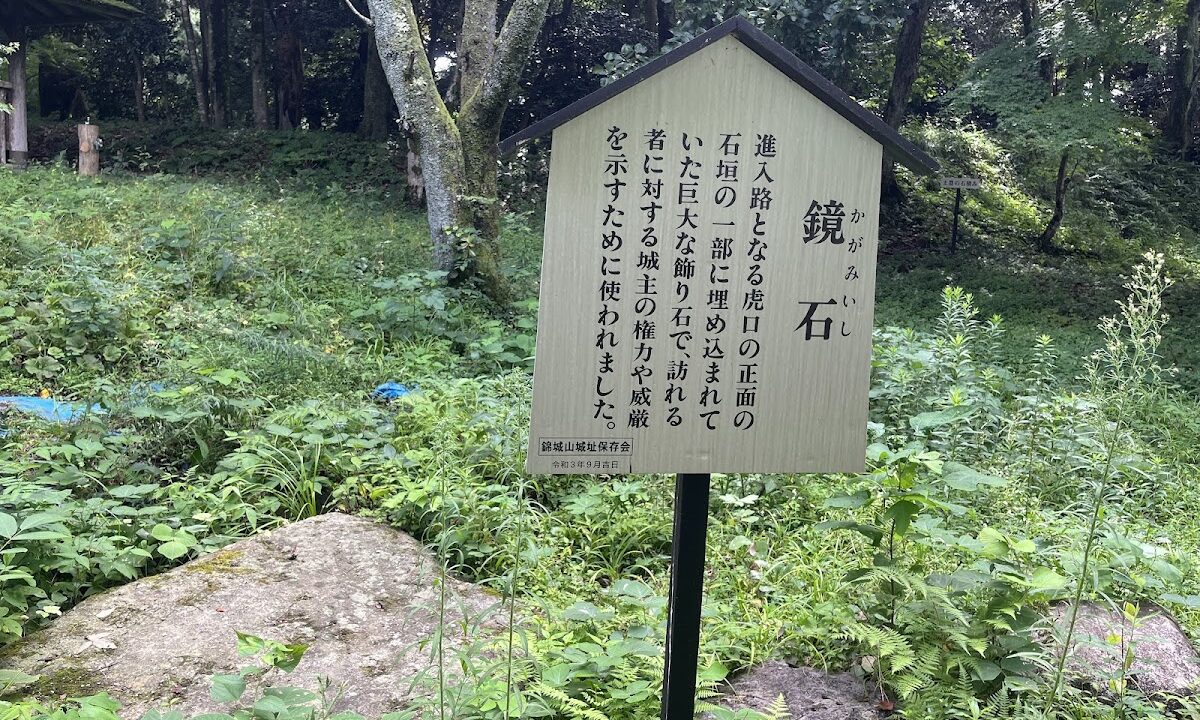
Walking paths are maintained within Kinjozan Park, allowing you to visit major historical remains such as the main keep, second bailey, and outwork bailey. Information boards are also installed, making it possible to explore while understanding the structure of the castle.
By actually seeing the earthworks, stone walls, and layout of the baileys, you can experience how castles of the Sengoku period were designed with defense in mind. It is a historical site well worth seeing for history buffs and castle enthusiasts.
Daishoji Castle Town | The Charm of a Historic City Following Kanazawa
Recognition as a Historic City
The castle town of Daishoji was recognized by the national government in fiscal year 2021 as the second historical city in Ishikawa Prefecture, following Kanazawa. This means that the historical and cultural value of Daishoji has been officially recognized.
Planned Town Planning and Castle Town Structure
After the establishment of the Daishoji Domain in 1639 (Kanei 16), the domain’s residence and samurai houses were located at the foot of Kinjozan Mountain, and to the east, artisan districts such as Kaji-machi (blacksmiths’ district) and Teppo-machi (gunsmiths’ district) were formed. To the south, the “Yamashita Temple Group” was positioned, also serving as a defensive measure for the town, demonstrating a well-structured town plan.
This planned urban design is highly regarded as a typical example of an Edo-period castle town, and the basic structure of its town plan remains to this day.
Historic Townscape Remaining Today
In the former castle town of Daishoji, historical buildings such as samurai residences, temples, and old townhouses still remain. Walking through the alleys, you can feel the atmosphere from the Edo to Meiji periods, and enjoy a leisurely time.
The townscape, surrounded by nature in all four seasons, also possesses the charm of a tourist destination, and the number of visitors enjoying historical walks is increasing.
Yamashita Temple District
Located south of the Daishoji castle town, the “Yamashita Temple District” was a temple district that also served a defensive role. Multiple temples were concentrated in this area, designed to function as a defensive stronghold in times of conflict.
Many temples still remain today, allowing visitors to explore historical buildings in a quiet and peaceful atmosphere.
Access and Tourist Information for Daishoji Castle
Location
Daishoji Nishikimachi, Kaga City, Ishikawa Prefecture (Kinjozan Park)
Access Methods
Access by Train:
- Approximately 15 minutes on foot from JR Hokuriku Main Line “Daishoji Station”
- From Daishoji Station to Kinjozan Park, head west through the city center.
Access by Car:
- Approximately 10 minutes from Hokuriku Expressway “Kaga IC”
- Parking is available.
Visiting Hours and Fees
- Kinjozan Park is always open and you can stroll around freely.
- Admission is free.
- However, advance reservations or confirmation of special opening days may be required to view the interior of the tea house, Choryutei.
Precautions for Visiting
- As you will be walking on mountain paths, we recommend wearing comfortable shoes.
- Don’t forget insect repellent in the summer and warm clothing in the winter.
- To protect the historical remains, please refrain from climbing on or damaging the stone walls and earthworks.
Nearby Tourist Attractions
When visiting the Daishoji Castle Ruins, we recommend also visiting the following nearby spots:
- Daishoji’s Old Castle Town: A historical townscape with samurai residences and merchant houses remaining.
- Yamanoshita Temple Group: A temple district with several historical temples.
- Jisshoin Temple: The family temple of the Maeda family of the Daishoji Domain.
- Kaga City Museum of Art: Introduces the history and culture of the region.
By combining these, you can enjoy a fulfilling sightseeing experience that allows you to deeply understand the history and culture of Daishoji.
Summary | The History of Kaga as Told by Daishoji Castle
Daishoji Castle in Kaga City, Ishikawa Prefecture, is a flatland castle that existed for approximately 260 years, from the Nanboku-cho period to the early Edo period. As a base for the Kaga Ikko-ikki rebellion and a castle ruled by powerful figures of the time such as Oda Nobunaga, Toyotomi Hideyoshi, and the Maeda clan, Daishoji Castle has witnessed important turning points in Japanese history.
Its 230-year history includes its dramatic fall at the Battle of Sekigahara, its abandonment due to the “One Castle Per Province” decree, and the establishment of the Daishoji Domain. The remains on Kinjo-yama Mountain are precious witnesses that convey this history to the present day.
With its castle ruins designated as a national historic site, the important cultural property tea house Choryutei, and the castle town recognized as a historical city second only to Kanazawa, Daishoji Castle and its surroundings are a fascinating area where you can experience the history and culture of Ishikawa Prefecture.
When you visit Kaga City, be sure to climb Kinjo-yama Mountain and feel the romance of history stretching from the Sengoku period to the Edo period. The Daishoji Castle ruins, which show different expressions in each season—cherry blossoms in spring, lush greenery in summer, vibrant autumn leaves, and the tranquility of winter—will offer new discoveries and inspiration no matter when you visit.