Complete Guide to Nanao Castle and Nanao City: The History of Japan’s Five Great Mountain Castles and the Charms of Noto Peninsula, Ishikawa Prefecture
Located in the central part of the Noto Peninsula in Ishikawa Prefecture, Nanao City is a historic city that flourished as a castle town of “Nanao Castle,” one of Japan’s five great mountain castles. This region, blessed with the magnificent remains of a mountain castle spanning seven ridges, tourist resources including Wakura Onsen, and abundant seafood, continues to fascinate many people, from history buffs to tourists.
This article provides comprehensive information to help you deeply understand this region, from the detailed history of Nanao Castle to the charms of Nanao City, access methods, and tourist spots.
What is Nanao Castle?: One of Japan’s Five Great Mountain Castles
Nanao Castle is a medieval mountain castle built on a mountain approximately 300 meters above sea level at the tip of the Isurugi mountain range in Nanao City, Ishikawa Prefecture. Nanao Castle is counted among Japan’s Five Great Mountain Castles (Nanao Castle, Kasugayama Castle, Kannonji Castle, Gassan Tomita Castle, and Odani Castle), and is known for its magnificent scale and robust defensive structure.
Origin of the Name of Nanao Castle
The name “Nanao” originates from the seven ridges on the castle mountain (commonly known as Shiroyama) where the castle was built. These ridges are called as follows:
- Kikuo
- Kameo
- Matsuo
- Torao
- Takeo
- Umeo
- Tatsuo
Numerous baileys, including the main keep, second bailey, and third bailey, were arranged along these seven ridges, forming an impregnable fortress that skillfully utilized the natural terrain. This topographical feature is also the origin of the place name Nanao City.
The History of Nanao Castle: The Rise and Fall of the Noto Hatakeyama Clan
Muromachi Period: Construction by the Noto Hatakeyama Clan
The history of Nanao Castle dates back to the Muromachi period. The Hatakeyama clan, appointed as the governors of Noto Province (present-day northern Ishikawa Prefecture), began full-scale construction of the castle from the late 15th to the early 16th century.
The Hatakeyama clan was a prestigious samurai family that wielded great power as important retainers of the Muromachi Shogunate, ruling Noto Province for approximately 170 years. Nanao Castle served as the headquarters of the Noto Hatakeyama clan, playing a central role in politics and military affairs.
Sengoku Period: A Famous, Impregnable Castle
During the Sengoku period, Nanao Castle became known as a “famous, impregnable castle” due to its robust defensive structure. Built on a steep ridge, it was a typical medieval mountain castle, employing a defensive system that made maximum use of the natural terrain.
The main keep was located at the summit of Shiroyama mountain, and numerous other enclosures, including the second and third baileys, were arranged in a stepped pattern along the ridges radiating from it. These enclosures were fortified with stone walls and separated by trenches and vertical moats, making them extremely difficult to conquer.
1577 (Tensho 5): Siege by Uesugi Kenshin
The most important event in the history of Nanao Castle was the siege by Uesugi Kenshin in 1577 (Tensho 5).
Uesugi Kenshin, a powerful daimyo of Echigo Province, began his invasion of Noto Province and besieged Nanao Castle. Although Nanao Castle was renowned as impregnable, the prolonged siege led to food shortages and the spread of disease within the castle, causing it to collapse from within.
Ultimately, due to the presence of traitors within the castle, Nanao Castle fell. This fall marked the end of the Noto Hatakeyama clan, who had ruled Noto for approximately 170 years. Uesugi Kenshin left behind a famous Chinese poem commemorating this victory, known as “Written on the Thirteenth Night of September in the Camp.”
After the Edo Period: Abandonment and Preservation as a Historic Site
After Uesugi Kenshin’s death, Nanao Castle came under the control of Maeda Toshiie. However, in the Edo period, its role as a mountain castle ended, and it was abandoned. The Maeda clan built a new castle on the plains, and Nanao Castle withdrew from the stage of history.
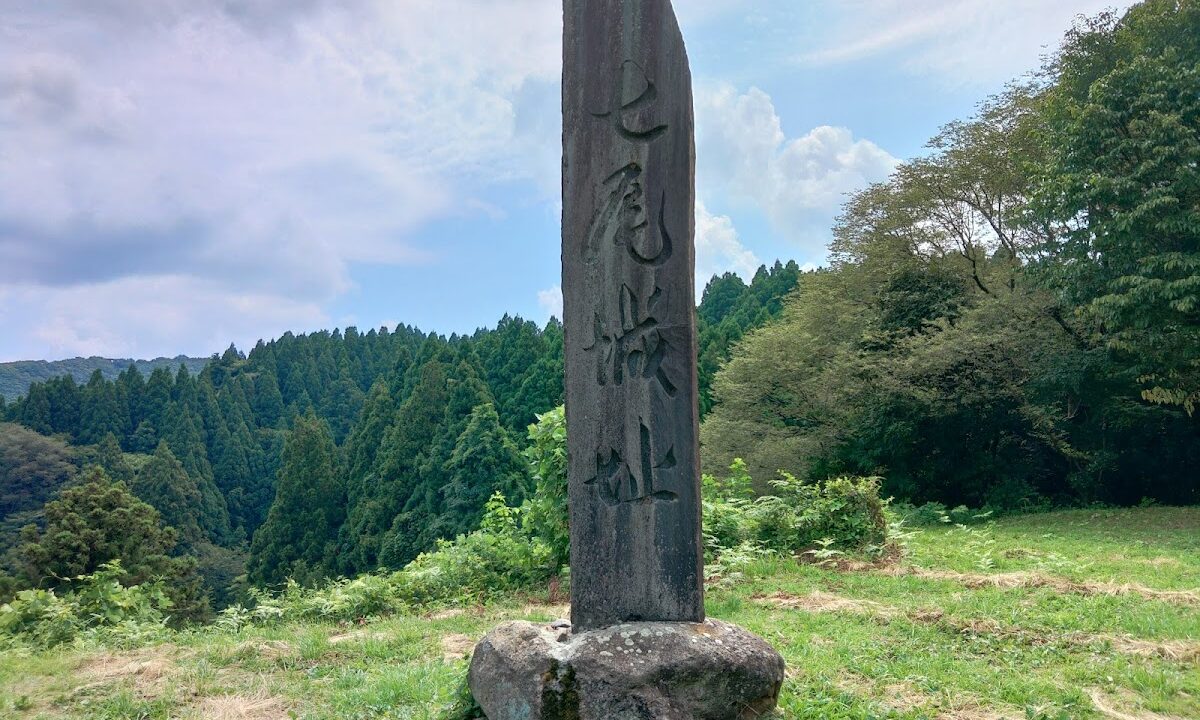
Currently, the Nanao Castle ruins are designated as a national historic site, and the remains of the stone walls and baileys are well-preserved. It has also been selected as one of Japan’s 100 Famous Castles, making it an important cultural property visited by history enthusiasts and tourists.
Highlights of Nanao Castle: Remains and Spectacular Views
Main Bailey Ruins and Stone Walls
The greatest highlight of Nanao Castle is the remains of the main bailey on the mountaintop and the surrounding stone walls. From the main keep, located at an altitude of approximately 300 meters, a spectacular view unfolds, encompassing Nanao Bay, Noto Island, and Toyama Bay.
The stone walls surrounding the main keep are constructed using a technique called “nozurazumi,” a highly advanced method for stonework in medieval mountain castles. These walls remain remarkably strong even after nearly 500 years, attesting to the high level of castle-building technology of the time.
Arrangement of the Enclosures
A distinctive feature of Nanao Castle is the numerous enclosures arranged along seven ridges. Centered around the main keep, over 20 enclosures have been identified, including the second enclosure, third enclosure, Sakurababa, Yuza Residence, and Nukui Residence.
These enclosures are arranged in a stepped pattern, conforming to the ridge terrain, and each functioned as an independent defensive stronghold. The enclosures are separated by moats and vertical trenches, demonstrating ingenuity in preventing enemy intrusion.
View from the Observation Deck
An observation deck has been installed at the site of the main castle keep, offering a 360-degree panoramic view of the beautiful scenery of the Noto Peninsula. Especially on clear days, you can see Noto Island floating in Nanao Bay and the Tateyama mountain range across Toyama Bay, a breathtaking view that captivates visitors.
In spring, cherry blossoms adorn the castle ruins, and in autumn, the autumn leaves color the grounds, allowing visitors to enjoy the contrast between the seasonal beauty of nature and the historical remains.
Overview of Nanao City: The central city of the Noto Peninsula, Ishikawa Prefecture
Geography and Location
Nanao City is located in the northern part of Ishikawa Prefecture, in the central part of the Noto Peninsula. It faces Toyama Bay to the north and Nanao Bay to the south, and its city limits include the entire island of Noto.
With an area of approximately 318 square kilometers, it functions as the economic and cultural center of the Noto Peninsula. Its topography, surrounded by two bays, Toyama Bay and Nanao Bay, provides abundant fishing resources and a beautiful coastline.
Topography and Natural Environment
Nanao City’s topography consists of mountains, hills, plains, and islands. The city center is spread across the plains facing Nanao Bay, with mountains including Shiroyama behind it.
Nanao Bay is a calm, sheltered bay, sometimes called a “natural fish farm,” and is a thriving center for oyster and sea cucumber farming. Noto Island is connected to the mainland by a bridge and serves as a base for marine leisure and tourism.
Climate
Nanao City has a Sea of Japan climate, experiencing snowfall in winter, but is relatively mild due to the influence of the Tsushima Current. Humidity is high throughout the year, and cloudy days are particularly common in winter.
History of Nanao City: Prosperity as a Port of Call for Kitamae Ships
Ancient to Medieval Periods
Nanao has long developed as the center of Noto Province. During the Nara period, the Noto Provincial Government was located in Nanao, and it flourished as a political and cultural center.
In the medieval period, as mentioned earlier, the Noto Hatakeyama clan built Nanao Castle and ruled for approximately 170 years. During this time, Nanao was developed as a castle town, and commerce and culture flourished.
Edo Period: Port of Call for Kitamae Ships
During the Edo period, Nanao came under the control of the Kaga Domain (Maeda clan). A defining characteristic of Nanao during this period was its prosperity as a port of call for Kitamae ships.
Kitamae ships were merchant ships that operated on the Sea of Japan route connecting Osaka and Hokkaido, and Nanao Port was one of their important ports of call. The goods transported by Kitamae ships greatly prospered Nanao as a commercial city, giving rise to numerous wealthy merchants.
The wealth accumulated during this period is reflected in the historical buildings and cultural properties that remain today.
Modern Era
Since the Meiji era, Nanao has continued to develop as the administrative and economic center of the Noto region of Ishikawa Prefecture. In 1939 (Showa 14), it was incorporated as a city, and Nanao City was established.
In 2004 (Heisei 16), it merged with the surrounding towns of Tazuhama, Nakajima, and Notojima to form the current Nanao City.
Nanao City Tourist Attractions
Wakura Onsen
Wakura Onsen is a representative tourist destination in Nanao City, known as one of the best hot spring resorts in the Hokuriku region. This seaside hot spring boasts a history of approximately 1200 years, and the hot spring town facing Nanao Bay is lined with luxury inns.
Wakura Onsen is characterized by its chloride spring water, which springs from the sea and is said to be effective for neuralgia, rheumatism, and gynecological diseases. From the hot spring town, you can enjoy beautiful views of Nanao Bay and Notojima Island, and it is also a popular spot for watching the sunset.
Notojima Island
Notojima Island, part of Nanao City, is an island in Nanao Bay with a circumference of approximately 72 kilometers. It is connected to the mainland by the Notojima Bridge and the Twin Bridge Noto, making it easily accessible by car.
The island is home to the Notojima Aquarium, popular for its dolphin and sea lion shows and whale shark exhibits. It also features glassblowing workshops, campgrounds, and beaches, making it a base for marine leisure and outdoor activities.
Nanao Castle Historical Museum
If you want to learn about the history of Nanao Castle, the first place you should visit is the Nanao Castle Historical Museum. Located at the foot of the castle mountain, it features detailed exhibits on the history of Nanao Castle, the lineage of the Noto Hatakeyama clan, and the siege battle against Uesugi Kenshin.
The museum displays artifacts unearthed during archaeological excavations, a reconstructed model of the castle, and ancient documents, deepening your understanding of Nanao Castle. It is recommended to visit before visiting the Nanao Castle ruins.
Komaruyama Castle Ruins Park
The site of Komaruyama Castle, built by Maeda Toshiie after Nanao Castle, is now a park. Known as a famous cherry blossom viewing spot, it’s bustling with visitors in spring.
A statue of Maeda Toshiie stands within the park, making it a place where you can feel the history of Nanao.
Noto Shokusai Market
If you want to enjoy the bounty of Nanao’s sea, Noto Shokusai Market is highly recommended. It’s a collection of shops and restaurants selling fresh seafood, where you can enjoy dishes made with seafood caught in Nanao Bay.
The oysters in winter and the rock oysters in summer are especially exquisite and a must-try when visiting Nanao.
How to Access Nanao Castle
Access by Public Transportation
From JR Nanao Station
- Circular Bus “Marin-go”: Take the bus from JR Nanao Station to the “Castle History Museum” bus stop (clockwise). The bus stop is a short walk from the Nanao Castle Historical Museum. From the museum to the main keep ruins, it’s about a 40-50 minute hike.
- Taxi: Approximately 10 minutes from Nanao Station to the Nanao Castle Historical Museum, and about 15 minutes to the main keep parking lot.
- Rental Bicycle: Rental bicycles are available around Nanao Station. Approximately 40 minutes to the museum.
- Walking: Approximately 40 minutes on foot from Nanao Station to the Nanao Castle Historical Museum, and about 50 minutes on foot from the museum to the main keep ruins. This route is for those with good stamina.
Access by Car
- Nōetsu Expressway: Approximately 10 minutes from Nanao IC to the Nanao Castle Historical Museum, and about 15 minutes to the main keep parking lot.
- Parking: The main keep parking lot (free) is available. It’s about a 5-minute walk from here to the main keep ruins. Parking is also available at the trailhead parking lot at the foot of the mountain.
Routes to the Castle
There are mainly two routes to the Nanao Castle ruins:
- Road Route: Access by car to the main keep parking lot, then a 5-minute walk to the main keep ruins. This is the easiest route.
- Main Road Route: This route starts from the trailhead parking lot at the foot of the mountain and ascends via the main road. While this is a more serious climb, you can experience the original castle approach and see the stone walls and baileys up close. The estimated time is approximately 40-50 minutes.
Important Note: Due to the 2024 Noto Peninsula Earthquake, some sections were closed, but the main road reopened on April 5, 2025, allowing visitors to walk from the foot of the mountain to the main keep. It is recommended to check the latest opening status before visiting.
Nanao City’s Industry and Economy
Fisheries and Aquaculture
One of Nanao City’s main industries is fishing. Nanao Bay is a rich fishing ground, often called a “natural fish preserve,” and a diverse range of seafood is landed there throughout the year.
Particularly famous are the “Noto oysters” cultivated in Nanao Bay. Grown in the calm waters of Nanao Bay, these oysters are known for their large size and rich flavor, and are highly regarded nationwide.
Other important marine resources include sea cucumbers, abalone, and turban shells.
Tourism
Tourism, centered around Wakura Onsen, is also a vital industry in Nanao City. Many tourists visit throughout the year, and hot spring inns, restaurants, and souvenir shops support the local economy.
Tourism promotion is underway, utilizing diverse tourist resources such as the Nanao Castle ruins, Noto Island, and the Noto Food Festival Market.
Traditional Crafts
Nanao City has a tradition of preserving traditional crafts such as Noto Jofu (a type of linen fabric) and Nanao Buddhist altars. Nanao Buddhist altars, in particular, are characterized by their luxurious decorations featuring gold leaf and maki-e (lacquerware with gold or silver powder), and are designated as a national traditional craft.
Educational and Cultural Facilities in Nanao City
Educational Institutions
Nanao City has several elementary, junior high, and high schools, making it the educational center of the Noto region. Ishikawa Prefectural Nanao High School is also known as a leading preparatory school in the Noto region.
Cultural Facilities
- Nanao Art Museum: Exhibits art related to Noto and a collection of tea ceremony utensils known as the Ikeda Collection.
- Nanao Marine Park: A base facility for marine recreation.
- Ishikawa Prefectural Nanao Art Museum: Exhibits a wide range of art, from contemporary art to antique art.
Transportation Infrastructure in Nanao City
Railways
The JR West Nanao Line runs through the city, with Nanao Station being a major station. Nanao Station is a key railway hub in the Noto region, with trains departing for Kanazawa and Wakura Onsen.
The limited express “Noto Kagari-bi” connects Kanazawa Station with Nanao Station and Wakura Onsen Station, providing access from Kanazawa in approximately one hour.
Roads
The Noto Expressway runs through the city, with Nanao IC and Nanao-Shiroyama IC located within it. Access to Kanazawa and Toyama is excellent.
Ports
Nanao Port is designated as an important port and serves as a logistics hub. It is also utilized as a base for marine leisure activities.
Population and Administration of Nanao City
Population Dynamics
Nanao City has a population of approximately 50,000 (as of 2025), making it the largest city in the Noto region. However, like many regional cities across Japan, it faces challenges such as a declining birthrate, an aging population, and population decrease.
The city is actively implementing measures to promote migration and settlement, as well as childcare support, to address population decline. ### Administration and City Council
Nanao City employs a dual representative system with a mayor and a city council. The city council consists of 20 members and deliberates and decides on important matters of city administration.
The city hall is located near Nanao Station and serves as the center of citizen services. Branch offices have also been established in the former towns that merged with Nanao, providing local administrative services.
Nanao City Events and Festivals
Seihaku Festival
Held every May, the Seihaku Festival is a representative festival of Nanao City and is registered as one of the UNESCO Intangible Cultural Heritage “Mountain, Float, and Procession Festivals.”
The sight of three gigantic “Deka-yama” floats, each 12 meters tall and weighing 20 tons, parading through the town is breathtaking, attracting many tourists. The “Tsuji-mawashi” (turning of the “Deka-yama” floats) is a highlight of the festival.
Issaki Hoto Festival
Held in August, the Issaki Hoto Festival is a magnificent festival where participants carry 15-meter-tall lanterns (kiriko) through the town. At night, the lanterns are lit, creating a magical atmosphere.
Noto Yosakoi Festival
Held in September, the Noto Yosakoi Festival features numerous teams from across Japan, showcasing vibrant dance performances in the streets of Nanao.
Nanao City’s Local Products and Cuisine
Seafood
Nanao City is a treasure trove of food, offering fresh seafood throughout the year:
- Noto Oysters: In season during winter (November to March). Rich and creamy flavor.
- Rock Oysters: In season during summer (June to August). Large and milky flavor.
- Noto Pufferfish: Wild sesame pufferfish. Winter is the peak season.
- Gas Shrimp: A type of sweet shrimp, characterized by its beautiful, translucent appearance and sweetness.
Local Sake
Nanao City has several sake breweries, where you can enjoy local sake brewed with rice and water from Noto. “Noto local sake” is characterized by its slightly dry taste and excellent pairing with food.
Japanese Sweets
Due to its history as a thriving port of call for Kitamae ships, a refined Japanese sweets culture influenced by Kyoto has taken root.
Relocation and Settlement in Nanao City
Relocation Support System
Nanao City offers various support systems to promote relocation and settlement:
- Housing Acquisition Support: Subsidies for purchasing new and used homes
- Vacant House Bank: Provision of information on vacant houses in the city
- Trial Residence: Short-term relocation experience program
- Childcare Support: Reduction of childcare fees, medical expense subsidies, etc.
Attractions of Nanao City
The attractions of Nanao City as a place to relocate include:
- Abundant natural environment and fresh produce
- Abundant tourist resources such as Wakura Onsen
- Good access to Kanazawa (approximately 1 hour by car)
- Relatively mild climate
- An environment where history and culture thrive
Summary: The Charms of Nanao Castle and Nanao City
Nanao Castle, a magnificent mountain castle spread across seven ridges, occupies an important position in the history of Japanese castles. This castle, which flourished for approximately 170 years as the residence of the Noto Hatakeyama clan and was the stage for the historical drama of a siege against Uesugi Kenshin, still retains well-preserved stone walls and baileys, evoking its former grandeur.
The view from the mountaintop is spectacular, offering panoramic views of Nanao Bay, Noto Island, Toyama Bay, and even the distant Tateyama mountain range. It’s a recommended spot not only for history buffs but also for anyone who enjoys the scenery.
Nanao City is a charming city with historical heritage centered around Nanao Castle, the first-class Wakura Onsen hot spring resort, abundant seafood, and natural resources such as Noto Island. Its history as a thriving port of call for Kitamae-bune (northern trade ships) is still reflected in its townscape and culture today.
When visiting the Noto Peninsula in Ishikawa Prefecture, be sure to climb to the ruins of Nanao Castle and enjoy the history, culture, and delicious cuisine of Nanao City. The scenery seen by ancient warlords and the charm of modern Noto are sure to deeply impress visitors.