Shishikura Castle (Ibaraki Prefecture) Complete Guide | History, Highlights, and Access: A Thorough Explanation
What is Shishikura Castle?
Shishikura Castle is a medieval castle located in Shishikura, Kasumigaura City, Ibaraki Prefecture. As an important base in southern Hitachi Province during the Sengoku period, it is a historically significant castle site that served as the stage for conflicts between the Oda and Satake clans. Currently, it is protected as a city-designated cultural property, and the remains such as dry moats and baileys are well-preserved.
Basic Information
- Location: Shishikura, Kasumigaura City, Ibaraki Prefecture
- Former Province: Hitachi
- Castle Type: Hilltop Castle
- Construction Period: Muromachi Period (Early 15th Century)
- Main Lords: Noda Tōtōmi-no-kami, Sugaya Oki-no-kami Sadatsugu, Ōyamada Gyōbu
- Year of Abandonment: Keichō 7 (1602)
- Cultural Property Designation: Kasumigaura City Designated Cultural Property
- Major Remains: Enclosures, Dry Moats, Earthworks
History of Shishikura Castle
Establishment in the Muromachi Period
The exact construction date of Shishikura Castle is unclear, but records indicate that it was under the jurisdiction of Noda Tōtōmi-no-kami during the Eikyō era (1429-1440). During this period, Hitachi Province was a time of intense conflict between the Kamakura Shogunate and the Kanto Kanrei Uesugi clan, as well as fierce power struggles among powerful local lords.
The Noda clan was a local lord with considerable influence in southern Hitachi, and Shishikura Castle is thought to have functioned as an important base controlling a strategic transportation hub along Lake Kasumigaura.
The Era of the Oda Clan’s Vassals
During the Bunki era (1501-1503), Shishikura Castle became the domain of Sugaya Oki-no-kami Sadatsugu, a vassal of the Oda clan. The Oda clan was a prominent family in southern Hitachi, based in Oda, Tsukuba City, and controlled a vast territory.
Sugaya Sadatsugu governed the surrounding area from Shishikura Castle, contributing to the expansion of the Oda clan’s power. It is presumed that Shishikura Castle played a crucial role in the Oda clan’s northern defense line during this period. The Sugaya clan ruled this area for generations, playing an active role as powerful local warlords.
The Satake Clan’s Southward Expansion and the Defenses
In the latter half of the 16th century, the Satake clan, based in northern Hitachi Province, aggressively pursued a southward expansion policy. Satake Yoshishige, known as a renowned general of the Sengoku period, played a crucial role in expanding the Satake clan’s power in the Kanto region.
As a result of the Satake clan’s southward expansion, the Oda clan’s power gradually declined. The Oda clan suffered numerous defeats against the Satake clan, losing territory along the way. Shishikura Castle also came under pressure from the Satake clan.
In 1573 (Tensho 1), Satake Yoshishige’s forces finally attacked Shishikura Castle. Although the Sugaya clan fiercely resisted, they were forced to surrender in the face of the Satake clan’s overwhelming military strength. This surrender led to the Sugaya clan being incorporated as vassals of the Satake clan.
As a Castle of the Satake Clan’s Vassals
After surrendering to the Satake clan, the Sugaya clan continued to use Shishikura Castle as their base, but this time as vassals of the Satake clan. The Satake clan controlled almost the entire Hitachi Province and grew into one of the most powerful daimyo in the Kanto region.
In 1595 (Bunroku 4), Oyamada Gyobu, a vassal of the Satake clan, became the lord of Shishikura Castle. The Oyamada clan was also one of the Satake clan’s important retainers, and Shishikura Castle continued to function as a base for the Satake clan’s control of the southern region.
Abandonment and End
In 1602 (Keicho 7), as part of the post-Battle of Sekigahara settlement, the Satake clan was transferred from Hitachi Province (540,000 koku) to Akita Province (200,000 koku) in Dewa Province. This was a punishment imposed by Tokugawa Ieyasu on the Satake clan, aimed at reducing their power.
With the Satake clan’s transfer to Akita, Shishikura Castle was also abandoned. Afterward, Shishikura Castle was never used as a military base, and the castle site was converted into farmland and other uses. However, the main remains were preserved without being destroyed and remain to this day.
Shishikura Castle’s Layout and Structure
Castle Location
Shishikura Castle is a flatland castle built on a plateau approximately 30 meters above sea level. Located at the boundary between the lowlands near Lake Kasumigaura and the plateau, its layout takes advantage of the topography that allows for panoramic views of the surrounding area. This location provided excellent conditions for both monitoring transportation routes and defense.
Main Enclosure (Honmaru)
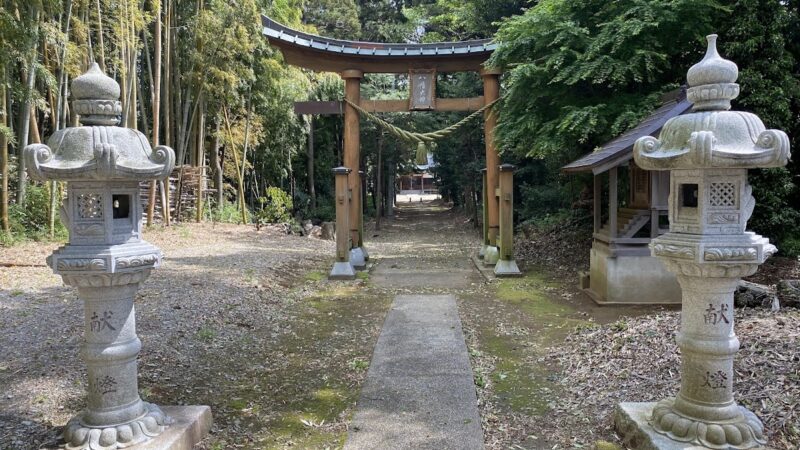
The main enclosure, the center of the castle, is now partially used as farmland, but it retains much of its original topography. A shrine dedicated to Jōnouchi Inari is located in a corner of the main enclosure, and it is an object of local worship.
The main enclosure is estimated to be approximately 80 meters east-west and 60 meters north-south, a standard size for a medieval castle. The interior of the main enclosure is relatively flat, making it a suitable terrain for building structures.
Dry Moat
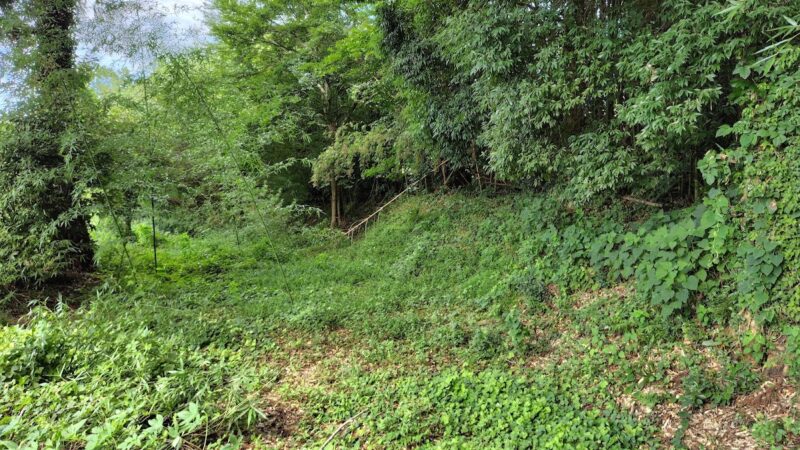
The most notable feature of Shishikura Castle is the large dry moat surrounding the main enclosure. While its depth varies, it reaches 5-6 meters at its deepest point and is over 10 meters wide.
This dry moat played a crucial role as a defensive structure, serving as a strong barrier against enemy intrusion. The clearly visible dry moat today attests to the high level of Shishikura Castle’s defenses.
The moat’s cross-section is similar to a yagenbori (a type of moat with a sharp angle at the bottom). This was a design intended to make climbing difficult, demonstrating the characteristics of castle construction techniques from the Sengoku period (Warring States period).
Arrangement of Enclosures
Several enclosures (kuruwa) were arranged around the main enclosure. These enclosures served to defend the main enclosure, forming a tiered defensive line. Even today, the arrangement of the enclosures can be discerned from the topography.
Earthworks
Earthworks were built around the main enclosure and baileys. These earthworks served as defensive structures to protect against enemy arrows and firearms, and also acted as screens to obscure the view into the baileys from the outside. Traces of the earthworks still remain in some areas today.
Entrance/Exit
The entrance/exit to the castle, the “koguchi,” is the most crucial defensive element. The koguchi of Shishikura Castle is thought to have had a complex structure to prevent enemy intrusion, but detailed structure requires on-site investigation and research.
Highlights of Shishikura Castle
Well-Preserved Dry Moat
The biggest highlight when visiting Shishikura Castle is the well-preserved dry moat. The dry moat surrounding the main enclosure is large in scale and sufficiently deep, allowing visitors to experience the castle’s defensive system from the Sengoku period.
Walking along the bottom of the dry moat, the rising earthen walls on either side create a sense of oppression, allowing visitors to experience the difficulty of a siege. Furthermore, the shape and scale of the moat indicate that this castle was not merely a residence, but a full-fledged military base.
Jōnouchi Inari Shrine
The Jōnouchi Inari Shrine, enshrined in a corner of the main enclosure, remains a cherished place of worship for the local community. This Inari shrine has a history of being protected by local people even after the castle was abandoned, and is an important symbol of the connection between Shishikura Castle and the local community.
Information Boards and Explanations
Information boards are installed at the castle ruins, explaining the history and structure of Shishikura Castle. Even first-time visitors can understand the castle’s overview by reading the boards.
Surrounding Landscape
From Shishikura Castle, you can overlook the surrounding rural landscape. The view towards Lake Kasumigaura is also excellent, giving a real sense of the castle’s strategic location controlling a key transportation hub.
Access Methods
Access by Car
From the Joban Expressway
- Approximately 15 minutes from Tsuchiura-Kita IC
- Approximately 20 minutes from Chiyoda-Ishioka IC
Parking
There is no dedicated parking lot for the castle ruins, but there is space for street parking near the entrance to the castle ruins. However, please be careful not to disturb local residents or obstruct traffic. When visiting, it is recommended to complete your visit quickly or use the parking lot of a nearby public facility.
Access by Public Transportation
JR Joban Line
- Take a bus or taxi from Kandatsu Station or Ishioka Station
- Approximately 15 minutes by taxi from Kandatsu Station
Route Bus
There is a Kanto Railway bus route, but the number of buses is limited, so it is recommended to check the timetable in advance.
Access on Foot
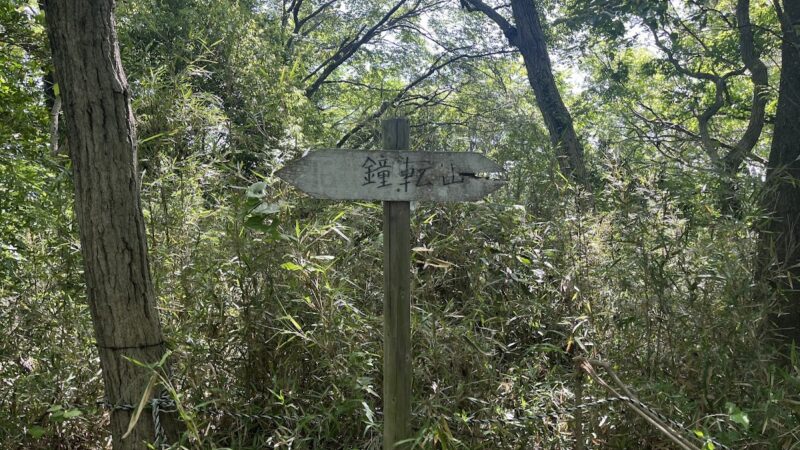
It is approximately a 5-minute walk from the prefectural road to the castle ruins entrance. After crossing the remains of the dry moat and proceeding up the dirt path, you will find a signpost, and the main enclosure is behind it. Since some parts of the path are not well-maintained, we recommend wearing comfortable walking shoes.
Notes for Visitors
Clothing and Equipment
- Footwear: Many parts of the castle ruins are unpaved dirt paths, so comfortable walking shoes such as sneakers or hiking boots are essential. Be careful as the ground can become muddy after rain.
- Clothing: In summer, long sleeves and long pants are recommended to protect against insects. Also, since there are times when mosquitoes are abundant, insect repellent spray is useful.
- Hat: We recommend wearing a hat to protect yourself from the sun.
Visiting Time
Allow 30 minutes to 1 hour to visit the castle ruins. If you want to carefully observe the remains, we recommend allocating 1 hour or more.
Photography
Photography is generally permitted within the castle ruins, but please be careful not to trespass on private property or farmland. Also, please be mindful of the privacy of local residents when taking photographs.
Manners
- Part of the castle ruins are used as farmland, so please be careful not to damage the crops.
- Please take all your trash with you.
- Do not damage the ruins or dig up the soil.
- Please avoid actions that may disturb local residents, such as making loud noises.
Nearby Attractions
Other Historical Sites in Kasumigaura City
Besides Shishikura Castle, Kasumigaura City has many other historical sites. Visiting other castle ruins, burial mounds, temples, and shrines in the city will allow you to gain a deeper understanding of the region’s history.
Lake Kasumigaura
Lake Kasumigaura, the second largest lake in Japan, is close to Shishikura Castle, and you can enjoy the lakeside scenery. Cycling paths are also available around Lake Kasumigaura, allowing you to fully enjoy nature.
Historical Sites in Ishioka City
The neighboring city of Ishioka has many important historical sites from ancient times, such as the Hitachi Provincial Government Ruins and the Hitachi Provincial Temple Ruins. Visiting Shishikura Castle in conjunction with this location allows for a comprehensive understanding of the history of Hitachi Province.
The Role of Shishikura Castle in the Sengoku Period History of Hitachi Province
The Conflict Between the Oda and Satake Clans
The history of Shishikura Castle is synonymous with the history of the conflict between the Oda and Satake clans in Hitachi Province. The Oda clan, a prominent family in southern Hitachi, held power from the Kamakura period, but faced difficulties during the Sengoku period due to the southward expansion of the Satake clan.
Shishikura Castle functioned as a key point in the Oda clan’s northern defense line, but ultimately fell into the hands of the Satake clan. This change in ownership of the castle symbolized a shift in the power balance within Hitachi Province.
The Rise of the Satake Clan in the Kanto Region
Throughout the Sengoku period, the Satake clan controlled almost the entirety of Hitachi Province, growing into one of the most powerful daimyo in the Kanto region. The capture of Shishikura Castle was a crucial step in this process.
Satake Yoshishige is known as a particularly outstanding warrior among the Sengoku daimyo of the Kanto region, and he fought against the Hojo and Uesugi clans. Shishikura Castle is positioned as part of the Satake clan’s military strategy.
End under the Tokugawa Regime
After the Battle of Sekigahara, the Satake clan was ordered to relocate to Akita, and Hitachi Province became a direct territory of the Tokugawa clan and the domain of hereditary daimyo. The abandonment of Shishikura Castle symbolized the end of the Sengoku period and the establishment of the Edo shogunate system.
Research and Preservation of Shishikura Castle
Cultural Property Designation
Shishikura Castle is a designated cultural property of Kasumigaura City and is protected by the government. This prevents the destruction or alteration of the remains and ensures its transmission to future generations.
Academic Research
Archaeological surveys and historical research based on historical documents are being conducted on Shishikura Castle. While archaeological excavations have been limited, the castle’s structure and history are gradually being revealed through site surveys and research into ancient documents.
Further detailed investigations are expected to shed more light on the true nature of Shishikura Castle.
Local Preservation Activities
Preservation activities by local residents are also important. Through activities such as grass cutting and cleaning, the castle ruins are maintained in good condition. It is also used as a site for local history education.
Recommended Points for Castle Enthusiasts
A Typical Example of a Medieval Castle
Shishikura Castle possesses typical characteristics of a medieval castle from the Sengoku period. Basic defensive structures such as dry moats and baileys remain well-preserved, making it a valuable example for learning about the structure of medieval castles.
A Quiet Environment for Visiting
Because it is not a famous tourist spot, you can leisurely explore the castle ruins in a quiet environment. It is rarely crowded with tourists, making it appealing for those who want to observe the remains at their own pace.
Photo Spot
The scale and shape of the dry moat make for a very photogenic spot. The combination with the surrounding rural landscape is also beautiful, allowing you to enjoy the scenery throughout the seasons.
Summary
Shishikura Castle is a valuable medieval castle remaining in Kasumigaura City, Ibaraki Prefecture. From the Muromachi period to the Sengoku period, it functioned as an important base in southern Hitachi Province and was the stage for conflicts between the Oda and Satake clans.
The remaining structures, such as the dry moat and baileys, are well-preserved and are an important historical site for understanding the structure of castles during the Sengoku period. While many castle ruins remain in Ibaraki Prefecture, Shishikura Castle is one of the most impressive.
It is a historical site worth visiting for a variety of people, including those who enjoy touring castle ruins in the Kanto region, those interested in the Sengoku history of Hitachi Province, and researchers of medieval castles. When visiting Kasumigaura City, be sure to visit Shishikura Castle. From the castle ruins nestled amidst a tranquil rural landscape, you can feel the spirit of the Sengoku period (Warring States period).