Ichinoseki Jinya (Iwate Prefecture): A Thorough Explanation of the History of the Tamura Domain and Current Highlights
Located in Ichinoseki City, Iwate Prefecture, Ichinoseki Jinya is an important historical site where the administrative offices of the Tamura Domain were located during the Edo period. While now developed as Tsuriyama Park and a place of recreation for citizens, it was once the center of domain administration and functioned as the political, economic, and cultural hub of the region. This article provides a detailed introduction to Ichinoseki Jinya, including its history, structure, current highlights, and access information.
What is Ichinoseki Jinya?: Basic Information and Historical Background
Ichinoseki Jinya was the administrative center of the Tamura Domain (Ichinoseki Domain), established during the Kan’ei era (1624-1644) of the Edo period. A “jinya” refers to a facility that served as both a residence and administrative office for a small daimyo (feudal lord) without a castle.
The Establishment of the Tamura Domain and the Role of the Ichinoseki Jinya
The Tamura Domain was established by its first lord, Tamura Takeaki. The Tamura clan originally resided in Tamura County, Mutsu Province (present-day Tamura City, Fukushima Prefecture), but were relocated to Ichinoseki by order of the Edo Shogunate.
With a rice yield of 30,000 koku, it was a relatively small domain, but Ichinoseki, located at a key point on the Oshu Kaido road, played a vital role as a transportation hub. The Ichinoseki Jinya was not merely a residence; it functioned as the domain’s administrative center, courthouse, and financial center, serving as the governing body of the territory.
Historical Changes of the Ichinoseki Jinya
The Ichinoseki Jinya continued to be used as the residence of the Tamura clan throughout the Edo period. Following the Meiji Restoration and the abolition of the feudal domains, the Tamura Domain was abolished, and its function as a Jinya was lost. Subsequently, the land was utilized as a public space, transforming into the present-day Tsuriyama Park.
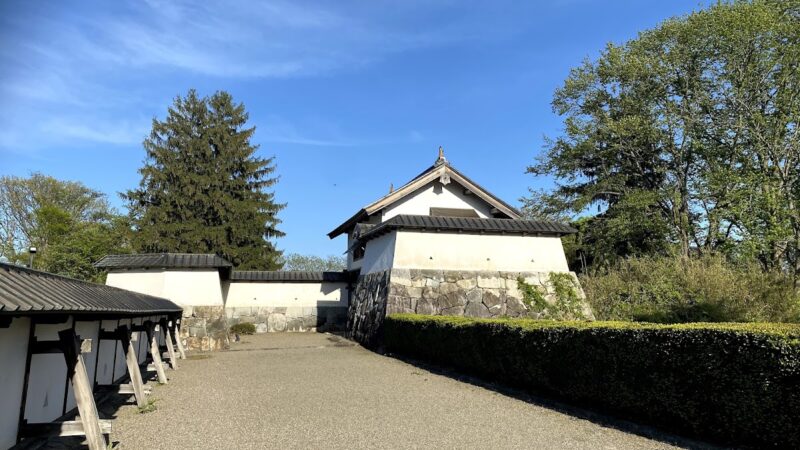
Although no Edo period buildings remain, the site of the former jinya (fortified residence) has been equipped with information boards and monuments, preserving its history for the present day.
Structure and Facility Layout of Ichinoseki Jinya
Unlike castles, jinya were not structures with keeps or high stone walls, but they still possessed a certain level of defensive capability and formality.
Basic Structure of the Jinya
The Ichinoseki Jinya is believed to have consisted of the following facilities:
- Palace: A building where the feudal lord and his family resided
- Office: An administrative body where the domain’s affairs were conducted
- Longhouse: Offices and residences for retainers
- Storehouse: A facility for storing tribute rice and weapons
- Garden: A place of relaxation for the feudal lord
The jinya was surrounded by a moat and earthen ramparts, and entry and exit were controlled through gates. The area around the current Tsuriyama Park is estimated to have been the site of the former jinya.
Location in relation to Tsuriyama Park
Currently, the Ichinoseki Jinya (fortified residence) site is located on the northern part of Tsuriyama Park. Tsuriyama Park sits on a small hill overlooking the city of Ichinoseki, indicating that the former Jinya was built in a strategically important location.
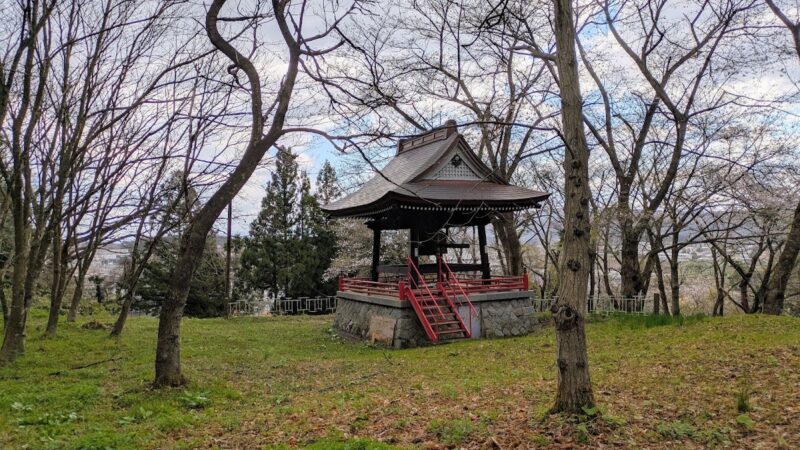
Many cherry trees are planted within the park, making it a popular spot for cherry blossom viewing in spring, attracting many citizens and tourists. It’s noteworthy that, despite its historical significance, it’s now a beloved place of relaxation for local residents.
Current Ichinoseki Jinya Site: Highlights and Visitor Guide
This section introduces the highlights and points to note when visiting the Ichinoseki Jinya site.
Tamura Takeaki Memorial Monument
A memorial monument commemorating the achievements of the first lord of the domain, Tamura Takeaki, stands on the Jinya site. This monument was erected to pass on to future generations the role the Tamura clan played in Ichinoseki and their contributions in laying the foundation for the domain’s administration.
The inscription on the monument details the biography and achievements of Tamura Takeaki, making it a valuable source of information for understanding the history of Ichinoseki during the Edo period. It’s a must-see spot for history enthusiasts and castle fans.
Information Boards and Explanatory Panels
Detailed information boards are installed at the site of the former Jinya (fortified residence), clearly stating that it was the residence of the Tamura family, the lords of the Ichinoseki domain, and the place where political affairs were conducted.
The information boards include the following:
- History of the Ichinoseki Domain (Tamura Domain)
- Structure and Layout of the Jinya
- Genealogy of the Tamura Family
- The State of Ichinoseki during the Edo Period
By reading these information boards, you can understand the role that the area, now a park, once played.
View from Tsuriyama Park
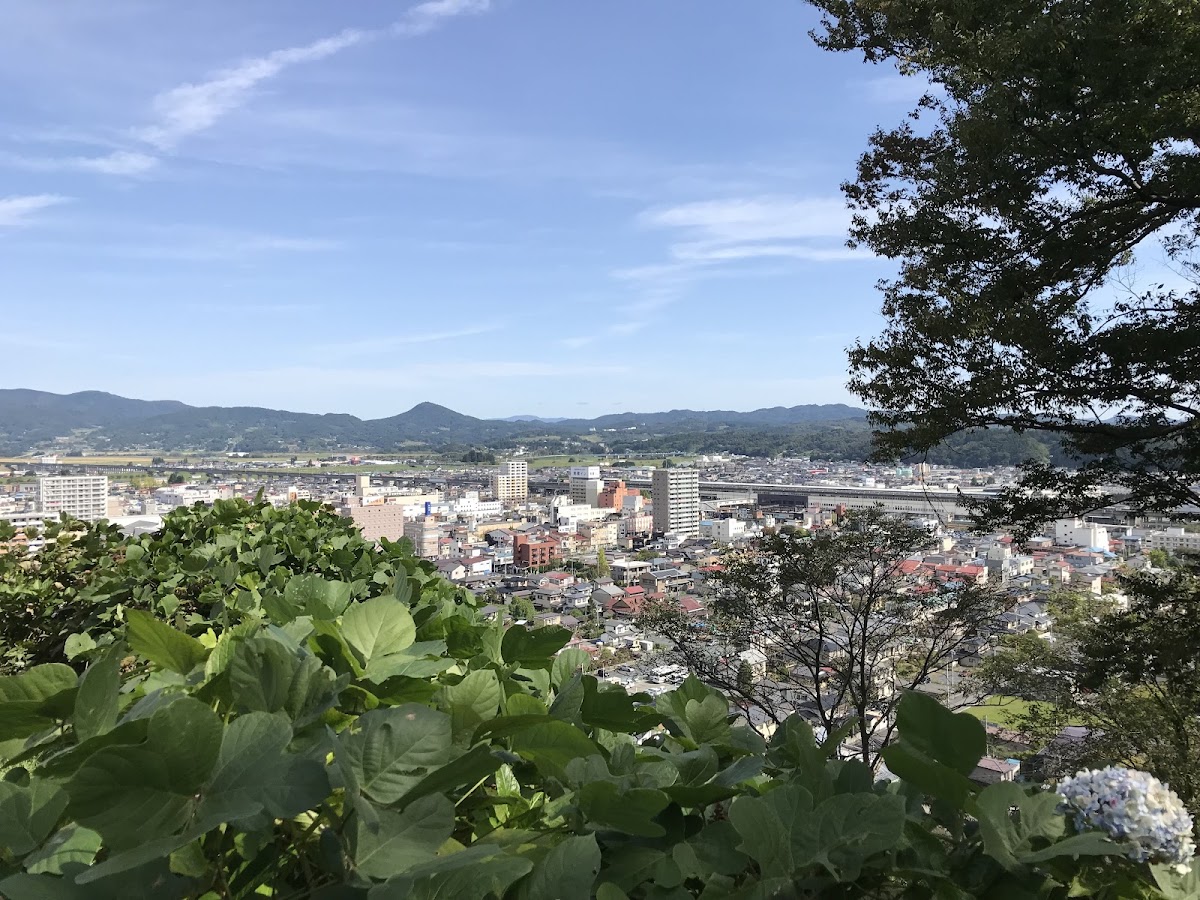
Tsuriyama Park is located on a small hill, offering an excellent viewpoint overlooking the city of Ichinoseki. Imagining the former lords looking out over their territory from this spot evokes a sense of historical romance.
Especially during cherry blossom season, the full bloom of cherry blossoms harmonizes with the cityscape, offering a beautiful panoramic view. The charm of the Ichinoseki Jinya Ruins lies in the fact that you can enjoy both historical exploration and nature appreciation simultaneously.
Photo Gallery: Photo Spots
The Ichinoseki Jinya Ruins and Tsuriyama Park are also suitable locations for photography. The following spots are particularly recommended:
- Tamura Kenken Memorial Monument: A historical monument
- Information Board and Surrounding Scenery: Harmony between historical explanation and nature
- Cityscape View from the Park: Ideal for panoramic photos
- Cherry Blossom Season Scenery: A beautiful view only available in spring
This is a place worth visiting not only for history buffs but also for photography enthusiasts.
Access and Tourist Information for Ichinoseki Jinya
This section introduces how to access the Ichinoseki Jinya Ruins (Tsuriyama Park) and useful information for your visit.
Access by Train
Access from JR Ichinoseki Station:
- Get off at Ichinoseki Station on the Tohoku Shinkansen/Tohoku Main Line
- Approximately 15 minutes on foot from the station
- Approximately 5 minutes by taxi
Ichinoseki Station is a stop on the Tohoku Shinkansen, making it easily accessible from both Tokyo and Sendai. The site of the former Jinya (fortified residence) is relatively close to the station and can be reached on foot without difficulty.
Access by Car
Using the Tohoku Expressway:
- Approximately 10 minutes from the Ichinoseki Interchange
- Parking available north of Tsuriyama Park (free)
The parking lot is located north of Tsuriyama Park, and this is the site of the former Jinya. The information board and monument are a few minutes’ walk from the parking lot.
Points to Note When Visiting
- Opening Hours: The park is open 24 hours, but daytime visits are recommended.
- Admission Fee: Free
- Estimated Time Required: Approximately 30 minutes for a visit to the Jinya ruins only; approximately 1 hour for a stroll through the entire park.
- Best Season: The cherry blossom season (mid-to-late April) is especially recommended, but the fresh green season and autumn foliage season also offer beautiful scenery.
Nearby Tourist Attractions
When visiting the Ichinoseki Jinya Ruins, we recommend also visiting nearby tourist attractions.
Hiraizumi, a World Heritage Site:
- Located next to Ichinoseki City, Hiraizumi Town is home to the World Heritage sites of Chuson-ji Temple and Motsu-ji Temple.
- Approximately 10 minutes by train from Ichinoseki Station to Hiraizumi Station.
- A group of historical buildings that convey the glory of the Oshu Fujiwara clan during the Heian period.
Genbi Gorge:
- A representative scenic spot of Ichinoseki City.
- A beautiful gorge woven from strangely shaped rocks and clear streams.
- Famous for its local specialty, “flying dumplings.”
Geibikei Gorge:
- A gorge counted as one of Japan’s 100 most beautiful landscapes.
- Enjoy the beauty of the gorge by boat.
Iwate Safari Park:
- A popular tourist facility for families.
- Enjoy interacting with animals.
By combining these tourist spots with the Ichinoseki Jinya Ruins, you can create a fulfilling travel plan that allows you to enjoy both history and nature.
The History of Ichinoseki and the Role of the Tamura Domain
To understand the Ichinoseki Jinya (fortified residence) more deeply, it is important to know the historical background of the Ichinoseki region and the role played by the Tamura Domain.
The Geographical Importance of Ichinoseki
Ichinoseki has flourished since ancient times as a key point on the Oshu Kaido (highway). Located on the main road connecting Edo (Tokyo) and Oshu (Tohoku region), it was a place of great traffic for people and goods.
Furthermore, its location allowed access to the Kitakami River’s water transport, making it a highly valuable transportation hub. The placement of the Tamura Domain in such a strategically important location was part of the shogunate’s policy of controlling the Tohoku region.
The Genealogy and Domain Administration of the Tamura Clan
The Tamura clan was a prestigious samurai family claiming descent from Sakanoue no Tamuramaro. During the Sengoku period (Warring States period), they had close ties with the Date clan and survived amidst complex political circumstances.
Even after being transferred to Ichinoseki, the Tamura family continued to govern the territory as feudal lords, focusing on agricultural development, the spread of education, and flood control projects. Although it was a relatively small domain with a 30,000 koku (unit of rice production) yield, it is said that they gained the trust of their people through sound and reliable administration.
The Meiji Restoration and the End of the Ichinoseki Jinya
With the Meiji Restoration, all feudal domains were abolished throughout the country, and a centralized prefectural system was established. The Ichinoseki domain was also abolished in 1871 (Meiji 4) with the abolition of the feudal domains and the establishment of prefectures, and the Ichinoseki Jinya ceased to exist.
Subsequently, the Jinya buildings were demolished, and the land was repurposed for public use. The current Tsuriyama Park was developed after the Showa era.
The Evaluation of the Ichinoseki Jinya from the Perspective of Castle Enthusiasts
How is the Ichinoseki Jinya evaluated among castle enthusiasts and history buffs?
Characteristics of the Jinya (Fortified Residence)
Ichinoseki Jinya is a typical Jinya-style facility with the following characteristics:
- A simple structure without a keep or high stone walls
- A practical design combining the functions of a residence and government office
- A defensive structure surrounded by moats and earthen ramparts
- A small-scale architectural style that maintained a sense of formality
These characteristics are commensurate with the scale of a 30,000 koku (rice yield) domain, making it a valuable example for understanding the realities of a small Edo period domain.
Status of Existing Remains
Unfortunately, no Edo period buildings remain at Ichinoseki Jinya. However, it is possible to imagine its former appearance from the topography and layout of the Jinya site.
Information boards and commemorative monuments are in place, creating an environment where visitors can learn about history. The absence of buildings also offers the enjoyment of using one’s imagination to feel the history.
Comparison with Jinya Across Japan
Numerous Jinya sites exist throughout Japan, but many, like Ichinoseki Jinya, have lost their buildings. While some jinya (fortified residences) still have their palaces and gates intact, these are exceptional cases.
The Ichinoseki Jinya is in a standard state of preservation for a jinya site, and its history is conveyed through information boards and commemorative monuments, which is commendable. Further research and development have the potential to make it an even more attractive historical site.
Historical Tourism and Future Initiatives in Ichinoseki City
Ichinoseki City is working to promote tourism by utilizing its historical resources, including the Ichinoseki Jinya site.
Utilization of Historical Resources
Besides the Ichinoseki Jinya site, Ichinoseki City has many other historical sites, including old townscapes, temples and shrines. Efforts are underway to develop historical walking routes connecting these sites and to provide multilingual information boards.
Particularly important is the collaboration with the World Heritage site of Hiraizumi, and efforts are being made to attract tourists visiting Hiraizumi to Ichinoseki as well. The Ichinoseki Jinya site is positioned as one of these historical tourism routes.
Engagement with Local Residents
Tsuriyama Park is a popular recreational spot for local residents and is bustling with cherry blossom viewers during the cherry blossom season. The way this historical site blends seamlessly into modern life is a distinctive feature of the Ichinoseki Jinya Ruins.
It is also used as a venue for local events and festivals, creating a space where history and modernity coexist.
Future Challenges and Prospects
To further utilize the Ichinoseki Jinya Ruins, the following challenges and prospects exist:
- Implementation of Archaeological Excavations: Archaeological investigations to clarify the detailed structure of the Jinya
- Consideration of Restoration and Development: Possibility of restoring some facilities and exhibiting models
- Strengthening Information Dissemination: Providing information through websites and social media
- Development of Educational Programs: Initiatives to teach history to local children
If these efforts progress, the Ichinoseki Jinya Ruins have the potential to attract even more attention as an attractive historical tourist spot.
Summary: Historical Value and Significance of Visiting Ichinoseki Jinya
Ichinoseki Jinya is a valuable historical heritage site that conveys the realities of a small domain during the Edo period. While it lacks the flashy elements of a castle tower or stone walls, it’s well worth a visit as a place that quietly conveys the history and culture of the region.
Currently, it’s a popular park for locals known as Tsuriyama Park, a space where history and modernity harmonize. Its convenient location within walking distance of Ichinoseki Station is also appealing, and combining a visit with nearby tourist attractions such as Hiraizumi and Genbikei Gorge will allow you to enjoy a more fulfilling trip to southern Iwate Prefecture.
It’s a place that history buffs and everyone visiting Ichinoseki should visit at least once. Reading the information boards, standing before the monument, and reflecting on the history of the feudal domain that once operated here will surely be a memorable experience.
The Ichinoseki Jinya Ruins may not be flashy, but it’s a place where you can feel the weight of history. When you visit Iwate Prefecture, be sure to stop by this quiet historical spot.