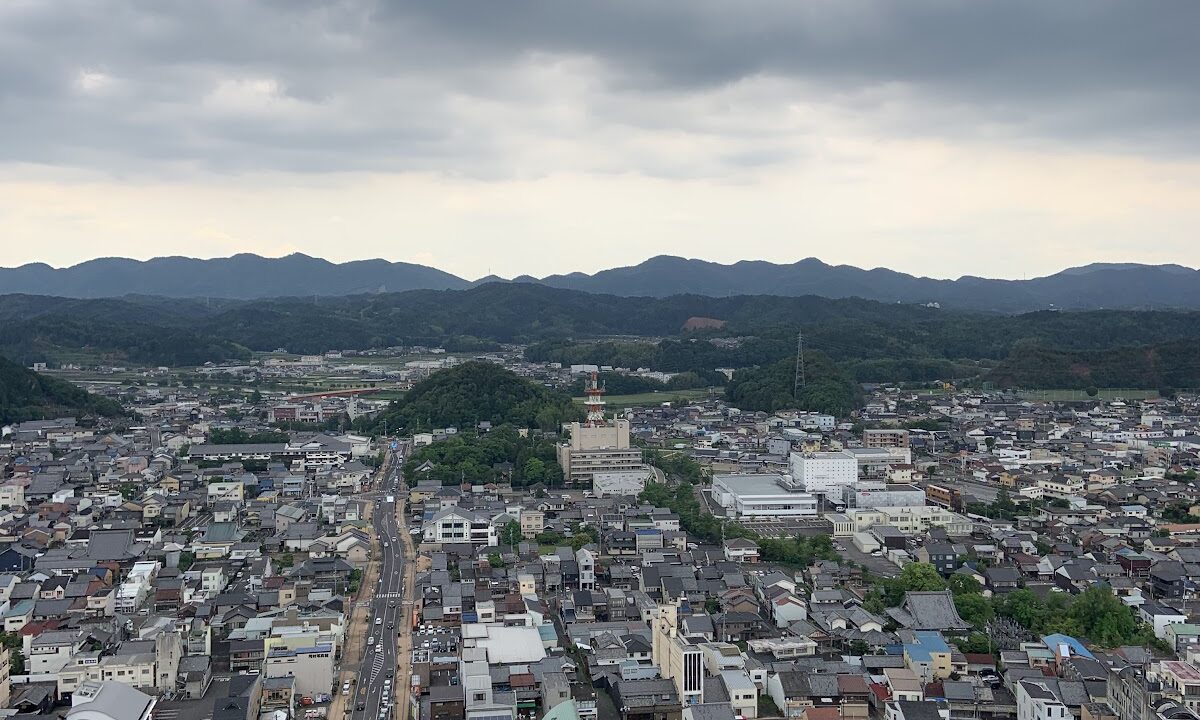
Seki Castle (Gifu Prefecture, Seki City) Complete Guide | History, Highlights, and Access Explained in Detail
Seki Castle, built on the summit of Mt. Anzaku, which rises in the heart of Seki City, Gifu Prefecture (151.9 meters above sea level), is an important mountain castle that tells the story of medieval Mino Province. While now a popular park for locals, the remains of the medieval mountain castle, such as the cliff face on the north side of the main enclosure at the summit, the outer baileys, and the vertical moats, are well-preserved. This article provides a thorough introduction to this representative castle site of Seki City, Gifu Prefecture, covering everything from its history and structure to its highlights, access methods, and surrounding tourist information.
Overview and Characteristics of Seki Castle
Seki Castle is a medieval mountain castle built on Mt. Anzaku in Seki City, Gifu Prefecture, and functioned as an important base for the Nagai clan in Mino Province. While now developed as Anzaku Mountain Park and home to the Ontake Shrine at the summit, the castle remains are still clearly visible.
Basic Information
- Location: Anzakuyama, Seki City, Gifu Prefecture
- Elevation: 151.9 meters
- Castle Structure: Mountain Castle
- Builder: Nagai Clan (Tradition)
- Construction Period: Details Unknown (Before the Sengoku Period)
- Main Lord: Nagai Clan
- Current Status: Anzakuyama Park, Ontake Shrine Grounds
- Designation: Not a city-designated historical site, but preserved as a local historical heritage site.
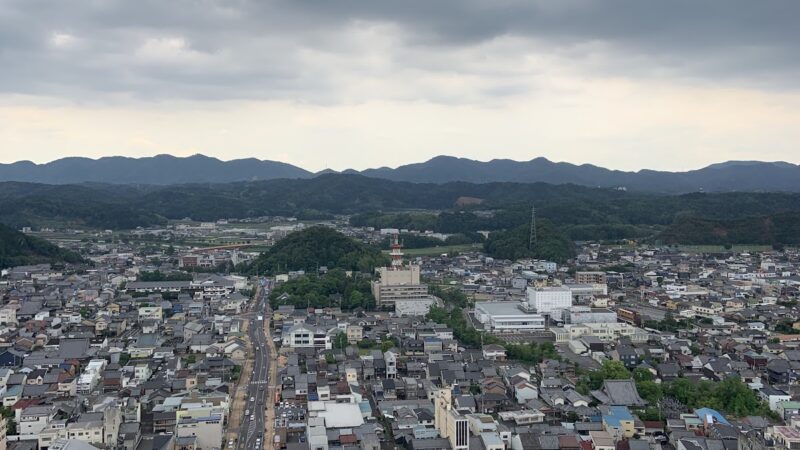
A notable feature of Seki Castle is that it retains well-preserved remains despite being located in the heart of Seki City. It is easily accessible as it is maintained as a park, and the mountaintop offers an excellent panoramic view of Seki City.
History of Seki Castle
Construction and the Nagai Clan Era
The exact construction date of Seki Castle is uncertain, but it is said to have been built by the Nagai clan. The Nagai clan was a powerful family in Mino Province, controlling the surrounding area from their base at Seki Castle.
The Nagai clan’s control of Seki Castle was closely intertwined with the political situation in Mino Province. At that time, the Saito clan was gaining real power in Mino Province, and the Nagai clan was under their influence. Seki Castle was located at a strategic point in the Nagara River basin and is thought to have functioned as an important military base controlling a key transportation hub.
Oda Nobunaga’s Conquest of Mino and Seki Castle
The most important event in the history of Seki Castle is Oda Nobunaga’s conquest of Mino Province in 1565. That year, Nobunaga attacked Dodō Castle in Mino Province. Nagai Hayato was stationed at Seki Castle to defend it, but records indicate that he withdrew after Dodō Castle fell.
This event is a crucial part of Oda Nobunaga’s process of unifying Mino Province and demonstrates that Seki Castle was recognized as a strategically important location. The fact that Nagai Hayato abandoned Seki Castle after the fall of Dodō Castle speaks to the overwhelming military power of the Oda army and suggests that defending Seki Castle was difficult.
The Aftermath of Seki Castle
There are no detailed records of how Seki Castle was used after Oda Nobunaga’s pacification of Mino Province. However, by the Edo period, it had already lost its function as a castle, and Mount Anzaku became a place of local worship, with the Ontake Shrine being enshrined there.
Since the Meiji era, it has been developed as a park, and is now Anzakuyama Park, a place of relaxation for citizens. Its value as a castle site is recognized, and efforts are being made to preserve the remains.
Structure and Layout of Seki Castle
Main Enclosure (Honmaru)
The main enclosure of Seki Castle is located on the summit of Mount Anzaku, where the Ontake Shrine is currently located. The main enclosure is a relatively flat, leveled area and functioned as the core of the castle. Although it has been partially altered by the construction of the shrine, the basic topography remains as it was in the past. From the main enclosure, one can enjoy a panoramic view of Seki city, the Nagara River basin, and the surrounding mountains. This excellent view is believed to have enhanced Seki Castle’s value as a military base. Its location was ideal for early detection of enemy movements and understanding the surrounding area.
Fortified Embankments and Terraced Enclosures
Of particular note among the remains of Seki Castle is the embankment remaining on the north side of the main enclosure. An embankment is a defensive structure created by artificially cutting into the slope of a mountain to make it steep, serving to make enemy intrusion difficult. The embankment of Seki Castle is still clearly visible today, making it a valuable example of medieval mountain castle defensive techniques.
A terraced enclosure is arranged around the main enclosure. These are long, narrow, flat areas surrounding the main enclosure, functioning as defensive passages and pathways for movement. While some parts of Seki Castle’s terraced enclosure are obscured due to the development of a park, careful observation allows for the deciphering of its original structure.
Vertical Moats
The remains of vertical moats are well-preserved at Seki Castle. Vertical moats are moats dug vertically along the slopes of mountains, effectively hindering enemy lateral movement and limiting entry routes into the castle. Despite the impact of park development, the vertical moats at Seki Castle provide important clues to understanding the defensive system of a mountain castle.
Multiple vertical moats have been identified, suggesting they formed a defensive line centered around the main enclosure. These remains indicate that Seki Castle was not merely a lookout post, but a full-fledged mountain castle built with actual combat in mind.
Ascent Route and Defensive System
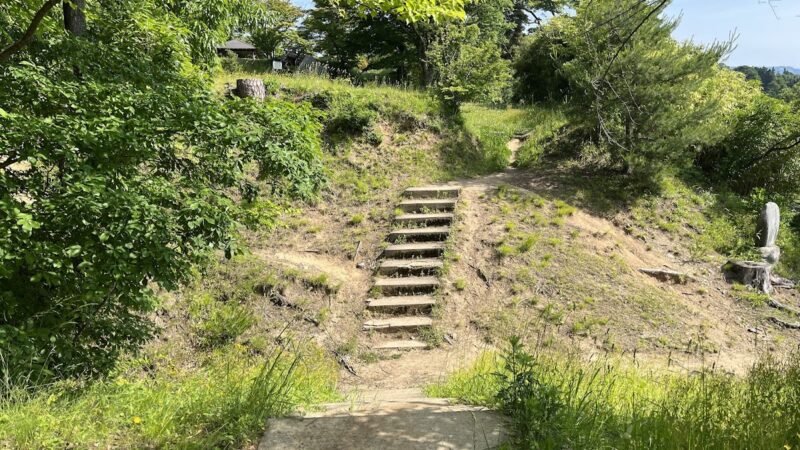
While the current ascent route is easily accessible due to park development, it is believed to have been a steep mountain path in its heyday. The defense of a mountain castle fundamentally relies on maximizing the use of natural terrain, and the topography of Mount Anzaku greatly contributed to Seki Castle’s defense.
Along the ascent route, there must have been numerous features designed to hinder enemy advances. Although much has been lost due to the development of the park, the undulations of the terrain and the arrangement of the baileys allow us to imagine the defensive system of the time.
Highlights of Seki Castle
View from the Main Bailey
The greatest highlight of a visit to Seki Castle is undoubtedly the view from the main bailey (mountaintop). From the mountaintop, at an altitude of 151.9 meters, you can see the entire city of Seki, and on a clear day, you can even see the mountains of Mino in the distance. This view is attractive not only for its historical value as a castle site but also as a modern tourist spot.
An observation deck has been installed, allowing you to enjoy a 360-degree panoramic view. Especially during cherry blossom season and autumn foliage season, you can enjoy a wonderful landscape where the castle ruins and natural beauty harmonize.
Ontake Shrine
The Ontake Shrine, located within the main bailey, has long been cherished as the center of local faith. The landscape where the castle ruins and the shrine coexist evokes a sense of the layered nature of Japanese history. The shrine grounds are enveloped in a tranquil atmosphere, making it an ideal resting spot during a historical walk.
Observing the Remains
For castle enthusiasts, observing the remains such as the cliff face on the north side of the main enclosure, the outer baileys, and the vertical moats is a major draw. Because the area is maintained as a park, some remains are difficult to discern, but careful observation allows you to understand the structure of a medieval mountain castle.
The cliff face, in particular, remains clearly visible, allowing you to see the artificially carved steep slopes up close. Walking along the outer baileys and imagining the samurai who defended the castle in those days is another enjoyable aspect.
Nature of Anzakuyama Park
The Seki Castle ruins have been developed into Anzakuyama Park, where you can enjoy nature throughout the seasons. In spring, cherry blossoms bloom, and as the name “Anzakuyama” (meaning “peaceful cherry blossom mountain”) suggests, it is a popular spot for cherry blossom viewing, attracting many visitors. In summer, you can enjoy a refreshing forest bath; in autumn, the autumn leaves; and in winter, the serene atmosphere.
The park has well-maintained walking paths, making it easy to stroll around. The ability to enjoy both castle ruins and nature walks simultaneously is a major attraction of Seki Castle.
Access to Seki Castle
Access by Public Transportation
Using the Nagaragawa Railway
- Get off at Seki Station on the Nagaragawa Railway
- Approximately 6 minutes on foot from the station to the castle entrance
- Approximately 10 minutes on foot from the castle entrance to the main enclosure
Seki Station on the Nagaragawa Railway is the central station of Seki City, and is relatively easy to access from the Nagoya area. The path from the station to the castle entrance is flat, and there are guide signs, so you won’t get lost.
Using JR
Transfer to the Nagaragawa Railway from Gifu Station or Mino-Ota Station on the JR Takayama Line to Seki Station. From Gifu Station, it takes about 1 hour via Mino-Ota Station.
Access by Car
Using the Expressway
- Approximately 9 minutes from the Seki Interchange on the Tokai-Hokuriku Expressway
- After exiting the Seki Interchange, take National Route 248
- Follow the signs for Anzakuyama Park
Parking Information
- Anzakuyama Parking Lot (Free)
- Capacity: Approximately 20 cars
- Convenient location near the castle entrance
From Nagoya, it takes about 1 hour via the Tokai-Hokuriku Expressway. From Gifu City, it takes about 30 minutes via National Route 248.
Precautions When Visiting the Castle
- There is a signpost at the castle entrance, making it easy to find.
- The path to the castle is well-maintained, but comfortable walking shoes are recommended.
- The climb to the summit takes approximately 10 minutes.
- Insect repellent is recommended during the summer months.
- Be careful as the ground can be slippery in rainy weather.
History and Culture of Seki City
Seki City, the City of Cutlery
Seki City, where Seki Castle is located, is known worldwide as the “City of Cutlery.” The sword industry, boasting a tradition of over 700 years, developed from the time of the lord of Seki Castle and continues to thrive as one of the world’s three major cutlery production areas.
The origins of Seki City’s cutlery industry date back to the Kamakura period. Blessed with high-quality water, soil, and charcoal, Seki provided an ideal environment for swordsmiths. Swordsmiths known as Seki swordsmiths produced numerous famous swords praised for being “unbreakable, unbendable, and exceptionally sharp.”
Seki City still boasts the highest cutlery production value in Japan, producing a wide variety of products including kitchen knives, scissors, and nail clippers. Visiting Seki City and exploring its cutlery-related facilities and shops is highly recommended.
Cutlery Festival
The “Cutlery Festival,” held every October, is a representative event of Seki City. Many people from all over Japan visit, enjoying sales of cutlery products, displays of Japanese swords, and demonstrations of sword forging. Visiting Seki City during this time, perhaps in conjunction with a visit to Seki Castle, is a good idea.
Oze Cormorant Fishing
The Oze Cormorant Fishing tradition, with a history of over 1,000 years, takes place on the Nagara River that flows through Seki City. This traditional fishing method, designated as a National Important Intangible Folk Cultural Property, is an important cultural heritage of Seki City. It can be enjoyed from mid-May to mid-October, and experiencing it in conjunction with a visit to Seki Castle is highly recommended.
Nearby Tourist Attractions
Seki Swordsmithing Tradition Museum
If you want to learn more about Seki City’s cutlery culture, the Seki Swordsmithing Tradition Museum is a must-see. Regular demonstrations of Japanese sword forging are held, allowing you to observe the ancient and elegant techniques up close. The museum also features extensive exhibits on the history and manufacturing process of swords and cutlery.
- Location: 9-1 Minami Kasuga-cho, Seki City
- Access: Approximately 5 minutes by car from Seki Castle
- Opening Hours: 9:00 AM – 4:30 PM (Closed Mondays)
Cutlery Hall
This facility allows you to purchase cutlery products from Seki City. A wide variety of cutlery products, including kitchen knives, scissors, and nail clippers, are available, making it ideal for souvenir shopping. You can choose from high-quality products showcasing the skills of craftsmen.
Monet’s Pond (Nameless Pond)
Monet’s Pond, which has become a hot topic on social media in recent years, is located in the Itadori area of Seki City. This beautiful pond, remarkably similar to Claude Monet’s famous painting “Water Lilies,” is a popular attraction. The sight of water lilies floating in the crystal-clear water and colorful koi swimming is truly like a painting.
- Location: 396 Itadori, Seki City (next to the approach to Nemichi Shrine)
- Access: Approximately 40 minutes by car from Seki Castle
21st Century Forest Park & Kabusugi Forest
This spot allows you to experience the rich nature of Seki City. In particular, Kabusugi Forest is enveloped in a mystical atmosphere, with giant cedar trees over 400 years old standing tall. Recommended for those who want to enjoy nature walks.
Itadori River
The clear waters of the Itadori River are attractive for their valley scenery and crystal-clear water. In summer, it is bustling with people enjoying river activities and camping. It is a scenic spot that symbolizes the richness of nature in Seki City.
Model Itinerary for Visiting Seki Castle
Half-Day Course (Approx. 3 Hours)
- Arrive at Nagaragawa Railway Seki Station (9:00)
- Climb Seki Castle (9:10-10:30)
- Stroll from the entrance to the main enclosure
- Observe the ruins
- Enjoy the view from the observation deck
- Visit Seki Swordsmithing Tradition Museum (11:00-12:00)
- Observe a demonstration of Japanese sword forging
- View the exhibits
- Lunch in the city center (12:00-13:00)
Full-Day Course (Approx. 7 Hours)
- Arrive at Nagaragawa Railway Seki Station (9:00)
- Climb Seki Castle (9:10-10:30)
- Visit Seki Swordsmithing Tradition Museum (11:00-12:00)
- Lunch in the city center (12:00-13:00)
- Shopping at the Cutlery Museum (13:30-14:30)
- Visit Monet’s Pond (15:30-16:30)
*Car travel required
- Return trip (17:00)
Points to note when visiting Seki Castle
Best time to visit
Seki Castle can be visited throughout the year, but the following times are especially recommended:
- Spring (late March to early April): Cherry blossom season. The cherry blossoms on Mt. Anzaku are beautiful, allowing you to enjoy both cherry blossom viewing and a tour of the castle ruins.
- Autumn (November): Autumn foliage season. The mountains are ablaze with color, and the view from the observation deck is exceptional.
- October: Cutlery Festival season. The entire city of Seki is bustling with activity.
Estimated Time Required
- From the entrance to the main enclosure: Approximately 10 minutes on foot
- Castle ruins tour: 30 minutes to 1 hour
- If you want to carefully observe the remains: 1 hour to 1 hour 30 minutes
What to Bring and Wear
- Comfortable walking shoes (sneakers, etc.)
- Drinks
- Summer: Hat, insect repellent, towel
- Camera (the view from the observation deck is a great photo spot)
- Rain gear (during periods of unpredictable weather)
Historical Value and Future Preservation of Seki Castle
Seki Castle holds historical value as a castle involved in a crucial moment in Japanese history: Oda Nobunaga’s conquest of Mino Province. Furthermore, its well-preserved medieval mountain castle remains make it an important historical site for castle research.
Currently, it is maintained as a park and serves as a place of relaxation for citizens, but it is also important to pass on its value as a historical heritage to future generations. It is necessary to protect it as a valuable cultural asset of Seki City, balancing the preservation and utilization of the remains.
In recent years, interest in castle ruins and historical tourism has been growing, and Seki Castle is attracting increasing attention. When visiting Seki City in Gifu Prefecture, we highly recommend visiting this historic mountain castle, along with its cutlery culture and natural beauty.
Summary
Seki Castle is a medieval mountain castle built on Mt. Anzaku in the heart of Seki City, Gifu Prefecture. It flourished as the residence of the Nagai clan and is a historically important castle site, having served as a stage for Oda Nobunaga’s conquest of Mino Province. Currently, it is maintained as Anzakuyama Park, and the remains, such as the cliff on the north side of the main enclosure, the outer bailey, and the vertical moats, are well preserved.
The view from the mountaintop is magnificent, offering a panoramic view of Seki City. Its easy accessibility, being only about a 15-minute walk from Seki Station on the Nagaragawa Railway, is also a major draw, making it a castle site that can be easily visited.
Seki City is known worldwide as a “city of cutlery,” and its sword culture has thrived for over 700 years. A visit to Seki Castle, along with watching a Japanese sword forging demonstration at the Seki Swordsmithing Tradition Museum, shopping at the Cutlery Museum, experiencing Oze Cormorant Fishing, and exploring natural spots like Monet’s Pond, will make for a fulfilling Seki City sightseeing experience.
Seki City in Gifu Prefecture is a place where history, culture, and nature harmonize. At its heart lies Seki Castle, a valuable heritage site that conveys the history of this region. It’s a recommended spot not only for castle ruin enthusiasts, but also for history buffs and those who enjoy nature walks. Be sure to visit Seki Castle and experience the history of Mino Province and the charm of Seki City.