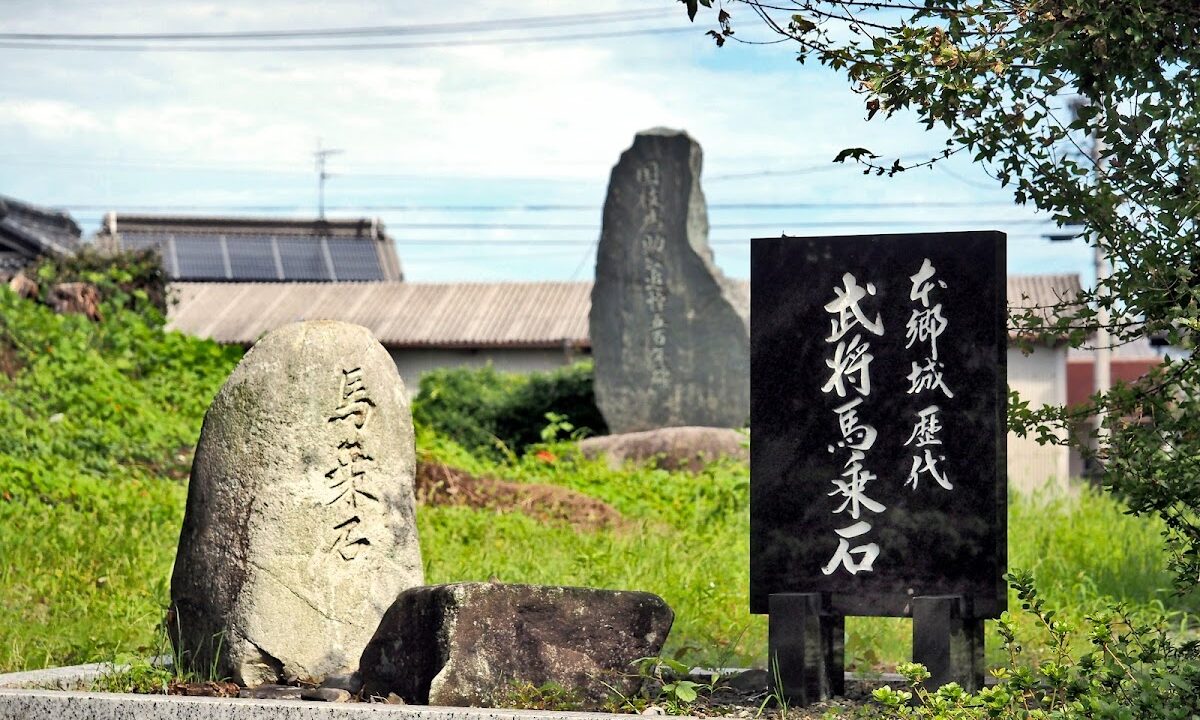
Hongō Castle (Gifu Prefecture, Ibi District) Complete Guide | History and Remains from the Kuni-eda Clan’s Residence to the Battle of Sekigahara
Located in Ikeda-cho, Ibi-gun, Gifu Prefecture, Hongō Castle is a flatland castle that played an important role from the medieval period to the Sengoku period as the base of the Kuni-eda clan in Mino Province. It features a concentric structure with double moats and earthen ramparts, and remains such as watchtower bases are still preserved as a town historical site. This article provides a detailed explanation of the entire castle, from its construction to its abandonment, to the details of its remains and how to access it.
Overview and Basic Information of Hongō Castle
Hongō Castle (also known as Ikeda Hongō Castle or Ikeda Castle) is a flatland castle built in Hongō, Ikeda-gun, Mino Province (present-day Hongō, Ikeda-cho, Ibi-gun, Gifu Prefecture). It is a concentric flatland castle characterized by its defensive structure with double moats and earthen ramparts.
Location and Basic Data
- Location: Kitaseko, Hongō, Ikeda-cho, Ibi-gun, Gifu Prefecture (〒503-2417)
- Castle Structure: Ring-shaped flatland castle
- Construction Period: Nanboku-chō period (late 14th century) or late 15th century
- Builder: Possible origins include Toki Yoritada and the Kunieda clan
- Main Lord: Kunieda clan
- Year of Abandonment: Keichō 5 (1600), after the Battle of Sekigahara
- Remains: Turret base, part of earthwork
- Designated Cultural Property: Ikeda Town Historic Site
The castle grounds have an irregular trapezoidal shape, extending approximately 116 meters east-west, 149 meters west-side, and 68 meters east-side. Currently, only a portion of approximately 35 meters square, including the turret base of the inner enclosure, remains, but the cadastral map clearly shows its original form.
Construction and History of Hongō Castle
Theory of Construction During the Nanboku-chō Period
There are several theories regarding the construction of Hongō Castle. One theory suggests that it was built during the Nanboku-chō period by Toki Yoritada, the governor of Mino Province. The Toki clan was a powerful daimyo who ruled Mino Province, and it has been suggested that they built the castle in Hongō as a base for their retainers.
Toki Yoritada was a military commander who was active during the Nanboku-chō period and solidified the Toki clan’s foundation in Mino Province. Many castles and residences were built in Mino Province during this period, and it is thought that Hongō Castle functioned as one of them.
Development of the Castle by the Kunieda Clan
From the late 15th century onward, Hongō Castle appears in reliable records as the residence of the Kunieda clan of Mino Province. The Kunieda clan was a powerful local family in Mino Province, with close ties to the Toki clan (governor) and the Saitō clan (deputy governor).
There are various theories regarding the lineage of the Kunieda clan, and it remains unclear, but historical records confirm that they had accumulated considerable power during the Bunmei era (1469-1487). During this period, the Kunieda clan played an important role in the political situation within Mino Province.
The Battle of Funada in the Meio Era and Kunieda Tamesuke
The name of the Kunieda clan and Hongō Castle is clearly etched in history during the Battle of Funada, which took place in June of Meio 4 (1495). This battle was a civil war instigated by Ishimaru Toshimitsu, a minor shugodai (deputy governor), who supported Toki Motoyori, the son of Toki Nariyori.
In this battle, Kunieda Tamesuke (Kunieda Tamesuke) participated as a second-in-command on Ishimaru’s side, leading an army. Tamesuke mobilized troops from Hongō Castle and actively participated in the political conflicts within Mino Province. This fact indicates that the Kunieda clan at the time was not merely a local powerful family, but possessed military power capable of influencing the political situation in Mino Province.
The actions of the Kunieda clan in the Battle of Funada reflect the power struggles within the Toki clan in Mino Province and their complex relationship with the Saito clan, who served as the shugodai (deputy governor). Records suggest that Tamesuke and his brothers were killed in the battle, making it a major turning point for the Kunieda clan.
Hongō Castle in the Sengoku Period
Entering the 16th century, Mino Province experienced a turbulent period, marked by the rise of Saito Dōsan and the subsequent pacification by Oda Nobunaga. Hongō Castle continued to function as the Kunieda clan’s residence throughout this period.
During the Sengoku period, Hongō Castle held significant strategic importance as a key point controlling the Ibi River basin. The Ikeda district was a vital transportation hub in western Mino Province, and Hongō Castle served as the Kunieda clan’s base of operations in this region.
The Battle of Sekigahara and the End of Hongō Castle
The history of Hongō Castle came to an end with the Battle of Sekigahara in 1600. At this time, the castle lord, Kunieda Shuri-no-suke Masamori (Kunieda Masamori), sided with the Western Army under Oda Hidenobu (Nobunaga’s grandson) of Gifu Castle.
In the preliminary skirmishes leading up to the Battle of Sekigahara, Gifu Castle fell to an attack by the Eastern Army. Hongō Castle, a subsidiary castle of Gifu Castle, was also attacked by the Eastern Army and burned down. As a result of this battle, the Kunieda clan fell from power, and Hongō Castle was abandoned.
The defeat at the Battle of Sekigahara marked the end of the Kunieda clan, who had maintained power in this area since the Middle Ages. After the castle burned down, Hongō Castle was never rebuilt, and its role came to an end.
Structure and Remains of Hongō Castle
Castle Structure
Hongō Castle was built as a concentric-style flatland castle. A concentric style refers to a structure where the central enclosure is surrounded by concentric moats and earthworks. Despite being a flatland castle built on plains, it had a strong defensive system thanks to its double moats and earthworks.
The castle area had an irregular trapezoidal shape and the following dimensions:
- East-West Width: Approximately 116 meters
- Western Edge: Approximately 149 meters
- Eastern Edge: Approximately 68 meters
This size was appropriate for a local powerful family’s castle and reflects the power of the Kunieda clan. The castle was surrounded by a double moat, with earthworks built inside.
Existing Remains
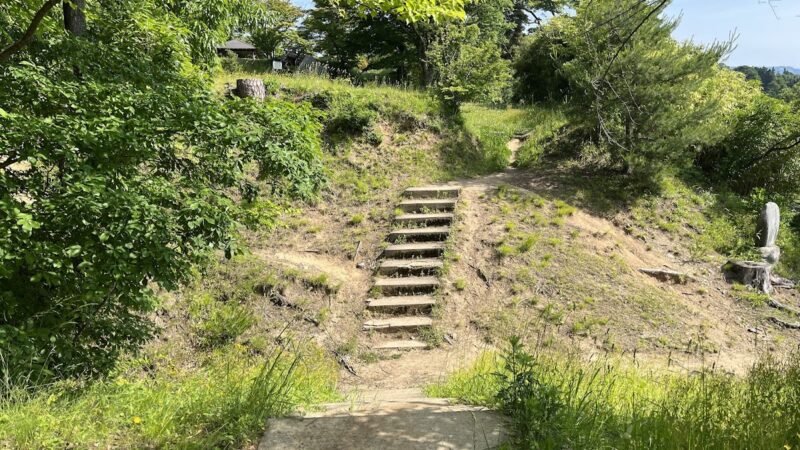
Currently, the remains of Hongō Castle consist of an area of approximately 35 meters square, centered around a watchtower base located in the northwest corner of the inner enclosure. This section is designated as a historical site of Ikeda Town and is preserved.
Characteristics of the Watchtower Base
The watchtower base of Hongō Castle was large in scale and functioned as a key defensive point in the flatland castle. The watchtower base was an important facility for monitoring enemy movements and providing defense with bows and arrows and firearms. Its shape can still be seen today as a raised earthen embankment.
Remains of the Earthen Embankment
Parts of the earthen embankment remain around the watchtower base. The earthen embankment, along with the moat, served as a defensive structure for the castle, preventing enemy intrusion. The earthen embankment of Hongō Castle was built inside a double moat, exhibiting a typical structure of a concentric castle.
Castle Form as Remains on the Cadastral Map
Interestingly, the castle grounds of Hongō Castle are clearly preserved on the cadastral map. A cadastral map is a drawing that records the boundaries and shape of land, showing that the former castle’s boundaries influenced modern land divisions.
Castle Form as Remains on the Cadastral Map
Information gleaned from cadastral maps allows for some estimation of the former moat locations and the layout of the baileys. This is valuable material for castle research and provides important clues to understanding the overall structure of Hongō Castle.
About the Kunieda Clan
Origins and Genealogy of the Kunieda Clan
The Kunieda clan (Kunieda), who were the lords of Hongō Castle, were one of the powerful local lords in Mino Province. There are various theories regarding their origins, and nothing is definitively known, but the following theories exist:
One theory suggests they were a branch of the Toki clan or a family that split off from their retainers. Another theory suggests they may have independently established their power as a local lord in Mino Province. In any case, in the latter half of the 15th century, they appear in records as powerful figures with deep ties to the Shugo Toki clan and Shugodai Saitō clan.
Scope of the Kunieda Clan’s Influence
The Kunieda clan’s base was the area centered around Hongō in Ikeda District. This region, located in the Ibigawa River basin, was a crucial transportation hub in western Mino Province. The Kunieda clan leveraged this advantageous location to expand their power and cultivate relationships with surrounding local lords.
By the Bunmei era (1469-1487), they are believed to have amassed considerable power, and, backed by military strength, were involved in the political affairs of Mino Province. Records show that Kunieda Tamesuke led an army as a deputy commander in the Battle of Funada in 1495, suggesting that the Kunieda clan possessed the ability to mobilize forces of several hundred to a thousand men during this period.
Relationship with the Toki and Saito Clans
The Kunieda clan is said to have had close ties with the Toki clan, the governors of Mino Province, and the Saito clan, who served as deputy governors. This relationship reflects the complex power structure within Mino Province.
Under the Toki clan, the Shugodai (deputy governor), the Saito clan, who handled practical affairs, gradually seized real power. As these clans grew, local powerful families like the Kunieda clan needed to maintain a balance between the two sides to preserve their own influence. Kunieda Tamesuke’s actions at the Battle of Funada are thought to have stemmed from this political position.
The Kunieda Clan After the Battle of Sekigahara
In the Battle of Sekigahara in 1600, Hongō Castle was destroyed by fire, and the castle lord, Kunieda Shuri-no-suke Masamori, sided with the Western Army, leading to the decline of the Kunieda clan. Detailed records of the Kunieda clan’s fate after losing their castle are scarce.
While some members may have returned to farming or served other daimyo, the history of the Kunieda clan as a Sengoku daimyo (warring states lord) ended here. The demise of a family that had maintained power in the Hongō region since the Middle Ages can be seen as an example of the major social changes brought about by the Battle of Sekigahara.
Historical Significance of Hongō Castle
A Key Castle in Western Mino Province
Hongō Castle was an important key castle in western Mino Province, particularly in the Ibi River basin. This region was a crucial point where transportation routes intersected between the central part of Mino Province, the northern mountainous region, and even to Ōmi Province. Hongō Castle’s strategic location made it highly important.
The fact that it was a flatland castle yet possessed strong defenses with double moats and earthworks speaks to the high level of military tension in the region. The Kunieda clan maintained their influence over the surrounding area from Hongō Castle.
Characteristics of a Local Clan Castle
Hongō Castle is important as a typical example of a local clan castle during the Sengoku period (Warring States period). Although not as large as a daimyo’s main castle, it possessed a practical structure with double moats, earthworks, and watchtower bases.
Many such small to medium-sized castles existed in Mino Province during the Sengoku period, but only a limited number of examples have survived to the present day. The remains of Hongō Castle are invaluable historical documents for understanding the types of castles built by local powerful families at the time.
The Battle of Sekigahara and the Fate of Castles
The abandonment of Hongō Castle is a concrete example of the impact the Battle of Sekigahara had on Mino Province. Following this battle, many small and medium-sized castles within Mino Province were abandoned, marking a transition to a new system of rule during the Edo period.
The burning of Hongō Castle and the downfall of the Kunieda clan can be seen as symbolic events representing the fate of local powerful families during the transition from the Sengoku period to the early modern period. The Battle of Sekigahara was not merely a battle that decided the fate of Japan, but also a battle for the very survival of local castles and powerful families.
Access and Visiting Information for Hongō Castle
Access Methods
Using Public Transportation
- Nearest Station: Mino-Hongō Station, Yōrō Railway Yōrō Line
- Distance from Station: Approximately 500 meters west
- Travel Time: Approximately 7-10 minutes on foot
Hongō Castle ruins are relatively close to Mino-Hongō Station and accessible on foot. Heading west from the station will lead you to the Hongō Castle ruins, which have been developed into a historical park.
Using a Car
- Meishin Expressway: Approximately 15 kilometers from Ōgaki IC
- Tōkai-Kanjō Expressway: Approximately 10 kilometers from Ōno-Kambe IC
- Parking: Parking spaces are available around the castle ruins (please check with Ikeda Town Hall for details)
Points to Note During Your Visit
Development as a Historical Park
Hongō Castle ruins are designated as a historical site of Ikeda Town and have been developed into a historical park. Information boards are installed around the existing remains of the turret base and earthworks, allowing visitors to learn about the castle’s history and structure.
Estimated Visiting Time
Visiting the castle ruins takes approximately 15-20 minutes. While the scale of the remains is limited, elements such as the shape of the turret base and the height of the earthworks allow visitors to experience the structure of a flatland castle.
Photography and Recording
Photography and viewing of the castle ruins are permitted. By photographing the turret base from various angles, you can record its scale and structure. Furthermore, observing the surrounding topography allows you to imagine the former extent of the castle grounds.
Nearby Tourist Attractions
Historical Resources of Ikeda Town
Besides the Hongō Castle ruins, Ikeda Town has other historical resources. Temples, shrines, and old townscapes are scattered throughout the town, making it a great place for historical walks.
Castles in the Ibigawa River Basin
Several other castle ruins remain in the Ibigawa River basin. As part of a historical exploration of castles in western Mino Province, a visit to Hongō Castle would be a good idea.
Contact Information
For inquiries regarding visits to the Hongō Castle ruins and other details, please contact:
Ikeda Town Board of Education, Social Education Division
- Address: Ikeda-cho, Ibi-gun, Gifu Prefecture
- Phone: Via Ikeda Town Hall main number
We recommend checking the opening status and parking before your visit.
Current Status and Challenges of Hongō Castle Research
Limitations of Historical Materials
Historical materials concerning Hongō Castle are limited, and many points remain unclear regarding the construction date and detailed castle structure. In particular, further research is needed to determine whether the theory of construction by Toki Yoritada or the theory by the Kunieda clan is correct, or whether there is any relationship between the two.
Possibility of Archaeological Excavation
The currently preserved remains represent only a part of the castle grounds, and many more remains may be buried underground. Further archaeological excavations could potentially provide more detailed information about the structure and history of Hongō Castle.
In particular, many elements, such as the structure of the double moat and the arrangement of buildings within the baileys, are likely to be revealed only through excavation.
Position in Local History
The history of Hongō Castle and the Kunieda clan occupies an important position in the regional history of western Mino Province. However, research on them is currently less advanced compared to that on castles and warlords of daimyo class.
Understanding the activities of local powerful families is essential for understanding regional society during the Sengoku period. Deepening research on Hongō Castle and the Kunieda clan will lead to a more comprehensive understanding of the history of Mino Province.
Summary
Hongō Castle is the site of a flatland castle from the medieval to Sengoku period, located in Ikeda-cho, Ibi-gun, Gifu Prefecture. There are two theories regarding the origin of Hongō Castle: one suggests it was built by Toki Yoritada during the Nanboku-chō period, and the other suggests it was built by the Kunieda clan in the late 15th century. In any case, it certainly functioned as the Kunieda clan’s residence from the late 15th century onward.
Records indicate that Kunieda Tamesuke participated as a deputy commander in the Battle of Funada in 1495, demonstrating his deep involvement in political conflicts within Mino Province. Hongō Castle, which served as the Kunieda clan’s base throughout the Sengoku period, was burned down and abandoned by the Eastern Army during the Battle of Sekigahara in 1600 because its lord, Kunieda Shuri-no-suke Masamori, sided with the Western Army.
Currently, a roughly 35-meter square area centered around a watchtower base is preserved as a historical site in Ikeda Town, retaining the appearance of a concentric flatland castle with double moats and earthworks. It is easily accessible on foot from Mino-Hongō Station on the Yōrō Railway, making it a convenient castle site to visit.
Hongō Castle is a valuable historical site that tells the story of how local powerful families built their castles during the Sengoku period and how they were tossed about by the turbulent waves of history. It is a place worth visiting for anyone interested in the history of Mino Province or who enjoys visiting castles.