Takenaka Jinya (Gifu Prefecture) Complete Guide: Visiting the Legacy of Takenaka Hanbei – The History and Highlights of a Hatamoto Jinya
The Takenaka Jinya (Takenaka Clan Jinya Ruins), quietly situated in Tarui-cho, Fuwa-gun, Gifu Prefecture, is a hatamoto (shogunate retainer) jinya ruled throughout the Edo period by the Takenaka clan, descendants of the renowned Sengoku period strategist Takenaka Hanbei. With its white-walled turret gate, sturdy stone walls, and moat, it is an extremely rare historical site nationwide, possessing castle-like structures despite being a hatamoto (shogunate retainer) site, and is designated as a Gifu Prefecture historical site.
This article thoroughly introduces this valuable historical heritage, from the historical background of the Takenaka Jinya to details of the existing remains, access methods, and surrounding tourist spots.
What is the Takenaka Jinya?: From Iwate Castle to the Jinya
The Takenaka Jinya is an Edo period jinya located in Iwate, Fuwa-gun, Mino Province (present-day Iwate, Tarui-cho, Fuwa-gun, Gifu Prefecture). Originally known as Iwate Castle during the Azuchi-Momoyama period, it came to be officially called a “jinya” (fortified residence) during the Edo period because the Takenaka clan remained of hatamoto (direct retainer of the shogun).
The difference between a jinya and a castle lies primarily in the lord’s status and kokudaka (rice yield). Generally, a jinya refers to a facility where hatamoto or kōtai-yoriai (alternate retainers) with less than 10,000 koku resided. However, the Takenaka clan, despite being hatamoto with 5,000 koku, maintained a jinya equipped with castle-like structures such as a turret gate and stone walls. This speaks to the Takenaka clan’s special status and historical background.
Alternative Names and Designations
Takenaka Jinya (the Takenaka encampment) has several names:
- Takenaka-shi Jinya (Takenaka Clan Encampment): Formal Name
- Iwate-jo (Iwate Castle): Name used during the Azuchi-Momoyama period
- Iwate Jinya (Iwate Encampment)
- Takenaka-shi Yakata (Takenaka Clan Residence)
- Takeura-yakata (Takeura Residence)
These names have been used interchangeably depending on the era and context.
History of the Takenaka Clan: From Hanbei to Shigekado
Takenaka Hanbei Shigeharu: The Life of a Genius Strategist
Indispensable to discussing Takenaka Jinya is the existence of Takenaka Hanbei Shigeharu. Hanbei was a renowned strategist of the Sengoku period and served as a military strategist for Toyotomi Hideyoshi (then known as Hashiba Hideyoshi).
Hanbei was from the Takenaka clan, a local powerful family in Mino Province, and displayed exceptional strategic brilliance from a young age. His most famous anecdote is the “Capture of Inabayama Castle,” where he seized Inabayama Castle (later Gifu Castle) with only 16 men. This audacious operation made Hanbei’s strategic talent known to the world.
Afterward, he became a retainer of Oda Nobunaga and later served as a strategist for Hashiba Hideyoshi, participating in the campaign against the Chugoku region. During the siege of Miki Castle in Harima Province (the Battle of Miki), he fell ill and died in his camp on June 13, 1579, at the young age of 36.
Takenaka Shigekado: Builder of the encampment
Takenaka Shigekado was born as Hanbei’s eldest son. After his father’s death, he served Toyotomi Hideyoshi and participated in the Bunroku-Keicho War, among other campaigns. During the Battle of Sekigahara (1600), Shigemasa fought on the Eastern Army (Tokugawa Ieyasu’s side). This choice determined the survival of the Takenaka family. After the war, Tokugawa Ieyasu granted them 5,000 koku in areas such as Iwate, Fuchu, and Sekigahara in Fuwa District, allowing them to maintain their family name as hatamoto (direct retainers of the shogun).
Around 1608, Shigemasa abandoned Bodaiyama Castle, which had served as his residence, and built a new fortified residence at the current location. This marked the beginning of the present-day Takenaka Jinya (fortified residence). It is believed to have been developed between the Bunroku and Keicho periods (1592-1615).
From the Edo Period to the Meiji Restoration
The Takenaka family continued to exist as hatamoto throughout the Edo period and ruled the Iwate region until the Meiji Restoration. They maintained a relatively high social status as hatamoto, and successive generations of them held important positions in the shogunate.
In 1875 (Meiji 8), the Seiga School (the predecessor of the current Iwate Elementary School) was established on the site of the former Jinya (fortified residence), and the Yagura-mon (turret gate) was designated as the school’s main gate. Interestingly, until around 1945 (Showa 20), the interior of the Yagura-mon was actually used as a classroom.
Highlights of Takenaka Jinya: Existing Remains
The Takenaka Jinya site retains valuable remains that convey the atmosphere of the Edo period.
Yagura-mon: The Only Existing Castle Structure of a Hatamoto (Shogunate Retainer)
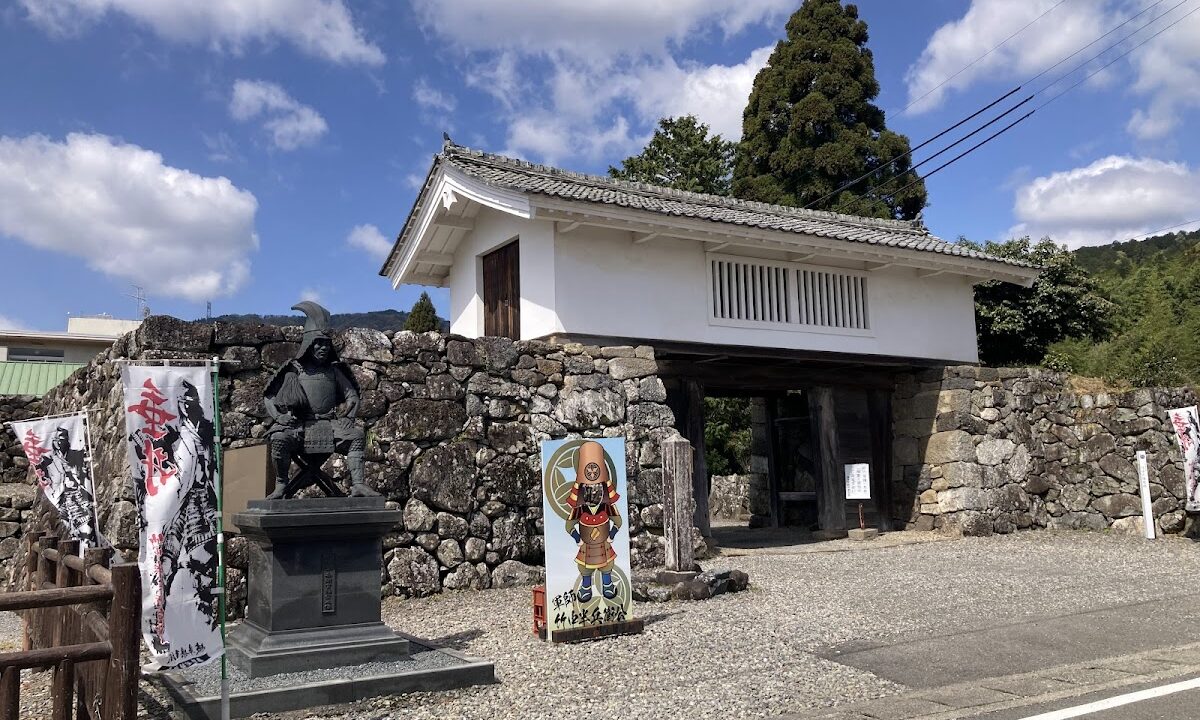
The greatest highlight of Takenaka Jinya is the white-walled Yagura-mon. This Yagura-mon is designated as a Gifu Prefecture cultural property and is considered the only existing castle structure of a Hatamoto in Japan.
Structure of the Turret Gate
- Size: 6 ken (approx. 10.9 meters) wide, 3 ken (approx. 5.45 meters) deep
- Structure: A two-story turret is placed on top of the gate.
- Features: Characterized by its white walls and heavy tiled roof, it is an unusually magnificent structure for a samurai’s residence.
The turret gate served both as a defensive structure and as a symbolic representation of the residence’s prestige. Normally, such turret gates are found in castles of daimyo (feudal lords), making its ownership by a 5,000-koku samurai extremely unusual.
Stone Walls: A Sturdy Defensive Structure
A sturdy stone wall remains in good condition around the turret gate. This stone wall was constructed using techniques such as nozurazumi (rough-stone masonry) and uchikomihagi (fitted stone masonry), allowing observation of stone wall techniques from the Sengoku period to the early Edo period.
The height of the stone walls varied depending on the location, but at their highest points they reached approximately 3-4 meters, strengthening the defensive capabilities of the encampment. The stones used are believed to be natural stones sourced locally.
Moat and Earthworks
Remnants of a moat remain around the turret gate, giving a glimpse into its former appearance. While the moat played an important role as a defensive structure, parts of it have now been filled in or drained.
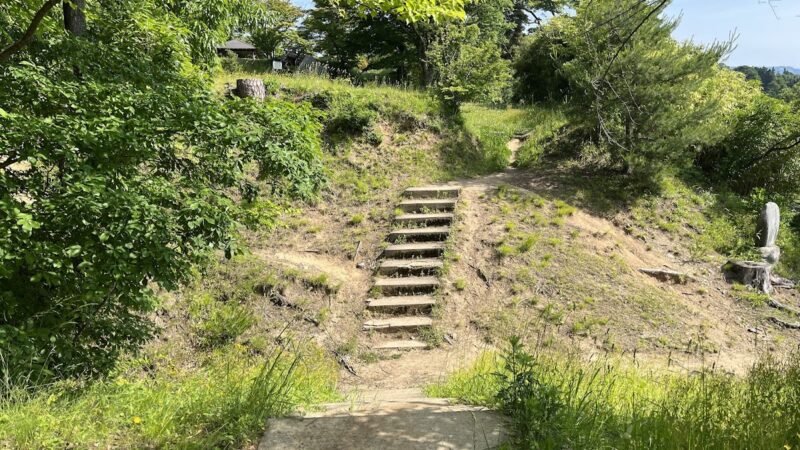
Furthermore, traces of earthworks can be seen around the encampment. These earthworks were defensive walls constructed by piling up earth, and together with the stone walls, they protected the entire encampment.
Scale and Layout of the Encampment
The grounds of the Takenaka encampment were considerably larger during the Edo period than they are today. The main buildings included the following:
- Main Gate (Watchtower Gate)
- Main House (Palace)
- Long House (Retainers’ Living Space)
- Storehouse (Rice Storehouse, Armory, etc.)
- Garden
Currently, only the watchtower gate, stone walls, and part of the moat remain, but these remnants allow us to imagine the grandeur of the encampment in its heyday.
Cultural Property Designation of Takenaka Encampment
The Takenaka Encampment site has been designated a Gifu Prefecture Designated Historic Site in recognition of its historical and cultural value. The watchtower gate, in particular, is protected as a prefectural designated cultural property, and regular restoration and preservation activities are carried out.
Examples of surviving castle-like structures at a samurai encampment are rare nationwide, making it a valuable historical resource for understanding the realities of local governance during the Edo period.
Access and Basic Information
Location
503-2121 Iwate, Tarui-cho, Fuwa-gun, Gifu Prefecture
The Takenaka Jinya Ruins are located in the Iwate district, northwest of Tarui town. They are situated along Prefectural Road 257 and are relatively easy to access.
Transportation Access
Access by Train
- Approximately 3 kilometers from JR Tokaido Main Line “Tarui Station”
- Approximately 10 minutes by taxi
- Approximately 40 minutes on foot
Access by Car
- Approximately 10 minutes from Meishin Expressway “Sekigahara IC”
- Approximately 20 minutes from Tokai-Kanjo Expressway “Ogaki-Nishi IC”
There is some parking space around the Jinya Ruins, but large vehicles should check in advance.
Visiting Information
- Visiting Hours: The exterior is always open for viewing (the interior of the turret gate is usually closed to the public).
- Admission Fee: Free
- Duration: Approximately 30 minutes to 1 hour
The interior of the turret gate may only be open to the public during special events or on designated cultural property public days. For details, please contact the Cultural Heritage Division of Tarui Town Hall.
Nearby Tourist Spots
When visiting Takenaka Jinya, we recommend also visiting the surrounding historical sites.
Bodaisan Castle Ruins
The ruins of Bodaisan Castle, the residence of Takenaka Hanbei, are located in the mountains approximately 5 kilometers northeast of the Jinya. The remains of the mountain castle are well-preserved, making it a great place for a historical site tour combined with hiking.
Sekigahara Battlefield
The battlefield of the Battle of Sekigahara, in which Takenaka Shigekado fought on the Eastern Army’s side, is located approximately 5 kilometers east of the Jinya. You can visit the Sekigahara Town Historical and Folk Museum and the encampment sites of various warlords.
Nangū Taisha Shrine
Nangū Taisha Shrine, the Ichinomiya (first-ranked shrine) of Mino Province, is a representative shrine of Tarui Town, located about 3 kilometers south of the encampment. It is revered as the god of metal, and its imposing shrine buildings are a highlight.
Tarui-juku
Tarui-juku, which flourished as a post town on the Nakasendō road, retains its old townscape and historical buildings. There are restaurants and souvenir shops around Tarui Station, making it a convenient base for sightseeing.
Points to Note When Visiting Takenaka Jinya
Best Season for Visiting
Takenaka Jinya is open for visits year-round, but the best seasons are:
- Spring (Late March to Early April): The cherry blossom season offers a beautiful contrast between the stone walls and the blossoms.
- Autumn (November): The autumn foliage is beautiful, creating a magnificent harmony with the white-walled gate tower.
- Early Summer (May to June): The fresh greenery is refreshing, making it ideal for a stroll.
Photography Tips
When taking photographs, the following angles are recommended:
- Front View of the Gate Tower: A classic angle that captures both the white walls and the stone walls.
- Side View of the Stone Wall: Clearly shows the construction and texture of the stone walls.
- Gate Tower Across the Moat: The gate tower reflected in the water is beautiful (if there is water).
Clothing and Items to Bring
- Comfortable Walking Shoes: There are cobblestone and unpaved paths.
- Hats and Sunscreen: There is little shade in the summer
- Drinks: There are few vending machines in the surrounding area
The Takenaka Family and its Aftermath
The Takenaka family continued to exist after the Meiji Restoration, and their lineage continues to this day. Descendants of Hanbei have been active in various fields.
Takenaka Hanbei’s grave is located near the Hiraiyama Honjin site in Miki City, Hyogo Prefecture, and a memorial service is held annually on the anniversary of his death. Activities to honor Hanbei also continue in Tarui Town, Gifu Prefecture, making him an important element of the region’s historical identity.
Preservation and Future of the Takenaka Jinya
Tarui Town and Gifu Prefecture are leading efforts to preserve and utilize the Takenaka Jinya site. Regular repairs to the turret gate and preservation work on the stone walls are being carried out, and efforts continue to pass on this valuable cultural asset to future generations.
In recent years, there have been movements to develop it as a tourist resource as a regional historical heritage site, and progress is being made in the development of information boards and the creation of explanatory pamphlets. Further utilization is expected as a historical site that is accessible not only to history enthusiasts but also to general tourists.
Takenaka Jinya and Takenaka Hanbei: Historical Significance
Takenaka Jinya is not merely the site of a hatamoto’s residence, but an important historical site that tells the story of the transformation of samurai society during the transition from the Sengoku period to the Edo period.
The fact that the lineage of Takenaka Hanbei, who greatly contributed to Toyotomi Hideyoshi’s unification of Japan, continued as a hatamoto of the Edo shogunate demonstrates the Tokugawa regime’s skillful personnel recruitment policy. Furthermore, the fact that they were able to maintain castle structures despite being a relatively small hatamoto with a stipend of 5,000 koku reflects the Takenaka family’s special status and the shogunate’s consideration for Hanbei’s achievements.
Visiting Takenaka Jinya today is a valuable opportunity to experience the flow of history from the era of strategic brilliance in the Sengoku period to the peaceful Edo period. The white-walled gate tower and stone walls quietly convey the lives of people from over 400 years ago.
Summary: The Charm of Takenaka Jinya
Takenaka Jinya in Tarui-cho, Gifu Prefecture, is a historical site worth visiting for the following reasons:
- The only Hatamoto turret gate in Japan: The only surviving castle structure of a Hatamoto (direct retainer of the shogun) status
- The Legacy of Takenaka Hanbei: The site of the residence of a family descended from a renowned military strategist
- Excellent Preservation: The turret gate, stone walls, and moat convey its original appearance
- Easy Access: Easily combined with sightseeing in the surrounding area, such as Sekigahara and Tarui-juku
- Historical Value: Tells the story of the transition from the Sengoku period to the Edo period
Takenaka Jinya ruins may not be flashy, but they possess a quiet, dignified atmosphere that tells the story of history. The time spent gazing at the white-walled turret gate and stone walls while contemplating the wise general Takenaka Hanbei will be an invaluable experience for history buffs.
When you visit Gifu Prefecture, be sure to stop by Takenaka Jinya and experience the history of the Hatamoto Takenaka clan and the lingering atmosphere of the Sengoku period.