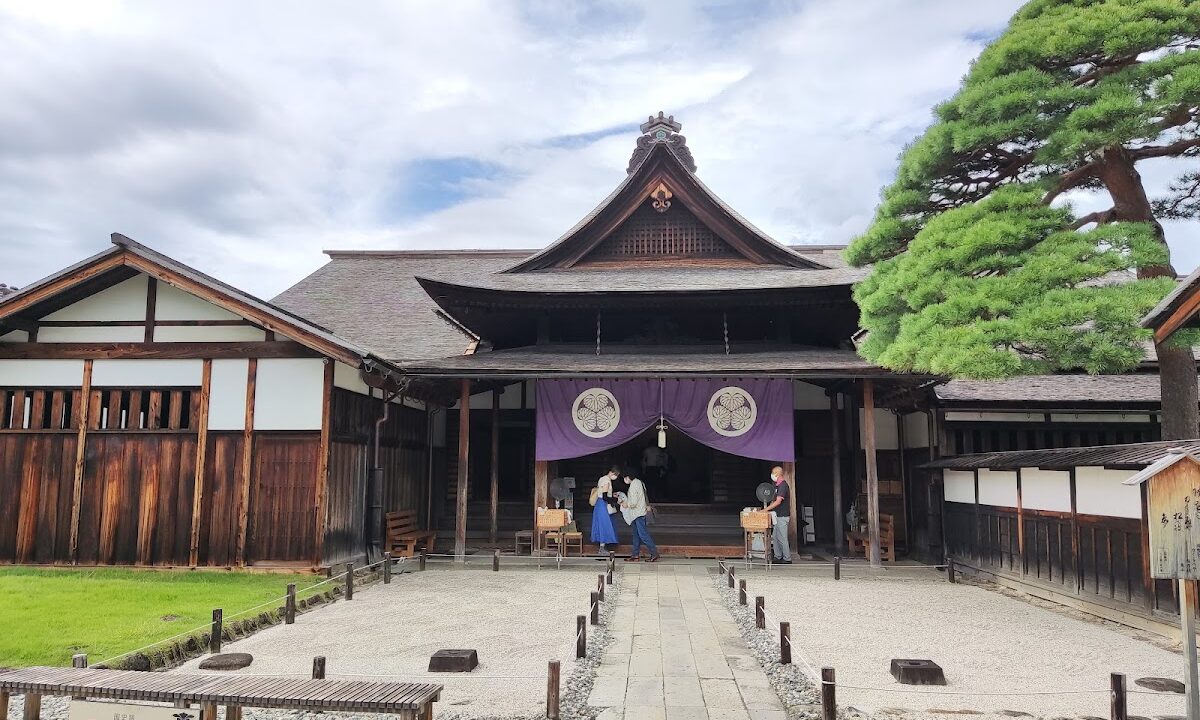
Takayama Jinya (Gifu Prefecture) Complete Guide: Highlights and History of the Only Existing Edo Shogunate Magistrate’s Office in Japan
Located in the heart of Takayama City, Gifu Prefecture, Takayama Jinya is a nationally designated historical site that preserves the history of the Edo period. Of the more than 60 magistrate’s offices said to have existed throughout Japan, Takayama Jinya is the only one with its main buildings still standing, making it an extremely valuable cultural asset that attracts many tourists.
What is Takayama Jinya?: The Edo Shogunate’s Governing Base for Hida Province
Takayama Jinya was a magistrate’s office established by the Edo Shogunate to manage Hida Province as a directly controlled territory (tenryo). Located in present-day Hachiken-cho, Takayama City, Gifu Prefecture, 25 generations of magistrates and magistrates worked here for 176 years.
The Role and Function of the Jinya
The Jinya served a role similar to a modern-day prefectural office, integrating the following functions:
- Administrative Functions: Governance and administration of the entire Hida Province
- Police Functions: Maintaining public order and investigating crimes
- Judicial Functions: Trials of civil and criminal cases
- Taxation Functions: Collection and management of land tax
The fact that all these functions were consolidated into a single facility illustrates the characteristics of local governance during the Edo period.
The History of Takayama Jinya: From the Kanamori Clan’s Lower Residence to Direct Shogunate Control
Origins and Changes
The Takayama Jinya building was originally one of the lower residences of the Kanamori clan, the lords of Takayama Castle. In 1692 (Genroku 5), when the Kanamori clan was transferred to Kaminoyama (present-day Kaminoyama City, Yamagata Prefecture), Hida Province became a direct territory of the Tokugawa Shogunate.
From this time until the Meiji Restoration, it continued to function as a Jinya for a remarkable 176 years. This long period of use has led to the preservation of the building and its current appearance.
Construction Period of Major Buildings
Many of the existing buildings were constructed or renovated during the following periods:
- Main Gate: Renovated in 1832 (Tenpo 3), a sturdy structure with a gatekeeper’s house.
- Entrance Hall, Great Hall, and Examination Room: Preserved as it was when it was renovated in 1816 (Bunka 13).
- Government Office Section: Developed from the mid to late Edo period.
Highlights of Takayama Jinya: Details of Buildings and Facilities
Main Gate and Gatekeeper’s House
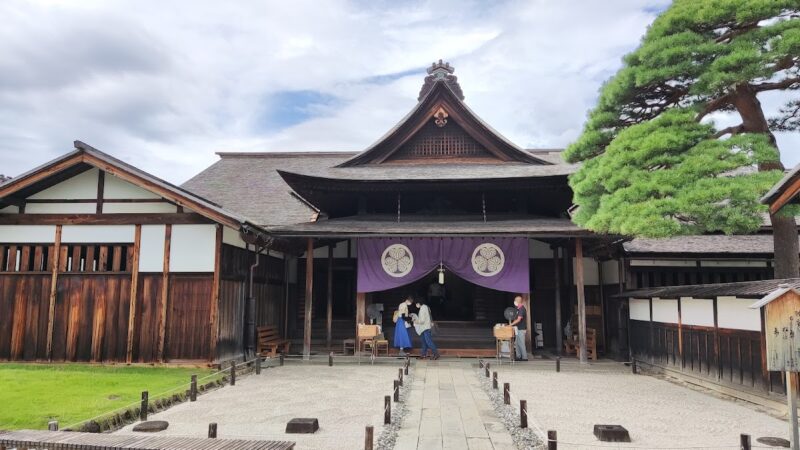
The Main Gate, the main entrance to Takayama Jinya, is a magnificent building renovated in 1832 (Tenpo 3). It has a gatekeeper’s house, indicating the strict security system of the time. Passing through the gate, you feel as if you’ve traveled back in time to the Edo period.
Entrance Hall and Grand Hall
The Entrance Hall is designed as a dignified space to welcome visitors. It is a spacious room with tatami flooring, and the walls are adorned with period decorations.
The Grand Hall was where important ceremonies and meetings were held, and it retains its appearance from the time of its renovation in 1816 (Bunka 13). The alcove and shoin-zukuri style are beautiful, allowing visitors to appreciate the high level of Edo period architectural technology.
Government Office
In the Government Office section, where officials actually worked, visitors can catch a glimpse of the administrative work of the time. Details such as the accounting office and document storage area have been restored, allowing visitors to experience the atmosphere of an Edo period government office.
Interrogation Room
The Interrogation Room is the room where interrogations took place. It was used to question suspects and uncover the truth of a case. It is an important facility for understanding the judicial system of the time.
Oshirasu (Courtroom)
One of the most impressive facilities is the Oshirasu. This is an outdoor space covered with white gravel, used as a courtroom. Criminals were judged here. It’s a rare opportunity to see a real-life “Oshirasu,” often seen in historical dramas.
At the Oshirasu, you can actually stand on the white gravel and experience the tension of the time.
Okura (Storehouse)
The Okura, where the annual tax rice was stored, is also open to the public. This massive warehouse, where rice collected from Hida Province was stored, provides clues to understanding the tax system and economic system of the time. It is currently open to the public as a restored building.
Kitchen and Living Spaces
The living spaces of the people working at the Jinya (fortified residence) have also been recreated. In the kitchen, cooking utensils and tableware from the time are displayed, allowing you to learn about the food culture and lifestyle of the Edo period.
Exhibits and Historical Learning
The Takayama Jinya building houses a wealth of historical materials from the Edo period:
- Ancient Documents: Administrative documents and court records from the time
- Daily Life Items: Everyday items used by officials and servants
- Weapons and Armor: Swords and other weapons used for security
- Surveying Instruments: Tools used for land surveying
- Tax-Related Materials: Records concerning tax collection
These exhibits allow visitors to gain a deeper understanding of the history and culture of Hida Province during the Edo period, going beyond mere building viewing.
The Cultural Value of Takayama Jinya
Designated as a National Historic Site
Takayama Jinya was designated a National Historic Site in 1929 (Showa 4). Its historical value is evident in the fact that it is the only surviving building from the Edo period’s district magistrate/local magistrate’s office.
The Only Existing Jinya in Japan
During the Edo period, there were over 60 county magistrate/local magistrate offices (jinya) throughout Japan, but Takayama Jinya is the only one whose main buildings remain in their original state. This uniqueness makes Takayama Jinya extremely important in the study of Japanese history.
Architectural Historical Value
As a valuable building that conveys the style of public architecture from the mid to late Edo period, it is highly regarded from an architectural historical perspective. In particular, the section renovated in 1816 (Bunka 13) is an important resource for understanding the architectural techniques and aesthetic sensibilities of the time.
Takayama Jinya Morning Market: Traditional Market Culture
Every morning, the Jinya Morning Market is held in front of Takayama Jinya. This market, along with the Miyagawa Morning Market, is known as one of Takayama’s two major morning markets, where local farmers sell fresh vegetables and fruits, handmade folk crafts, and more.
Features of the Jinya Morning Market
- Hours: Approximately 6:00 AM to 12:00 PM (may vary seasonally)
- Location: Plaza in front of Takayama Jinya
- Items for Sale: Local vegetables, pickles, folk crafts, handicrafts, etc.
- History: A traditional market culture dating back to the Edo period
Visiting the morning market before or after visiting the Jinya allows you to experience Takayama’s traditional culture more deeply.
Information for Visitors: Fees, Opening Hours, and Access
Admission Fees
- Adults: 440 yen
- High School Students and Younger: Free
- Group Discount: Discounts available for groups of 30 or more
*Fees are subject to change, so please check official information before visiting.
Opening Hours
- March 1st – October 31st: 8:45 AM – 5:00 PM
- November 1st – End of February: 8:45 AM – 4:30 PM
- August: 8:45 AM – 6:00 PM
- Closed: December 29th, 30th, 31st, January 1st
Access
Access by Train
Approximately a 10-minute walk from JR Takayama Station. Located in the heart of Takayama City, it’s easily accessible on foot from the station. Strolling through the old town is also recommended.
Access by Car
- Approximately 10 minutes from Takayama IC on the Chubu Jukan Expressway
- Parking: Parking available at the Jinya Plaza parking lot and several other paid parking lots in the surrounding area.
Address
1-5 Hachiken-cho, Takayama City, Gifu Prefecture 506-0012
Inquiries
Takayama Jinya Management Office
TEL: 0577-32-0643
Points of Interest and Recommended Route
Estimated Time Required
If you plan to thoroughly explore Takayama Jinya, please allow approximately 60-90 minutes. If you wish to see all the exhibits inside the building and visit the courtroom and storehouses, it is recommended to plan accordingly.
Recommended Visiting Route
- Enter through the Main Gate: Observe the gatekeeper’s quarters
- Entrance Hall and Grand Hall: Experience the dignified atmosphere
- Governor’s Office: Visit the official’s workspace
- Interrogation Room: See the interrogation site
- Courtyard: Stand on the white gravel
- Storehouse: Visit the storage area for tax rice
- Kitchen and Living Space: Learn about life at the time
Recommended Visiting Season
- Spring (April-May): Beautiful cherry blossoms and fresh greenery, and pleasant weather
- Autumn (October-November): Season of autumn leaves, coinciding with the Takayama Festival
- Winter (December-February): The snow-covered Jinya (fortified residence) is picturesque, and there are relatively few tourists
Photography Tips
- A classic and beautiful composition is a shot from directly in front of the main gate
- The contrast between the white gravel of the courtyard and the buildings is striking.
- The details of the Shoin-zukuri style in the main hall are a treasure trove of architectural beauty.
- The lively atmosphere during the morning market is also worth photographing.
Combining with surrounding tourist spots
Takayama Jinya is located in the heart of Takayama City, making it easy to combine with other tourist spots.
Old Town (Sanmachi Street)
Located about a 5-minute walk from Takayama Jinya, the Old Town is a designated Important Preservation District for Groups of Traditional Buildings, lined with Edo-period merchant houses. It’s perfect for a stroll before or after visiting the Jinya.
Takayama Municipal Government Memorial Hall
This facility allows you to see Meiji-era government building architecture. Visiting it together with Takayama Jinya helps you understand the transition from the Edo period to the Meiji period.
Miyagawa Morning Market
A traditional Takayama morning market, alongside the Jinya Morning Market, held along the Miyagawa River. Visiting both markets and comparing them is one way to enjoy the experience.
Takayama Festival Float Museum
This facility permanently displays the magnificent floats used in the Takayama Festival. You can gain a deep understanding of Takayama’s traditional culture.
Points to Note When Visiting Takayama Jinya
Clothing and Items to Bring
- Shoes are not allowed inside the building, so easy-to-remove shoes are recommended.
- The building can get cold in winter, so warm clothing is necessary.
- It’s convenient to bring writing materials to take notes on the exhibits.
Manners and Precautions
- Eating and drinking are prohibited inside the building.
- Flash photography is restricted in some areas.
- Please do not touch the exhibits.
- Please view quietly and be considerate of other visitors.
Accessibility Information
Some buildings have steps, making wheelchair access difficult. It is recommended to inquire with the management office in advance.
Educational Value of Takayama Jinya
Use in School Education
Takayama Jinya is an ideal place for learning Japanese history and social studies. You can learn about local governance, the judicial system, and the tax system of the Edo period through actual artifacts.
Target Age
Elementary school students in upper grades and above can understand and view the exhibits. For middle and high school students in particular, it is a valuable opportunity to experience firsthand what they have learned in history class.
Family Visit
Easy-to-understand explanatory panels are installed so that families with children can enjoy the visit. The experience of actually standing on the court site will be a memorable one for children.
Preservation and Future of Takayama Jinya
Preservation Activities
Regular restoration and preservation work is carried out at Takayama Jinya, which is managed by Gifu Prefecture. Traditional construction methods are used for maintenance and management to pass on Edo period architectural techniques to future generations.
Use as a Cultural Property
It is used not only as a tourist facility but also as a place for academic research. Researchers from various fields such as architectural history, history, and folklore visit and conduct research.
Summary: The Charm of Takayama Jinya
Takayama Jinya is a unique historical site that conveys the realities of local governance during the Edo period. As the only surviving magistrate’s office in Japan, its architectural and historical value is immeasurable.
It’s a must-visit spot when you’re in Takayama City, Gifu Prefecture. Its convenient location within walking distance of JR Takayama Station, reasonable admission fees, and comprehensive exhibits make it enjoyable for people of all ages.
An experience like stepping back in time to the Edo period, the thrill of standing on the courtroom, and the awe of exquisite architectural techniques—a special time awaits you at Takayama Jinya. Combine it with the old townscape and the Jinya Morning Market to fully enjoy Takayama’s history and culture.