Sagiyama Castle (Gifu Prefecture) Complete Guide: A Thorough Explanation of the History of Saito Dosan’s Retirement Castle and its Connection to Nohime
Located in the city center of Gifu City, Gifu Prefecture, Sagiyama Castle was the retirement home of Saito Dosan, a notorious warlord of the Sengoku period. It is also famous as the place where Nohime, known as the wife of Oda Nobunaga, spent time before her marriage. Built on a small hill only 68 meters above sea level, the castle is now preserved as the Sagiyama Castle Ruins, a valuable historical site that conveys the history of Gifu to the present day.
This article will thoroughly explain the charm of Sagiyama Castle, from its historical background to existing remains, points of interest, and access methods.
History of Sagiyama Castle: From the Heian Period to the Sengoku Period
Construction and Early History of Sagiyama Castle
There are various theories regarding the construction period of Sagiyama Castle, but the most widely accepted theory is that it was built by Satake Hideyoshi during the Bunji era (1185-1190) from the late Heian period to the early Kamakura period. Initially, it functioned as a branch castle of Kawate Castle, the base of the Toki clan, the shugo daimyo of Mino Province.
The name Sagiyama (meaning “heron mountain”) is said to originate from the many herons (sagi) that inhabited the area. Although a low mountain with an elevation of 68 meters, it was strategically located overlooking the surrounding plains. Situated northwest of Kinka Mountain (Inaba Mountain) and overlooking the Nagara River, its topography played an important role as a key point in Mino Province.
Sagiyama Castle under the Toki Clan
In the Muromachi period, the Toki clan, the shugo daimyo of Mino Province, ruled this area. During the time of Toki Yorinori, in particular, Sagiyama Castle functioned as one of the important strategic points. Toki Yorinori was also known as a man of culture, and it is said that many cultural figures gathered around Sagiyama Castle.
However, Saito Dosan (then known as Nagai Norihide), a vassal of the Toki clan, gradually seized power, and the political situation in Mino Province changed dramatically.
Saito Dosan and Sagiyama Castle: Its Role as a Retirement Castle
In 1548, Saito Dosan expelled Toki Yorinori from Mino Province, completely seizing control of the province. Afterward, Dosan handed over the family headship to his eldest son, Saito Yoshitatsu, and moved from Inabayama Castle (later Gifu Castle) to Sagiyama Castle, making it his retirement residence.
There are several possible reasons why Dosan chose Sagiyama Castle as his retirement residence:
- Proximity to Inabayama Castle: Located just a few kilometers northwest of Kinka Mountain, it allowed him to maintain political influence while keeping a certain distance.
- Defense Security: Despite being a low mountain, its terrain offered a panoramic view, making it a suitable location for responding to emergencies.
- Strategic Transportation Point: Its location allowed for monitoring of transportation routes along the Nagara River.
Even after Dosan’s retirement, Sagiyama Castle remained an important political center in Mino Province.
Nohime and Sagiyama Castle: The Origin of “Sagiyama-dono”
On February 24, 1549 (Tenbun 18), Kicho, later known as Nohime, daughter of Saito Dosan, married Oda Nobunaga of Owari Province from Sagiyama Castle. This political marriage was intended to strengthen the alliance between Mino and Owari Provinces.
Because Nōhime lived at Sagiyama Castle, she was also called “Sagiyama-dono” (Lady Sagiyama). This title continued to be used even after she married Nobunaga, and it remains an important name indicating Nōhime’s lineage.
While there are few detailed records of Nōhime’s actual life at Sagiyama Castle, it is believed that she received an education as the daughter of a Sengoku daimyo and prepared for a political marriage. Her marriage from Sagiyama Castle to the Oda family was an event that greatly influenced the subsequent history of Mino and Owari provinces.
The Conflict Between Dōsan and Yoshitatsu and Sagiyama Castle
Around 1555, the relationship between Saitō Dōsan and his eldest son, Yoshitatsu, deteriorated. Yoshitatsu was dissatisfied with his father Dōsan’s tyranny, and the conflict between the two became serious, including the murder of his younger brothers.
In April of Kōji 2 (1556), the two finally faced each other across the Nagara River, and the Battle of Nagara River erupted. In this battle, Dōsan was defeated and killed, and Yoshitatsu completely seized control of Mino Province. While historical records are limited regarding the role of Sagiyama Castle before and after this battle, it undoubtedly held an important position as Dōsan’s base.
After Dōsan’s death, it is believed that the political importance of Sagiyama Castle gradually declined.
Sagiyama Castle After the Era of Oda Nobunaga
In Eiroku 10 (1567), Oda Nobunaga pacified Mino Province and renamed Inabayama Castle to Gifu Castle. From this period onward, records of Sagiyama Castle rapidly decrease, and it is believed to have been abandoned. Nobunaga began his path to unifying Japan from Gifu Castle, and smaller castles like Sagiyama Castle lost their strategic value.
Afterward, Sagiyama Castle disappeared from the forefront of history, and after many years, it remains as a castle ruin to this day.
Structure and Layout of Sagiyama Castle
Structure of the Mountaintop
Sagiyama Castle is a flatland castle built around the summit of Mt. Sagiyama, which is 68 meters above sea level. The main enclosure (honmaru) is located at the summit, and even today, the remains of the leveled enclosure can be seen.
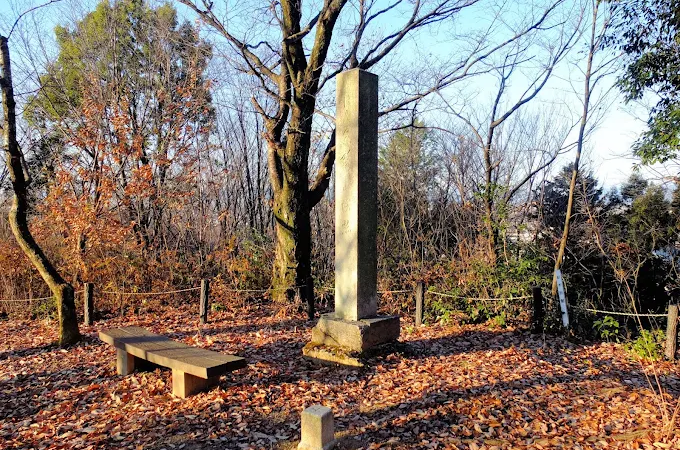
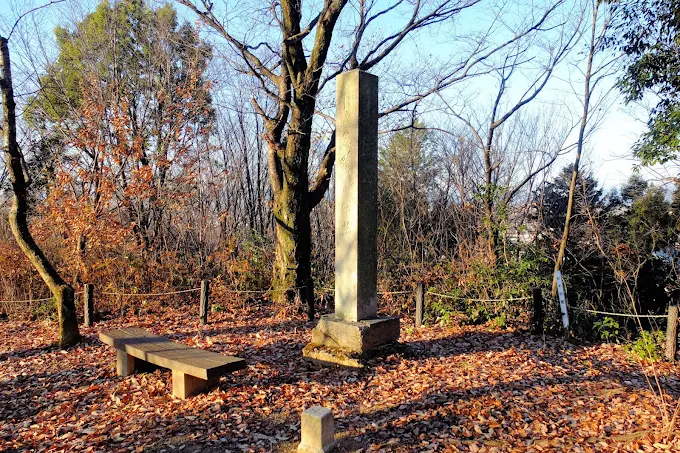
The main enclosure at the summit is a relatively large, flat area, and it is thought that the main buildings were located here. Currently, a castle site monument has been erected, and some traces of earthworks remain around it.
From the summit, one can enjoy a panoramic view of Gifu city, Gifu Castle on Mt. Kinka, and the flow of the Nagara River. This excellent view likely served not only a military surveillance function but also a symbolic meaning in demonstrating the authority of the ruler.
Moats and Defensive Facilities
Multiple moat remains have been confirmed at Sagiyama Castle. The moat, a defensive structure that cut across the ridge, played a crucial role in preventing enemy incursions. Even today, traces of the moat can be discerned from the topography, exhibiting a typical structure of a Sengoku period mountain castle.
Furthermore, several leveled areas, believed to be terraced enclosures, exist on the mountainside, suggesting a multi-layered defensive structure.
Residence at the Foot of the Mountain: Fukumitsu Ongamae (Semidote Castle)
At the eastern foot of Sagiyama Mountain lies the site of the residence believed to have been the actual residence of Saito Dosan, known as “Fukumitsu Ongamae,” also called “Semidote Castle.”
The estimated location is around the present-day Kitano Shrine and NTT Sagiyama Housing Complex, and a large earthen embankment remains north of Kitano Shrine. This embankment, called “Semidote,” is thought to have been part of the defensive structure surrounding the residence.
In mountain castles of the Sengoku period, the mountaintop was typically used as an emergency fortification, while government affairs and daily life were conducted in the residence at the foot of the mountain during peacetime. It is presumed that Sagiyama Castle also had this typical structure.
Development as Sagiyama Park
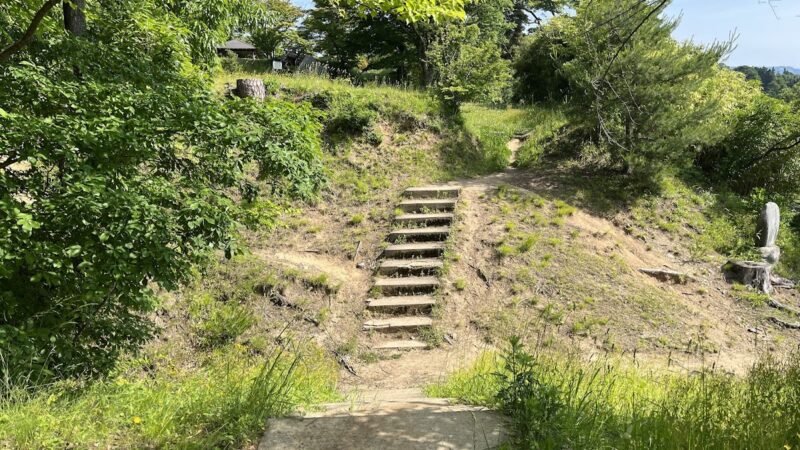
Currently, the Sagiyama Castle ruins have been developed into Sagiyama Park, a place of relaxation for citizens. Walking paths have been constructed, making it relatively easy to climb to the mountaintop. Information boards have been installed within the park, allowing visitors to learn about the castle’s history.
Highlights of Sagiyama Castle
Castle Ruins Monument and View from the Mountaintop
The castle ruins monument erected at the mountaintop is a symbolic monument that conveys the history of Sagiyama Castle to the present day. From the area around the monument, you can see the keep of Gifu Castle towering on Mount Kinka up close, allowing you to reflect on the eras of Dosan, Yoshitatsu, and Nobunaga.
Especially on clear days, you can see the flow of the Nagara River, the city of Gifu, and even the distant mountains, giving you a real sense of this strategically important location.
Remains of Earthworks and Moats
The remains of earthworks and moats on the mountaintop and slopes are valuable historical sites for understanding the structure of castles during the Sengoku period. In particular, the earthworks of the “Semi-dote” (Cicada Embankment) around Kitano Shrine, some reaching several meters in height, give a real sense of the scale of the defensive facilities at the time.
For castle enthusiasts, carefully observing these remains offers the pleasure of deciphering the layout of Sagiyama Castle.
Kitano Shrine and Historical Landscape
Located at the eastern foot of Sagiyama, Kitano Shrine is close to the site of the former residence, and a historical atmosphere remains in the surrounding area. Strolling through the shrine grounds and surrounding area allows you to feel the traces of the era in which Saito Dosan and Nohime lived.
Kitano Shrine also has a parking lot, making it a convenient base for visiting Sagiyama Castle. ### Relationship with Gifu Castle
The view of Gifu Castle (Kinka Mountain) from Sagiyama Castle is one of the castle’s greatest highlights. These two castles, located only a few kilometers apart, had a deep connection during the time of Saito Dosan.
Visiting Gifu Castle after Sagiyama Castle (or vice versa) will provide a more comprehensive understanding of Mino Province’s Sengoku period history. We recommend visiting both castles while being mindful of the historical story connecting them.
Access and Visiting Guide
Basic Information
Location: Sagiyama, Gifu City, Gifu Prefecture
Elevation: 68 meters
Year of Construction: Bunji era (1185-1190)
Builder: Satake Hideyoshi
Main Lords: Toki clan, Saito Dosan
Year of Abandonment: After Koji 2 (1556), around Eiroku 10 (1567)
Remains: Enclosures, earthworks, moats, earthworks of the residence site
Designation: Gifu City Designated Historic Site
Admission Fee: Free
Visiting Hours: Free (however, it is recommended to avoid nighttime visits)
Access by Car
From Gifu-Kakamigahara IC on the Tokai-Hokuriku Expressway: Approximately 20 minutes
From Gifu-Hashima IC on the Meishin Expressway: Approximately 30 minutes From JR Gifu Station: Approximately 15 minutes by car
Parking: Park parking lot south of Kitano Shrine (free, approximately 50 spaces)
Please note that the road to the parking lot is narrow and passes through a residential area. Please be careful of oncoming traffic and drive slowly. Setting “Kitano Shrine (Sagiyama, Gifu City)” on your car navigation system is convenient.
Access by Public Transportation
From JR Gifu Station or Meitetsu Gifu Station:
- Take the Gifu Bus bound for “Sagiyama Kitamachi,” get off at the “Sagiyama Kitamachi” bus stop, and walk for approximately 10 minutes.
- Take the Gifu Bus bound for “Sagiyama,” get off at the “Sagiyama” bus stop, and walk for approximately 15 minutes.
While there are relatively frequent bus services, it is recommended to check the timetable in advance.
Ascent Route
From the Kitano Shrine parking lot to the summit, it takes approximately 15-20 minutes using the well-maintained walking trail. The elevation difference is only about 60 meters, making it possible to climb the castle even in light clothing, but please note the following:
- Footwear: Comfortable walking shoes such as sneakers are recommended (it can be slippery after rain)
- Clothing: Take precautions against insects in summer and warm clothing in winter
- Hydration: Remember to stay hydrated, especially in summer
- Time: Allow about an hour round trip for a leisurely stroll
Best Season for Visiting
Sagiyama Castle is open year-round, but the best times to visit are:
Spring (late March to May): The surrounding area is beautiful during cherry blossom season, the weather is mild and ideal for a stroll
Autumn (October to November): The autumn leaves are beautiful, the air is clear, and the view of Gifu Castle is excellent
Winter (December to February): Fewer visitors, allowing for a quiet immersion in history. However, cold weather gear is essential.
During the summer months (June to September), due to the heat and numerous insects, early morning or evening visits are recommended.
Nearby Tourist Attractions
Gifu Castle (Kinka Mountain)
Located approximately 3 kilometers from Sagiyama Castle, Gifu Castle is a famous castle associated with Saito Dosan and Oda Nobunaga. You can reach the summit via the Kinka Mountain Ropeway, and from the keep, you can enjoy a spectacular view of the Nagara River and Gifu city. Visiting both Sagiyama Castle and Gifu Castle together will give you a deeper understanding of the Sengoku period history of Mino Province.
Gifu City History Museum
Located within Gifu Park, the Gifu City History Museum boasts extensive exhibits on Saito Dosan and Oda Nobunaga. It’s an ideal facility for learning about the historical background of Sagiyama Castle.
Nagara River Onsen
This hot spring resort town stretches along the Nagara River, lined with long-established inns such as “Miyako Hotel Gifu Nagara River,” “Juhachiro,” and “Ishikin.” After visiting Sagiyama Castle, you can relax and unwind in a hot spring. Bathing while overlooking the clear Nagara River is a truly special experience.
Old Townscape of Kawaramachi
This old townscape along the Nagara River preserves buildings from the Edo period to the early Showa period. Cafes and general stores are scattered throughout, making it a pleasant place to stroll.
Points to Note When Visiting Sagiyama Castle
- Consideration for Residential Areas: The area around the castle ruins is a residential area. Please be considerate of local residents regarding noise and street parking.
- Protection of Historical Remains: Please be careful not to damage historical remains such as earthworks and moats.
- Safety Measures: Some parts of the mountain path are slippery. Particular caution is needed during and after rainy weather.
- Take your trash home: There are no trash cans, so please be sure to take your trash with you.
- Insect repellent in summer: Carry insect repellent spray during seasons when mosquitoes and gnats are abundant.
Historical Value and Future Preservation of Sagiyama Castle
Sagiyama Castle, though not large in scale, played an important role in the Sengoku period history of Mino Province. Its historical and cultural value is particularly high, as it served as the retirement castle of Saito Dosan and as the residence of Nohime.
Currently, the castle ruins are preserved and managed by Gifu City and are also used as a place for citizens to learn about history. Appropriate preservation and utilization are expected in the future.
In recent years, visits by castle enthusiasts and history lovers have increased, and information dissemination on social media has also become more active. On the other hand, there are concerns about damage to the remains and impact on the surrounding environment due to excessive tourism, making a balance between sustainable preservation and utilization a challenge.
Summary: Rediscovering the Charm of Sagiyama Castle
Sagiyama Castle, though a small mountain castle at an altitude of only 68 meters, holds a significant place in Japanese history as the retirement castle of Saito Dosan, a prominent figure of the Sengoku period, and as a place associated with Nohime, the wife of Oda Nobunaga.
The remaining earthworks and moats, as well as the view of Gifu Castle from the mountaintop, offer enough charm to evoke the Sengoku period in Mino Province. It’s easily accessible from Gifu city center, making it a historical spot you can visit without hesitation.
Visiting it in conjunction with Gifu Castle and Nagara River Onsen will allow you to enjoy a more fulfilling Gifu sightseeing experience. Sagiyama Castle is an ideal destination for those interested in the history of the Sengoku period, castle enthusiasts, and those who want to quietly immerse themselves in history.
Next time you visit Gifu, be sure to visit the Sagiyama Castle ruins and experience the world of the Sengoku period where Saito Dosan and Nohime lived.